Rosh Yeshiva and Exec. Director
Yeshivat and Midreshet TVA
Ra"m and Director
Yeshivat and Midreshet TVA
Rav Yair HaLevi (Eisenstock)
Rosh Yeshiva, Yeshivat TVA
Michelle Kaplansky
Israel Programs Administrator
Bnei Akiva of the US and Canada
Rav Shaul Feldman
Founder; Director of
Bnei Akiva of the US and Canada
Bini Dachs
Operations Director
Zvi Zobin
Mazkir Artzi
|
|
520 8th Avenue, 15th Floor
New York, NY 10018
Office: (212) 465-9536
Fax: (212) 216-9578
office@TVAIsrael.org
|
|
|
|
Dvar Torah
By: Daniel Osen, YTVA Student
|
Parshat Ki Tavo does not lack for topics of discussion. From beginning with the pesukim that we find in our Hagadoth , to  the blessings and, more famously, the curses, the parsha is consistent with the general structure of Sefer Devarim as a whole. The overwhelming majority of Devarim possesses a structure that resembles the treaties of Assyrians kings, such as Ashurbanipal and Esarhaddon, that were made with rival kingdoms or newly subjected nations. The beginning of the text, the suzerain, or in the Torah, God, presents the reasons as to why new subjects should be loyal. However, God actively presents all the good will and miracles he has performed for the Israelites, while Ashurbanipal offers the newly subjugated Persians a friendly reminder that he was responsible for the slaughter of their people. the blessings and, more famously, the curses, the parsha is consistent with the general structure of Sefer Devarim as a whole. The overwhelming majority of Devarim possesses a structure that resembles the treaties of Assyrians kings, such as Ashurbanipal and Esarhaddon, that were made with rival kingdoms or newly subjected nations. The beginning of the text, the suzerain, or in the Torah, God, presents the reasons as to why new subjects should be loyal. However, God actively presents all the good will and miracles he has performed for the Israelites, while Ashurbanipal offers the newly subjugated Persians a friendly reminder that he was responsible for the slaughter of their people.
The next piece of this style of writing is the emperor demanding the absolute, unwavering loyalty of the people, followed by the terms of the treaty. These could range from taxes, to military, to local religious practice. In the Torah, these terms and new laws are what we would refer to as Mitzvot. The suzerain continues by issuing a stern warning of how he intends to destroy any rebels and those who do not adhere to the terms that have been laid out. The Torah does not lack this feature, but before it proceeds to present a series of curses that could potentially befall the Israelites, we are introduced to a random ritual that involves the Twelve Tribes divvying themselves up between two opposite mountains (Gerizim and Eival). As the two tribes are atop the two mountains, the Levites announce a series of principles that the Israelites are supposed to accept. However, these are not testaments of faith that would be expected to be at a national gathering. Rather it is filled with proclamations regarding sexual immorality and other intrapersonal laws. The Israelites in turn respond "Amen". These prohibitions are strikingly similar to the list that appears in Parshat Kedoshim. However, there is one fundamental difference between the two sections: language. The consequence for violating the prohibitions is death in Kedoshim. However, it is presupposed in our Parsha that anyone who violates these prohibitions is cursed. What does this distinction serve?
In the realm of human justice, we can only administer justice upon finding guilt of the crime. In the human world we can only offer death as the most severe punishment. However, suggesting that anyone who transgresses these is cursed takes us into an entirely new world: the world of the supernatural, of the divine. The fact that being cursed is the immediate presumed consequence of violating these laws presents a notion that God is always watching, a sentiment later echoed by the Sages in Pirkei Avot: "Know what is above you, a seeing eye, a listening ear, and all your deeds are written in a book." When acknowledging that some things are to be left to divine justice, it is an acceptance of God's rulership in our world.
As we approach Rosh HaShanah, it is important to remember that ultimately, God is the Eternal king, a value which will be emphasized in the Mussaf of that day. Ultimately, we should be willing to accept there are some thing we can never truly know, and that some of our assumptions are simply prescriptivist in nature and at the end of the day, God will pass the right judgement. My hope is that we will all be able to truly take this New Year as a time to reflect upon our deeds, good and bad, and continue to strive in the upkeep of the King's eternal pact.
|
|
|
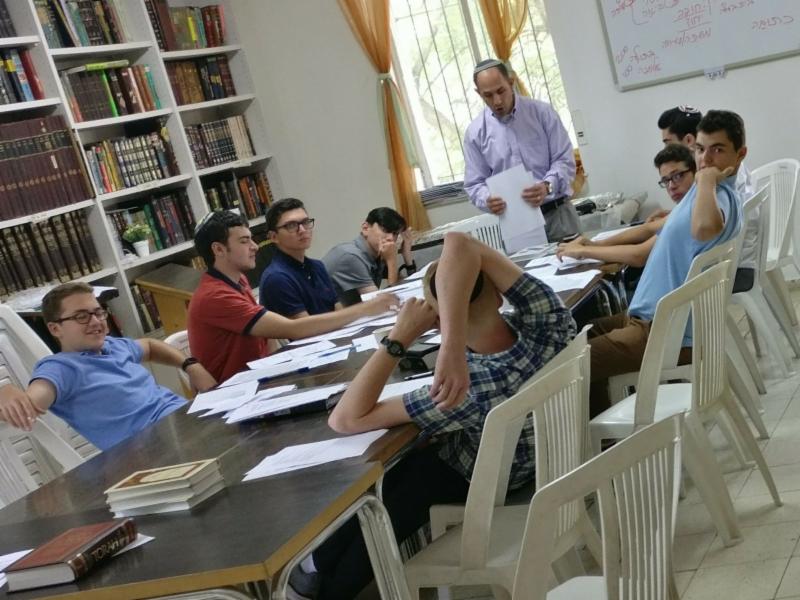
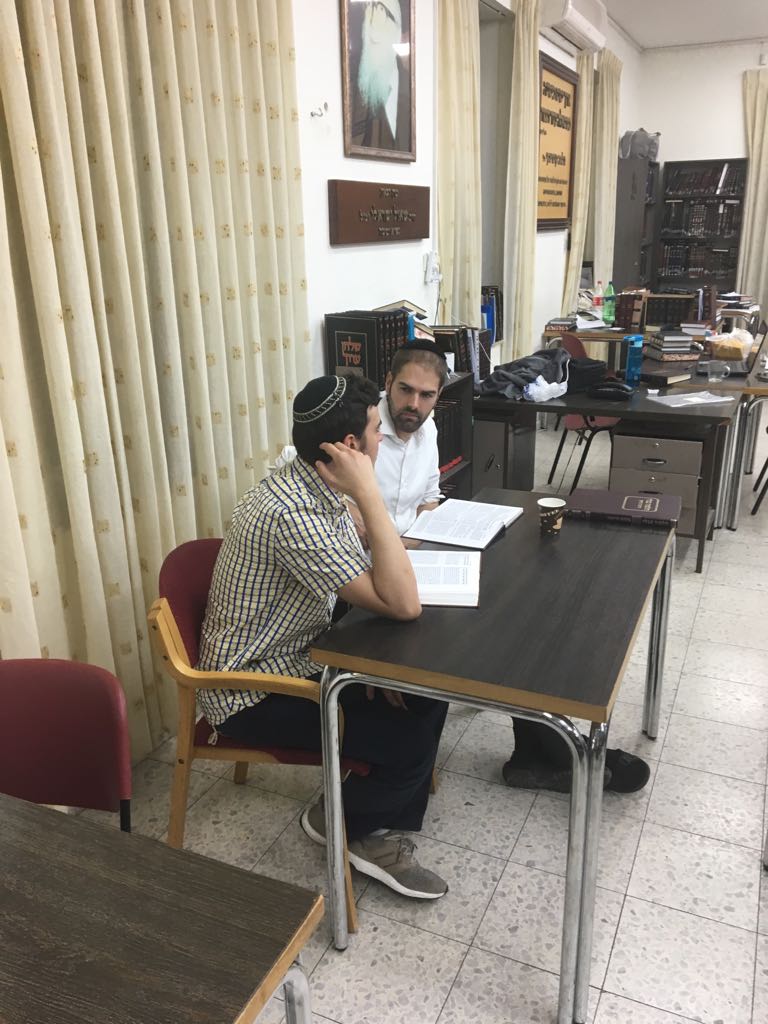
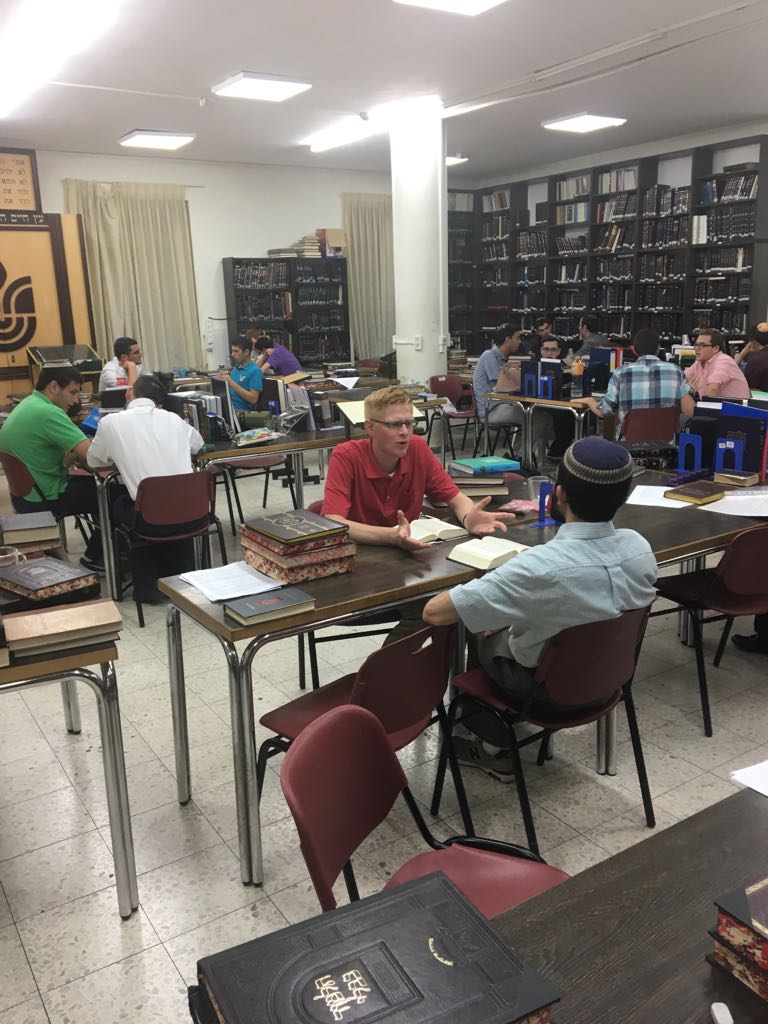
We had a phenomenal first full week of limud-Torah! Students have been very engaged with the learning and have really jumped into the world of the Beit Midrash with great enthusiasm. With each day, students have acclimated to the schedule and begun to adjust to life in Israel and yeshiva.
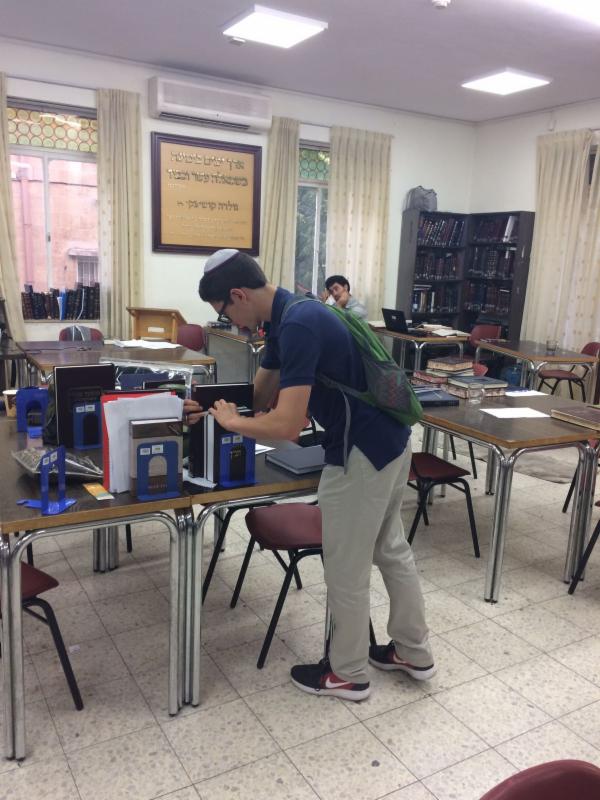
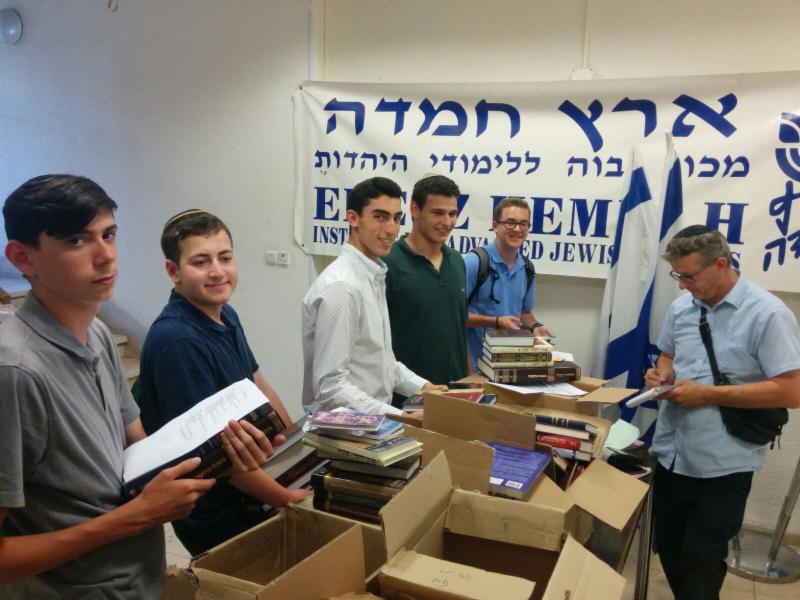
It was quite exciting to watch students buy the Sefarim that they need for their shiurim and begin to buy books to learn for their own personal interest. Everyone's Makom (seat) in the Beit Midrash is now marked by their respective books as each student's Makom is becoming their home in the Beit Midrash.
We ended the week off strong with a mishmar which lasted late into the night!
Next week from Wednesday through Friday we will be going on a special "masa" (journey) with HaShomer HaChadash. This week we had an orientation session with the facilitator to discuss goals, and to review the itinerary and packing list.
We are really looking forward to this masa which will allow us to encounter major issues for Israeli farmers, work the Land and create space for serious reflection on questions of personal and communal responsibility. To learn more about HaShomer HaChadash please click here. The masa will end on Friday afternoon and we will remain in the north for a very special Shabbat in Yeshivat HaGolan, which is a yeshivat Hesder, in Yishuv Hispin.
|
|
|
|
|