 | |
Neiman Reports, July 14, 2022
We have reported on the dangerous and troubling world of sex trafficking for nearly two decades, writing about the domestic sex trafficking of minors and the commercial sexual exploitation of foreign workers in this country’s nail salons and massage parlors — two angles that focused on female victims. But neither of us before had focused deeply on the plight of boys and young men in the dark and dangerous world of sex trafficking. Until now. The problem is that there’s little data to show what’s really happening. But a source who had followed our work reached out to ask, repeatedly: What about the boys?
We decided to look into it. We continued our inquiry for more than a year, talking to advocates, government officials, and researchers. We brought in Jenifer’s investigative journalism clinic at Boston University to increase our reach. We talked to researchers who found that more than a third of young people involved in the U.S. sex trade were boys and young men. Most importantly, we talked to more than a dozen survivors who trusted us to tell their stories. They told us about selling their bodies to avoid homelessness and pay bills, their bodies seemingly their only currency in a world that abandoned them. We focused on how Black, brown, and LGBTQ youth are disproportionately affected. In the end we published a six-part series titled, “Unseen: The Boy Victims of the Sex Trade.”
|
 | |
Psychiatry Advisor, July 15, 2022
Body dysmorphic disorder (BDD) “consists of a distressing or impairing preoccupation with imagined or slight defects in appearance.”1 Muscle dysmorphia (MD) is “a condition underpinned by people’s beliefs that they have insufficient muscularity.”2 The condition has been increasing in both public and professional awareness, beginning with the late 1980s and early 1990s, when several studies and books drew attention not only to the disorder but to its potential deleterious impact on the health and lives of those who suffer from it.2 In particular, the work of Pope et al has spurred research and placed the disorder on the map.3,4 MD (sometimes referred to as “reverse” or “big” anorexia, colloquially called “bigorexia”) is on the rise, according to Jason Nagata, MD, MSc, assistant professor of pediatrics in the division of Adolescent and Young Adult Medicine at the University of California, San Francisco. Dr Nagata is also the editor of the recently published book Eating Disorders in Boys and Men. “During the COVID-19 pandemic, we’ve seen an explosion of eating disorders and body dysmorphia, with more awareness being brought to these issues,” Dr Nagata said. An Australian study of 3618 adolescents (aged 11-19 years) found an MD prevalence of 2.2% in boys and 1.4% in girls.5 Boys with MD were more likely than girls with MD to report severe preoccupation with muscularity and engage in weight-lifting regiments that interfered with their lives, while girls were more likely to report discomfort with body exposure.5 According to a report by the British Broadcasting Corporation, as much as 10% of male gym members in the UK (roughly 427,000 individuals) may have MD.6 A study of 1320 service members in the military found a prevalence rate of BDD of 13% in males and 21.7% in females; however, the prevalence of MD was 12.7% in males and only 4.2% in females.7 And a study of close to 15,000 adolescents found that 22% reported engaging in muscle-enhancing behavior, such as excess exercise, taking supplements or steroids, and engaging in muscularity-disordered eating behaviors.8
|
 | |
Health Day, July 15, 2022
More teens in the United States are reporting their sexual identity as gay, lesbian or bisexual, nationwide surveys show. Between 2015 and 2019, the percentage of 15- to 17-year-olds who said they identified as "non-heterosexual" rose from 8.3% to 11.7%, according to nationwide surveys by the U.S. Centers for Disease Control and Prevention. "Although our analyses demonstrated that there has been a significant increase in the proportion of girls and boys that self-identified as gay, lesbian or bisexual, we cannot be certain if this represents a true increase of this magnitude, or if it reflects at least in part, greater comfort by teens with acknowledging a non-heterosexual identity on an anonymous questionnaire," said Dr. Andrew Adesman, who led an analysis of the findings.
|
 | |
Medical News Today, July 15, 2022
Fast facts on when boys stop growing:
- How long puberty lasts and general development depends on a range of factors.
- For boys, there is some evidence that being overweight or obese means that puberty is likely to begin at an older age.
- Puberty lasts 2 to 5 years for both boys and girls.
- Boys tend to start puberty around a year later than girls. This means that boys may be shorter than girls of a similar age for 1 to 2 years.
|
 | |
Medical Express, July 13, 2022
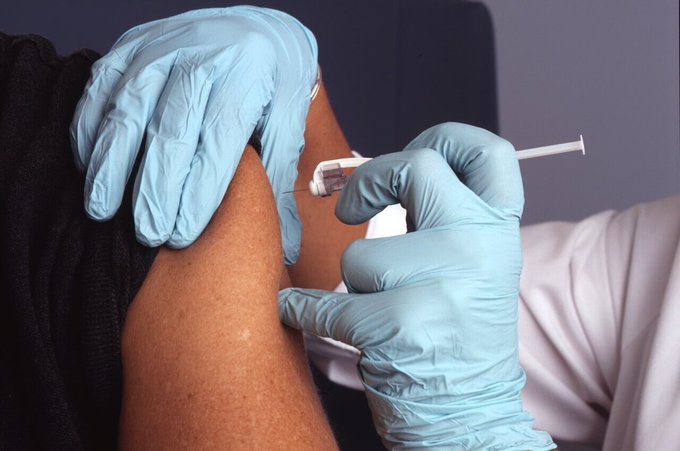
A study published by The BMJ today provides an up-to-date summary of evidence on the risk of heart inflammation (myocarditis and pericarditis) after mRNA vaccination against the COVID-19 virus. The review of more than 8,000 reported cases from 46 studies by researchers in Canada confirms previous reports that myocarditis is rare, but cases are highest among young males shortly after a second dose, and are probably higher after Moderna's mRNA vaccine than after Pfizer's vaccine. It also shows that while cases are predominantly mild, the risk of myocarditis or pericarditis might be lower when the second dose is given more than 30 days after the first dose. However, the researchers warn that in general, the evidence is of low certainty and say these findings must be considered alongside the overall benefits of vaccination.
| ________________________________________ |  | |
The Partnership has announced the 2022 National Symposia on Adolescent and Young Adult (AYA) Male Health. The virtual series will consist of nine episodes covering a range of topics of interest to those who know or serve young males between the ages of 10 and 25. The symposia will take place over the course of five months and began in June with the symposium on Young Males and ADHD. There is no charge. The webcasts will also be available for viewing after.
The Next symposium, on Young Males, Healing Partnerships and Promoting Resilience, will be held July 27 from 1-3 PM EST. Information for other symposia will be forthcoming
The full list of topics is -
· An overview of the State of AYA Male Health
· Young Males and Reproductive Health
· Young Males, Sexual Orientation and Gender Identity
· Young Males and Depression
· Young Males and ADHD
· Young Males, Body Image and Eating Disorders
· Young Males and Suicide
· Young Males, Healing Partnerships and Promoting Resilience
· Young Males, Relationships and Health
Each episode will run approximately two hours and will include audience participation. Nationally known experts have been chosen to co-chair each episode.
| ____________________________________ |
 | |
The study shows that income disparities also play a factor in men's health.
ABC News, July 14, 2022
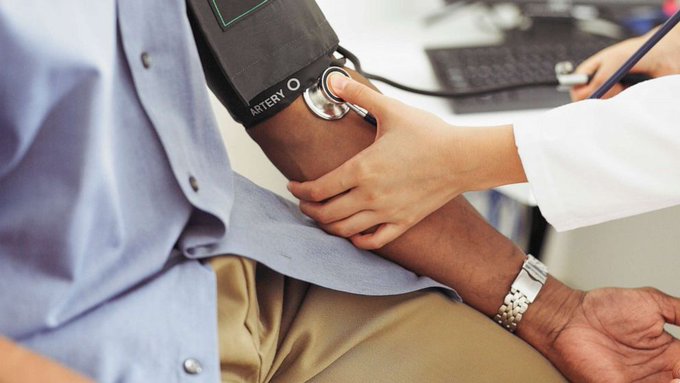
American men are sicker and die earlier than men living in other developed nations, according to a new report from The Commonwealth Fund, a non-profit organization focusing on public health issues. The study looked at men from the U.S, Switzerland, Norway, New Zealand, Germany, Australia, the U.K., France, the Netherlands, Canada and Sweden and found that rates of avoidable deaths, chronic conditions and mental health needs are among the highest with American men. Around 29% of American men reported they have multiple chronic illnesses, followed closely by Australian men at 25%, according to the study. Men living in France and Norway were the lowest at 17%. "Whether it's stubbornness, an aversion to appearing weak or vulnerable, or other reasons, men go to the doctor far less than women do," the study's authors wrote. Men in the U.S. also die from avoidable deaths, classified as deaths before 75 years old, at a higher rate than men from the 10 other countries listed in the report. The U.S. remains an outlier being the only industrialized nation without universal healthcare and has led to men avoiding getting the care they need because costs are too high, researchers noted.
|
 | |
University of Virginia Today, July 15, 2022
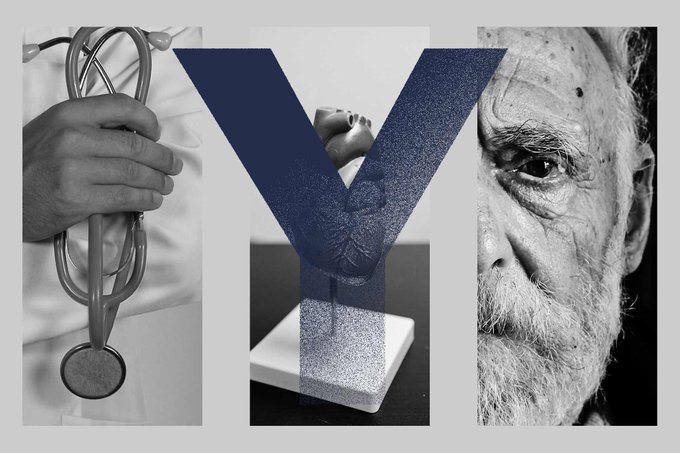
The loss of the male sex chromosome as many men age causes the heart muscle to scar and can lead to deadly heart failure, new research from the University of Virginia School of Medicine shows. The finding may help explain why men die, on average, several years younger than women. UVA researcher Kenneth Walsh says the new discovery suggests that men who suffer Y chromosome loss – estimated to include 40% of 70-year-olds – may particularly benefit from an existing drug that targets angerous tissue scarring. The drug, he suspects, may help counteract the harmful effects of the chromosome loss – effects that may manifest not just in the heart, but in other parts of the body as well.
|
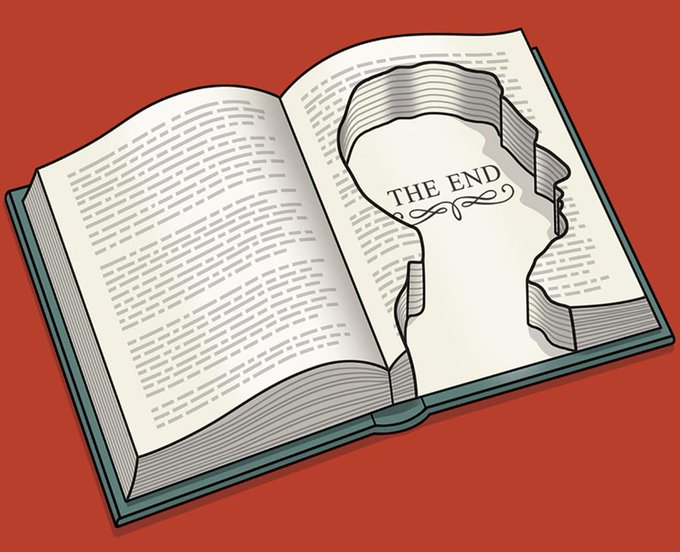 | |
Novels about middle class male malaise are now considered passé but they were once both groundbreaking and shocking
The Critic, July 2022
Last year, The Observer reported that male writers are increasingly absent from literary prize shortlists and fiction catalogues, while one publisher acknowledged that “if a really good novel by a male writer lands on my desk, I do genuinely say to myself, ‘This will be more difficult to publish.’” Others narrow the issue further. In 2020 The Times reported one publisher as saying it was “young white men” that were “really, really hard” to publish because “the culture doesn’t want to hear from them.” Earlier this year, Private Eye noted that white men were entirely absent not only from some major prize shortlists but also from the latest catalogues of several high-end literary fiction imprints. Men are not, of course, over — the last two Booker winners were white men, and they continue to recklessly publish new novels — but they are sharing the limelight now more than ever. In a world where fiction is as likely to be marketed on its author’s story as its characters’, we want to hear from other people. And maybe it’s not just readers, but literature itself, which has become exhausted by the same stories.
|
 | |
USA Today, July 15, 2022
Past research has suggested that at low levels of consumption, alcohol lowers the risk of death from all causes. However, the Global Burden of Diseases project, which tracks epidemiological levels and trends worldwide, previously found that any level of alcohol consumption increased the risk of death. That led the researchers to continue the study of alcohol's effects on health. They found that for people ages 15–39, there is no health benefit to drinking booze, only health risks, according to the study released Thursday. Males aged 15-39 risked health loss by drinking a little more than one-tenth of a standard drink, while women increased health risks by drinking about 1/4 of a standard drink, researchers said. About 6 in 10 (59%) people who consumed unsafe amounts of alcohol in 2020 were between the ages of 15 and 39 years. Nearly 77% of them were male.
|
 | |
Magic Valley, July 15, 2022
Non-Hispanic White men are disproportionately affected by late-stage human papillomavirus (HPV)-related oropharyngeal cancer (OPC), but cancer-specific mortality (CSM) is elevated among Hispanic and non-Hispanic Black men, according to a study published online July 1 in the Annals of Cancer Epidemiology. The researchers found that 84.2 percent of the 162,183 HPV-related OPCs were in non-Hispanic White men; from 2005 to 2016, there was a 50 percent increase in late-stage cancer incidence among White men. Hispanic and non-Hispanic Black men had similar odds of late-stage diagnosis as White men, but they had higher CSM (adjusted hazard ratios, 1.17 and 1.79, respectively). The higher mortality among Hispanic and Black men was attenuated, but not eliminated, after adjustment for treatment.
|
 | |
GW Hatchet, July 15, 2022
Black masculinity, fatherhood and joy are on full display at the Corcoran Gallery of Art, where still images capture the deeply personal and often misperceived themes of their manhood as seen through the lens of Black photographers. Framing Fatherhood launched at the gallery last month, featuring 75 shots from 14 of the most renowned Black photographers in the country to chronicle intimate moments between fathers and their sons in settings like the pews of a church or the seats of the dinner table. Dr. Imani Cheers, an associate professor of media and public affairs who curated the exhibit, drew on the intersection of race, gender, and family structures to illuminate Black males in a light that a more white-washed mainstream media often neglects. “The basics of boyhood and messages for manhood is an interdisciplinary project that explores the ways in which Black masculinity is celebrated, is represented on, not only through social media but in particular in mass media all around us, the images, names, the things that we see.” Cheers said in a recorded interview played at the exhibit.
|
|
DO YOU ENJOY READING
THE WEEKLY NEWS ROUNDUP?
If so, please consider a contribution to support its publication. All donations are tax deductible. Click on the button below.
| |
DENNIS J. BARBOUR, JD
Editor
|
ABOUT
The Weekly News Roundup is produced by The Partnership for Male Youth and is released every Monday.
For more information contact Dennis J. Barbour, JD.
|
|