6. Keep a journal.
Translating thoughts and feelings into written words offers a host of benefits that support mental health. Writing about what you’re grateful for is a particular powerful intervention. Keeping a gratitude journal can help teens focus on the things they appreciate about winter.
7. Use food as medicine.
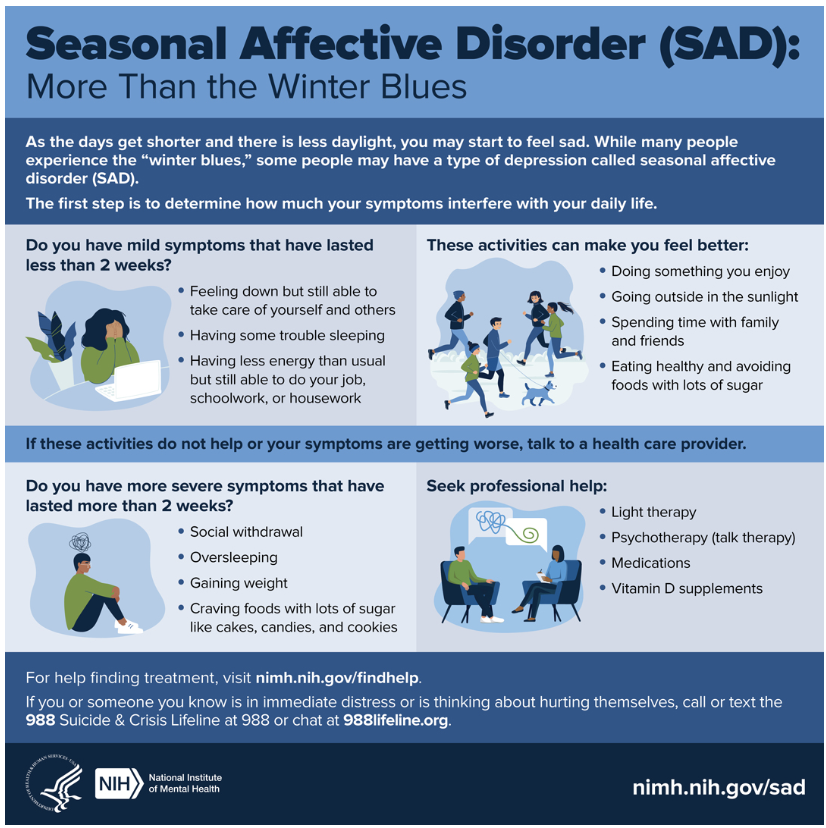
Food can be a powerful vehicle for healing. Nutrients such as omega-3 fatty acids, folic acid, and vitamin D have been shown to help fight symptoms of depression. Additionally, try minimizing the family’s sugar intake, since sugar and sugar additives have been linked to depression in numerous studies.
8. Get out of town.
If you’re able, schedule a vacation for the family in a sunny and warm location. If you can’t go that far, plan a getaway to a place you’ve never been before, even if it’s only a few hours away. Seeing new things can help jog your teen out of their usual routine and give them more energy.
9. Bring light into your family’s life.
Even when you’re staying warm indoors, take in as much light as you can. Open the curtains and blinds, and move chairs closer to bright windows to encourage sitting in the sunshine. Remind teens to open their window shades and consider purchasing a light box for their room.
10. Remind your teen that spring will return.
Remembering that it’s temporary can help ease the winter blues. However, SAD is more than just the winter blues. Therefore, don’t hesitate to reach out for help for your teen. With the support of a compassionate mental health professional, they can start feeling better during the cold season and in every season.
|