|
13 June 2024 — Memories from the Pages of Classic Issues of Sea History: the Topsail Schooner Californian
Every so often I like to peruse back issues of Sea History. It’s a little like time travel, reading what leaders in the maritime heritage community were thinking and talking and arguing about in decades past. It’s also a lot like leafing through a family scrapbook, full of milestones, memories, birth announcements and baby pictures. While leafing through Sea History 38 (Winter 1985/86) recently, I came across a “baby picture” of sorts—“Californian’s First Year.” In this article, Christine Parker Smith, wife of the topsail schooner Californian’s designer, Melbourne Smith, caught us up with what was, at the time, one of the youngest ships in our historic and replica ship fleet:
This visit to Hawaii [competing in the 1985 San Diego-to-Maui Race sponsored by the Ancient Mariners Sailing Society of San Diego and the Lahaina Yacht Club of Maui] marked the end of an eventful first year of operation for Californian and her owners, the Nautical Heritage Society at Dana Point. The vessel had logged over 12,000 nautical miles and carried more than 200 cadets on seventeen cruises, normally of eleven days duration each. Cruises have ranged coastwise from San Diego to San Francisco Bay and up the Delta to Sacramento. Much of cadet sailing time has been spent among the Channel Islands off Santa Barbara. On a typical eleven-day cruise the cadets, who range in age from sixteen to twenty-one are instructed in marine science, coastal navigation and the history of California as well as the study of wind and weather. They must stand watch and help the crew with all aspects of ship handling. On one day of a weekend, the vessel is in port and cadets are expected to help with a dockside reception or day charter.
The schooner had had an auspicious start. In June 1983 the California state assembly passed a resolution saluting the planned “full-scale recreation of the 1849 vintage Revenue Cutter Lawrence,” which would “restore to our shores the grace, beauty, and indomitable spirit of the single coast guard cutter that maintained law and order during the frenzy of the Gold Rush” and serve as the state’s “official tallship ambassador.” Her keel was laid just a few weeks later, on the Fourth of July, at Spanish Landing in San Diego Bay.
|
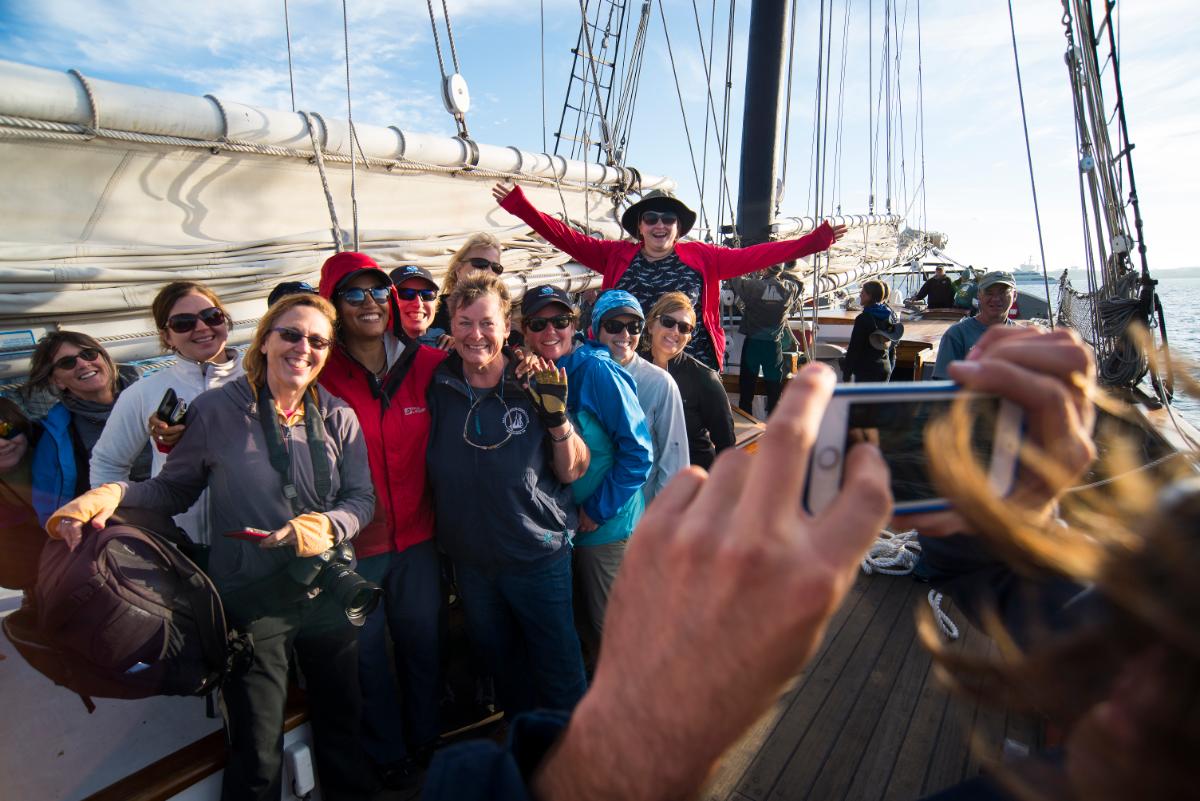
 | Sea education aboard Californian. Photo: Ted Walton | One of the main design inspirations for Californian was the US Revenue Cutter C. W. Lawrence. Melbourne Smith was able to reference her ship’s logs, as well as the plans for one of her sister ships for her design. Launched in August 1848 at the William Easby shipyard in Washington, DC, Lawrence was sent to serve on the California coast. By the time she had made the long and difficult passage, the discovery of gold in California had added to the challenges facing the ship’s captain, Alexander Fraser. However, the brig-rigged Lawrence wasn’t the only influence on Californian’s design. She is rigged as a topsail schooner and also bears some resemblance to the revenue cutter Campbell (renamed the Joe Lane in 1855, when a new cutter was given the name of Campbell), a topsail schooner built in 1849 by Graves & Ferrebee of Portsmouth, Virginia. She was also cited as the design inspiration for the sail training schooner Shenandoah. | |
NOAA Educators aboard Californian. Photo: Ryan Hawk | Constructed to be the flagship for the non-profit Nautical Heritage Society at Dana Point, Californian was launched in May of 1984, with the mission of “providing at-sea education programs for elementary, high school, college students and adults… to build confidence, teamwork, and foster an awareness for the marine environment and its importance to our quality of life.” Her first year is chronicled briefly in that Sea History article: taking sail training cadets on 11-day cruises along the California coast, and also participating in events like the San Diego to Maui Race, and carrying and presenting to Hawaii's governor a special replica pistol commemorating a gift to King Kamehameha III, originally presented by Lawrence’s captain in 1851. | |
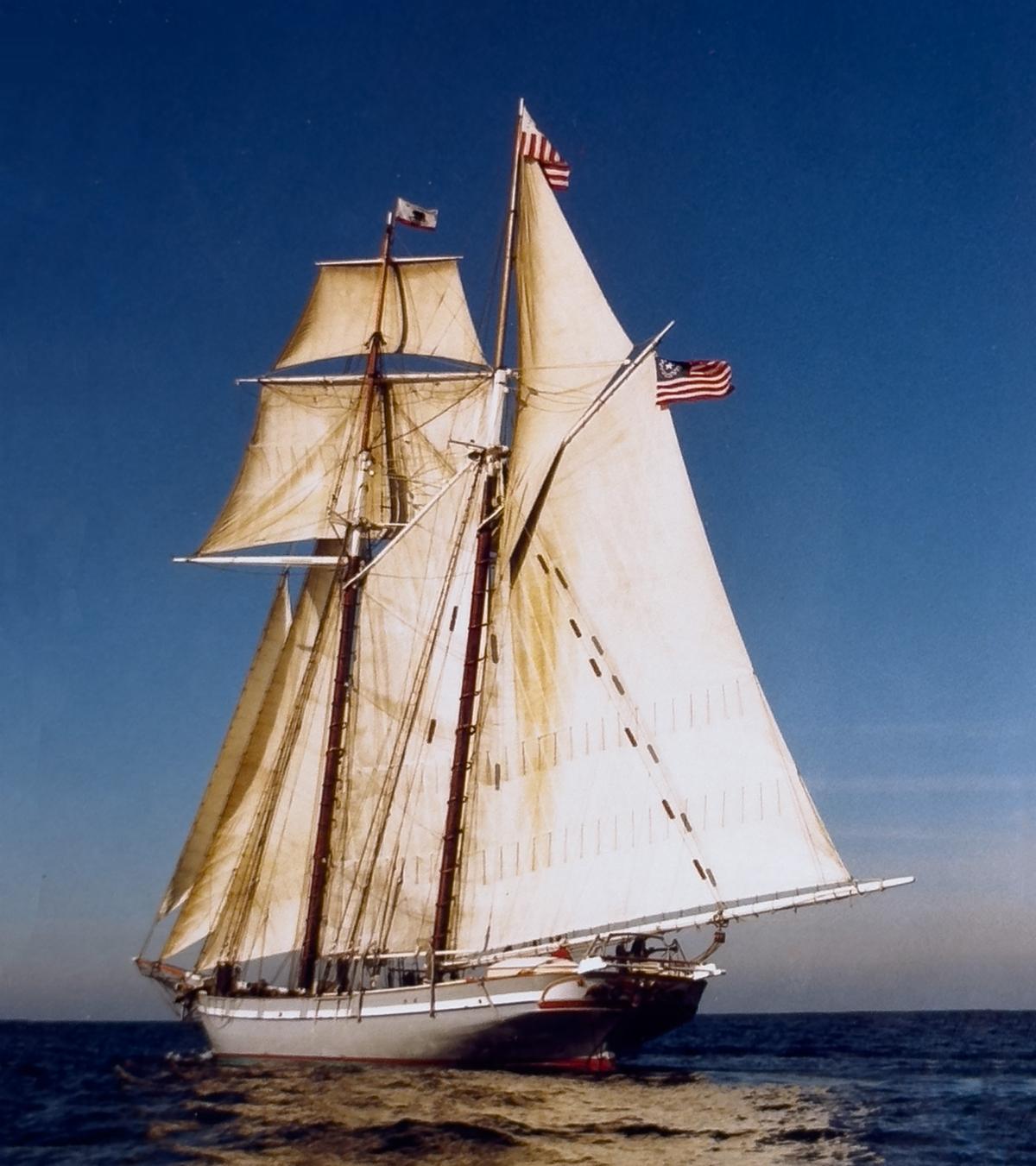
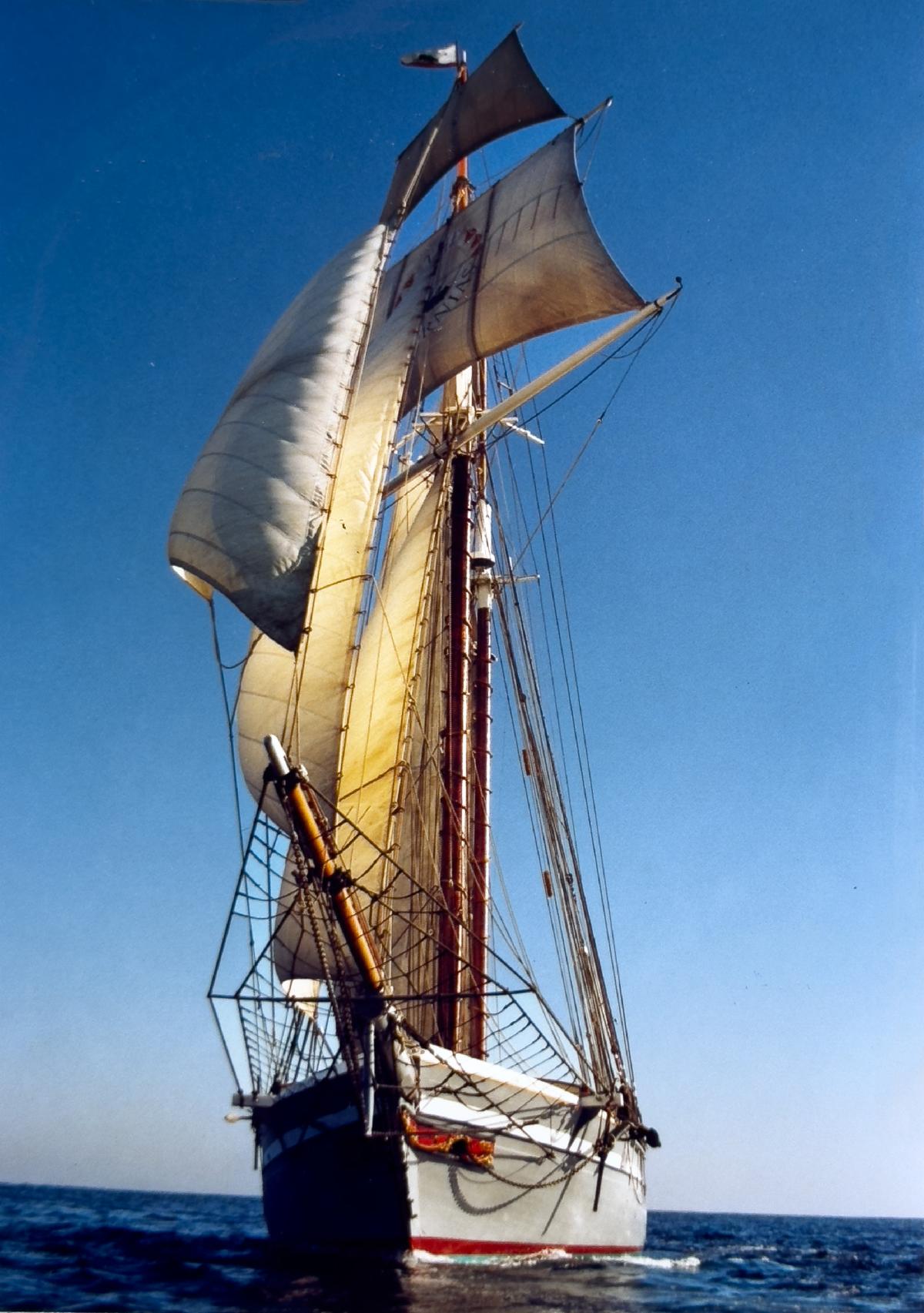
Californian during her years as the flagship of the Nautical Heritage Society. Photos: Brian Andrews | |
Californian would sail for the Nautical Heritage Society for eighteen years, journeying 500,000 miles and providing educational trips for around 80,000 young people. As sailing ambassador for the state she visited ports in New York, Boston, Maine, Hawaii, Canada, and Mexico, and she appeared at events such as the 1984 summer Olympic games, OpSail 86 in New York City, the California sesquicentennial celebration, and Tall Ships Challenge California. Keen observers will catch Californian in the 1997 film Amistad, as well as several documentaries. | |
Californian underway. The model for the figurehead was actress Catherine Bach, best known for her role in the tv show The Dukes of Hazzard. Photo: George Adkins | |
In 2002 funding challenges forced the Nautical Heritage Society to sell its beloved schooner. Thanks to a gift from the Hughes and Sheila Potiker Family Foundation of San Diego, the Maritime Museum of San Diego was able to purchase her. The museum secured a $300,000 grant to cover a significant portion of the estimated $400,000 cost of restoration of Californian, including an overhaul of the plumbing, electrical, and mechanical systems, painting, and a new set of sails. To recognize Californian’s new home, the state passed Assembly Bill No. 965, signed by Governor Arnold Schwarzenegger, declaring her “the official state tall ship.” | |
Photo courtesy Deirdre O’Regan | | | | |