|
2 November 2023 — NS Savannah: One of a Kind
The United States Maritime Administration (MARAD) posted this week its official notice of vessel availability and request for information (NOA and RFI), for Nuclear Ship (NS) Savannah, the pioneering nuclear passenger/cargo flagship of Dwight D. Eisenhower’s Atoms for Peace program, outlined in a 1953 in a speech to the UN as a proposed shift in the focus of nuclear development from military uses to powering civilian endeavors, particularly in what he described as “power-starved areas” of the world. MARAD will be decommissioning the ship’s nuclear power plant, which will result in the termination of the ship’s Nuclear Regulatory Commission (NRC) license, making her eligible for new oversight or ownership. The NOA and RFI are intended “to determine preservation interest from entities that may wish to acquire [Savannah];” the feedback it receives will inform the decision-making process in determining her fate.
The important dates you need to know:
11 Nov. 2023 Deadline to RSVP for a site visit to the vessel
18 Nov. 2023 Informational meeting where MARAD will address questions
17 Dec. 2023 Site visit opportunities
16 Feb. 2024 Deadline for responses to the RFI
As you might expect, given the complexities of repurposing a ship overseen by multiple agencies, there is a lot of reading involved to consider and prepare a submission responding to this post—find your reading glasses and sit in your comfiest chair.
|
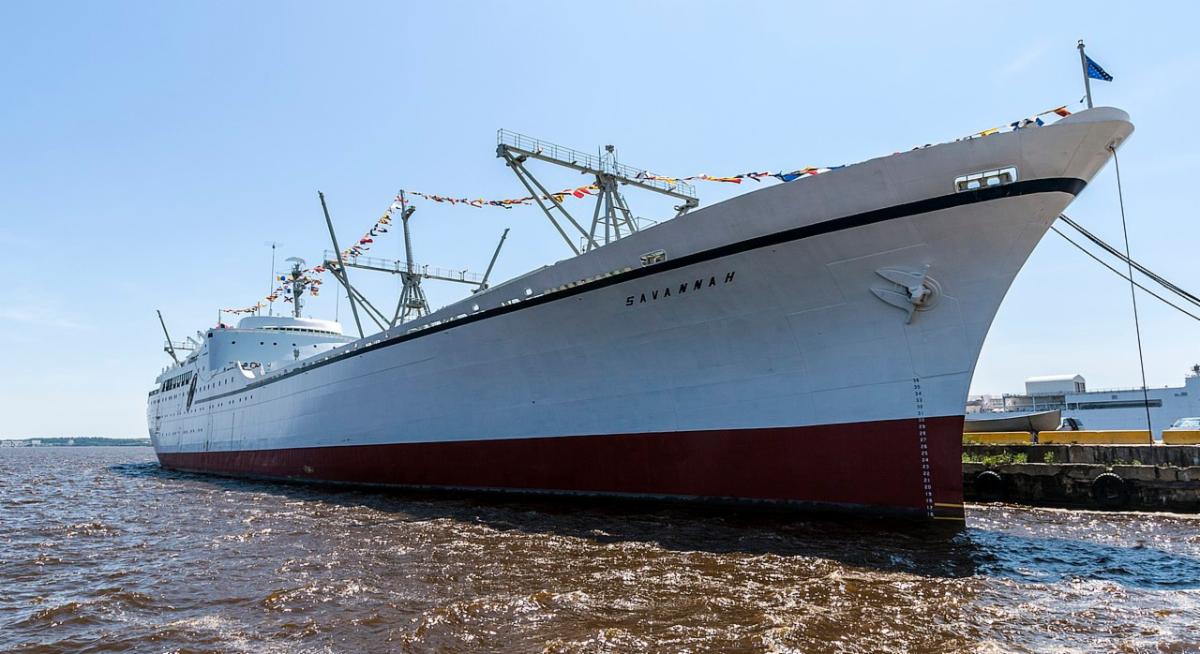 | Some historians have called her “the prettiest cargo ship ever built.” All photos: Acroterion via Wikimedia Commons. | The first nuclear passenger/cargo vessel was named for SS Savannah, the first steamship to make a trans-Atlantic voyage back in 1819. Savannah of 1818 was originally a sailing packet ship fitted out with an auxiliary 90 HP steam engine and paddlewheels. Carrying 75 tons of coal and 25 cords of wood for fuel, she had very little room for cargo—and on her groundbreaking voyage she relied on sail to power much of the 4-week voyage from NYC to Liverpool to conserve fuel. Eventually her engine would be removed altogether and she would finish out her career under sail. Much as her namesake was more of a symbol and not a true commercial fully steam-powered vessel, NS Savannah was described by author Rowland F. Pocock as a “floating laboratory to study design, operation and manning of nuclear ships, not a vessel to ‘prove or disprove the economics’ of nuclear propulsion.” The design choices made to accommodate 30 posh passenger staterooms and amenities didn’t allow for a great deal of cargo space or the infrastructure to load and offload efficiently. The main focus of her sailing career was as a floating ambassador for the peaceful use of nuclear power. She traveled more than 450,000 miles, visiting 32 US ports and 45 ports in other countries, and receiving over 1.5 million visitors. |
|
The digital version of this 1964 half-hour documentary film about Savannah was released just this past summer. | |
Designed by George G. Sharp, Inc., Savannah was built by New York Shipbuilding Corporation in Camden, NJ; the main contractor for her power plant was Babcock & Wilcox Company. Her keel-laying ceremony, held on Maritime Day (22 May) 1958, was presided over by Pat Nixon, wife of the then-vice president Richard Nixon. She waved an “atomic wand” containing a minute amount of radioactive material, which triggered a Geiger counter. The clicking of the Geiger counter cued a crane operator to swing the first section of the keel into place. Savannah was christened 21 July 1959 by Mamie Eisenhower, to be followed by the installation of her reactor, further testing, and sea trials. Capt. Gaston DeGroote assumed command on 31 January 1962. and after further testing and sea trials she was brought to full power in April and accepted by MARAD on 1 May, 1962, to be delivered to operator States Marine Lines Inc. Savannah had her own tender, Atomic Servant, fitted with special nuclear-waste processing equipment and a pit for spent fuel elements. |
|
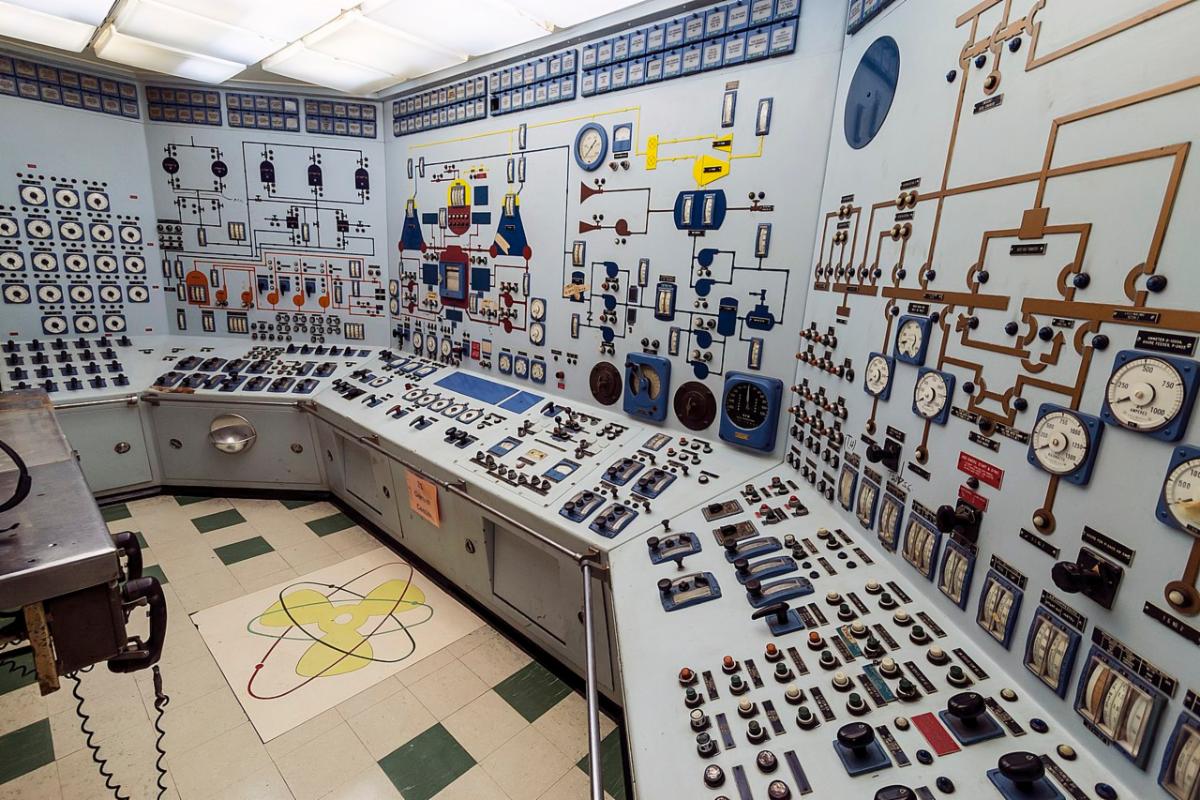
Holy moley, that's a lot of switches and dials! The first group of enrollees in training to serve at the controls of Savannah, 13 licensed marine engineers, took 31 weeks of instruction in math, physics, chemistry, and the fundamentals of nuclear technology, followed by 30 weeks of field training under the Atomic Energy Commission. | |
|
Reporting on one of those trial voyages for National Geographic magazine was none other than noted veteran seafarer and writer Alan Villiers. He described the motion of the ship as “a sootless, exhaustless, practically vibrationless peace, such as has not been known since steamships ousted sail.” His final thoughts on the voyage:
I thought of the infinite endeavor that had gone into all brave seafaring, the hardness of the sailor’s lot of long ago, the human cost as man stumbled, sailed, rowed, and fought by Herculean efforts to achieve at last the peace and ease of this nuclear merchantman of 1962. From the dreadful servitude of oars and the uncertainties of sail to smooth and infinite power from a handful of nuclear elements—here was progress dramatized.
| |
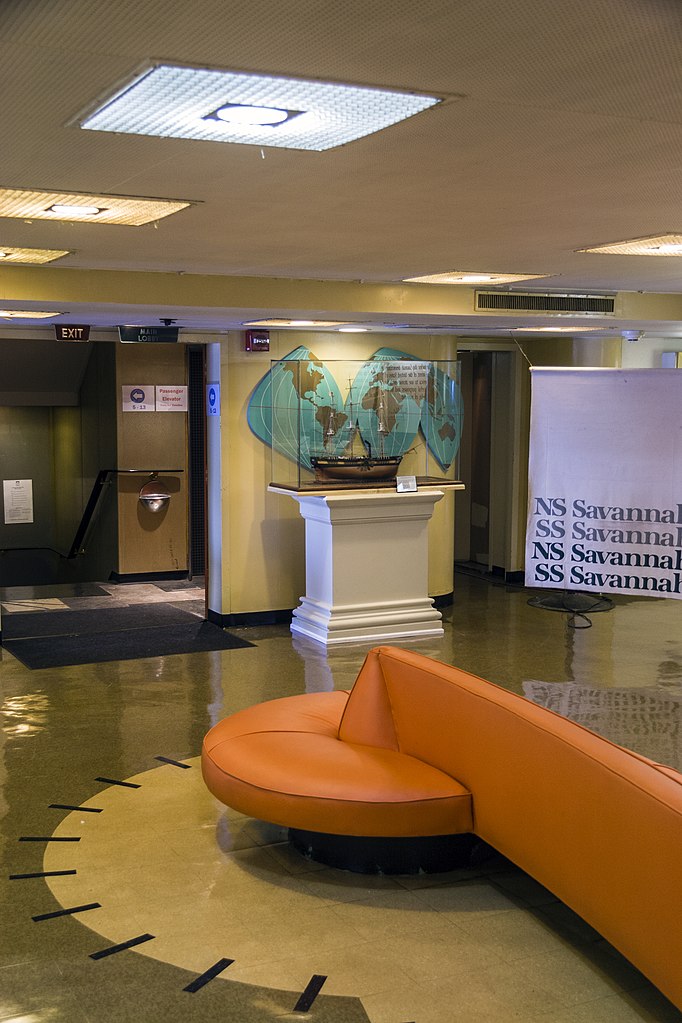
Visitors to the common space were greeted by a golden model of the auxiliary steam ship Savannah, the first steam-powered ship to cross the Atlantic. | |
|
Savannah operated in public relations mode for those first few years, including a stint at the 1962 World’s Fair, and port visits in the US and around the world. In 1965 her passenger spaces were sealed, and 1,800 tons of ballast were removed so that she could carry cargo for First Atomic Ship Transport, Inc. (FAST), a subsidiary of American Export-Isbrandtsen Lines, which leased her for three years at the bargain price of one dollar per year and free fuel, in return for continuing to operate the ship as a demonstration vessel. By 1970, though, government priorities had changed and it was decided not to go forward with the development of a nuclear merchantman. Savannah was deactivated in 1971. She was first given to the city of Savannah, but plans for an Eisenhower Peace Memorial, his “floating ambassador,” never came together. The ship was then shifted to Patriots Point Naval and Maritime Museum in South Carolina, and she was added to the National Register of Historic Places in 1982. She can be found in Baltimore Harbor today.
Is there a soft spot in your heart for “The Ship that Totally Failed to Change the World” (you can thank the BBC for that one), or would your organization be a good fit for adapting this one-of-a-kind wonder for a museum, conveyance, or venue? Then set aside some time for perusing the legal and technical particulars, and respond to the good folks at MARAD by 16 February. They’re looking forward to hearing from you.
Extra Credit
Nuclear Ship Savannah Public Information Meeting, 9 July 2008
Virtual Tour of NS Savannah
Sea History Today is written by Shelley Reid, NMHS senior staff writer. Past issues can be read online by clicking here.
| | | | |