|
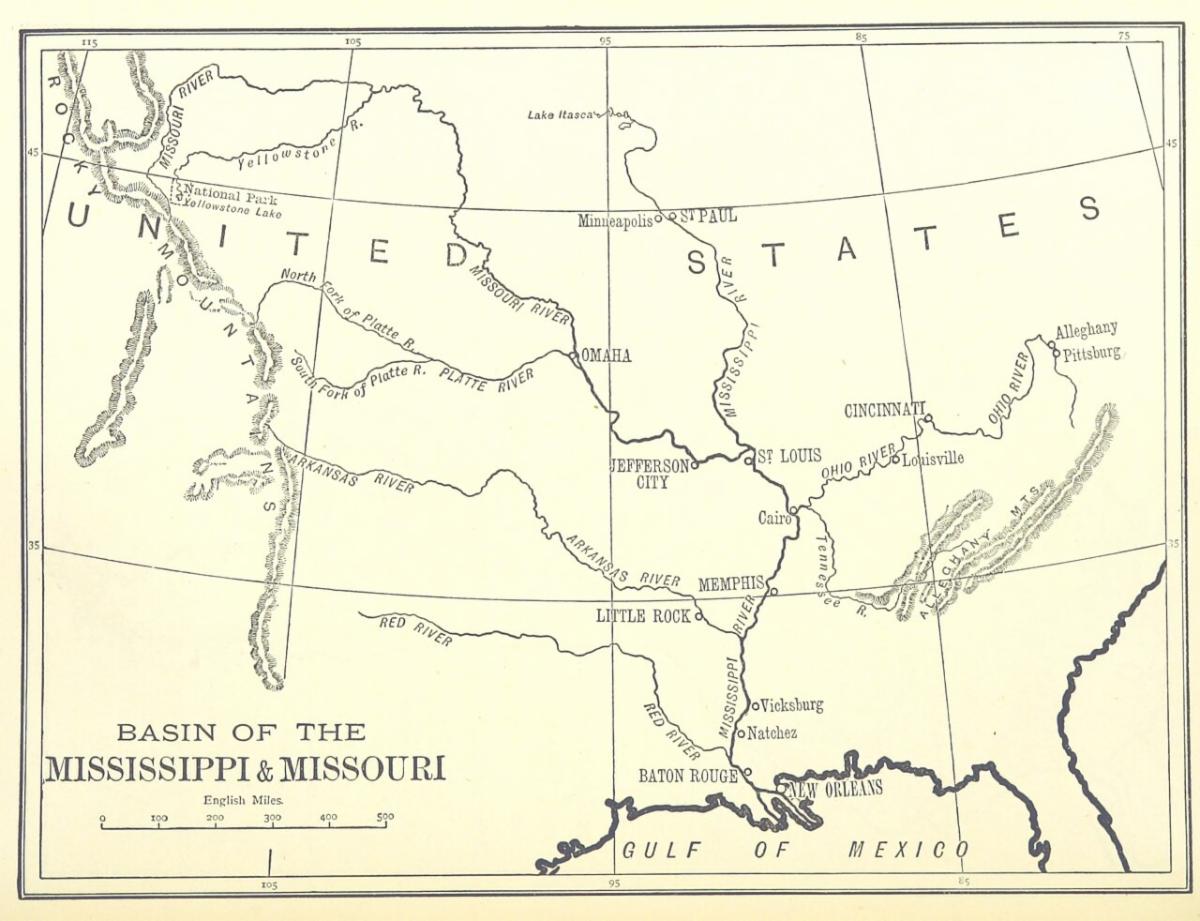
Meanwhile, the West was calling innovators in transportation. In 1803 Robert Livingston and James Monroe negotiated the Louisiana Purchase, predominantly to gain American control over the port of New Orleans; the move also had essentially doubled the size of the United States. Prior to the railways and a passable road network, the Mississippi River system was the best way to move goods and people, and New Orleans was the crucial gateway to traffic into and out of the region. In his 1880 history of Mississippi, one-term Congressman, newspaperman and historian John Francis Hamtramck Claiborne summed up the options for transporting cargo along this vital artery:
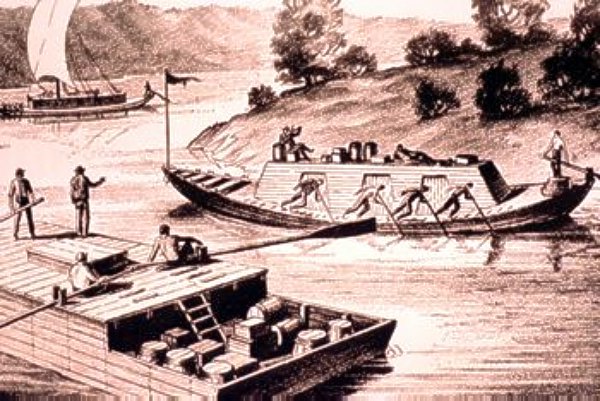
The keel-boat was long and slender, sharp fore and aft, with a narrow gangway just within the gunwale, for the boatmen as they poled or warped up the stream, when not aided by the eddies that made their oars available. When the keel-boat was covered with a low house, lengthwise, between the gangways, it was dignified with the name of “barge.” The only claim of the flat-boat, or “broad-horn;” to rank as a vessel was due to the fact that it floated upon water and was used as a, vehicle for transportation. Keel-boats, barges, and flat-boats had prodigious steering oars, and oars of the same dimensions were hung on fixed pivots on the sides of the last named, by which the shapeless and cumbrous contrivance was, in some sort, managed. Ignorant of anything better, the people of the west were satisfied with these appliances of trade in 1810.
|