|
|
|
|
|
|
|
|
The SFC wishes you and your family all the best this winter and through the holidays! Whether you're traveling, spending time with family, or getting winter chores and projects done, we hope you will stay safe and warm. Please note that the SFC office will be closed from Dec 22 through Jan 2.
The final eNews for 2017 will bring you up to date on Saskatchewan's forage news and 2018 events. This month we feature articles on a major funding announcement, winter grazing, Saskatchewan researchers and more.
If you have topics you'd like to have us share in our monthly eNews or on our website, get in touch with us. We'd love to hear from you! Follow us on
Facebook or Twitter
@saskforage to keep up to date on news and events.
Please fe
el free
to forward the eNews on to
others you think may be interested
i
n fora
ge and livestock industry updates -signing up is as
easy
as clicking the 'Join Our Mailing List!' on the left.
Your Forage and Livestock eNews
Editor,
|
|
|
|
A&W advances the U of S global leadership in beef and forage research
|
News release, December 1, 2017
SASKATOON - A&W has made a substantial investment in the Canadian beef industry with a $5-million donation toward the University of Saskatchewan's (U of S) Livestock and Forage Centre of Excellence (LFCE).
The unique centre will foster innovative research, training and outreach to meet the needs of both livestock producers and consumers in Canada, while also helping to sustainably produce food for a growing world population.
The donation will be used to fund the construction of the Livestock and Food Building at the LFCE site near Clavet ($3 million), create a community outreach and engagement program ($1 million), and establish a visiting fellowship in One Health research ($1 million). The new building will be completed in the spring of 2018.
Read more
Top of Page
|
Saskatchewan Forage Council welcomes new researchers
|
By: Michele Simili da Silva, PhD; SFC- WBDC Post-Doctoral Fellow
The 2017 Saskatchewan Advisory Council on Forage Crops (SACFC) meeting was held on November 6th in Saskatoon, SK. This year's meeting provided an overview from Agriculture and Agri-Food Canada (AAFC), Saskatchewan Ministry of Agriculture, Agriculture Research Branch, Beef Cattle Research Council (BCRC), Saskatchewan Forage Network, Saskatchewan Cattlemen's Association (SCA), and the University of Saskatchewan (U of S) on research being conducted, funding program opportunities and investments in forage across Canada over the past few years. An update on the new Livestock and Forage Centre of Excellence (LFCE) was also provided by Dr. Mary Buhr, Dean, College of Agriculture and Bioresources, University of Saskatchewan.
The SACFC meets annually with the mission of uniting representatives from government, industry, producer groups and researchers to share information and to identify and address issues of concern regarding forage production and utilization. It is also an opportunity to introduce new members and discover new research. In this spirit, Saskatchewan Forage Council (SFC) is pleased to welcome researchers Dr. Jillian Bainard, Dr. Jon Bennett, and Dr. Sean Prager and the Post-Doctoral fellow Dr. Michele Simili da Silva.
Dr. Jillian Bainard is a research scientist with AAFC at the Swift Current Research and Development Centre (SCRDC). As a Forage Ecophysiologist, Jillian's research involves studying forage crops and the interface between plants and their environment. She works with forage breeders, ecologists, and animal scientists to develop forages that are beneficial nutritionally, environmentally, and economically. Jillian completed her Ph.D. in Botany at the University of Guelph in 2011, followed by a postdoc at SCRDC where she studied the use of annual forage polycultures.
Dr. Sean Prager is an Entomology Assistant Professor in the Plant Sciences Department of the U of S. Dr. Prager's forage related research is primarily focused on clover and other forage seed crops with interest on how to balance pollination services, especially from native pollinators with management of insect pests such as lesser clover leaf weevils. Sean has a Ph.D. in Biological Sciences (Ecology and Evolution) from Brock University in Ontario and postdocs at USDA-ARS and at Texas A&M University.
Dr. Jon Bennett is a Rangeland Ecologist recently hired by the U of S, Plant Sciences Department. Jon's research focuses on understanding the processes that structure grasslands and using that understanding to predict how they will respond to changes in the environment, with an emphasis on invasion. He has earned a Ph.D. from the University of Alberta, where he studied the factors regulating plant communities in fescue grassland and fellowships at the University of British Columbia and the University of Tartu in Estonia.
Dr. Michele Simili da Silva is a Mitacs Post-Doctoral Fellow in the Department of Animal and Poultry Science at the U of S in partnership with SFC and the Western Beef Development Centre (WBDC), under the supervision of Dr. Bart Lardner. Michele is an Animal Scientist from Brazil with a Master's and Ph.D. in Forage Crops and Pasture. The majority of her studies have been concentrated on analysis and characterization of the effects of species, varieties, mixtures, management and utilization on production and nutritive value of forages. Currently, she is involved in projects focused on the improvement of forage performance on the Canadian Prairies.
Top of Page
|
|
Soil Health in a New Climate
|
The Saskatchewan Soil Conservation Association's 30th Annual Conference promises an exciting lineup of speakers! Start the New Year by learning something new about soil health and climate change. Get energized with new knowledge and ideas about actions you can take.
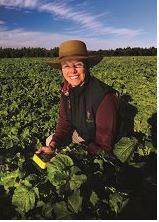
The Conference's keynote speaker is Jill Clapperton, PhD, Chief Scientist of Rhizoterra Inc, in Spokane, Washington. Jill is a well-known researcher, international lecturer and advocate for p
 |
|
|
Jill Clapperton, PhD., Rhizoterra Inc. |
ractices that promote soil health. The keynote address topic is The Rulers of Underground and
How They Plan to Take Over the World: Plants, soils and the soil biota are the Rulers of the Underground. The dynamic interactions between these founding partners determine the basis for mineral nutrient dense food, clean water, purified air, and the wellness of our World. This presentation will give an overview of life in the soil and how farmers can work with this life to improve the health o
f soils, plants and consumers.
Other speakers include geography, soil science, cropping systems and plant science researchers and professors, a farming systems producer panel and much more! Plan to attend the Conference on January 8th during Crop Production Week in Saskatoon and register before January 3rd to save on registration fees!
To learn move, visit the SSCA website http://ssca.ca/conference. Download the registration form at http://ssca.ca/images/pdf/2018_conference_pdf/Conference_2018_-_Registration_Form.pdf
|
|
Transition Planning Workshop for Farm Families
|
January 11, 2018
8:00am-4:30pm Hilton Garden Inn, 90 22 St E, Saskatoon, SK
Is your family farm in a state of transition? Are you looking to start the succession conversation?
Yes?! The Farm Management Canada's new Bridging the Gap Workshop is for you!
The Bridging the Gap Workshop welcomes farm families to work with renowned farm family coach Elaine Froese and farm management consultant Cedric MacLeod to address some of the elephants in the room that are preventing or hindering succession planning back on the farm.
Registration closes January 5th.
Register Here.
For more info visit:
https://fmc-gac.com/programs-services/btg/
|
|
CFGA's 8th annual conference a huge success
|
By: Trudy Kelly Forsythe, Canadian Forage and Grassland Association
The Canadian Forage and Grassland Association (CFGA), in conjunction with the Ontario Forage Council, held its 8th annual conference in Guelph, Ont., Nov. 14 to 16. This year's theme was Next Generation Forage Cropping Systems: Profit Above, Wealth Below to recognize the important role forage and grasslands play in providing both economic and environmental benefits to Canadians from coast to coast.
The conference included a pre-conference tour, an exhibition of businesses and organizations related to forages and grasslands, a full line-up of speakers on such topics as soil carbon storage, forage exports, soil health enhancement and profitable forage systems and virtual farm tours featuring innovative producers across the country.
Leadership award winner
A highlight of the conference was the CFGA awards luncheon when the CFGA announced the winner of its New Holland-sponsored Leadership Award. This year's winner is Bill Thomas from Truro, Nova Scotia. Well-known as a tireless advocate, educator and leader in the Atlantic forage sector, Thomas has 30 years of extension service in Nova Scotia specializing in forage crops and livestock production, adaptive research and leadership working directly with agricultural commodity groups, farmer clients and the public.
The CFGA Leadership Award was established in 2012 to recognize and encourage leadership in the forage and grassland sector. It recognizes individuals, groups or organizations who exemplify or enhance the goals of the CFGA and whose leadership has impact of national and/or international significance.
AGGP update
This year's conference also brought together leading forage and grassland experts from across Canada and North America for a day and a half of technical workshops. Along with presentations related to high performance forages, stakeholders and leading researchers from universities and Agriculture and Agri-Food Canada discussed best management practices and provided a science review on high performance forage and grassland management systems in Canada.
These presentations and workshops were the latest activities for the CFGA's High Performance Management Systems to Reduce Greenhouse Gases in Canada's Forage and Grasslands research and development project that falls under Canada's $27 million, five-year Agricultural Greenhouse Gases Program (AGGP).
More info
Top of Page
|
|
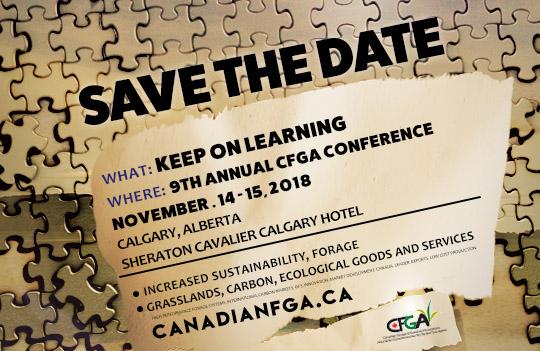
2018 CFGA Conference - Calgary, AB, November 2018
|
|
|
Forage Seed Information Session - during crop week in Saskatoon - January 11, 2018
|
Saskatchewan Forage Seed Development Commission (SFSDC)
By: Ray McVicar, executive director
Crop Week and the Crop Production Show 2018 will be held during the week of January 8 to 12, 2018 in Saskatoon. To make it convenient for growers and industry members to attend, the Forage Seed Information Session and SFSDC AGM will be held on Thursday January 11, 2018 from 1 PM to 5:00 PM at the Radisson Hotel Saskatoon, 405-20th St. East. Admission is free and refreshments will be available.
We have a great lineup of speakers:
|
|
|
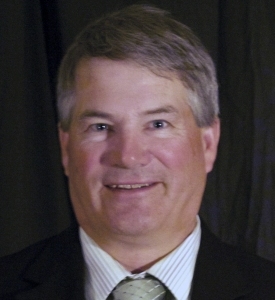
Dave Grafstrom, University of Minnesota |
- Dave Grafstrom, Northland College, University of Minnesota, Roseau, MN will talk on will talk on Managing for Top Seed Yields in Forage Grasses including using growing degree days to pinpoint pest outbreaks, plant growth regulators and fertility, fungicides and using aerial drones in agriculture research;;
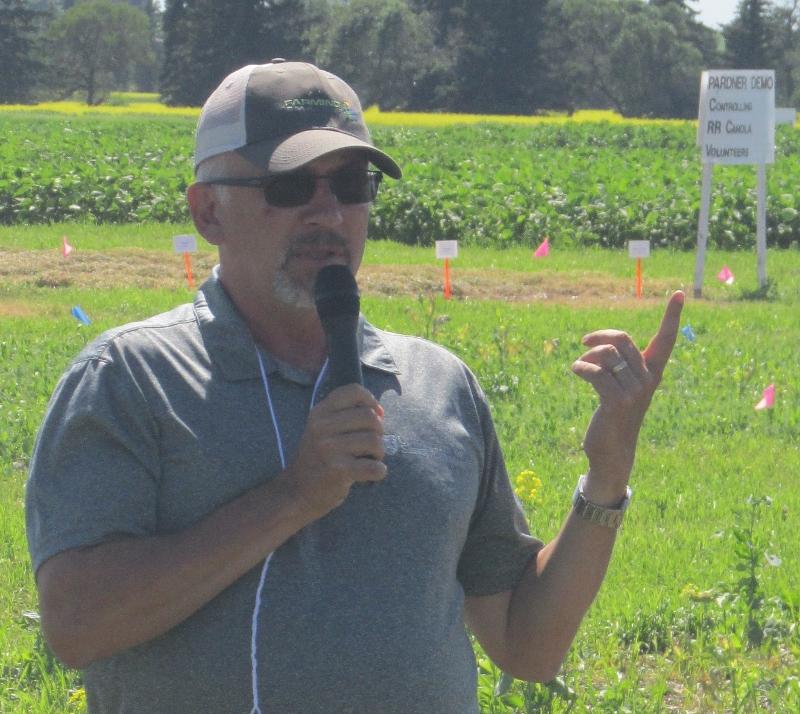
- Eric Johnson, Weed Management Program, University of Saskatchewan, will discuss their herbicide tolerance and plant growth regulator research on forage seed crops at Saskatoon;
- Jessica Pratchler, Northeast Agriculture Research Foundation, Melfort, SK will review their research on weed and insect control and plant growth regulators;
- Stu Brandt, Northeast Agriculture Research Foundation, Melfort, SK will discuss their alternate row, rotational crop and companion crop research using forage seed crops;
- Mike Scheffel, Canadian Seed Growers Association, Ottawa, ON will provide an update on forage seed inspections, isolation borders, volunteer species and other topics on the growing pedigreed forage seed; and
- Terry Kowalchuk, Provincial Forage Crop Specialist, Saskatchewan Agriculture, will review and update the forage seed market.
The SFSDC Annual General Meeting will be held to review SFSDC activities and financial statements and provide growers and industry members the opportunity for input into future programs.
For more informati
|
|
|
| Eric Johnson, University of Saskatchewan |
|
on, please visit our website at
The Alfalfa Seed and Leafcutter Bee Conference will be held in the evening of Thursday January 11, 2018 and Friday January 12, 2018 at the Radisson Hotel Saskatoon.
Bring your friends to the Crop Production Show and attend the SFSDC Forage Seed Information Session and the Leafcutters Conference!!
|
|
2018 Sask Alfalfa Seed and Leafcutter Bee Conference
|
January 11-12, 2018
Radisson Hotel, Saskatoon, SK
Trade-show displays will be set up during the afternoon of Thursday, January 11th, 2018. The 2018 Conference will begin at 7:00 p.m. with the wine and cheese reception and the opening of the registration table. The conference will continue on Friday, January 12th, with a full day of presentations, the SLA 46th Annual Business Meeting and the SASPDC 21st Annual Business Meeting.
Conference information will include updates on parasite control research, sainfoin pollination, alfalfa breeding research, disease monitoring, round table discussions and much more.
|
|
Canadian Bison Association 34th Annual Convention - Centuries of Bison - 150 Years as a Country
|
By: Terry Kremeniuk, Canadian Bison Association Executive Director
About 310 people participated in the different events of the 34th Canadian Bison Association Annual Convention at the Delta Regina on November 19th and 20th, 2017. The theme of the convention "Centuries of Bison - 150 Years as a Country" was in recognition of Canada's 150th birthday while acknowledging that bison have been on the Canadian landscape for centuries. Each person who attended the banquet and awards ceremony received a bison pin inscribed with "150".
In addition to the convention attendees there were 22 participants in the Childrens' Program and 14 young people involved in the Junior Judging Program.
Keynote speaker Gabe Brown from Bismarck North Dakota kept producers glued to their seats for almost three hours as he shared his experiences in improving soil health through regeneration of resources. He shared with the group their ranch's strategies of holistically integrating their grazing and no-till cropping systems which include a wide variety of cash crops, multispecies cover crops combined with all natural grass finished beef and sheep. The Browns also believe that healthy soil leads to healthy plants, animals and people. In sharing the strategies that they use on their farm, Gabe emphasized that the strategies work for them and that producers may have to modify some of the ideas shared to be effective for their own operations. Thank you to the Saskatchewan Forage Council and the Saskatchewan Bison Association for working together to bring Gabe Brown to the CBA convention as keynote speaker.
Read the full article
here.
Top of Page
|
|
Three tips for swath and bale grazing
|
By: Beef Cattle Research Council, reprinted from Alberta Farmer Express
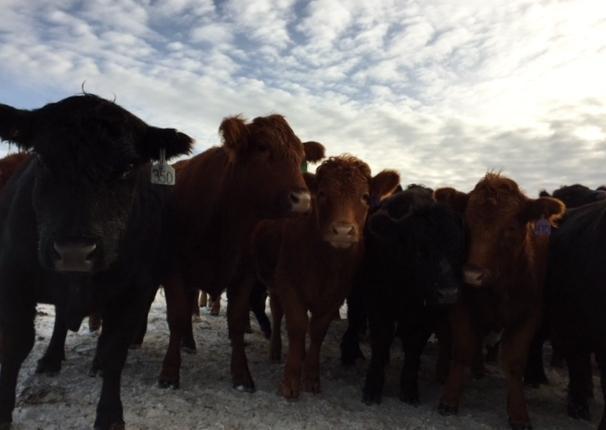
Match your cows and your feed, leave a 'snowshoe' if mud is an issue, and make those swaths wide and high.
If you're planning to swath or bale graze cattle this winter, here are three pieces of advice from Agriculture Canada research scientists Vern Baron in Lacombe and John Duynisveld in Nappan, N.S.
Match animal and forage
Successful extended grazing matches the energy requirements of the cow with the true quality of the forage and/or supplement being offered. Knowing the quality of the feed, by reviewing the results after sending samples to a lab for feed analysis, is the first and critical step to a successful winter grazing program.
It takes 20 per cent more energy on average for cows in an extended grazing system than in a drylot system because of the extra energy they use to search for feed and to stay warm. This means cows must be in good condition to be able to face the demands of winter grazing.
Leave some biomass on the field
Be prepared for whatever Mother Nature will throw at you so harsh weather doesn't result in cows losing body condition (and having more calving difficulties, lower calf birth weights, and a longer postpartum interval). One tip is to ensure cows have proper lice control to keep their hair coat healthy and full all winter.
During extreme cold patches, make sure they have enough high-energy feed. This may mean moving fences a little earlier and not making cattle 'clean up' swaths to the same extent you would expect during milder temperatures. Good access to natural or man-made windbreaks is especially important when temperatures drop or winds pick up.
Leave big swaths
Leaving some biomass in the field improves soil organic matter, but generally speaking, the more crop that cattle utilize, the more efficient the extended grazing system.
Overall utilization in extended grazing systems is relatively high - both Baron and Duynisveld have found utilization rates of 65 to 90 per cent in their research trials, with utilization declining in deep snow.
To increase utilization when swath grazing, build large swaths around three to four feet wide and 18 inches high. These big swaths are easier for cows to access even with snow cover. Choosing a type of crop and variety that is higher yielding also helps to increase utilization.
Read the full article at
https://www.albertafarmexpress.ca/2017/11/02/here-are-three-tips-for-swath-and-bale-grazing-this-winter/
Top of Page
|
|
Saskatchewan Forage Council Featured Project...
|
"This guide is to be used as a tool to help identify invasive plant species in Saskatchewan. An
invasive plant species is a non-native plant that, because of its growth and reproductive characteristics, can adapt to one or more habitats very quickly and proliferate, expanding in range. An invasive plant species has a negative economic, ecological and/or aesthetic effect."
Funding for this project has been provided by Agriculture and Agri-Food Canada through the Canadian Agricultural Adaptation Program (CAAP). In Saskatchewan, this program is delivered by the Agriculture Council of Saskatchewan.
Download your free pdf copy of this guide on the SFC website, under the resources tab or
click here.
To view the Saskatchewan Forage Council's completed projects, click here.
|
|
Upcoming Events
|
________________________________________________________________________________
Western Canada Feedlot Management School
February 6-8, 2018
Regina, SK
Registration is now open for the 20th edition of Western Canada Feedlot Management School. Register early to ensure your spot in this workshop that will improve your cattle feeding savvy! This year's agenda includes some high profile speakers who will help you focus on a winning business strategy, hone your animal handling skills, and get up to date on animal health and nutrition. As always you will have plenty of time to network with others in the industry and make valuable business connections.
To view the agenda and registration form,
click here or visit the
Saskatchewan Cattle Feeders Association website.
_______________________________
_________________________________________________
SSCA 30th Annual Conference
January 8, 2018
Saskatoon, SK
2018 marks the Saskatchewan Soil Conservation Association's 30th Annual Conference! Keynote speaker is Jill Clapperton (PhD), Principal Scientist and Co-founder of Rhizoterra Inc. Jill is a well-known researcher, international lecturer and advocate for practices that promote soil health.
Conference details and registration information are posted at
www.ssca.ca.
_______________________________________________________________________________
Forage Seed Information Session
January 11, 2018
Saskatoon, SK
The annual Saskatchewan Forage Seed Development Commission's Forage Seed Information Session will be held in Saskatoon this year. By holding the session during the same week as Crop Production Show, we hope to make it convenient for growers and members to attend. The Information Session and SFSDC Annual General Meeting will be held on Thursday January 11, 2018 from 1 PM to 4:30 PM at the Radisson Hotel Saskatoon in the Davinci Ballroom - 2nd Floor.
For more information, please visit our website at
www.skforageseeddc.com or contact SFSDC at email
sfsdc05@gmail.com or phone (306) 789-1958.
________________________________________________________________________________
Transition Planning Workshop for Farm Families
January 11, 2018
Saskatoon, SK
Is your family farm getting ready for transition? Are you looking for help to start or continue the conversation? Yes? Then Farm Management Canada's Bridging the Gap Workshop is for you! The Bridging the Gap Workshop welcomes farm families to work with renowned farm family coach Elaine Froese and farm management consultant Cedric MacLeod to address some the elephants in the room that are preventing or hindering transition planning on the farm. Full day event takes place at the Hilton Garden Inn, Saskatoon. For more information and for tickets,
click here.
________________________________________________________________________________
Sask Alfalfa Seed and Alfalfa Leafcutter Bee Conference
January 11-12, 2018
Saskatoon, SK
The 2018 Saskatchewan Alfalfa Seed & Alfalfa Leafcutter Bee Conference, in conjunction with the SLA 46th and SASPDC 21st Annual Business meetings will be held on Thursday evening January 11th and Friday, January 12th, 2018 at the Radisson Hotel in Saskatoon.
For more information about the conference visit:
http://saspa.com/comingEvents.htm
________________________________________________________________________________
SSDB Symposium and AGM
January 12-13, 2018
Regina, SK
This annual event is an opportunity for networking and learning about the sheep and lamb industry. Keynote Speaker 2018 - Paula Menzies.
_________________________________________________________________________________
Dairy Info Day
January 25, 2018
Warman, SK
This annual event is an opportunity to learn about the developments in agriculture research as it relates to dairy.
Learn more at
saskmilk.ca or view the
schedule here.
________________________________________________________________________________
Native Prairie Restoration/Reclamation Workshop
February 7-8, 2018
Saskatoon, SK
Look to the future, learn from the past at the Saskatchewan Prairie Conservation Action Plan (SK PCAP) native prairie restoration and reclamation workshop. Topics include native prairie, climate change, soil remediation, species at risk, partnerships and more.
For registration and sponsorship information, contact Carolyn Gaudet at 306.352.0472 or
pcap@sasktel.net. To learn more visit the
website.
_______________________________________________________________________________
Saskatchewan Ranch Management Forum
February 9-11, 2018
Moose Jaw, SK
Topics include: Calving Management, Livestock Water Quality, Beef Cattle Nutrition, Managing Forages in Dry Conditions, Artificial Insemination, The Do's and Don'ts of Cattle Marketing, Cattle Handling Facilities, Making Feed with Your Calculator, Cattle Marketing, Succession Planning, Cow Herd Surveillance Equipment, Farm Structure and Tax Tips, a tour of JGL, a Producer Panel and more! Curt Pate, an internationally recognized stockmanship instructor will provide a stock handling demonstration. Learn cattle handling techniques to help move cattle comfortably and stress free. Cost: $175 (meals are included).
To register or for more information call the Agriculture Knowledge Centre at 1-866-457-2377
________________________________________________________________________________
Take This Farm and Love It!
February 15-16, 2018
Meadow Lake, SK
This Stockman Grassfarmer business school is instucted by Joel Salatin and Steve Kenyon. Topics include: What is your business? Who is your business? Where is the money? How to make it all work? Spaces are limited, register today! Presented by the Beaver River AEGP.
_______________________________________________________________________________
|
Saskatchewan Forage Council Membership
|
|
Be Sure Your Voice in the Forage Industry Counts!
- Incorporated under The Co-operatives Act, a membership fee for the SFC is a one-time cost of $25.00;
- The SFC has worked in the province on behalf of ALL forage industry stakeholders (and that's a very extensive and diverse group) for more than 20 years;
- If you are involved with production, management, protection, harvesting, storage, utilization or marketing of forage products, the SFC wants your involvement and input;
- The SFC is committed to placing a focus and awareness on the importance of forages in our province.
The SFC at a glance...

With a mandate to enhance the province's forage and grassland industry, the Saskatchewan Forage Council (SFC) strives to partner with all sectors of the industry - producers, industry organizations and companies, government and university.
Formed in 1988, our objectives are focused on the development and dissemination of information related to the production and utilization of all forage resources, prioritization of forage research and collaboration with governments to develop and implement effective policies and programs as they relate to forage production and marketing.
To learn more about becoming a member
Click Here
.
|
|
Forage and Livestock eNews
is published by the Saskatchewan Forage Council (SFC). Opinions and information are provided by the authors and publication does not imply endorsement by the SFC.
Financial support for the Forage and Livestock eNews
has been provided in part by one of our partners,
the Saskatchewan Forage Seed Development Commission.
We welcome questions about article submission or to find out more about sponsorship,
please contact the Saskatchewan Forage Council at:
Phone: 306.329.3116
|
The Saskatchewan Forage Council Gratefully Acknowledges
funding
for our
'Facilitating Forage Initiatives in Saskatchewan'
project
through the
Saskatchewan Cattlemen's Association
Industry Development Fund:
|
The Saskatchewan Forage Council recognizes our Annual Supporters:

|
|
| |
|