Sasakawa USA Newsletter March 6, 2023 | |
|
Included in this issue of the newsletter:
- Message from Sasakawa USA's Chairman Satohiro Akimoto
February Activities
- Policy Briefing: Bolstering the U.S.-Japan Security Alliance in the Indo-Pacific Region with ADM Katsutoshi Kawano at the U.S. Naval Academy
- Policy Briefing: A Taiwan Contingency: Legal Challenges to Japan’s Involvement with Prof. Masahiro Kurosaki
- Japan US Military Program (JUMP): JUMP Annual Dinner
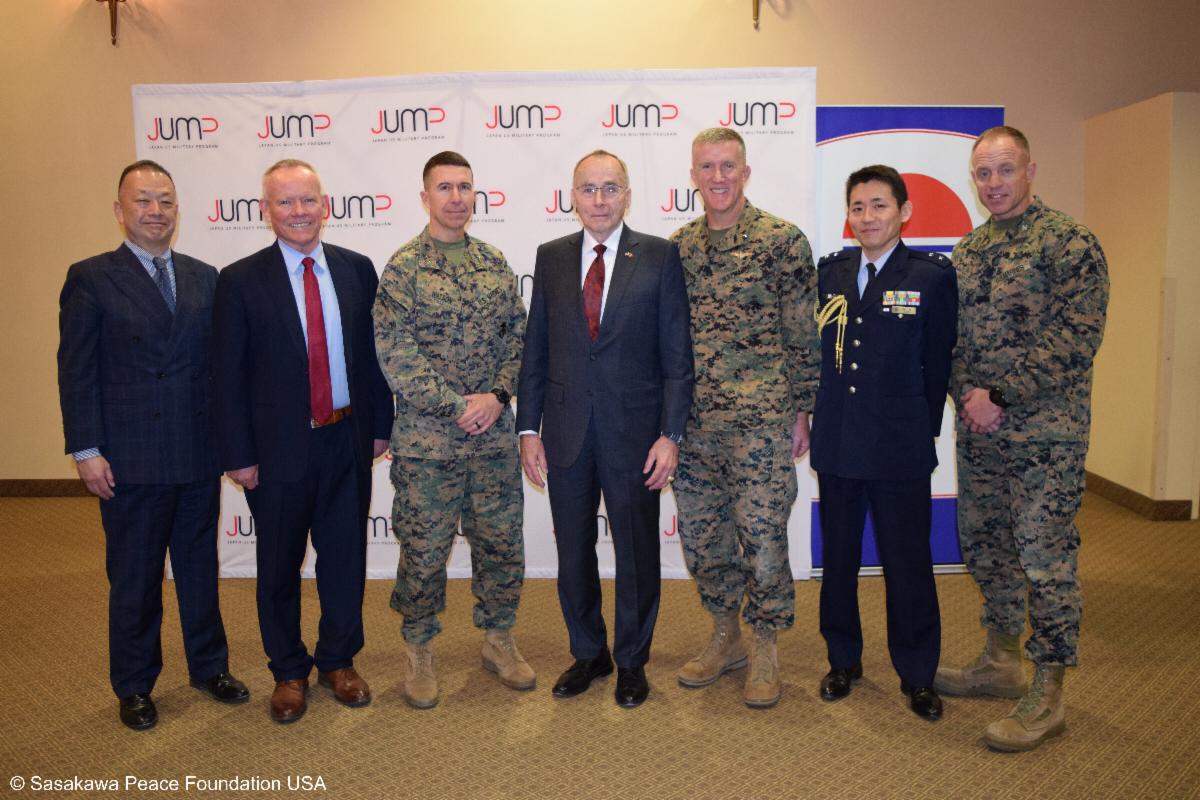
- Japan US Military Program (JUMP): JUMP Camp Pendleton
- Japan US Military Program (JUMP): JUMP Colorado Springs
- USJETAA: Mini-Grant Event with JETAA Northern California
- Pacific Islands Maritime Domain Awareness (MDA) Program: Honolulu Conference
External Engagements
- Mr. James Schoff Speaks at the Reischauer Center for East Asian Studies at the Johns Hopkins School of Advanced International Studies
Publications
- Commentary & Analysis: The U.K.’s Strategic Vision for the Indo-Pacific (Dr. Puri)
- US-Japan NEXT Alliance Initiative: Pursuing a Technology Alliance: The T-14 (Mr. Rasser)
- US-Japan NEXT Alliance Initiative: New US-Japan Supply Chain Task Force Can Enhance Economic Cooperation in Southeast Asia (Mr. Baron)
- Japan Political Pulse: Kishida’s Policy Goals and Party Politics in 2023 (Dr. Smith)
Upcoming Activities
- US-Japan NEXT Alliance Initiative: NEXT Alliance Conference 2023 in Tokyo
| |
Message from Sasakawa USA's Chairman Satohiro Akimoto | |
|
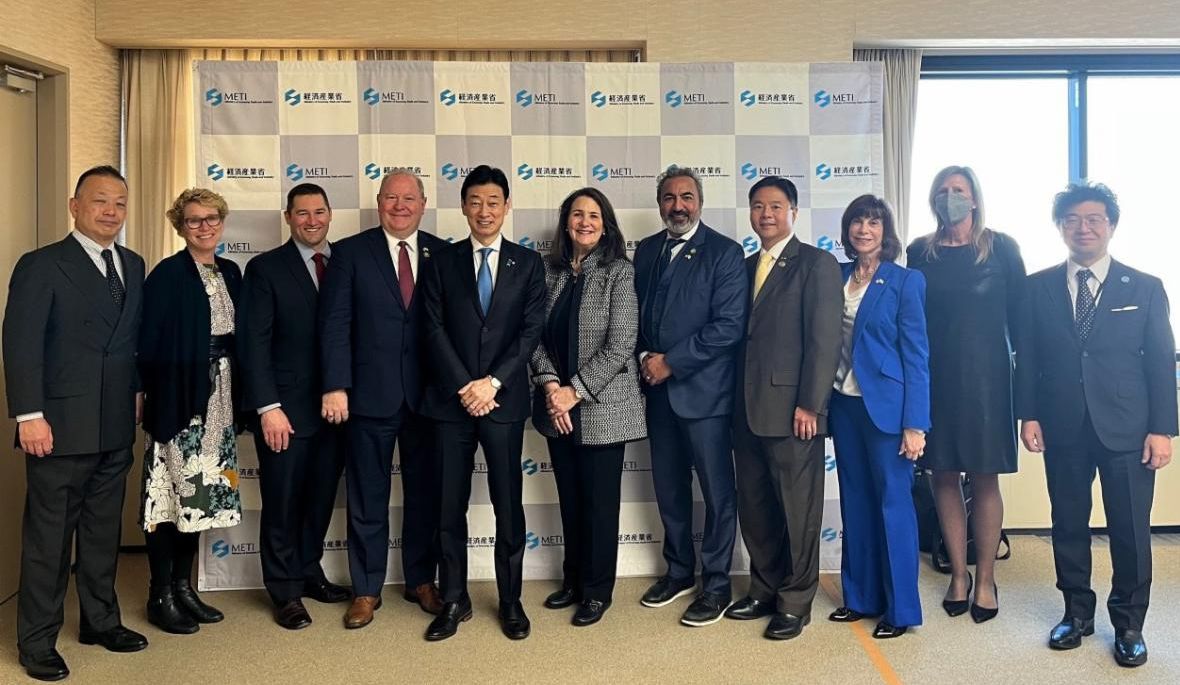
Sasakawa Peace Foundation USA (Sasakawa USA) is proud to work with the Association of Former Members of Congress (FMC) to help U.S. lawmakers deepen their understanding of the importance of the U.S.-Japan relationship. The platform to do so is the Congressional Study Group on Japan administered by FMC. A main program of the Congressional Study Group on Japan is an annual visit to Japan for a week with a small group of selected U.S. lawmakers from both sides of the aisle.
The Congressional Study Group on Japan’s 2023 trip took place from February 20 to 24. The delegation consisted of Rep. Diana DeGette (D-CO), co-chair; Rep. Larry Bucshon (R-IN), co-chair; Rep. Ami Bera (D-CA); Rep. Chrissy Houlahan (D-PA); Rep. Ted Lieu (D-CA); Rep. Kathy Manning (D-NC); and Rep. Guy Reschenthaler (R-PA) spent three days in Tokyo and two days in Iwakuni and Hiroshima. In Tokyo, the delegation met with Prime Minister Fumio Kishida; Minister of Foreign Affairs Yoshimasa Hayashi; Minister of Economy, Trade and Industry Yasutoshi Nishimura; Hon. Hirofumi Nakasone, Chair of the U.S.-Japan Parliamentary Friendship Caucus, and other political leaders. The delegation had a briefing on the U.S.-Japan relationship from Ambassador Rahm Emanuel and U.S. Embassy staff. The delegation also exchanged views on the relationship between Japan and Southeast Asian countries with Mr. Yohei Sasakawa, Chairman of Nippon Foundation.
In Iwakuni, the delegation visited the U.S. Marine Corps Air Station Iwakuni, the biggest and most important U.S. Marine installation in Northeast Asia. The delegation received a briefing on the strategic importance of the base in terms of maintaining stability in the region and providing an immediate response when necessary. The delegation also observed the close co-existence of the U.S. Marine Corps station with the Japanese Self-Defense Forces as well as with the local community. In Hiroshima, the delegation visited Hiroshima Peace Memorial Museum and laid a wreath at Hiroshima Peace Memorial Park. Hiroshima is the hometown of Prime Minister Kishida and the venue for the G7 Summit in May this year. The delegation enjoyed a stroll on Itsukushima, popularly known as Miyajima, visiting the famous giant torii-gate and Itsukushima shrine.
Russia’s invasion of Ukraine and the brutal fighting that has taken place reminds us that large-scale warfare between major countries is still possible. Worse, we may be witnessing the rebirth of the real threat of nuclear war as Russia threatens Ukraine with the use of nuclear weapons, Iran produces uranium enriched nearly to weapons-grade, and China continues to expand its nuclear weapons arsenal and modernize its delivery systems. This has led Prime Minister Kishida to state his intention to use the upcoming G7 summit in Hiroshima to urge all nuclear-armed states to act with responsibility. In the meantime, the national security strategies of the U.S. and Japan have begun to converge as Japan plans to make transformational changes to its security policy by significantly increasing defense spending, introducing counterstrike capabilities, and creating a joint command for the Self-Defense Forces.
In short, the U.S. and Japan need to coordinate more closely to meet renewed challenges posed by major countries. The Congressional Study Group on Japan’s trip to Japan provides a valuable platform for U.S. lawmakers to strengthen the critical bilateral relationship with Japan by exchanging views on the geopolitical situation and building trusted personal relationships with their counterparts in Japan. Sasakawa USA is proud to support that work.
Photo (left to right): Dr. Satohiro Akimoto, Chairman and President, Sasakawa USA; Congresswoman Chrissy Houlahan (D-PA); Congressman Guy Reschenthaler (R-PA); Congressman Larry Bucshon (R-IN); Yasutoshi Nishimura, Minister of Economy, Trade and Industry of Japan; Congresswoman Diana DeGette (D-CO); Congressman Ami Bera (D-CA); Congressman Ted Lieu (D-CA); Congresswoman Kathy Manning (D-NC); Sabine Schleidt, COO, USAFMC; Dr. Atsushi Sunami, President, Sasakawa Peace Foundation
| |
Policy Briefing: Bolstering the U.S.-Japan Security Alliance in the Indo-Pacific Region with ADM Katsutoshi Kawano at the U.S. Naval Academy | |
|
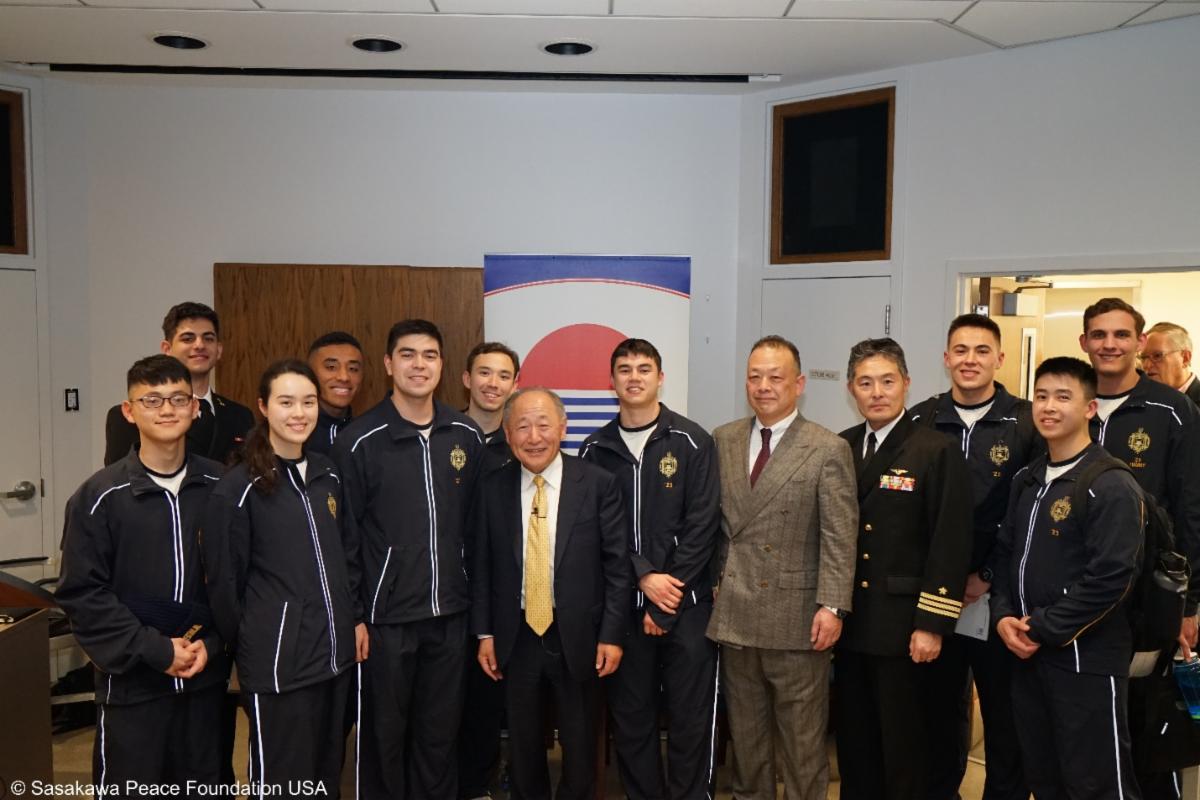
On February 14, Admiral Katsutoshi Kawano (JMSDF, Ret.), 5th Chief of Staff, Joint Staff of the Japan Self-Defense Forces and Sasakawa USA Board Member, spoke at the U.S. Naval Academy in Annapolis, MD, on developments in Japan’s defense strategy and posture in addition to strengthening the U.S.-Japan security alliance. Following his remarks, a lively Q&A session with the U.S. Naval Academy’s midshipmen, officers, and civilian faculties took place.
Photo: ADM Kawano and Dr. Satohiro Akimoto with U.S. Naval Academy’s midshipmen and officers
| |
Policy Briefing: A Taiwan Continency: Legal Challenges to Japan's Involvement with Prof. Masahiro Kurosaki | |
|
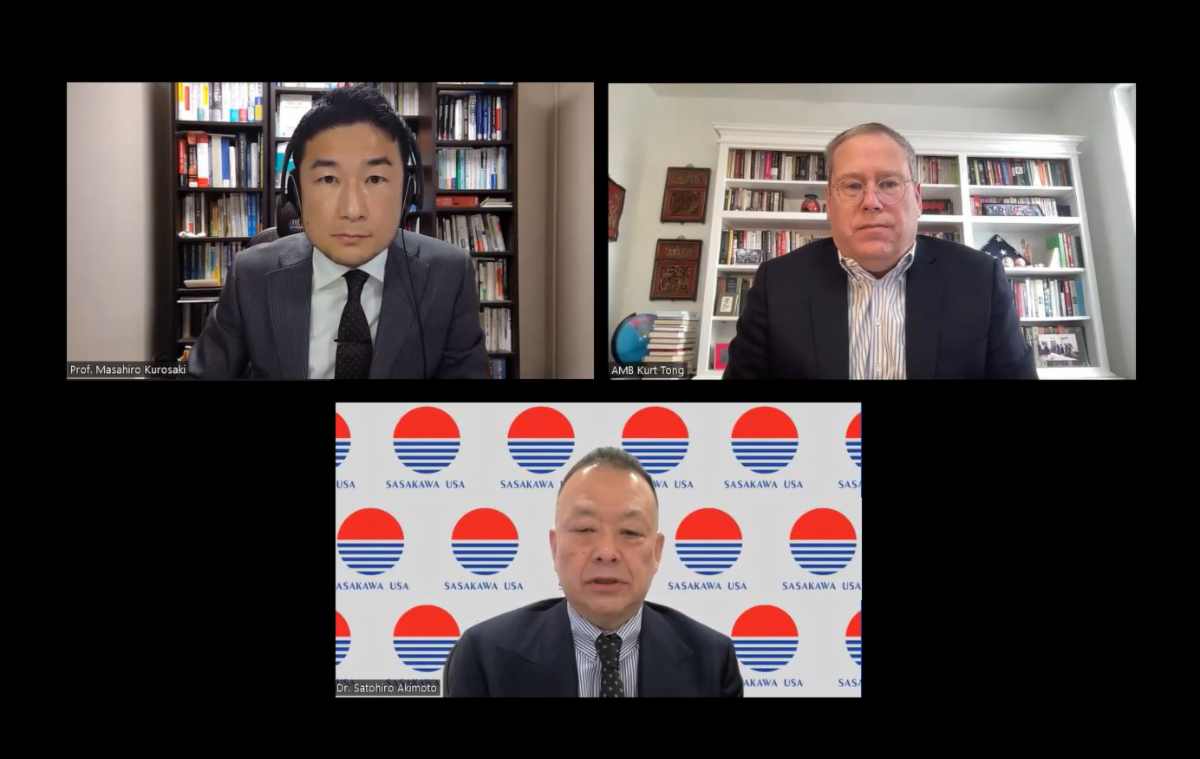
On February 7, Sasakawa USA hosted the virtual briefing and discussion, “A Taiwan Contingency: Legal Challenges to Japan’s Involvement,” featuring remarks by Prof. Masahiro Kurosaki, Professor of International Law and Director of the Study of Law, Security and Military Operations at the National Defense Academy of Japan. Prof. Kurosaki discussed legal challenges and constraints that Japan’s political leadership and Self-Defense Forces would face in the event of a Taiwan contingency, with an emphasis on how the U.S.-Japan alliance would play a role in Japan’s decision-making under such circumstances. Prof. Kurosaki’s remarks were supplemented by commentary from Ambassador Kurt Tong, Managing Partner at The Asia Group and Advisory Committee Member at Sasakawa USA, followed by an engaging Q&A discussion with attendees moderated by Dr. Satohiro Akimoto, Chairman and President of Sasakawa USA.
Photo (clockwise from upper left): Prof. Masahiro Kurosaki, Ambassador Kurt Tong, and Dr. Satohiro Akimoto
| |
Japan US Military Program (JUMP): JUMP Annual Dinner | |
|
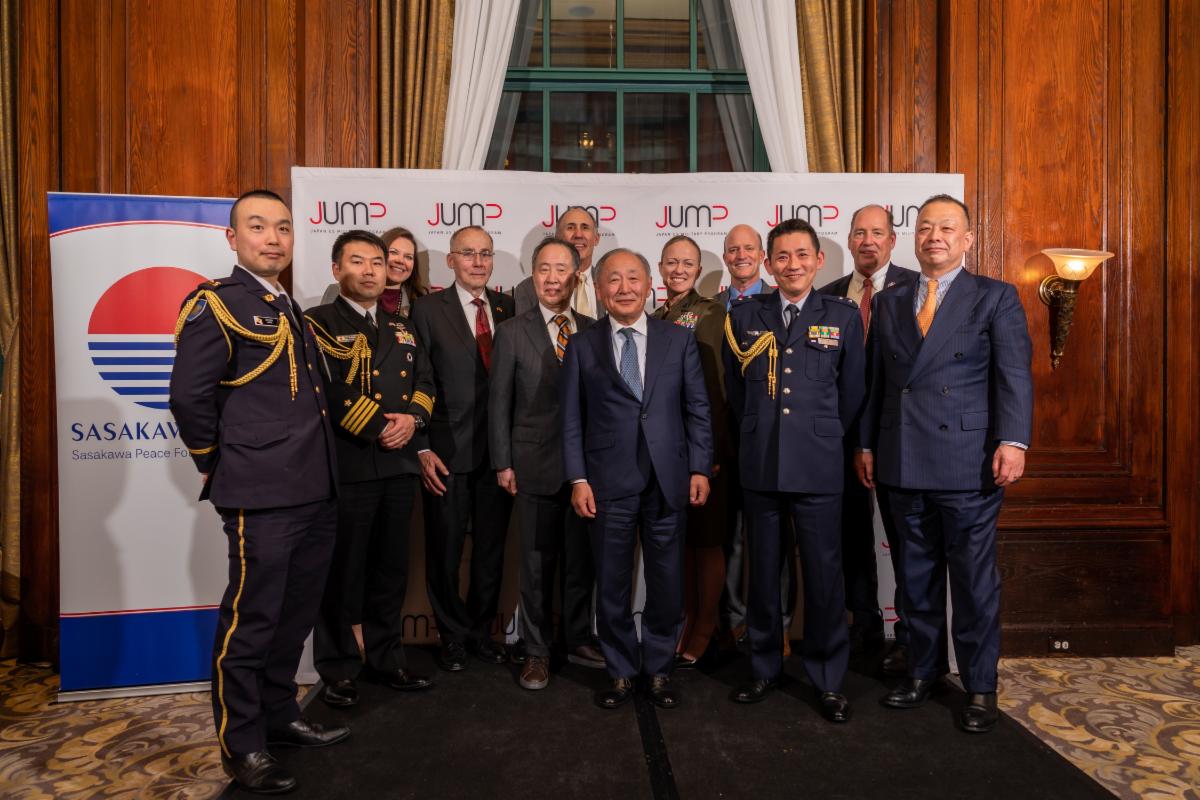
On February 15, Sasakawa USA hosted its 2023 JUMP Annual Dinner at the Army and Navy Club in Washington, D.C. The JUMP Annual Dinner focused on the future of the U.S.-Japan Alliance in facing new challenges in the Indo-Pacific. The evening featured a keynote address by Admiral Katsutoshi Kawano (JMSDF, Ret.), 5th Chief of Staff, Joint Staff of the Japan Self-Defense Forces and Sasakawa USA Board Member. In addition, there were welcome remarks from Ambassador Koji Tomita, Ambassador Extraordinary and Plenipotentiary of Japan to the United States of America; a toast and remarks from Brigadier General Maura M. Hennigan (USMC), President of Marine Corps University; and an introduction of the keynote speaker by Major General Hiroyuki Sugai (JASDF), Defense, Air, and Space Attaché of the Embassy of Japan. In attendance were senior active-duty and retired officers with an interest in the U.S.-Japan relationship. JUMP continues to serve as a national program to connect past and present service members, families, and government civilians who have served in Japan through social networks and grassroots events. JUMP is the only national program to provide this service, establishing a powerful foundation for sustaining the alliance between the United States and Japan.
Photo (left to right): LtCol Takahiro Ota, CAPT Hiroyuki Sano, Ms. Shanti Shoji, LtGen Wallace “Chip” Gregson, Ambassador Koji Tomita, VADM Scott Van Buskirk, ADM Katsutoshi Kawano, BGen Maura M. Hennigan, VADM William Merz, MajGen Hiroyuki Sugai, Hon. Ted Yoho, and Dr. Satohiro Akimoto
| |
Japan US Military Program (JUMP): JUMP Camp Pendleton | |
|
On February 3, Sasakawa USA held a JUMP event at the Marine Corps Base at Camp Pendleton, California. The event focused on the importance of Marines to the U.S.-Japan alliance and featured remarks by Lieutenant General Wallace "Chip" Gregson (USMC, Ret.), former Assistant Secretary of Defense for Asian and Pacific Security Affairs; Lieutenant General Lawrence "Larry" Nicholson (USMC, Ret.), former Commanding General of the III Marine Expeditionary Force; Major General Hiroyuki Sugai, Defense, Air and Space Attaché, Embassy of Japan; and Brigadier General Jason Woodworth (USMC), Commanding General, MCI West – MCB Camp Pendleton. JUMP continues to serve as a national program to connect past and present service members, families, and government civilians who have served in Japan through social networks and grassroots events. JUMP is the only national program to provide this service, establishing a powerful foundation for sustaining the alliance between the United States and Japan.
Photo (left to right): Dr. Satohiro Akimoto, LtGen Lawrence “Larry” Nicholson, LtGen Wallace “Chip” Gregson, BGen Jason Woodworth, and MajGen Hiroyuki Sugai
| |
Japan US Military Program (JUMP): JUMP Colorado Springs | |
|
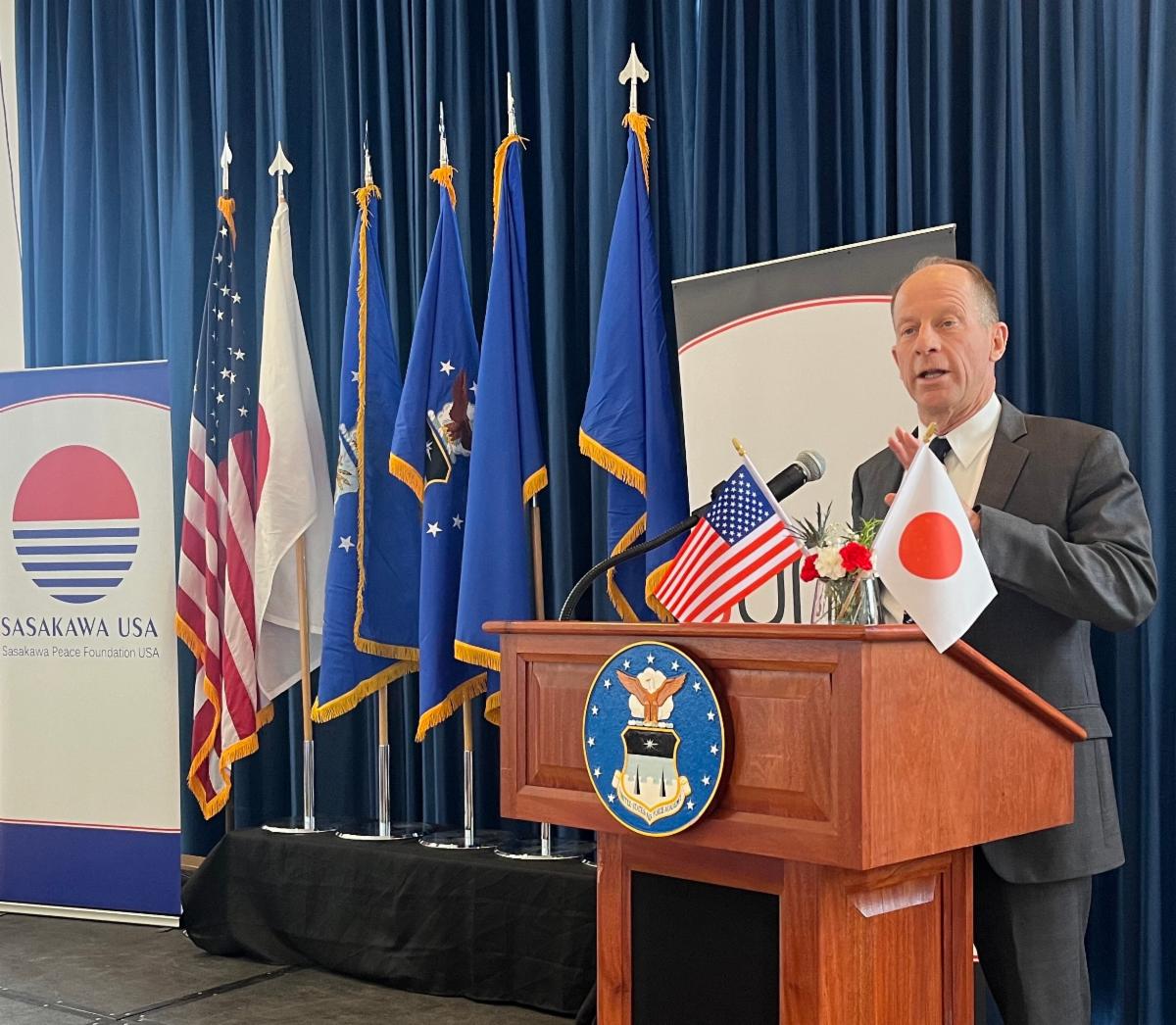
On February 25, Sasakawa USA, in partnership with the Japan-American Society of Southern Colorado and the Japan Club at the Air Force Academy, held a JUMP event at the Air Force Academy in Colorado Springs, Colorado. The event focused on the convergence of U.S. and Japanese national security strategies with featured remarks from Brigadier General David R. Stilwell (USAF), former Assistant Secretary of State for East Asian and Pacific Affairs; and Major General Hiroyuki Sugai, Defense, Air and Space Attaché, Embassy of Japan. Opening remarks were provided by Consul-General Yoichi Mikami, Consulate-General of Japan, Denver; and Dr. Satohiro Akimoto, JUMP Director, Chairman and President, Sasakawa USA. A toast to kick off the reception that followed was given by Admiral Harry Harris. JUMP continues to serve as a national program to connect past and present service members, families, and government civilians who have served in Japan through social networks and grassroots events. JUMP is the only national program to provide this service, establishing a powerful foundation for sustaining the alliance between the United States and Japan.
Photo: Brigadier General David R. Stilwell, former Assistant Secretary of State for East Asian and Pacific Affairs
| |
|
USJETAA: Mini-Grant Event with JETAA Northern California
| |
|
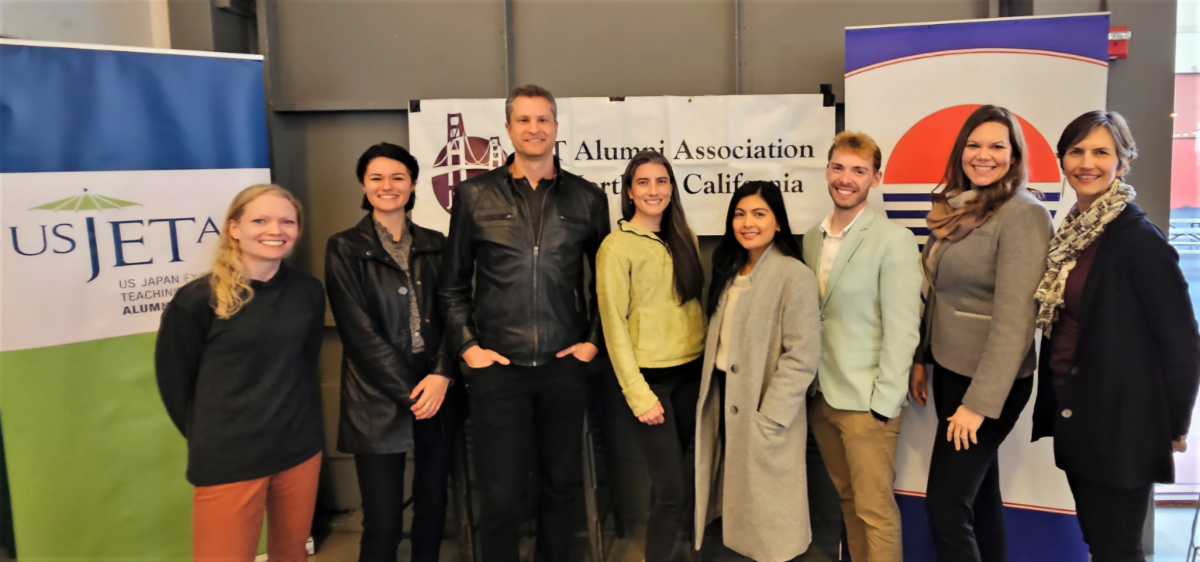
On February 23, Sasakawa USA representatives traveled to San Francisco, CA, to participate in the JET Alumni Association of Northern California (JETAANC) event, “Building Your Post-JET Career in the San Francisco Bay Area.” This event was sponsored by Sasakawa USA and the US JET Alumni Association (USJETAA), who have partnered since 2016 to provide funding and support for JETAA Chapters to pursue projects that encourage deepened and expanded JET Alumni engagement in U.S.-Japan relations. The event was held at The Firehouse at Fort Mason Center for Arts & Culture and included welcome remarks by Melissa Golden (President, JETAANC), Isabelle Burke (Associate Program Officer, Sasakawa USA), and Jessyca Livingston (Executive Director, USJETAA). This was followed by a career panel featuring Charmaine Estacio (Software Engineer, Pariveda), Tim Wagner (Entrepreneur & Angel Investor), and Stephanie Harris (Global Marketing Director, Argos Multilingual)—all JET Alumni with extensive experience navigating Bay Area startups and tech companies. The panel was moderated by Shanti Shoji (Director of Programs, Sasakawa USA) and Drew Esterline (MBA & Asia-Pacific Studies Dual Degree Candidate, University of San Francisco). The event closed with a networking session among panelists and attendees.
Photo (left to right): Melissa Golden, Isabelle Burke, Tim Wagner, Stephanie Harris, Charmaine Estacio, Drew Esterline, Shanti Shoji, and Jessyca Livingston
| |
Pacific Islands Maritime Domain Awareness (MDA) Program: Honolulu Conference | |
|
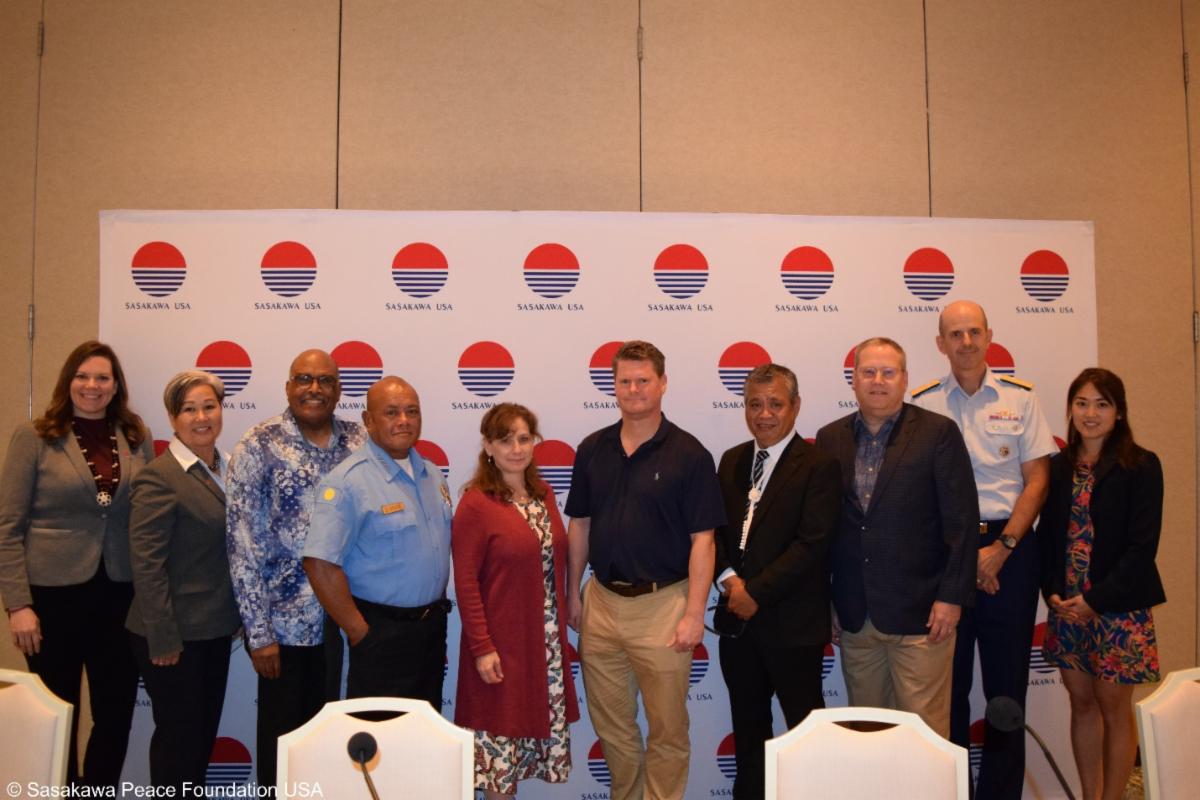
On January 31, Sasakawa USA hosted the second iteration of the Pacific Islands Maritime Domain Awareness (MDA) conference in Honolulu, Hawaii, which was led by Hon. Randall G. Schriver, Director of Pacific Islands MDA Program and Advisory Committee Member at Sasakawa USA; and Chairman of the Board at the Project 2049 Institute. The Honolulu Conference welcomed 30 participants from various military and public sectors from the Pacific Islands, the U.S., and Japan. The day’s engaging discussions covered a wide range of topics, such as views from the Pacific Islands, understanding toolkits available in the Pacific region, and bolstering the U.S.-Japan and allied nations’ cooperation in the region. A policy recommendation report based on learnings from the two conferences will be published on our website in the coming months.
The Pacific Islands MDA Program was borne out of a strong conviction that the Freely Associated States (FAS) are critical allies and partners to the United States and Japan, vital to ensuring a regional liberal order rooted in universal values such as freedom, democracy, and the rule of law in the Pacific. The program aims to make policy recommendations to the U.S. and Japan on MDA and related issues vis-à-vis the FAS.
Photo (left to right): Ms. Shanti Shoji, Ms. Suzanne Vares-Lum, AMB Steven McGann, Mr. Ismael Aguon, Ms. Cleo Paskal, Hon. Randall G. Schriver, Mr. Glen Joseph, AMB Kurt Tong, RDML Charles E. Fosse, and Ms. Jennifer Hong Whetsell
| |
Mr. James Schoff Speaks at the Reischauer Center for East Asian Studies at the Johns Hopkins School of Advanced International Studies | |
|
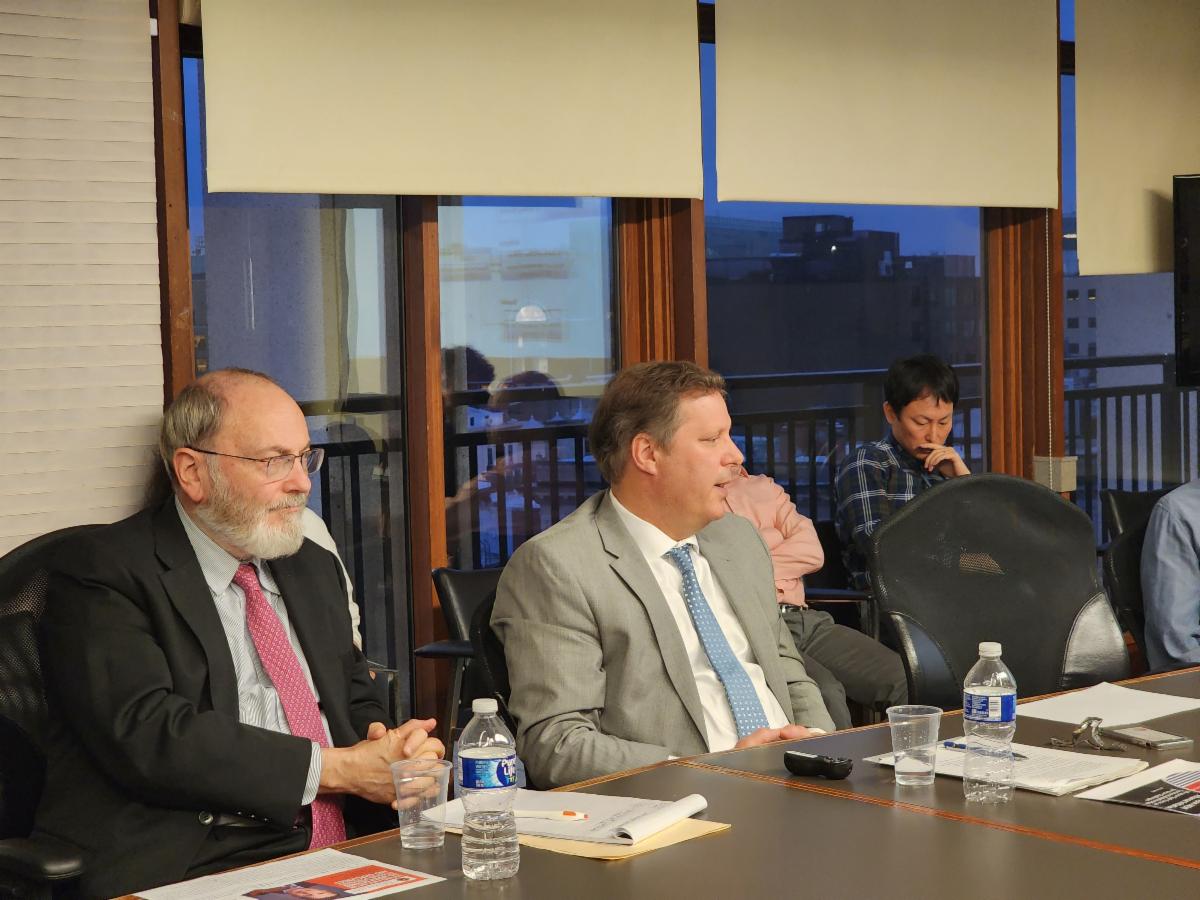
Senior Director James Schoff spoke at the Reischauer Center for East Asian Studies at the John Hopkins School of Advanced International Studies (SAIS) on February 16. The event was entitled “Entering a New Era for US-Japan Defense Integration: Opportunities and Challenges.” The discussion covered the new era in bilateral security cooperation in the wake of the January U.S.-Japan “2+2” meeting. Mr. Schoff’s remarks covered trends that are challenging current U.S.-Japan command and control arrangements, along with possible useful adjustments. He highlighted a shifting regional military balance that makes integration more important, the mixture of technological advances and operational needs that are driving combined force concepts, and Japanese defense reforms that are driving forces behind emerging challenges and opportunities.
Photo: Dr. Kent Calder and Mr. James Schoff
| |
Commentary & Analysis: The U.K.'s Strategic Vision for the Indo-Pacific (Dr. Puri) | |
|
Sasakawa USA published its ninth paper in the Commentary and Analysis series on Europe’s evolving strategic vision for the Indo-Pacific. Dr. Samir Puri, Visiting Lecturer in the Department of War Studies at King’s College London, authored “The U.K.’s Strategic Vision for the Indo-Pacific.” In his analysis, Dr. Puri outlines how 2021 proved to be a momentous year for the U.K.’s Indo-Pacific tilt with the release of its Integrated Review, withdrawal of forces from Afghanistan, dispatch of the HMS Queen Elizabeth to the Indo-Pacific, and announcement of AUKUS. Dr. Puri makes a correlation between the U.K.’s historical roots as an imperial maritime trading power and its interests in a role today to preserve a “free and open Indo-Pacific.” Furthermore, Dr. Puri highlights ways the U.K. can sustain its Indo-Pacific engagement with a naval commitment to the region, defense industrial cooperation, the Tempest tripartite defense project with Japan and Italy, and increased intelligence and diplomatic cooperation. You can read Dr. Puri’s paper here.
Photo: Dr. Samir Puri
| |
US-Japan NEXT Alliance Initiative: Pursuing a Technology Alliance: The T-14 (Mr. Rasser) | |
|
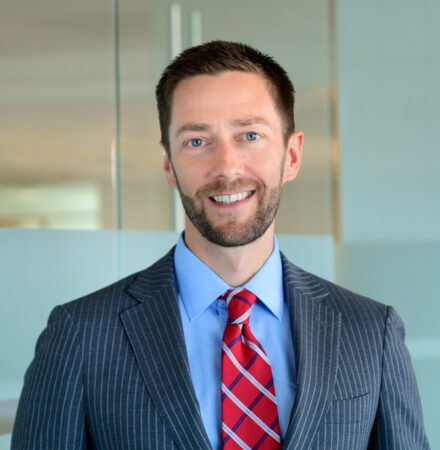
NEXT Alliance Conference participant and Senior Fellow and Director of the Technology and National Security Program at the Center for a New American Security (CNAS), Mr. Martijn Rasser, published a paper entitled “Pursuing a Technology Alliance: The T-14” on February 1. Sasakawa USA asked Mr. Rasser to prepare a paper on the topic for the NEXT Alliance Conference held at the beginning of November. The paper highlights the need for the tech-leading democracies to collaborate and coordinate in burgeoning fields of AI, biotechnology, quantum computing, among others. Mr. Rasser stresses that current multilateral partnerships are insufficient to face the challenge posed by wide ranging tech policy issues facing the world today. The paper is published on the NEXT Alliance Conference page, click here.
Photo: Mr. Martijn Rasser
| |
US-Japan NEXT Alliance Initiative: New US-Japan Supply Chain Task Force Can Enhance Economic Cooperation in Southeast Asia (Mr. Baron) | |
|
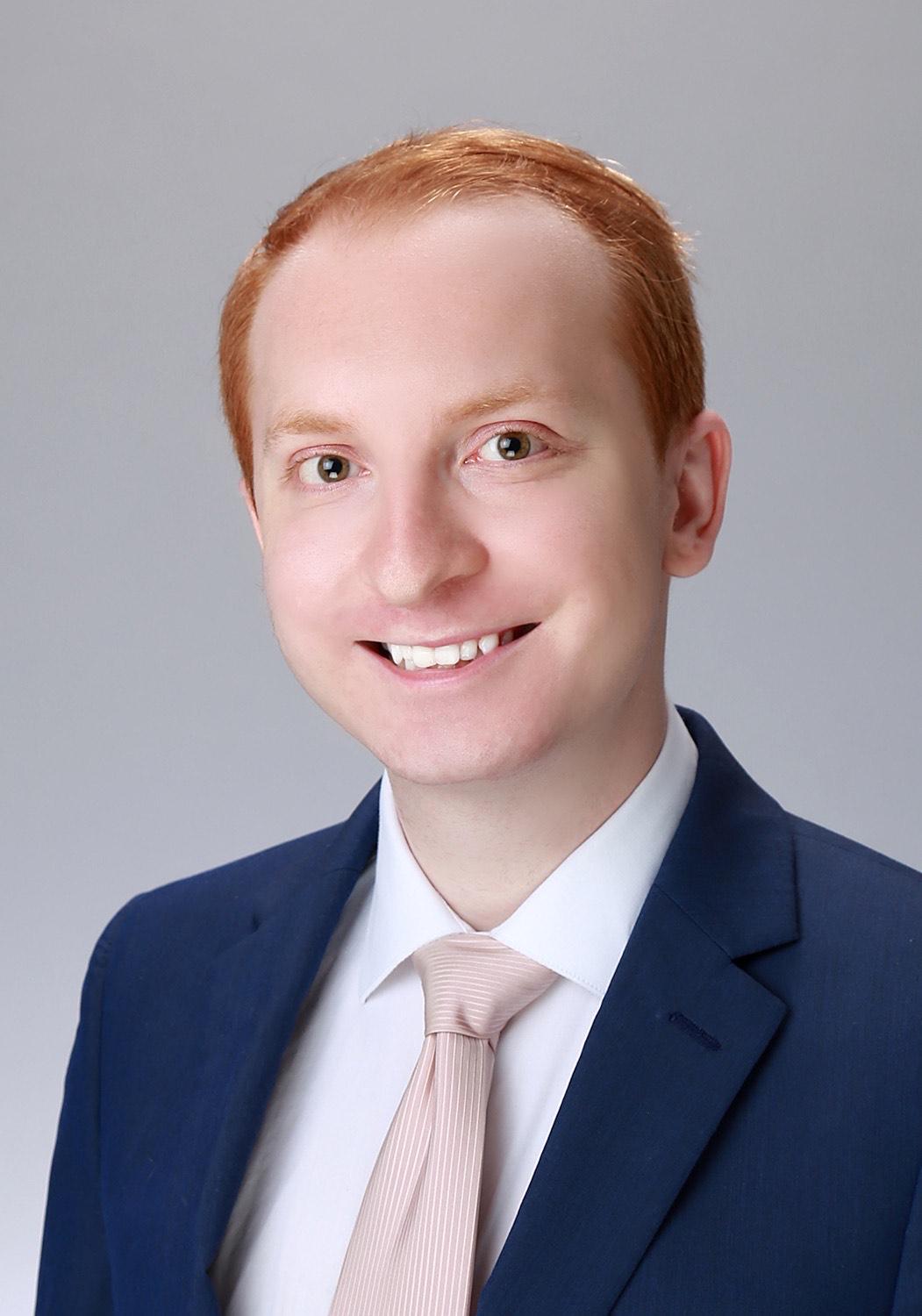
NEXT Alliance Initiative Non-Resident Scholar Sam Baron authored a paper entitled “New US-Japan Supply Chain Task Force Can Enhance Economic Cooperation in Southeast Asia.” The paper discusses the task force launched by Japan’s Ministry of Economy, Trade, and Industry (METI) and the Office of the U.S. Trade Representative (USTR) in January to promote international labor standards along global supply chains. Mr. Baron says that as Japan’s government expands its embrace of a business and human rights agenda, it cements its status as a global leader, a donor of overseas development assistance, and as a steward of responsible economic development of ASEAN. For the full article, click here.
Photo: Mr. Sam Baron
| |
Japan Political Pulse: Kishida's Policy Goals and Party Politics in 2023 (Dr. Smith) | |
|
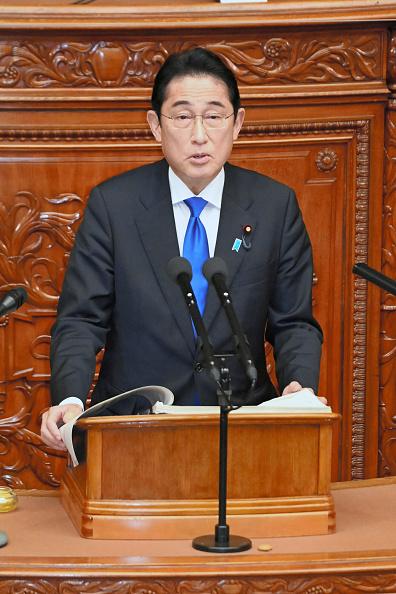
In his latest article, “Kishida’s Policy Goals and Party Politics in 2023,” Dr. Daniel M. Smith, the Gerald L. Curtis Visiting Associate Professor of Modern Japanese Politics and Foreign Policy at Columbia University, analyzes key findings from his 2023 research trip to Tokyo with Sasakawa USA. Dr. Smith spent a week in January meeting with a number of high-level politicians, journalists, and academics to discuss the state of the Liberal Democratic Party-Komeito coalition. The defense spending increase and how to pay for it are key policy issues for Prime Minister Kishida and the LDP in 2023. Dr. Smith infers that there are divisions within the LDP on how to pay for this defense increase, frictions within the LDP-Komeito coalition on taxes and China, and that opposition parties have an electoral opportunity on the valence issue of reform. You can read more of Dr. Smith’s analysis here. Japan Political Pulse (JPP) is a resource for American media, policymakers, academics, and public with regular and reliable insight and analysis of the trends and state of Japanese politics.
Photo: Prime Minister Fumio Kishida makes a policy speech at the Lower House on the opening day of the 211th ordinary session at the Diet building on January 23, 2023, in Tokyo, Japan. (Photo by The Asahi Shimbun via Getty Images)
| |
US-Japan NEXT Alliance Initiative: NEXT Alliance Conference 2023 in Tokyo | |
|
The NEXT Alliance Initiative is proud to announce its second NEXT Alliance Conference (NAC), which will take place in Tokyo from March 10-13. The NAC is convened twice per year by Sasakawa USA on an emerging priority issue area for the U.S.-Japan alliance. The Tokyo conference will be attended by around 30 American and Japanese specialists from government, academia, think tanks, and the private sector and includes a site visit to a military facility. The focus of March’s conference is “US-Japan Command Relationships for New Challenges,” which has become a priority for policy makers in both countries and a major agenda item as threats to the stability of East Asia continue to grow. The group will convene sessions on current command and control (C2) structures, models of alliance C2, reflections on political and legal considerations, in addition to briefings by U.S. and Japanese government officials, and other related issues. The NEXT Alliance Conference will provide for a deeper dive on these complex issues, compared to our normal Track 1.5 roundtable dialogues, and it will offer quality professional networking opportunities as well.
| |
|
Sasakawa Peace Foundation USA
1819 L Street, NW
Suite 300
Washington DC 20036
202.296.6694
www.spfusa.org
| | | | |