Sasakawa USA Newsletter July Highlights | |
|
Included in this issue of the newsletter:
- Message from Sasakawa USA's Chairman Satohiro Akimoto
July Activities
- Sasakawa USA Emerging Experts Delegation (SEED): Strengthening Disaster Risk Reduction through Women, Peace and Security Study Trip to Japan
- US-Japan NEXT Alliance Initiative: AI Security Study Trip to Japan
- Celebrating U.S.-Japan Friendship: New Conference Venue Opening Reception
Recaps
- US-Japan NEXT Alliance Initiative: Workforce Challenges and Opportunities for U.S.-Japan Cybersecurity Cooperation
External Engagements
- Shinano-Mainichi Shimbun Student Journalists Visit
Publications
- Japan Political Pulse: Calm Before the Storm for the Liberal Democratic Party (Dr. Satohiro Akimoto)
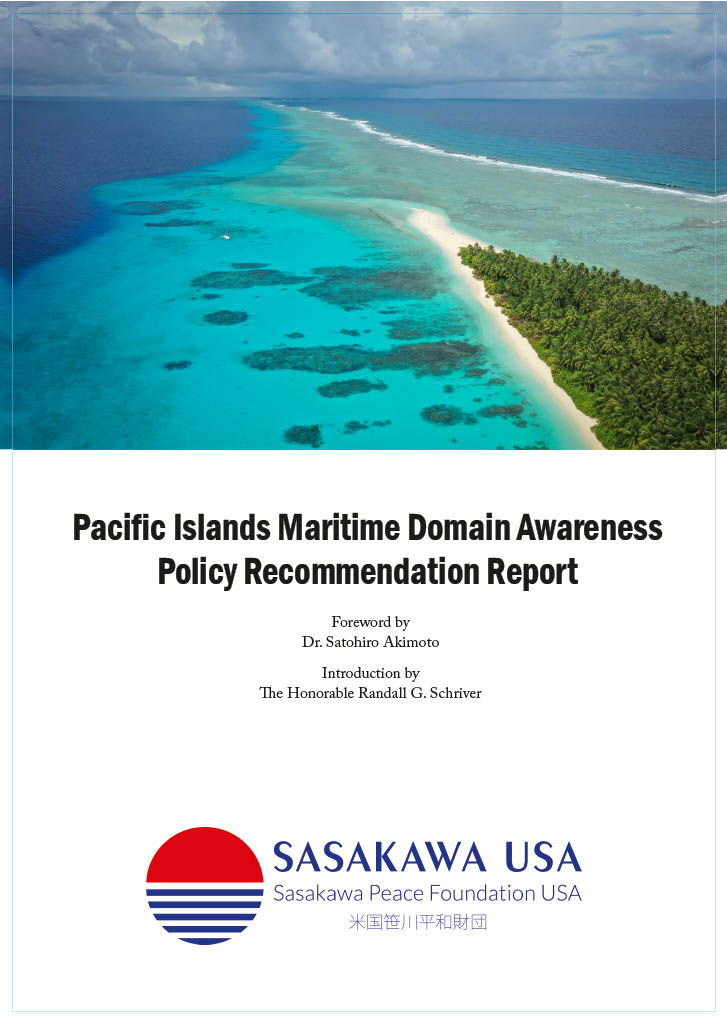
- Pacific Islands Maritime Domain Awareness Policy Recommendation Report
- English Publication Gives Insider's Account of Operation TOMODACHI (LTG Koichi Isobe, JGSDF, Ret.)
-
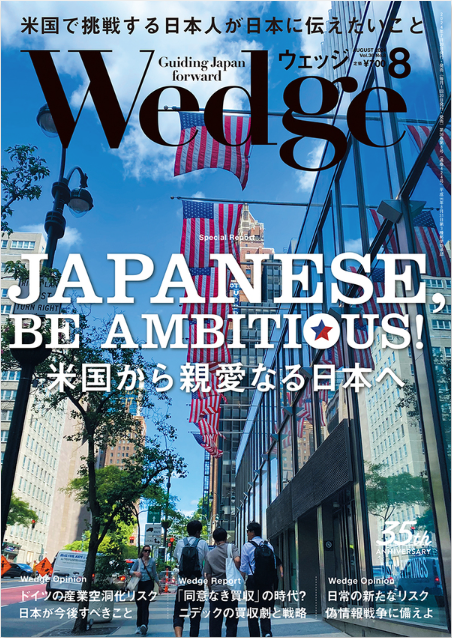
Wedge: A Letter from Washington: What is Needed to Strengthen Equal Partnership between the U.S. and Japan to Effectively Meet New Global Challenges (Dr. Satohiro Akimoto)
Upcoming Activities
- Japan US Military Program (JUMP): Fort Leavenworth
- U.S.-Japan Regional Alliance Series: The Ohio State University
Featured Intern
| |
Message from Sasakawa USA's Chairman Satohiro Akimoto | |
|
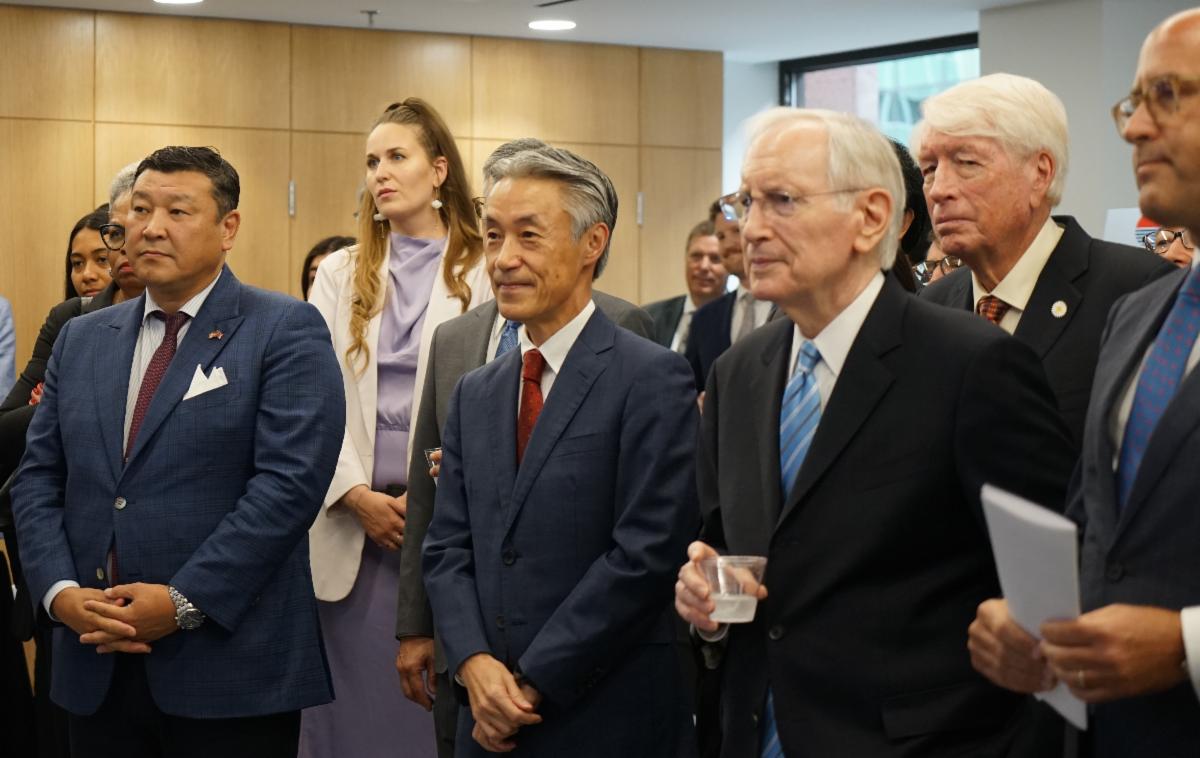
Sasakawa Peace Foundation USA (Sasakawa USA) has opened a new conference venue in our building at 1819 L Street NW on July 26, 2024. We were delighted to be able to celebrate the opening of the new conference room with 100-plus friends in Washington, DC, who have been active in U.S.-Japan relations. We are hoping to make the conference venue one of the gathering places for those working in U.S.-Japan related fields.
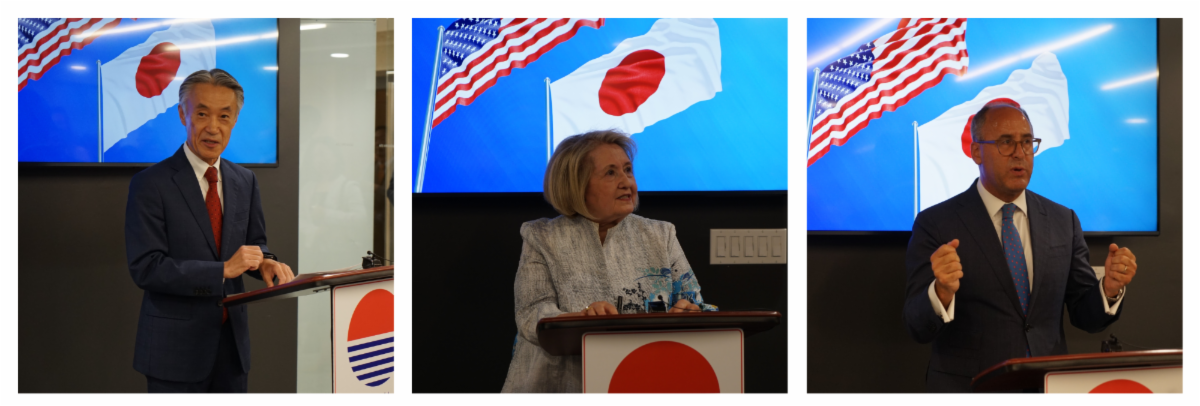
Sasakawa USA is sincerely thankful to all our friends who came to celebrate. We are particularly grateful to H.E. Shigeo Yamada, ambassador of Japan to the United States; Ambassador Melanne Verveer, director of the Georgetown Institute for Women, Peace and Security; and Mr. Nicholas Snyder, director of the Office of Japanese Affairs at the U.S. Department of State; for taking time out of their busy schedules to be present at the opening ceremony as our featured guests.
Ambassador Yamada emphasized the need to view the U.S.-Japan relationship not just bilaterally, but also in the context of the global community. His remarks reflected the vision that President Biden and Prime Minister Kishida agreed upon as the grand vision for the bilateral relationship – “Global Partners for the Future” which would extend “across all domains and at all levels.” Although our conference venue is a small facility, we aim to leverage it to contribute to the broader vision of the U.S.-Japan relationship within the global context.
Sasakawa USA’s activities continue to grow. We have just held the annual Advisory Board meeting in which we talked about future possibilities for the foundation. As we aim to venture into new policy areas, we intend to make the best use of this new conference facility.
Photo (left to right): H.E. Batbayar Ulziidelger, ambassador of Mongolia to the United States; H.E. Shigeo Yamada, ambassador of Japan to the United States; H.E. Philip Verveer, former U.S. Coordinator for International Communications and Information Policy; and Mr. Nicholas Snyder, director of the Office of Japanese Affairs at the U.S. Department of State
| |
|
Sasakawa USA Emerging Experts Delegation (SEED):
Strengthening Disaster Risk Reduction through Women, Peace and Security Study Trip to Japan
| |
|
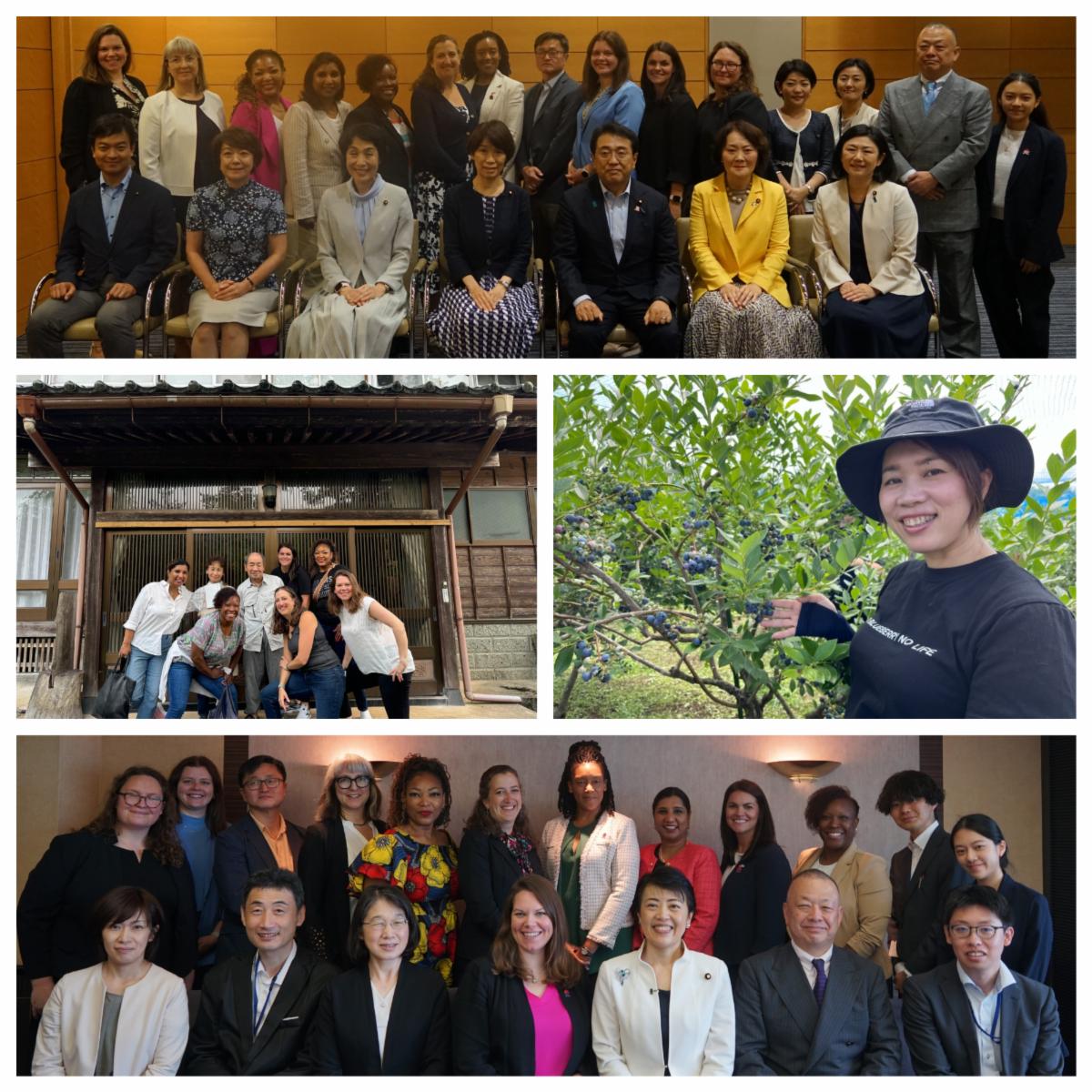
From July 7 to 14, Sasakawa USA Director of Programs Shanti Shoji led the 2024 Sasakawa USA Emerging Experts Delegation (SEED) on a study trip to Tokyo, Tohoku, and Noto. The delegation engaged with a diverse array of stakeholders, including Diet members, central and local government officials, Japan Self-Defense Forces, academics, and civil society leaders. The mission was to gain a deeper understanding of how Japan implements the Women, Peace and Security (WPS) framework within its Disaster Risk Reduction (DRR) policies and practices, and to explore opportunities for U.S.-Japan cooperation on the integration of a gender perspective in disaster preparedness and response.
Notably, the trip featured field study of areas significantly impacted by natural disasters. In Miyagi prefecture, the group visited Sendai, Minami Sanriku, and Matsushima, regions impacted by the 2011 Great East Japan Earthquake and Tsunami. They also visited Noto in Ishikawa prefecture, the site of the recent January 2024 earthquake. These field studies provided invaluable opportunities to meet with local leaders and officials who experienced these disasters firsthand and are actively involved in community recovery efforts.
SEED delegates are currently crafting individual reports that distill key insights from their engagements in Japan. These reports will offer recommendations for enhancing U.S.-Japan collaboration on gender-responsive DRR policies and practices, aimed at building more resilient communities in both nations. Additionally, Sasakawa USA will produce a comprehensive report that synthesizes the delegates' findings, contextualizing their recommendations within the broader Women, Peace and Security agenda. All 2024 SEED reports, including the integrated analysis, will be published on the Sasakawa USA website in the coming months, providing valuable resources for policymakers, researchers, and practitioners in the field.
Top photo: Delegates with members of the WPS Parliamentarians’ Network Japan, a caucus-like group that has formed within the Japanese Diet to promote the implementation of the WPS framework.
Middle photo (left-hand side): SEED delegates stayed with families in a local agricultural community who belong to Shunran no Sato, a collective of farmhouse inns in Noto.
Middle photo (right-hand side): SEED delegates met with Ms. Miyuki Hira, owner of Hiramiyuki Farm, and visited her blueberry farm in Noto which was impacted by the Noto earthquake in January.
Bottom photo: SEED delegation meet with Hon. Haruko Arimura, member of the House of Councillors, and the Cabinet Office’s Gender Equality and Disaster Management Bureaus.
| |
|
US-Japan NEXT Alliance Initiative:
AI Security Study Trip to Japan
| |
|
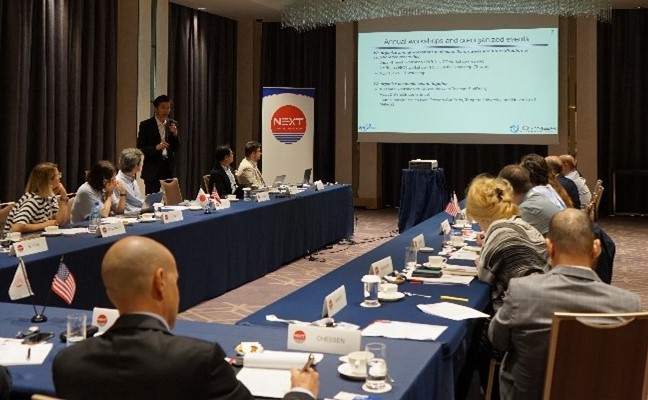
From July 18-19, US-Japan NEXT Alliance Initiative Senior Director James Schoff led a six-person U.S. delegation of Artificial Intelligence (AI) experts from the national research community and government to meet with counterparts in Tokyo. The purpose of the trip was to foster networking, share information, and explore opportunities for bilateral research collaboration to strengthen AI defenses, mitigate disinformation, and confront various other challenges created by adversarial AI. The delegation met with policy makers and AI researchers in Japan’s government, private sector, and research institutes to discuss strategic approaches and develop joint initiatives for AI security. The U.S. experts came from Lawrence Livermore National Laboratory, Oak Ridge National Laboratory, Pacific Northwest National Laboratory, and the Department of Homeland Security, meeting with Japanese officials and researchers from the Cabinet Office, various ministries, Japan’s AI Safety Institute, and Japanese universities and laboratories. The trip culminated with a public event featuring the U.S. delegation at the University of Tokyo, Research Center for Advanced Science and Technology (RCAST).
Photo: The NEXT Alliance Initiative's AI delegation at a workshop in Tokyo
| |
|
Celebrating U.S.-Japan Friendship:
New Conference Venue Opening Reception
| |
|
On July 26, Sasakawa USA officially commemorated its newly renovated multi-purpose conference venue by welcoming friends from the U.S.-Japan community in the greater Washington, DC area. This new venue will serve to strengthen the relationship between the U.S. and Japan for years to come.
On this momentous occasion, Sasakawa USA was honored to hear remarks from distinguished guests H.E. Shigeo Yamada, ambassador of Japan to the United States; Mr. Nicholas Snyder, director of the Office of Japanese Affairs at the U.S. Department of State; and Ambassador Melanne Verveer, director of the Georgetown Institute for Women, Peace and Security, as well as advisory committee member at Sasakawa USA. Dr. Satohiro Akimoto, chairman and president of Sasakawa USA, also gave welcome remarks at the opening reception, which was moderated by Ms. Shanti Shoji, director of programs at Sasakawa USA.
Sasakawa USA looks forward to expanding its outreach via this new conference venue, as we further coordinate with partners to strengthen the U.S.-Japan relationship.
Photos (left to right): H.E. Shigeo Yamada, ambassador of Japan to the United States; H.E. Melanne Verveer, former U.S. ambassador-at-large for Global Women’s Issues; and Mr. Nicholas Snyder, director of the Office of Japanese Affairs at the U.S. Department of State
| |
|
US-Japan NEXT Alliance Initiative:
Workforce Challenges and Opportunities for
U.S.-Japan Cybersecurity Cooperation
| |
|
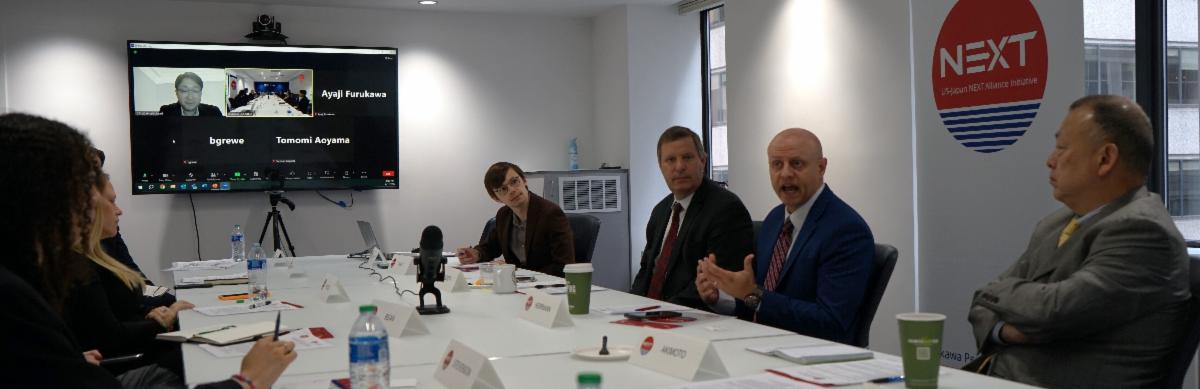
In July, the US-Japan NEXT Alliance Initiative published a recap of its sixth bilateral dialogue on "Mapping the Future of U.S.-Japan Cybersecurity Cooperation." Senior Director James Schoff welcomed 20 American and Japanese specialists to the event from government, think tanks, and the private sector. This event featured Mr. Andrew Herrmann, division chief of the Strategic Workforce Planning Office at the U.S. Department of State, and Mr. Hiroshi Sasaki, from the Industrial Cyber Security Center of Excellence (ICSCoE) at the Ministry of Economy, Trade and Industry (METI). Together, Messrs. Herrmann and Sasaki discussed how the U.S. and Japan are preparing future cybersecurity workforces through initiatives to recruit, retain, and reskill professionals, as well as considering alliance collaboration in cybersecurity workforce development. The not-for-attribution summary describes the event presentations and follow-on dialogue.
Photo (right-hand side, left to right): Mr. Matthew Willis, Mr. James Schoff, Mr. Andrew Herrmann, and Dr. Satohiro Akimoto
| |
Shinano-Mainichi Shimbun Student Journalists Visit | |
|
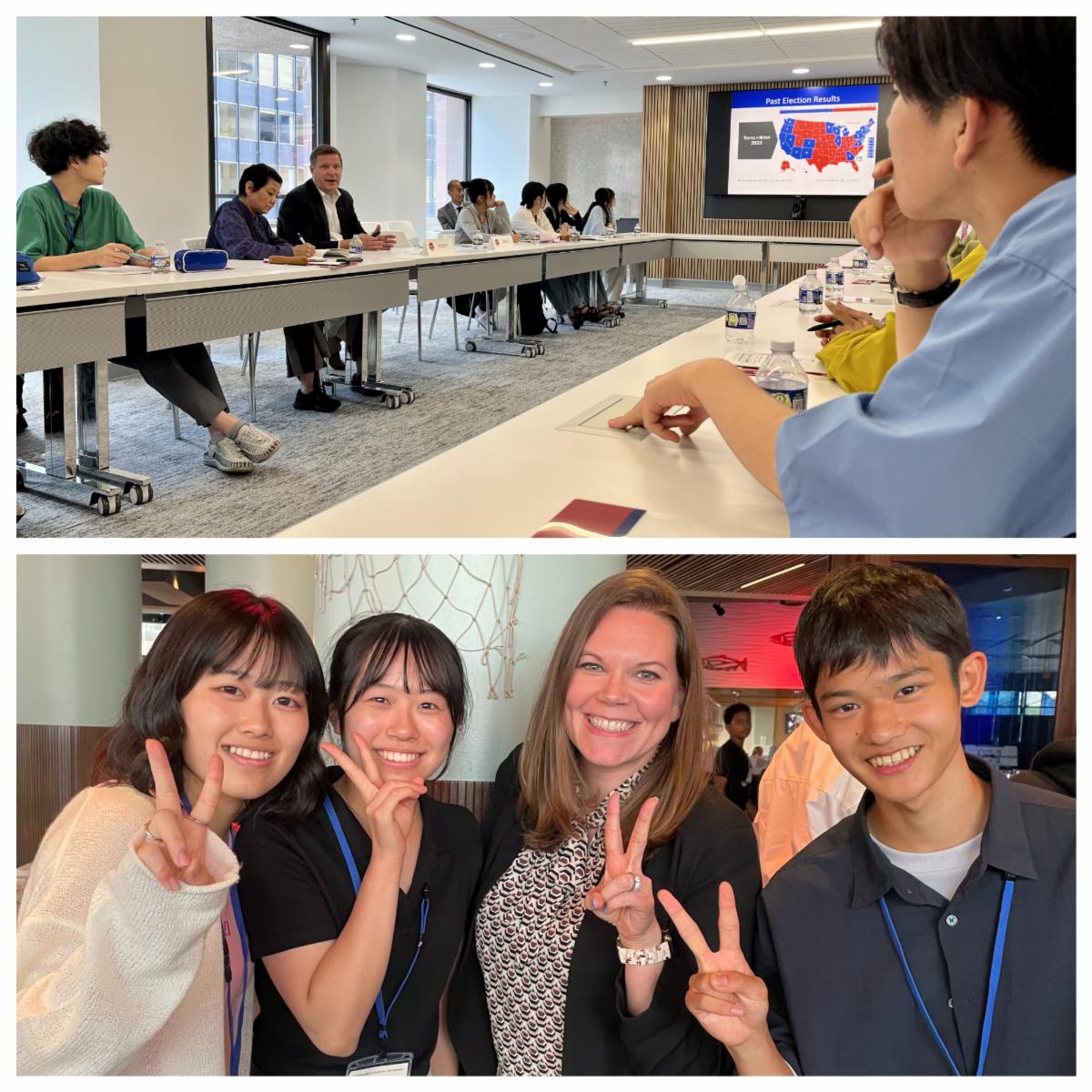
On July 29 and 30, Sasakawa USA met with 20 junior and senior high school students from Nagano, Japan, who were participating in the Shinano-Mainichi Newspaper exchange program. The student journalists were in Washington, DC and New York City to learn about various facets of the U.S., as well as conduct interviews to inform articles they will write upon returning to Japan. Sasakawa USA Senior Director James Schoff spoke to the students about the upcoming U.S. presidential election and how the policies and politics of the candidates could affect Japan and the world, and Sasakawa USA Director of Programs Shanti Shoji spoke with students on the importance of cross-cultural communication as they conduct interviews with various people they encounter in the U.S.
Top Photo: Mr. James Schoff (center, left-hand side) with Shinano-Mainichi Newspaper exchange students at Sasakawa USA's conference venue
Bottom Photo: Ms. Shanti Shoji (center, right-hand side) with Shinano-Mainichi Newspaper exchange students
| |
|
Japan Political Pulse:
Calm Before the Storm for the Liberal Democratic Party (Dr. Satohiro Akimoto)
| |
In his recent article, “Calm Before the Storm for the Liberal Democratic Party,” Sasakawa USA Chairman and President Dr. Satohiro Akimoto examines the inner workings of the Liberal Democratic Party (LDP) in the lead up to their party presidency election in September.
There is an air of eerie calmness on the surface surrounding potential contenders for the LDP presidency. It is believed Prime Minister Fumio Kishida will run for LDP president re-election, but he faces an uphill battle because of his unpopularity among the public due to the political funds scandal, an uncertain relationship with former Prime Minister Taro Aso who is a powerful factional leader, and LDP lawmakers whose primary interests are to protect their Diet seats. There are several potential contenders, such as Hon. Shinjiro Koizumi, Hon. Taro Kono, and Hon Shigeru Ishiba to name a few, but none have announced their clear intentions as Prime Minister Kishida holds his cards close to his heart. For more analysis on current Japanese politics, you can read Dr. Akimoto’s article here.
Japan Political Pulse (JPP) regularly publishes articles on the state and trends of Japanese politics for American observers and practitioners of U.S.-Japan relations.
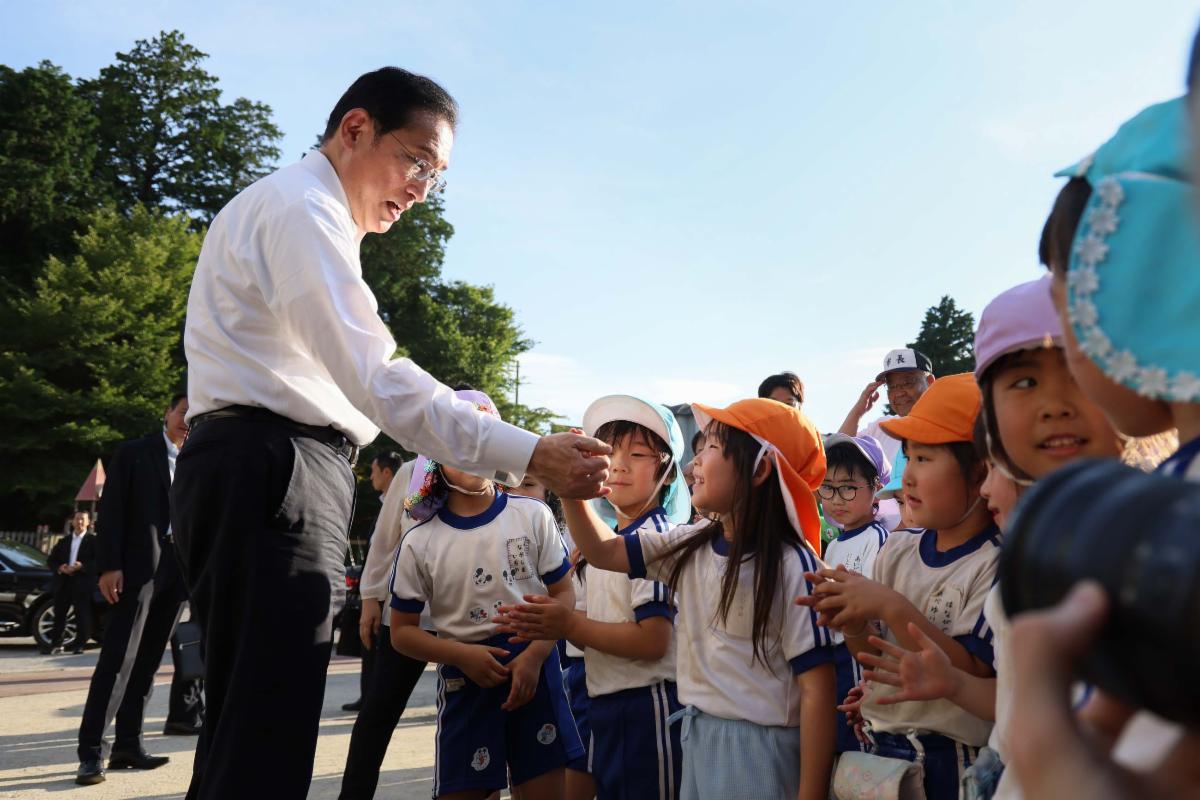
Photo: Prime Minister Fumio Kishida visiting a kindergarten in Chiba Prefecture on August 1, 2024. (Prime Minister’s Office of Japan)
| |
Pacific Islands Maritime Domain Awareness
Policy Recommendation Report
| |
In July, Sasakawa USA published the Pacific Islands Maritime Domain Awareness Policy Recommendation Report, which synthesizes key findings from Sasakawa USA’s two conferences on maritime domain awareness in the Pacific. The report offers strategic policy recommendations for the U.S., Japan, and Indo-Pacific partners.
The comprehensive analysis covers critical regional challenges, U.S. and Japanese interests in bilateral and multilateral Pacific engagements, networked service and enforcement capacity of maritime domain awareness, and actionable policy recommendations.
At its core, the Pacific Islands Maritime Domain Awareness Policy Recommendation Report advocates for institutionalizing and expanding cooperation and communication among stakeholder nations to further bolster MDA capabilities and provides innovative policy frameworks and toolkit models for the region.
Sasakawa USA is grateful to Honorable Randall G. Schriver, chairman of Project 2049 and advisory committee member of Sasakawa USA, for leading this Pacific Islands MDA project.
| English Publication Gives Insider's Account of Operation TOMODACHI (LTG Koichi Isobe, JGSDF, Ret.) |
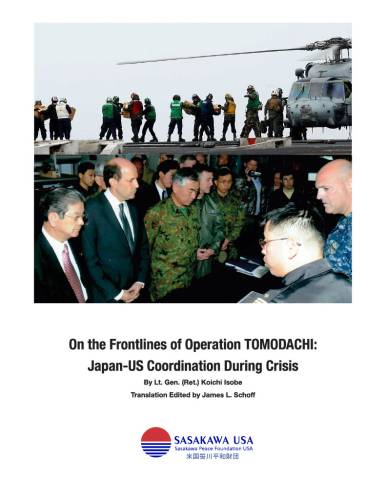 |  | In July, Sasakawa USA published an English version of LTG (JGSDF, Ret.) Koichi Isobe's book On the Frontlines of Operation TOMODACHI: Japan-US Coordination During Crisis. LTG Isobe, a former commander of Japan’s Eastern Army, was the J-5 in Japan’s Joint Staff Office during the tragic earthquake, tsunami, and nuclear disasters that hit the country in March 2011. LTG Isobe’s book is a comprehensive and detailed account of his experience and observations on the frontlines of the allied relief Operation TOMODACHI and is supplemented by archival research and dozens of interviews with high-ranking officials and officers who responded to the crisis from the U.S. and Japan. The timing for this English version is fortuitous, as the governments of the U.S. and Japan consider ways to modernize their command-and-control relationships to enhance defense cooperation and prepare for Japan’s new Joint Operations Command, expected in 2025. Policy makers in the United States now have greater access to a behind-the-scenes telling of the most intense U.S.-Japan disaster and consequence management operation ever undertaken, seen through the eyes of a high-ranking Japanese military officer actively looking for insights that can be applied to future bilateral military missions.
| Wedge: A Letter from Washington:
What is Needed to Strengthen Equal Partnership between the U.S. and Japan to Effectively Meet New Global Challenges (Dr. Satohiro Akimoto) | |
Wedge, a Japanese monthly journal, has a special report titled “Japanese, Be Ambitious” in its August issue published on July 20, 2024. Mr. Keizo Oshiro, editor-in-chief, envisioned delivering various messages to Japanese people to revitalize Japan by influential opinion leaders from San Francisco; San Diego; Cleveland; New York; and Washington, DC. In an article from a Washington perspective, Dr. Satohiro Akimoto wrote about what is necessary for Japan to establish and strengthen the bilateral relationship with the U.S. as equal strategic partners in a true sense to effectively meet new challenges in the Indo-Pacific region.
Read “A Letter from Washington: What is Needed to Strengthen Equal Partnership between the U.S. and Japan to Effectively Meet New Global Challenges” in Japanese here.
| |
Japan US Military Program (JUMP): Fort Leavenworth | |
|
On September 12, Sasakawa USA will hold a Japan US Military Program (JUMP) event in cooperation with the U.S. Army Command and General Staff College at Fort Leavenworth, Kansas. The event's theme, "Impacts of Russo-Ukrainian War on U.S. and Partner Nations’ Security Strategies in the Indo-Pacific Region," will further U.S. Army officers’ understanding of the implications and lessons that the war in Ukraine holds for efforts to ensure a free and open Indo-Pacific through cooperation in the U.S.-Japan alliance. JUMP is a partnership between Sasakawa USA and the Embassy of Japan.
| |
|
U.S.-Japan Regional Alliance Series:
The Ohio State University
| |
|
The next iteration of Sasakawa USA’s U.S.-Japan Regional Alliance Series will be held on October 9, in partnership with the East Asian Studies Center at The Ohio State University.
The U.S.-Japan Regional Alliance Series connects economic and security experts on the U.S.-Japan alliance and the Indo-Pacific region with local officials, businesses, scholars, and students to discuss the importance of the alliance both nationally and regionally.
| |
|
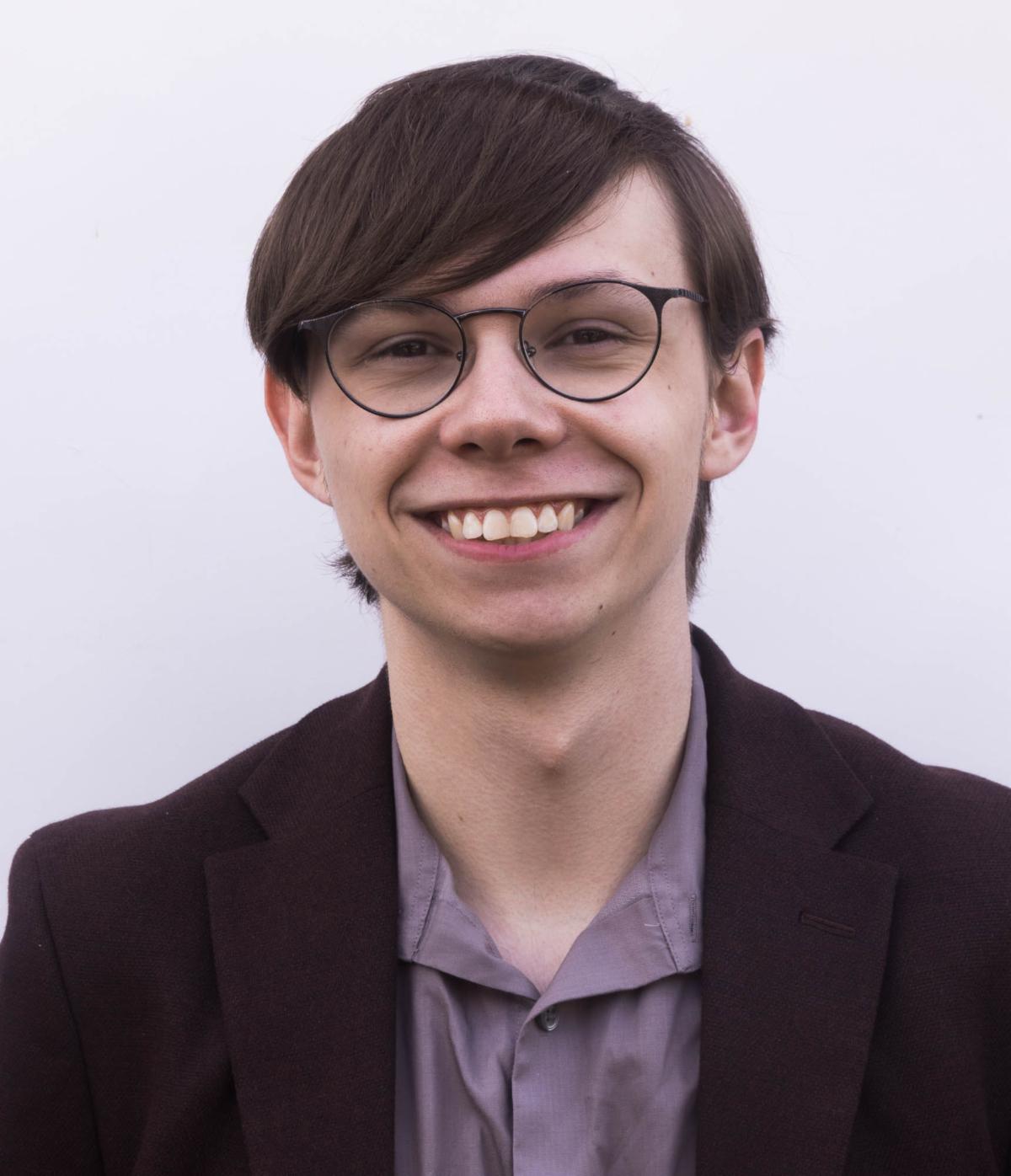
Hello! My name is Matthew Willis, and I have been the US-Japan NEXT Alliance Initiative intern at Sasakawa USA this summer. Next year, I will be a senior at the University of Texas at Austin, majoring in international relations, government, East Asian studies, and Japanese. Throughout my academic and professional experiences, I have focused on U.S.-Japan and U.S.-China relations, including prior internships at the Mansfield Foundation, Wilson Center, and East-West Center in DC over the past year.
During the past two months, one of the biggest projects I supported was the NEXT Alliance AI Security Study Trip – an exchange that facilitated collaboration between experts in the United States and Japan on AI security and innovation. Mr. James Schoff, senior director, kindly brought me to Tokyo to provide on-the-ground support for the meetings and events, which was an incredible opportunity to develop my programmatic skills. Once back in DC, I shifted my focus to working on a new cyber mapping tool for U.S.-Japan collaboration and contributing to the bimonthly Alliance Digest. These projects have enhanced my writing, research, and web development abilities.
This internship has been a truly memorable experience, and I am so fortunate to have been surrounded by such patient and encouraging people like Mr. Schoff, as well as everyone at Sasakawa USA. My immediate goal after completing my undergraduate coursework is to study or live abroad in Japan for an extended period. I have never done this before, so the next step is to immerse myself in the Japanese language and culture more fully so I can better contribute to U.S.-Japan relations in the future. After that, I hope to return to DC for a master’s program or fellowship that will allow me to continue working in this field. I have sincerely appreciated this summer internship opportunity and am thankful for the honor of working at Sasakawa USA!
Photo: Mr. Matthew Willis
| |
|
Sasakawa Peace Foundation USA
1819 L Street, NW, Suite 300
Washington, DC 20036
+1.202.296.6694
| | | | |