February 27, 2024

SWAT Waterborne and Marine Unit Amp Up Training at Marine Week 

by Laura L. Sullivan, Public Relations Specialist

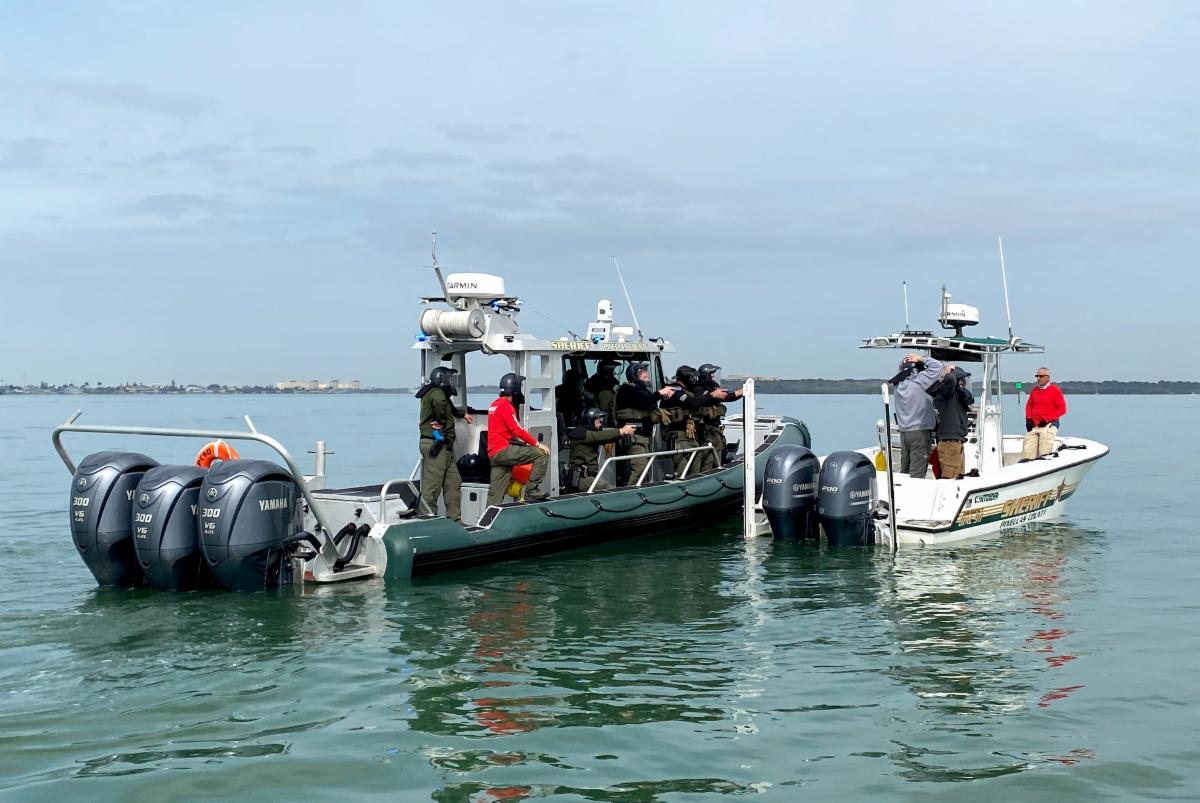
The sheltered Intracoastal waterway between the mainland and the barrier islands was calm, quiet except for the splash of a jumping mullet. But danger can come by land or by sea, and recently our Marine and Environmental Lands Unit joined forces with SWAT Waterborne to train for the worst possible scenarios on the water. It was part of Marine Week, an annual tradition of high intensity maritime training that added some new components this year.


If you’ve seen the video of Deputy Jill Constant’s precision vessel handling that enabled Deputy Travis Fernandes to leap onto an unmanned runaway boat you know that the Pinellas County Sheriff’s Office (PCSO) Marine Unit trains in maneuvers that look like movie stunts but are vital in protecting life and property. Like a lot of things deputies do in the course of their jobs, risk is minimized by training, and for this Marine Week the agency brought in one of the oldest and most respected marine tactical training companies, Tactical Advantage Consultants (TAC), staffed by subject matter experts. They train marine units around the US and Caribbean, and even internationally. This year they brought a challenging course of training to our members.


What happens if there’s an active shooter, hostage situation, or suicidal subject on a dinner cruise? StarLite Cruises generously allowed PCSO to train on their Starlite Sapphire yacht so Marine and SWAT could learn to work in conjunction. “The trainer calls out the scenario over the radio,” said TAC Chief of Staff Dave Johnson. They hear the situation exactly as they would a real call. “Then Marine and SWAT have to determine how to respond. Is it going to be dynamic, or slow and deliberate? The information they gather will determine that.” PCSO members and StarLite Cruises personnel played bad guys and victims in the scenarios.


The heat of a crisis situation isn’t the time for teams with different specialties to learn how to work together. Each has to understand the capabilities of the other so that every maneuver is safe and fluid. Anything on the water adds factors of movement from waves and tide, and the danger of falling overboard while fully loaded with gear. Marine deputies have to approach the yacht strategically. “Insertion needs to be quick,” Johnson said. “The faster you offload the team, the safer they’ll be.” Marine deputies then pull away quickly to aid in surveillance, but must be ready to come alongside again at a moment’s notice, or even engage with an armed subject from their patrol vessel. 


Clearing a vessel and engaging with a suspect on a multi-level boat adds new dimensions. “There are a lot of fatal funnels,” Johnson said, referring to the danger zones in and around doorways. “And there are ladders and stairs so it’s not just a 360 view. They have to scan 720 degrees.” Two teams of SWAT Waterborne boarded the Starlite Sapphire. In one scenario a rampage on land ended with a gunman commandeering the yacht and holding hostages. In another, the subject hid and tried to ambush the deputies. Once, the bad guy tried to sneak out with the fleeing victims. Marine and SWAT working together brought each scenario to its proper end.


That afternoon, Marine and SWAT trained in vessel pursuits, where they shot simulated handgun, shotgun, and less lethal rounds while both vessels were underway. Their target was a Boston Whaler hull with mannequins, towed by another vessel. With the precision driving our Marine deputies are known for they got within inches as SWAT opened fire. Though marksmen on the range, they learned that shooting from one high speed bouncing vessel into another requires different techniques. They had to brace themselves and even bolster each other to maintain their firing stance, and keep their focus even when waves were smashing into their faces.


The next day focused on felony stops at sea. In a felony vehicle stop deputies have plenty of room to position themselves safely and order the subjects out of the vehicle and on the ground for handcuffing. But at sea, the only option is to tie up to the other vessel. Arrested subjects are directed to the edge of their vessel, handcuffed, and fitted with a personal floatation device. Only then are they brought on board the PCSO vessel. When boarding is necessary, deputies face tight quarters, unexpected wave action, and an environment replete with fishhooks and filleting knives. 


During the debriefing, the TAC trainers had high praise for our deputies. “The PCSO Marine Unit and SWAT Waterborne are among the best we’ve ever trained,” Johnson said.


Pinellas County Deputies are STARS on the Ice  

by Laura L. Sullivan, Public Relations Specialist

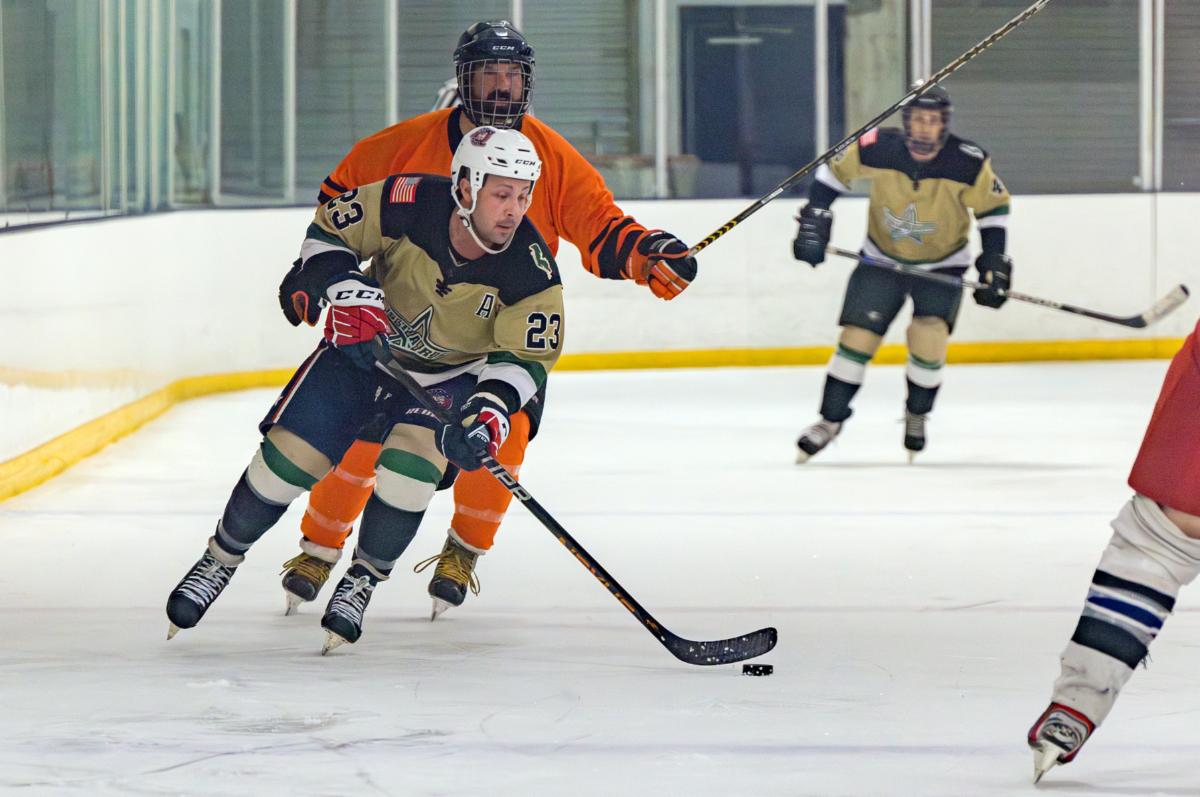
Nine years ago, Sergeant Matt Wilkins of the Sexual Predator and Offender Tracking Unit (SPOT) fulfilled a lifelong dream and learned to skate so he could start playing hockey. Once he was playing a couple of nights a week, the next step was to bring hockey to the Pinellas County Sheriff’s Office (PCSO). There had once been a PCSO team in the 1990s that eventually dissolved, but after talking to a few interested members, Sergeant Wilkins was determined to bring the Stars hockey team back to life. “I wrote up a proposal and approached the sheriff asking if he would be interested in an agency team, and he was all for it.” Since then, Sergeant Wilkins has been the team captain.


The team is made up of active PCSO members, two retired members, and a couple of law enforcement members of other agencies. Stars player Deputy Quinn Morrison of the Marine and Environmental Lands Unit said, “Our team is a mixed bunch in both jobs and experience.” Members include detectives, detention deputies, and patrol deputies. “We blended together as a family,” Deputy Morrison said. “There’s no chain of command on the team. Everyone is on the same playing field, and everyone works together.”


Since the current team’s founding, the Stars have played in the Florida First Responder games three times, taking home the gold medal once, and the silver medal twice. “We also finished in second place at the Orlando Fire Department’s annual Battle of the Badges tournament, and have won our league championship twice.” Sergeant Wilkins said the team plans on winning another gold medal in June at the next Florida First Responder games.


Some of the team members are extremely skilled, while a few barely skated before joining the team. Cold Case Corporal Ron Chalmers had only ever done inline skating before he signed up for the Stars, but now he’s making game-winning assists and goals. “A lot of the guys we have are very experienced hockey players,” said Sergeant Wilkins. “Some folks who currently play are very unassuming, and their coworkers have no idea how good they really are on the ice. Corporal Anthony Orlowski, Deputy Geoff Moore, Deputy Joshua Pinsker, Deputy Quinn Morrison, and Deputy Brandon Smith have all have played hockey for years at high levels and it shows. Their experience and knowledge of the game are very beneficial for the team.”


Deputy Smith has been playing hockey since he was 11, and played in high school and college. He didn’t even know PCSO had a hockey team until he ran into Deputy Morrison on a local men’s team. Now Deputy Smith is one of the top players.


Deputy Morrison started even younger, going to games with his dad at age one, and learning to skate at just two years old in his hometown of Rochester, NY. He started playing hockey at age five. “I love just getting in the locker room, being with the boys, the sounds, the smells.” The smells? “Moldy gear. It’s a nostalgia thing!” The game never gets old for him. “Every time you step on the ice it’s the first time all over again. Everything else disappears and it’s just about that game, just about the team.”


The Stars is the only hockey team in their league built around a single employer, and attitudes about law enforcement sometimes follow them onto the ice. “We wear a star on our chest, we represent the agency,” said Deputy Smith. “But it’s a hockey game. That’s the sport. I’ll be protecting my goalie, and the other team will shout, police brutality!”


Though the sport is known for its brawls, Sergeant Wilkins says the Stars team doesn’t get into fights. “When you have 10 hockey players and two goalies fighting with sticks for a three-inch rubber puck on a sheet of ice there is going to be contact. Most people understand the game, and realize contact is part of the game.” Some opponents, though, take it personally and use the Stars’ law enforcement jobs to instigate trouble or just get under their skin. “We’ve heard individuals make comments like why aren’t you out writing parking tickets, and worse.” 


The Stars team remains unfazed. “We know who we are and who we represent, and let a lot of that drama go. We play to win and give it our all every time we hit the ice.”


Facebook  Twitter  Instagram  Linkedin  Youtube