¡El Monday Morning Memo ya está disponible en español! Haz clic aquí para leerlo
|
#DisabilityVoteCA

Imagine the power of four million
Californians with disabilities voting.
Disability Vote California aspires to make this a reality. A non-partisan campaign inspired by REV UP, our mission at Disability Vote California is to engage and inform voters with disabilities and create dynamic regional teams which will facilitate access to voting for their friends, colleagues, and neighbors with disabilities.
There are many ways for you to get involved:
|
Become A Leader!
Our mission is to engage and inform voters with disabilities and create dynamic regional teams that will facilitate access to voting for their friends and neighbors with disabilities. Go to
DisabilityVoteCA.org to sign up for webinar trainings to become a team leader in your community!
|
Engage!
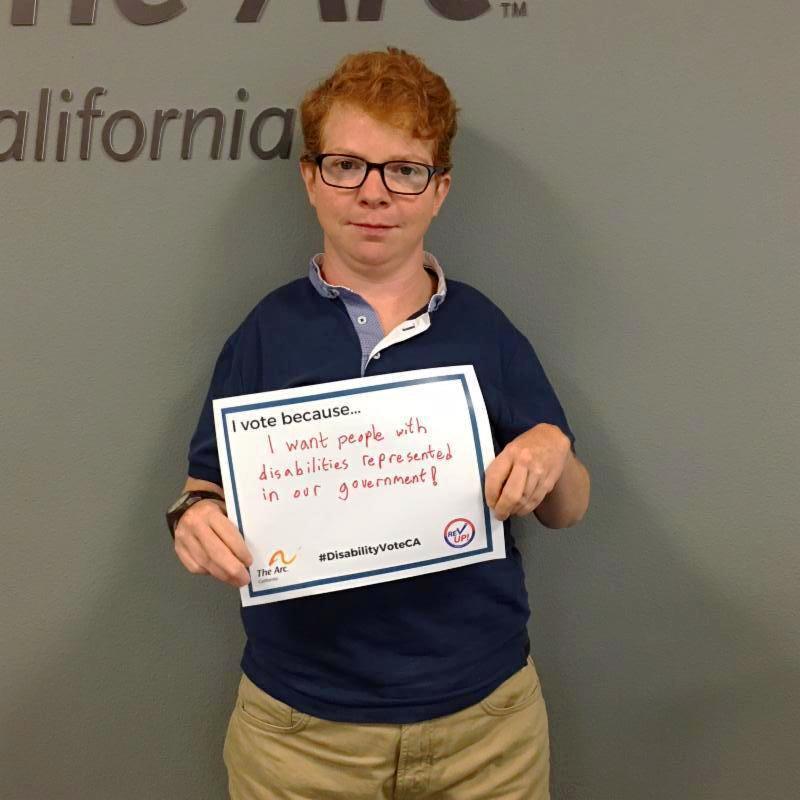
Show people the strength in our numbers: Download and print this flyer and write in your reasons for voting. Snap a selfie and post it to social media using the #DisabilityVoteCA #RevUp hashtags. Or email your pictures to christian@thearcca.org and we will post them to the website for you.
|
Educate!
Visit DisabilityVoteCA.org to learn about the voting rights of people with disabilities in our state, see interviews and promos from prominent figures, and sign up to participate in our webinars for county leadership.
|
Equal Access to Voting in California - Can You Vote If You Are Under Conservatorship?

Adults with Intellectual and Developmental Disabilities are routinely denied their right to vote. The Federal Voting Rights Act gives states the authority to enact laws to deny people the right to vote by reason of "criminal conviction or mental incapacity". The California Constitution does limit voting based on the federal criteria which has historically led to an undue denial of the right to vote for many people with I/DD who are under conservatorship. The state has defined mental incapacity in a manner that is not particularly reflective of what we know about people with I/DD today. Click
here
to read the state definition.
For example, among the criteria to determine capacity is the ability to reason using abstract concepts, the ability to reason logically or the ability to plan, organize and carry out actions in one's own rational self-interest or ability to attend and concentrate. There are several other criteria listed as well and the law states that there only need be a deficit in "
at least one". It goes without saying that there are many people with I/DD who are fully capable of understanding who they want to vote for while at the same time exhibiting a deficit in one or more of the defining criteria. We know that a person with cerebral palsy who uses eye gaze technology, but perhaps is under conservatorship for support with medical and financial decision making, could and should be able to vote but by the nature of their disability they would easily be considered deficient in one or more of the defining criteria.
Without a doubt there are reasons why caution should be used to protect the democratic process and guard against voter fraud and vulnerability. The potential to exploit people with I/DD and the voting process is there and a genuine concern so laws protecting that process are definitely warranted. However, in protecting that process we cannot take away the rights of thousands of people who are capable of voting. Thus, it is essential that state laws narrow the grounds on which they deny the right to vote to those who are truly unable to understand the nature of what they are doing when they are voting. Thankfully, California heard the call of thousands of people and in October 2016, Governor Jerry Brown signed into law
SB 589 Voting: Voter Registration: Individuals with Disabilities and Conservatees which changed the law to allow individuals with disabilities under conservatorship to retain their right to vote unless it is shown by clear and convincing evidence that the individual cannot communicate, with or without reasonable accommodations, a desire to participate in the voting process. This was a critical piece of legislation to improve the protections of adults with I/DD to maintain their voting rights in California.
To learn more about how to get voting rights restored for and individual under conservatorship click
here.
 |
|
|
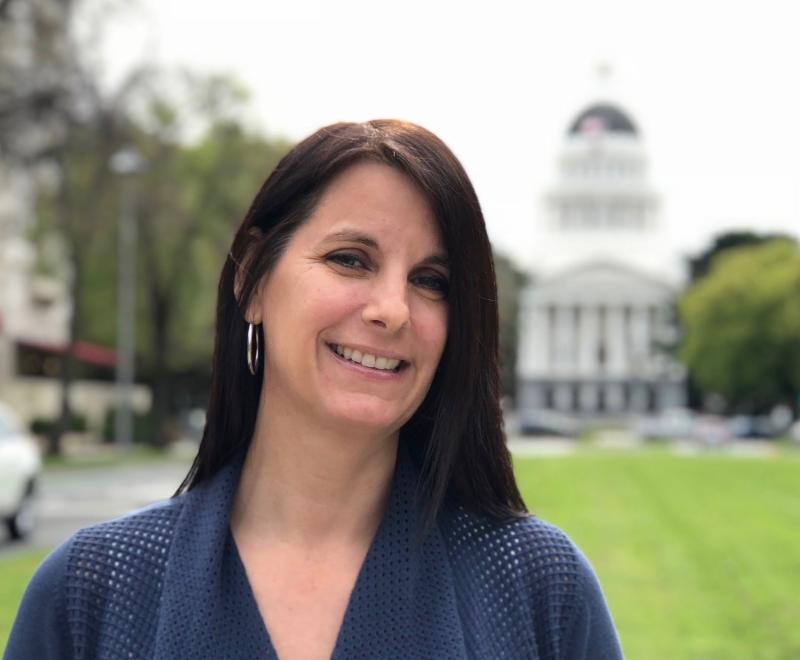
Teresa Anderson, Policy Director, The Arc & UCP California Collaboration
|
|
This Month the Monday Morning Memo is Sponsored by:

|
From the Frontlines of Accessible Voting
Voting, the most fundamental level of civic participation, is often considered something that is fairly straightforward. That is, until it isn't. For those of us in the I/DD and larger disability communities, it's much like the rest of life - an opportunity to encounter and challenge barriers.
However, in five
SB 450 "Voter's Choice Act" (VCA) implementation counties - Sacramento, San Mateo, Nevada, Napa and Madera - everything was different. On the face of it, the changes for some, were, again straightforward: All voters received a mail-in ballot (this change was in all counties statewide) and... (From here forward, I will provide you with a reading soundtrack recommendation: "Changes" by the late David Bowie.) The VCA pilot counties became an "All-Mailed Ballot/Vote Center Election Model."
That last bit, the "Vote Center" part essentially meant that places where ballots would be cast, formerly known as polling places, were going to be dramatically different. Some of them would be open for as many as 11 days, and others for four. All of them would have at least three fully accessible ballot marking machines. The vote centers were required to be, when possible, located near public transportation. And on the "vote by mail" side, voters with disabilities have the opportunity to access a
"Remote Accessible Vote by Mail System" (RAVBM) to provide an opportunity for increased privacy and accessibility for mailed ballots.
I was fortunate in that I had a history as a disability rights advocate and past president of Disability Organizing Group For Initiating Total Equality (DOGFITE), and had met Dr. Mindy Romero, Director of the California Civil Engagement Project and unquestionably California's rockstar voter engagement policy wonk. Several years ago, Dr. Romero planned a public opinion research opportunity on disability voting access, convened by Ted Jackson, Community Organizer with the
DONetwork (a statewide independent living advocacy network) for persons with disabilities. I was lucky to be a part of that table.
As you might be able to tell, my first year as Director of Advocacy Services at
Resources for Independent Living has given me a crash course in voting advocacy for people with disabilities. Previously, my knowledge had been limited to my own experience with physical barriers at a polling place: a closed, non-accessible exterior door. One of my first times voting in California, I also had to wait about a half-hour while the single accessible ballot marking machine was set up, because no one had requested use of it.
Now I know that the most locally-powerful, influential advisory body is the county's Voter Accessibility Advisory Committee (VAAC). These committees offer direct input to the counties' Election Administration Plans. This is the room that all persons with disabilities interested in voting accessibility should absolutely be in. Some counties may not yet have VAACs that are active, and others may still be unaware that the word on the street is California Sec. of State Alex Padilla hopes to have the VCA model deployed statewide by 2020. And even after the changes in the pilot counties, a closed door can still be an issue. (My closest Vote Center did not have an ADA power-assisted door opener... Thankfully, I knew to call the county's Registrar of Voters!)
I also know that change can be good. It felt empowering to be able to use a ballot marking machine that was just like every other ballot marking machine in the room: accessible. The results from the changes are also encouraging. The increase in turnout compared to 2014 (also a nonpresidential election year) between the five pilot VCA counties averaged 12.95% according to data from the Secretary of State's office. Here in Sacramento County, voter turnout was 41.9%. Impressive for a nonpresidential election.
The real story is still ours for the making, however. The new VCA changes are an absolute positive shift toward increased accessibility.
"In Colorado, they went to a system similar to [the Voter's Choice Act], and their turnout in 2016 was 69 percent," Jackson said. He added he is looking forward to seeing numbers for voter turnout for people with disabilities in VCA pilot counties.
"I'm feeling very positive, actually," Jackson said.
I am also looking forward to the future. Here in Sacramento County, we've got a chance to further expand access, to grow from lessons learned and improve the VCA model for November's election. But we need engagement from our community in order to succeed. We need to hear stories about voting accessibility barriers. We need our community to be present in VAACs (and Language Accessibility Advisory Committees [LAAC] too!). We need to hear you.
"There is a whole lot of work that
REV UP! has done to mobilize the disability community," Jackson said. " I feel like everywhere folks are mobilizing. Voter turnout is getting more familiar for grassroots disability organizations, so it's getting easier to fit in their plans."
It's true. The ability to use a computer with assistive technology from home to independently mark a mail-in ballot or visit a Vote Center and use an accessible ballot marking device - in some places, more than a week before "Election Day" - means increased access for our community.
But sometimes there can still be a closed door in the way. Barriers to voting access, and the real truth is that election policy and access is subject to change - just like everything else - motivated my desire to engage. If we can all take a seat at the table and have our voices heard, together, the future of California's elections will be increasingly accessible to all.
|
|
|
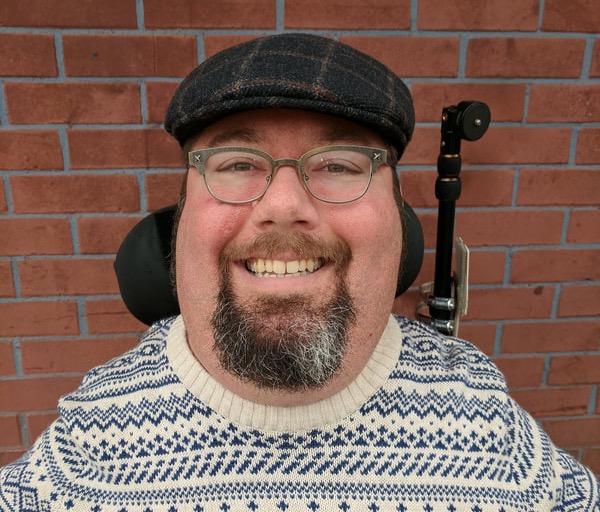
Guest Columnist Russell Rawlings, Director of Advocacy Services, Resources for Independent Living
|
|
|

UPCOMING
July 19-20
for
families with children with disabilities, their friends and professionals who support them. Wealth of information, child care, resources, and more.
in Hayward
August 4
in Los Angeles September 7
November 8-10
|

RECENTLY RELEASED REPORTS, STUDIES, ANNOUNCEMENTS, ETC.
NASUAD and NASDDDS
Committee on Energy & Commerce Democrats
California Budget & Policy Center
Center on Budget and Policy Priorities
California Budget & Policy Center
Justice in Aging
|

NEWS ARTICLES
Disability Scoop
California Healthline
In These Times
KPCC
North Bay Business Journal
Disability Scoop
Disability Scoop
The Sacramento Bee
The Sacramento Bee
NBC Bay Area
ACLU
PR Newswire
Daily Bruin
The San Diego Union-Tribune
Disability Scoop
|

FUNDING OPPORTUNITIES
The Community Transportation Association along with its partners the National Association of Area Agencies on Aging and the Institute for Community Inclusion of the University of Massachusetts-Boston is pleased to announce the availability of a new round of funding for local inclusive planning projects. CTAA, with financial support from the United States Department of Health and Human Services, Administration for Community Living, and in collaboration with other federal and national partners, is making available grants of up to $35,000 each for up to 20 organizations for a six-month period. The new projects are expected to adopt inclusive strategies that fit their communities and build upon learning from previous projects. It is anticipated that the experience from these grants will add to the knowledge garnered from previous project and help to build recognition and support for inclusive planning across the U.S.
The purpose of the ARRT program (funded through NIDILRR's Disability and Rehabilitation Research Projects and Centers Program) is to provide advanced research training and experience to individuals with doctorates, or similar advanced degrees, who have clinical or other relevant experience. ARRT projects train rehabilitation researchers (including those with disabilities) with particular attention to research areas that support the implementation and objectives of the Rehabilitation Act and that improve the effectiveness of services under this law.
|

CAREER LADDER
The Arc of California posts job announcements in the Career Ladder section every week because we would like to contribute to steering quality candidates to professional positions that support people with disabilities and we are trying to communicate to Direct Support Professionals that there is a "career ladder" in their chosen profession.
We are looking for a program manager for an adult day program in San Rafael/Novato, to lead efforts to create person centered program and training for client self-advocacy. We are a 42-staff 100 client community inclusion day program for adults with developmental disabilities. We are looking for a client advocacy program manager for a 2 year engagement to develop people-centered organization design, program implementation, training and incorporate client advocacy best practices into our agency at all levels. We are looking for someone who can turn ideas into action and build the values framework, practices, policies and tools to develop a people-centered culture in our organization.
We are looking for a Vice President of Operations/Chief Operations Officer (COO) to drive operational and experiential excellence throughout The Arc of San Diego, and advance our leading position in person-centered and self-directed care in the region. Combining entrepreneurial spirit with operational skills, the COO will successfully lead change and effectively grow the organization, driving operational efficiency, continuously improving consumer outcomes, and ensuring financial strength along the way.
The Chief Executive Officer is responsible for the management and operation of all programs and services provided by The Arc San Francisco, for implementing all policy decisions of the governing Board, and for employing and supervising a staff whose dedication and high morale creates a healthy working environment and produces quality of service more than adequate to achieve Board objectives. S/he oversees the administrative and fiduciary functions of the agency. S/he represents the agency to the community, and builds strong relationships with key stakeholders, agency staff, and the Board. S/he and professional advancement staff partner with the Board in fundraising to support The Arc programs. S/he will be guided by the priorities, all discussed in this prospectus, cited by the Board in the 2016-2019 Strategic Plan, "Building Our Future: The Way Forward."
Arc of Los Angeles and Orange Counties, Chief Operations Officer
Make a difference in people's lives and enrich your career. The Arc Los Angeles & Orange Counties is a quality driven non-profit agency, with 13 programs, including a production and packaging center, serving hundreds of individuals with intellectual and developmental disabilities. We have an opening for a full-time, experienced Chief Operations Officer. As a key member of the Executive Management team, the Chief Operations Officer will oversee and ensure the agency has the proper operational controls, administrative, and reporting procedures. Additionally, the successful candidate will act as the agency safety compliance officer.
Children's Services Division annually supports almost 700 children with intellectual and developmental delays and behavioral health needs and their families.
A job portal custom-designed for people on the autism spectrum. This portal is free for the autism community and developed in partnership between Autism Speaks and Rangam Consultants Inc.
|
|
|
|
|