|
SOMB Quarterly Minute
January 2023
| |
|
Happy New Year from the Sex Offender Management Board! If you're anything like me you are still wondering how this year went by in a flash and how we made it to 2023? So many highlights to mention from the past year including a return to our in-person conference that was so dearly needed by us all, new standards updates, SOMB staff reorganization to better meet the needs of stakeholders, and all of the new data collection efforts for our legislative reporting to name a few. The SOMB certainly has a large agenda as we look into the new year and continue to support our clients with evidence based practices. I hope you all were able to rest over the holidays in preparation for a new year. While I've never really been one to make New Year's resolutions, I have always enjoyed setting intentions. I hope yours include taking care of yourselves so we can continue to take care of those that need us. Happy New Year!
Thank you,
Kimberly Kline, MA, LPC, ACS
SOMB Chair
| |
|
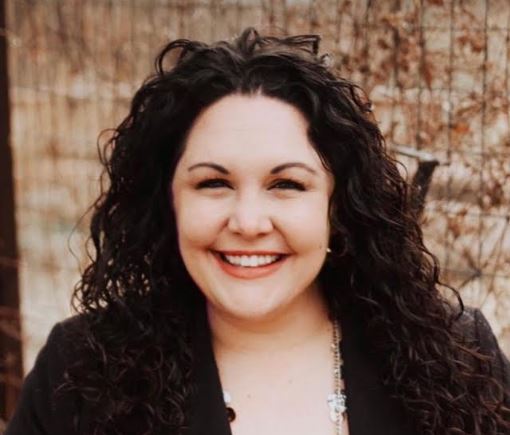
Amanda Retting is the newly appointed SOTMP Administrator for the Colorado Department of Corrections (CDOC). She began her career at CDOC in 2016 providing treatment in the ITC (Intensive Treatment Community). She was then promoted to SOTMP Community Liaison in September 2020 providing continuity of care for clients released from SOTMP into the community. She has a Master’s degree in Counseling and is a Licensed Professional Counselor. She is an SOMB Full Operating Adult treatment provider, Clinical Supervisor, and Associate level evaluator. She serves as co-chair on the SOMB adult standards revision committee and presented at the SOMB annual conference in 2019 and 2021. Prior to her career with CDOC, she had an internship where she conducted offense-specific treatment in the community and completed offense-specific evaluations all over the state of Colorado. She also interned at Colorado Mental Health Institute in Pueblo providing mental health services in the Advanced Cognitive Behavioral Unit.
| |
|
Join the SOMB in Thanking Departing Board Members
In January 2023, two long-term SOMB members will be departing the Board. Detective Jeff Shay from the Pueblo Police Department has served eight years on the SOMB and Glenn Knipscheer, polygraph examiner, has served four years on the SOMB.
Detective Shay works as a the sex offender registry officer for Pueblo in addition to his other duties. Detective Shay has also been the Chair of the Sex Offender Registration Legislative Work Group for the SOMB.
Glenn Knipscheer provides polygraph exams to clients who have bene involved in sexual
offending. Glenn has also been a member of the Application Review Committee approving
provider applications. Please join the SOMB in thanking Jeff Shay and Glenn Knipscheer, and the SOMB wishes them well in future endeavors.
| |
|
Practice Corner
The SOMB has committed to ensuring our Standards and Guidelines are equitable, address diversity, and are inclusive of all individuals. The SOMB Best Practice Committee tasked the Adult Standards Revisions Committee to provide direction in Section 2: Standards for Sex Offense-Specific Evaluations for evaluators when assessing clients who may require or benefit from the Use of An interpreter. Standard 2.160 was revised by the Adult Standards Revision Committee after a literature review regarding the Use of Interpreters and cultural considerations within Treatment was conducted by SOMB Staff Researcher Dr. Rachael Collie. These research-based practices and recommendations were used to draft the new standards. The title of this section is now Language, Culture, and Ethical Considerations and requires evaluators to consider “cultural, ethnic developmental, sexual orientation, gender, medical and/or education issue or disabilities” that may impact the evaluation process.
This standard was expanded to include Standard 2.165 Use of Interpreters. This new standard was created to provide guidance and direction to evaluators should concerns arise regarding the need requirement for a language interpreter. The Standard requires the following guidance:
1. Required use of a Court Certified Interpreter
2. Required information to be shared or communicated with the Interpreter before the evaluation
3. Required Documentation for Evaluators
A discussion point was also drafted to explain the inherent difficulties that arise from the need or requirement to use an interpreter, which evaluators will have to navigate. Prior to its approval, this Language was reviewed by the Victim Advocacy and Best Practice Committee. It also went through a Public Comment Period prior to being voted on and approved by the members of the Board. This standard can be found in the most recent version of the Adult Standards and Guidelines
for the Assessment, Evaluation, Treatment, and Behavioral Monitoring of Adult Sex Offenders.
| | |
|
Please join us for our monthly SOMB meeting In-Person or Virtually.
When: January 20, 2023
Time: 9:00am-4:00pm
Where: Denver Police Protective Association Event Center
2105 Decatur St., Denver, Colorado 80211
Agenda & Registration Coming Soon!
| |
|
Traveling Sex Offender Management Board Meetings
This form is a solicitation for traveling SOMB Meetings across the State of Colorado. This allows for other stakeholders to be a part of our meetings in person. Our meetings are the Third Friday of every month. If you are interested in having a SOMB Meeting in your city, please fill out this form.
| |
|
Research Corner
Dr. Rachael Collie, Staff Researcher/Statistical Analyst, ODVSOM
I highlight two recent articles that demonstrate the effectiveness and importance of evidence-based treatments to address sexual offending. The article by Heppell et al. (2022) focuses on evaluating the effectiveness of group CBT for adult males with intellectual disabilities who have histories of sexually abusive behavior. The article by Olver et al. (2020) examines the ability of dynamic risk, and changes in dynamic risk across treatment, to predict subsequent recidivism. Both provide recent, high-quality, research that supports the effectiveness of CBT programs that address risk factors (criminogenic needs) associated with sexual offending. Both speak to the relevance of assessing changes in dynamic risk across treatment.
Heppell, S. Jones, C. & Rose, J. (2022). The effectiveness of cognitive-behavioral therapy group-based interventions for men with intellectual disabilities and sexual offending histories: A meta-analysis. International Journal of Developmental Disabilities, 68(4), 416-429.
Heppell et al. conducted a meta-analysis to examine the effectiveness of CBT group-based programs for people with intellectual disabilities who demonstrate sexually abusive behavior. Sexually abusive behavior was defined as any sexually related behavior that is considered illegal, or where the other person did not consent or their ability to consent was compromised. A total of 18 research articles were included, reflecting 20 independent program evaluations (N=443). The participants were from a variety of settings, including prison, probation, secure hospital, and forensic community services, and had offenses against adults and children. All participants were considered to have moderate to borderline intellectual functioning. The program outcomes evaluated across the range of studies were improvements in cognitive distortions and attitudes (13 evaluations, 296 participants), increases in sexual knowledge (7 evaluations, 87 participants), increases in victim empathy (7 evaluations, 223 participants), and the occurrence of further sexually abusive behavior (17 evaluations, 179 participants).
The analyses showed a large treatment effect size for improvements in cognitive distortions and attitudes, a medium treatment effect size for increases in sexual knowledge, and a large treatment effect size for increases in victim empathy. At least one incident of further sexually abusive behavior was identified for 11.5% of the participants over a follow-up period that ranged from the end of treatment to 6 years. As all of the studies in the meta-analysis had a within-group design that lacked a matched control group, it is difficult to draw conclusions about the degree that treatment reduced rates of further sexually abusive behavior. Nonetheless, the meta-analysis adds to a small body of research that indicates group CBT programs can lead to effective changes for people with intellectual disabilities who demonstrate sexually abusive behavior. Strengths of the article include that it provides a brief synopsis of each study, uses a thorough approach to assessing the impact of study biases, and discusses the challenges of empirically demonstrating if the rate of further sexually abusive behavior is lowered by treatment in this client group.
Olver, M. E., Nicholaichuk, T. P., Kingston, D. A., & Wong, S. C. P. (2020). A prospective multisite examination of dynamic sexual violence risk: Extension and update to Olver, Nicholaichuk, Kingston, and Wong (2014). Journal of Consulting & Clinical Psychology, 88(4), 362-371.
Olver et al. examined the ability of the dynamic risk scales of the VRS:SO (Violence Risk Scale: Sex Offender Version) to measure treatment changes and predict recidivism amongst male Canadian federal prisoners (N=570) who had undertaken a prison-based sex offender treatment program. The VRS:SO produces a total dynamic risk score comprised of 17 items and three underlying factor scores: sexual deviance (sexually deviant lifestyle, sexual compulsivity, offense planning, sexual offending cycle, deviant sexual preference), criminality (criminal personality, interpersonal aggression, substance abuse, community support, impulsivity, compliance with community supervision), and treatment responsivity (cognitive distortions, insight, released to high-risk situations, treatment compliance). Two additional items add to the total dynamic score but not any of the factors (emotional control, intimacy deficits). The study examined the ability of pre-treatment, post-treatment, and treatment change scores to predict sexual, violent, and general recidivism. All men in the study were referred at some point in their sentence to the sexual violence reduction program (called NaSOP), which was a multisite RNR-style program offered at various levels of intensity. Just under half of the men had sexually offended exclusively against a child (< 14 years), while the remainder had offended against a teen or adult (≥14 years). Participant ethnicity-race was 59% White, 35% Indigenous Canadian, 2% Black, 2% Asian, and 1% Latin American.
Using a fixed 5-year follow-up period, the recidivism rates were 7.8% for sexual recidivism, 18.2% for violent recidivism, and 36.7% for general recidivism. All VRS:SO pre- and post-treatment scores were significantly associated with sexual recidivism, except the sexual deviance pre-treatment score. All VRS:SO pre- and post-treatment scores, except sexual deviance, were significantly associated with violent and general recidivism. Residualized change scores on each measure were significantly associated with decreased sexual and violent recidivism and uniquely added to the prediction of recidivism beyond baseline pre-treatment risk. Residualized change scores reflect change unconstrained by the pretreatment dynamic risk score and account for the measurement conundrum that higher-risk individuals have more room to change on dynamic risk measures than lower-risk individuals. For every 1-point increase in the change score, there was an approximate 11-12% decrease in sexual recidivism after controlling for pretreatment risk. The study demonstrates that reductions in risk associated with treatment predicted reduced sexual and violent recidivism. The findings underscore the dynamic nature of sexual violence risk and support the relevance of these risk factors as broadly defined intervention and management targets.
| |
|
Lunch & Learn Trainings are for SOMB Approved Providers ONLY
SOMB Lunch & Learn: Implementation of the PDMS/New Applications
Presenters: Raechel Alderete & Erin Austin
The Staff of the SOMB is happy to announce that all applications to become an SOMB Approved Provider will now be PAPERLESS. As of January 1st, 2023, all Applications can be entered electronically through the Provider Data Management System (PDMS or Database). This Lunch and Learn is MANDATORY FOR ALL SOMB APPROVED TREATMENT PROVIDERS, EVALUATORS, AND POLYGRAPH EXAMINERS.
This training will provide a comprehensive overview of that process. Staff will walk through each application process from brand new providers, through renewals and requests for a change of status. Since its launch in 2020, changes have been made to the original database to allow providers to update their own information and listing. This training will highlight these changes and provide instructions on how providers can update their information in order to ensure their public listing is accurate. Providers will also be responsible for adding their education and transcripts, employment information, credentials, and DORA license before their next renewal.
WHEN: February 9th, 2023
TIME: 12:00 PM - 1:30 PM
WHERE: Virtual
CEU: 1.5 Hours
COST: Free
More trainings will be posted on our website!! Lunch and Learns are Bi-Monthly on the second Thursday of the month.
| |
|
Specialized Trainer Form
If you are interested in providing training for the SOMB or the DVOMB, please fill out this form.
| |
|
VASOR/SOTIPS Request Form on the Western Slope
Addressing criminogenic needs is critical for risk and recidivism reduction. The VASOR-2 and SOTIPS risk assessments help clinicians and community supervision professionals identify a client’s criminogenic needs when working with an adult sex offender caseload, which will then inform the client’s supervision and treatment. In this course, learners will review static and dynamic risk factors as they relate to sexual recidivism. Using the VASOR-2 and SOTIPS, learners will enhance their skills by scoring case studies to interpret risk levels. Learners will gain insight into the scoring of the assessments and how to interpret risk levels to maximize their case and treatment planning with a focus on risk reduction and enhancing protective factors. Finally, this training includes learner interaction.
2 Day Training
CEU: 14 Hours
| |
|
Trainings Sponsored by Others
Cross-Cultural Validity of Structured Risk Assessment Tools
This Zoom presentation summarizes the research on the generalizability of recidivism risk tools across different racial/ethnic groups, and the potential for culturally-unique risk and protective factors for individuals of Indigenous heritage.
Attend this 2-hour presentation to learn more.
Date: March 1, 2023
Time: 11:00 – 13:00 (Eastern Time Zone; New York/Toronto)
Presenter: L. Maaike Helmus, Ph.D.
SAARNA Vice-President, Research
Free to SAARNA Affiliates, Users, and Trainers (You must log into your account to register and discount will be applied at checkout)
$25 for non-SAARNA affiliates. (Note that SAARNA affiliation costs a mere $25!)
Register Here: https://saarna.org/product/cross-cultural-validity-of-structured-risk-assessment-tools-what-does-the-research-tell-us/
| |
|
NEW - SOMB Provider HUB
The SOMB is excited to announce the new SOMB Provider HUB!! This is a website where Providers can find Lunch & Learn and standard training recordings. This Hub is for SOMB Providers ONLY. In this Hub, all of the previous and future SOMB Lunch & Learn recordings will be posted, as well as Standards Training recordings. You will need to Register for the Provider Hub ONCE and then you will be able to log in throughout the year to view trainings (it is set up similarly to the conference recordings). You will have to manually be Approved before you are able to log into the Provider Hub.
**Note: There is not a set time or date for these online trainings, they will be available at any time after you register throughout the year.
| |
|
2023 Annual Office of Domestic Violence and Sex Offender Management Boards Conference
We look forward to hosting our 2023 Domestic Violence and Sex Offender Management Annual Conference in Breckenridge, Colorado. Our conference typically draws a little over 500 attendees and we hope that you will consider presenting at our conference in 2023. The theme of the 2023 conference is "Activating Intersectionality while Building Healthy Lives & Trusting Partnerships". If you are interested in presenting at our conference, please fill out this form.
| |
|
Committee Updates
Best Practice Solicitation and Description
In 2018, the legislature required the Colorado Sex Offender Management Board to have a Committee of at least 80% Approved SOMB Providers with the purpose of ensuring the Adult and Juvenile Standards remain current with any emerging research. This mandate was assigned to the Best Practice Committee. Currently, this committee makes recommendations to other active committees or the formation of work groups when necessary to carry out the work of the Board. They also review all Standards Revisions and Work Product created in order to make recommendations, and revisions prior to being reviewed by the members of the Board. When issues are brought to the Board, they most
often are assigned to Best Practices to determine a solution or pathway forward. They either assign the work to the appropriate committee or workgroup and make recommendations to the Board after thorough review and discussions. The work of this committee is essential to the SOMB and we invite all providers and stakeholders to attend monthly meetings.
Per the Bylaws of the SOMB, each member can serve 2 consecutive terms for a total of 4 years, unless they are a sitting member of the Board. Currently, there are several members who have reached their term limit, and Staff is looking for new members! We are looking for a diverse group of providers who are innovative, passionate, and committed to progress in the field. Providers who are ready to tackle
issues facing our board and this field head-on are encouraged to apply! If you have any questions, please contact the SOMB Staff via email. The staff assigned to this Committee is Erin Austin, or you can contact Program Coordinator Raechel Alderete. There is currently no limit to the number of appointed members and the only requirement is voting members are made up of 80% Approved Providers.
For questions, please contact Erin.austin@state.co.us or Raechel.Alderete@state.co.us
| |
|
Policy Update
Housing Barriers for Registered Sex Offenders
Housing instability is a known public health issue and represents a public safety concern with justice-involved populations. Housing instability encompasses a range of challenges including access to affordable and suitable housing, moving frequently, and spending the bulk of income on housing, transience, and homelessness. Housing stability is important for employment, social services, and individual and family functioning, while housing instability is linked to a range of negative physical, mental, and behavioral health outcomes. Research highlights, however, that justice-involved populations have additional challenges finding suitable and affordable housing, especially where there is a sex offense conviction history. One barrier to suitable and affordable housing for registered sex offenders is formal and informal residential restrictions. Residence restrictions are laws that prohibit registered sex offenders from living within a specific distance of schools, parks, and other areas where children congregate with the intent to limit the accessibility of potential victims to known sex offenders. Although Colorado has no state-wide residential restrictions, several local municipalities have adopted their own. Despite the intention to protect children and promote public safety, research does not support residential restrictions as an effective mechanism to reduce sexual recidivism.
In an effort to counter misunderstanding, stigma, and exaggerated fears regarding all sex offenders, the SOMB embarked on a project to produce informational material to reduce
unnecessary housing barriers for registered sex offenders. The brief information handout titled Housing Barriers for Sex Offenders is suitable for use by SOMB providers, justice agencies, and offenders. The handout outlines basic facts and key research on individuals with a sex offense conviction including information on risk, recidivism, reintegration, and housing. The SOMB is supporting the information handout with a short presentation that can be shared with interested stakeholders and possible training on key issues. For more information or to obtain access to the handout and presentation PowerPoint, contact Dr. Rachael Collie at rachael.collie@state.co.us
| |
|
Staffing Changes to Reorganize the Office of Domestic Violence and Sex Offender Management
The Office of Domestic Violence and Sex Offender Management (ODVSOM) is excited to announce changes to the office structure and roles regarding the program staff here in the Division of Criminal Justice. In 2016, the program staff supporting the Sex Offender Management Board (SOMB) and the Domestic Violence Offender Management Board (DVOMB) were combined into one office under the leadership of Chris Lobanov-Rostovsky. While the SOMB and DVOMB are defined separately by law, both Boards are structured very similarly and possess similar guiding principles and mandates. This convergence of mandates and functions pointed to the need for a new and more responsive organizational framework focused on the implementation of research-informed practices. By consolidating resources the ODVSOM staff have shifted to a shared-services model as seen below.
| |
|
What does this shared-services model exactly mean? Well, this means that the staff supporting the Boards will be more specialized, more accessible, and more engaged. Raechel Alderete is now the SOMB Program Coordinator and Erin Austin’s is our Implementation Specialist for the SOMB. Erin will have less of a role with the Application Review Committee (ARC) and instead take on a larger role as an implementation specialist for the Standards. She will serve as the lead change agent and support the ongoing implementation of the Standards for training and technical assistance. This means less time processing applications and more time working directly with SOMB Approved Providers, Supervising Officers and anyone else who uses the Standards. You may be wondering if Erin is not managing the application process, then who is? Reggin Palmitesso-Martinez is the newest member of the ODVSOM team and she will be taking on the role of Application and Standards Compliance Coordinator for both the DVOMB and SOMB. Over the last year, the program staff have transitioned to this new model and our hope is that this sets the stage for the next era. Please note that this does not mean the DVOMB is merging with the SOMB; there will still be two separate Boards and staff functions. Please feel free to congratulate the staff in their new roles and opportunities along with welcoming Reggin Palmitesso-Martinez.
Reggin Palmitesso-Martinez - My name is Reggin (pronounced Reegen) Palmitesso-Martinez and I’m so happy to have joined the Division of Criminal Justice, Department of Public Safety! I am originally from upstate New York in the beautiful area of Lake Ontario but have lived most of my life here in sunny Colorado! I have a Bachelor of Arts in Sociology from the University of Northern Colorado. My previous occupation was as a probation officer supervising domestic violence offenders. I am married with three children and one dog, Nala and one cat, Bounty. In my spare time I enjoy traveling, reading, and being outdoors. My favorite season is fall due to cooler temperatures and the beauty of the colors!
| |
|
On the Job, Looking for a Job? The Office of Domestic Violence and Sex Offender Management is Hiring
If you are looking for a change of pace and want to join the Division of Criminal Justice, here is an opportunity for you. The Office of Domestic Violence and Sex Offender Management is hiring a Statistical Analyst. Click here to apply and find out more information about the position. The application closes TODAY, January 9th, at 5pm Mountain Time
https://www.governmentjobs.com/careers/colorado/jobs/3840653/statistical-analyst-ii
| |
|
SOMB Data Management System Analysis Request/Question Suggested form
Description: This form is for all interested stakeholders to request a specific analysis or to suggest a new question for the SOMB Data Collection System. This form can be submitted at any point throughout the year. More immediate requests will be considered based on need and availability. Most other changes and analyses will only be considered following completion of the annual data analysis in November. Great questions are always welcomed by our analysts. For analysis other than what is published in the annual legislative report, the SOMB staff are more than happy to try to accommodate the diverse requests and needs from all stakeholders when possible. However, for effective comparisons and analysis, it is important to only make significant changes once per year. The SOMB staff will meet to discuss the requests for analysis or questions, and will consult with the treatment provider committee (best practices) periodically. All substantive changes to the data collection system will be made in December following this review, so that we can maintain the data consistency as much as possible.
Location: https://form.jotform.com/DVSOMB_Unit/somb-data-management-systemanalysis
| | |
|  |
| | | |