By Alan Schwartz, PhD, President | |
|
SMDM’s officers, board, committees, and members have been hard at work to advance the Society and its mission. On the educational front, the upcoming Introduction to MDM webinar has nearly two hundred people signed up as of this writing, and promises to be a terrific entrée into our multidisciplinary field. The upcoming annual conference in October in Boston is shaping up to be a peak academic experience. Through thoughtful management, we are reducing costs at the same time, and improving the financial position of the Society. And keep your eyes open for the call for nominations for SMDM officers and trustees—nominate yourself or a colleague who can continue to drive the Society forward.
At a recent SMDM Board meeting, I broached the idea that our 2025-2027 strategic plan should be a modest one, and focus primarily on improving the Society’s finances through membership and meeting attendance. To my delight, the Board pushed back, calling for developing aspirational plans that strengthen the Society and reflect new opportunities open to us as a result of the changes in meeting venue and timing and our increasing educational reach outside of the annual meeting. So although we will employ a more modest process (for example, we will not be engaging an outside consultant to facilitate this cycle’s plan), we will develop a set of forward-looking goals for future growth in both members and mission activities. Your suggestions and priorities for activities the Society should undertake are encouraged – please email us (via info@SMDM.org) early and often.
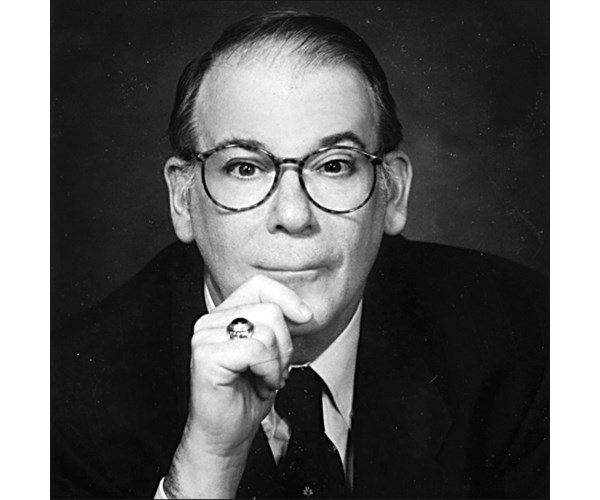
Life is a checkerboard of weal and woe, and while we celebrate these ongoing successes, we also recognize losses and looming threats. Our field lost a guiding light with the passing of Dr. Stephen Pauker, past President and Historian of SMDM. From his seminal work on prenatal decision making together with his wife Dr. Susan Pauker, to his justly famous New England Journal paper with Jerome Kassirer on the threshold model of decision making, to his deep engagement in the Society and commitment to mentoring younger scholars, there are few in our field who have not been influenced by Steve’s contributions. When I met him at my first SMDM meeting, I, like others, initially found his acumen intimidating. He was quick to see the implications and limitations of both his own work and that of others, and never shy to ask questions that explored the heart of a method or finding. But I soon learned to relish talking with him in more depth about his insights, which sharpened my thinking about decision making and showed me how much Steve cared about his patients and his colleagues in SMDM.
Turning from the personal to the national, U.S. researchers who use the Centers for Medicare and Medicaid Services (CMS) research identifiable data have raised concerns about a new CMS proposal to limit forms of access to those data and increase costs. SMDM member and past Trustee Dr. Anirban Basu was recently quoted by ProPublica expressing concern about the impact of the proposed rule on health services and decision science research. Click here for the full story.
Thank you all for you continued support of the Society!
| |
IN MEMORIAM: STEPHEN GARY PAUKER | |
By John B Wong, MD, Tufts Medical Center | |
|
Stephen Gary Pauker passed away comfortably and peacefully while being held by his wife, daughter, and son on 23 February 2024. Having attended what he called meeting zero in Atlanta, Steve was a founding member of the Society for Medical Decision Making where he was trustee 1979-81 and 1982-84, vice president 1981-82, the ninth president 1987-89, second historian 1994-2014, Medical Decision Making Editorial Board member 1980-94, and Associate Editor 1984-94 including Clinical Decision Making Rounds at the New England Medical Center where he had founded the CDM Division. He was the second Distinguished Service Awardee and the first Distinguished Career Achievement Awardee.
Attending every SMDM meeting until he couldn’t, Steve was renowned for his questions which often began with a hand rubbing his bespectacled head followed by his famous “I’m confused” and or “I’m a simple country doctor” after which he would proceed to cut to the essence of the talk as he had processed the aim, the methods, and the results and was now proffering insightful and constructive questions and comments for which he received the Grand Questioner Award from Myriam Hunink. Legend has it that as a Harvard medical student, Steve would appear to “nod off” and then “wake up” and ask an astute question that captured the entire lecture. No surprise then that Steve graduated magna cum laude from Harvard University and Harvard Medical School.
Perhaps Steve’s greatest gift to SMDM were his trainees: Joseph Lau (Director, Tufts and then Brown Evidence-based Practice Center), J Robert Beck (Senior Vice President Fox Chase Cancer Center), Deborah Zarin (Director, ClinicalTrials.gov), Frank Sonnenberg (former MDM Editor, Chief Medical Informatics Officer, Rutgers Robert Wood Johnson Medical School), Joel Tsevat (Director, Center for Research to Advance Community Health and Director, Institutional CTSA KL2 program, UT Health Science Center at San Antonio), Mark Eckman (Director Division of General Medicine, University of Cincinnati), and R. Scott Braithwaite (Director, Division of Comparative Effectiveness and Decision Sciences, NYU Langone School of Medicine) among many others. From 1989 to 2014, ten of the Society’s 25 Presidents were either former CDM fellows or decision scientists with significant mentorship from Steve.
On a personal note, Steve changed my life and shaped my professional career in ways that I could never have imagined. To end with part of a prayer from Einstein and the Rabbi, “Your life has ended, but your light can never be extinguished,” and for that I am eternally grateful. Peace be with you. Please let me invite you to contribute your own personal remembrances online.
| |
CALL FOR OFFICER AND TRUSTEE NOMINATIONS | |
By Beate Sander, PhD, Chair SMDM Nominating Committee | |
|
Each year the SMDM Nominating Committee reaches out to the full membership soliciting candidates to serve on the SMDM Board as Officers and Trustees. Service on the Board offers you the opportunity to help drive the decisions and projects of the society and help shape our future.
We invite you to nominate yourself or a colleague for one or more of these positions:
- President-Elect
- Vice President-Elect
- Secretary-Treasurer-Elect
- Trustee, 3 Needed
We hope to offer SMDM members a diverse slate of candidates from which to choose our future leaders. All candidates need to be SMDM members in good standing for at least 3 of the past 4 years, and candidates for President-Elect and Vice-President-Elect must include evidence of sustained, active involvement in the leadership of the Society. Elections will take place later this year with our new officers inducted during our 2024 Annual Meeting.
Please submit your nominations by the deadline, 20 March 2024!
For more information and to submit your nomination, click the button below.
| |
ABSTRACT REVIEW PROCESS FOR THE
SMDM ANNUAL MEETING
| |
By Victoria Shaffer, PhD, President-Elect | |
|
The call for abstracts for our 2024 Annual Meeting will open soon, and I wanted to briefly outline our process and timeline for scoring abstracts and constructing the program for the conference, with the goal of increasing transparency about operations within SMDM leadership.
The abstract review process begins when the call for abstracts closes on 17 May 2024. ADG (our management company) will then send the blinded abstracts to members of the Scientific Review Committee. This committee consists of members of SMDM who volunteer to review abstracts - a call will go out on 1 April for the 46th Annual Meeting in Boston. Each Scientific Review Committee member is asked to review approximately 15 abstracts within their self-identified area of expertise (i.e., Decision Psychology and Shared Decision Making, Applied Health Economics, Health Services, Outcomes and Policy Research, Quantitative Methods and Theoretical Developments, and Patient Stakeholder Preferences and Engagement). Reviewers provide a score for each abstract on a 1-10 scale, where ‘1’ = Unacceptable and ‘10’ = Outstanding, and brief comments about the rationale for their rating. The goal is for each abstract to receive 7-8 reviews . After the review scores have been submitted, they will be compiled by ADG and sent to the Scientific Review Committee Co-Chairs. They will create an overall score for each abstract by calculating reviewer specific z-scores (i.e., normalizing each abstract raw score within reviewer) and then constructing the average z-score. Our Scientific Review Committee Co-Chairs for the 46th Annual Meeting in Boston are Ellen Lipstein and Reza Yaesoubi.
The abstracts submitted for consideration in the Lee B. Lusted Student Prize Competition are sent to the Lusted Co-Chairs to select the finalists. The Lusted Student Prizes are awarded for outstanding student posters at the Annual Meeting. The competition is named after Dr. Lee B. Lusted, a leader in advancing medical decision making as a field and founding member of the Society in 1979. He was also the first editor of the Journal of Medical Decision Making. Two awards are given in each of the five SMDM Scientific Areas of Interest. The Lusted finalists will present a short “elevator pitch” and a poster based on their abstract at the moderated Lusted session during the Annual Meeting. Abstracts selected as Lusted finalists will not be eligible for any other oral or poster sessions. Our Lusted Co-Chairs for the 46th Annual Meeting in Boston are Kathryn Martinez and John Giardina.
After the Lusted finalists have been chosen by the Lusted Co-Chairs, the Scientific Review Co-Chairs will slot the remaining abstracts into oral and poster sessions based on the abstract score, reviewer comments, topic of the abstract, and fit to meeting theme. The Scientific Review Committee Co-Chairs, with approval from the Annual Meeting Co-Chairs, will finalize the conference program. Finally, ADG will send acceptance and rejection notices to authors by 26 July 2024. Abstracts accepted for an oral or poster presentation will include the date and time of the scheduled session.
In the last two years, we have navigated changes in management companies and abstract submission platforms, which caused significant delays in receipt of the abstract acceptance/rejection notices. This year we are positioned to send abstract notices in an efficient and timely fashion. To adhere to the abstract review timeline, we will not extend the abstract submission window past the original due date. Please note that this year abstracts will not be accepted after 17 May 2024.
We are looking forward to a vibrant meeting in Boston this fall! Please stay tuned for key details about the upcoming meeting, including the keynote speaker, themed symposia, social event details, and more. I am excited to see you in October!
| |
SMDM'S PRESIDENT ON MDM AND THE LAW | |
By Alan Schwartz, PhD, President | |
|
In lieu of a U.S. legal case in medical decision making for this issue, I’ll give you the results of a search of published legal cases for “quality-adjust life years”, “quality-adjusted life expectancy”, “QALY”, or “QALE”. There are only four published judicial opinions that use these terms. One is an early opinion in American Trucking Associations, Inc. vs. U.S. Environmental Protection Agency (EPA), a 1999 case about regulation of air pollution. The opinion included a paragraph that referred to QALYs as an analogy in suggesting that the U.S. EPA “should be capable of developing the rough equivalent of a generic unit of harm that takes into account population affected, severity and probability”; the opinion was later modified after rehearing and this paragraph was removed. A second case, Janssen Pharmaceuticals., Inc. vs. Teva Pharmaceuticals USA, Inc., was a 2021 patent lawsuit, where the owner of a drug patent presented an article reporting a favorable Dutch cost-utility (€/QALY) as evidence of praise of the drug. The third case was a 2008 product liability class action, In re Zyprexa Product Liability Litigation, arguing that a drug manufacturer has misrepresented the drug’s efficacy and overpriced it. An expert witness employed QALYs in comparing cost-effectiveness of Zyprexa vs. two competitors. The fourth case, In re Blitz U.S.A. Inc., is a 2013 bankruptcy proceeding against a company that made portable gas cans, in which the bankruptcy court lays out a procedure for evaluating the loss of enjoyment resulting from burn injuries based multiplying the annual average value of life (which it set at $356,000/life year) by lost quality of life. The court refers to QALYs as “the accepted measure for loss of enjoyment”.
What do we learn here? First, QALYs (and medical cost-utility analysis) aren’t unknown to the courts as a valuation method or as evidence of value. Second, although there is a fair amount of U.S. legal writing about QALYs, the term appears in published opinions very infrequently in America. In comparison, a quick search in other English-language countries found at least 17 published opinions involving QALYs in the U.K. and Canada, countries where cost-effectiveness analysis is expected, rather than discouraged by health technology assessment regulators.
| |
|
HOT TOPIC:
MAKING MEDICAL DECISIONS FOR OTHERS
| |
|
By Aisha Langford, PhD, Deputy Editor
Many MDM interventions focus on providing adults with sufficient information to make informed decisions for themselves (e.g., vaccination, screening, treatment, participating in a clinical trial). Individual decisions are often made alone, but can also be made in consultation with important referent others such as clinicians or partners when desired. While not always easy, decisions for oneself are often based on one’s personal values, preferences, health goals, and assessment of financial toxicity. However, making medical decisions for others can be more challenging. You may not always know what the other person would want or prefer. Depending on the situation, you may have to balance the needs of a caregiver who is there 24/7 alongside the needs of the person for whom decisions need to be made. For example, if an older loved one needs help with activities of daily living, the family may also have to weigh the financial implications of different long-term care options against the impact of each option on elder health outcomes.
Many of our SMDM members are tasked with making medical decisions for others: children, parents, significant others, extended family members, and friends. The role of being the surrogate decision maker often comes with questions, conflicting priorities, and strong emotions. For example, the decisions some parents make on behalf of very young children may have long-term implications (e.g., how to handle osteosarcoma). In such cases, there can be fear that children will question the choices made by their parents once they get older. Helping a loved one/significant other make decisions can be a blessing and a burden at the same time, but many people are afraid to admit this because of “caregiver guilt”.
We would like to hear from you about your experiences making decisions for others. All answers are anonymous.
- What is the hardest health-related decision you had to make for someone else?
- How, if at all, do we need to support parents, caregivers, and other surrogates differently with regard to MDM tools?
- Has your MDM knowledge helped or hindered you in your role as a surrogate decision maker?
| |
|
POLL RESULTS:
EDUCATION COMMITTEE REPORT
| |
|
By Margo Wheatley, PhD, Co-Chair SMDM Education Committee
The SMDM Education Committee has been busy organizing strong educational offerings for members and non-members in 2024.
Core Courses: Core Courses for SMDM's Certificate Program will be offered virtually this year in April (note: this is a departure from previous years when Core Courses were offered in the 3rd quarter alongside the North American SMDM Annual Meeting). In 2025, they will be held again in the 3rd quarter. The Core Courses will be offered on the following dates:
- 3 April 2024: Introduction to Cost Effectiveness Analysis
- 10 April 2024: Introduction to Psychology of Medical Decision Making
- 17 April 2024: Introduction to Shared Decision Making and Patient Decision Aids
- 24 April 2024: Introduction to Medical Decision Analysis (Decision-Analytic Modeling)
Free Webinars: Our first free webinar of 2024: “Introduction to Medical Decision Making,” was held on 28 February and had over 90 participants from 19 countries. During the webinar, each core course faculty provided a high-level overview of their course content. We hope this webinar introduced participants to SMDM as a professional society, generated interest in medical decision making, as well as promoted our core courses. Thank you to all course faculty who participated! The recording is available here.
Tutorial Webinars: We will continue to offer 1-1.5 hour Tutorial Webinars as a member benefit. Stay posted for information on our next tutorial!
Results from the Poll on Education: We received 115 responses to the Education Committee's survey in the SMDM last newsletter. Thank you to those who participated! Here are some results. The top two reasons why respondents did not take a virtual course in 2021-2023 were 1) scheduling challenges and 2) costs were too high. Respondents provided nearly 100 ideas for virtual short courses they would like to see. Some of the top themes were courses on artificial intelligence, health equity, discrete event modeling, multi-criteria decision-making, and more advanced courses on decision modeling.
Virtual Short Courses: We plan to continue hosting virtual short courses throughout the year and would like to expand our offerings to meet the many interests among our members. If you would like to teach a virtual course, please submit your proposed course below.
| |
NEW SESSIONS FOR TRAINEES ANNOUNCED | |
|
By Hadley Smith, PhD, MPSA and Ryan Suk, PhD
Grant Review and Networking for Trainees (GRANTs)
SMDM DSCCo + CDC
We are excited to announce the launch of a new series hosted by the SMDM Decision Sciences for Child Health Collaborative (DSCCo) and the Career Development Committee (CDC) that will focus on grant preparation and guidance, Grant Review and Networking for Trainees (GRANTs).
- We will address topics related to grant funding in quarterly one-hour virtual meetings, including strategies for writing successful decision science proposals for health funders and experience with various career development and research award mechanisms.
- We will also provide the opportunity for trainees and early career researchers (within 10 years of their terminal degree) to receive valuable feedback on a polished draft of a portion of a proposal in progress (e.g., a specific aims page or a letter of intent).
- Participation will be limited to SMDM members to encourage free exchange of ideas and maintenance of confidentiality.
Whether you are an experienced grant writer or new to the process, this program offers a valuable chance to receive expert and peer feedback. Register today!
| |
|
SHARED DECISION MAKING SIG:
21 MARCH MEETING
| |
|
By Semra Ozdemir Van Dyk, Ph.D.
The 21st Century CURES act, which was implemented in April 2021, mandates that imaging reports must immediately be available to patients through an online portal. The implications of this law are widespread, affecting patient-provider relationships and almost every aspect of healthcare.
Patient preferences research on communication of imaging reports indicates frustration with the unpredictability in communication practices and a desire for more information from the reports they receive. Meanwhile, qualitative studies have shown ordering provider’s (OP) acknowledgement of patient dissatisfaction and their own grievances on the results-sharing processes. However, there remains a gap in knowledge concerning which factors of imaging report communication with patients contribute to patient and OP frustration. In addition, it is unclear how patients make trade-offs between attributes of imaging services and how preferences vary among and within different patient populations.
| |
Patient Understanding of Imaging Reports: Differences in Perception Between Patients and Providers
21 March 09.00 PDT | 12.00 EDT | 16.00 UTC | 17.00 CET
Dr. van den Broek-Altenburg will present results from a study in which patients and OP’s were asked why they are dissatisfied with direct imaging report communication. The objective was to determine if there are differences in interpretation between patients and OP groups. She will also discuss results from a Discrete Choice experiment looking at the trade-offs that patients make when choosing between different imaging service locations and patient preference heterogeneity for interpretation by a (sub)specialty versus a general radiologist. Dr. van den Broek-Altenburg will seek to answer the question what shared decision making should look like when there is no direct patient-provider relationship.
| |
|
MDM JOURNAL EDITORS AND ABSTRACTS HOURS | |
|
By Brian Zikmund-Fisher, PhD
Editors and Abstracts Hours Continue!
Just a reminder that MDM Journals Editor-in-Chief Brian Zikmund-Fisher and Deputy Editor Lauren Cipriano will be hosting Editors and Abstracts Hours on the following dates:
- Thursday, 11 April 2024
- Thursday, 16 May 2024
- Thursday, 13 June 2024
Each session will be at 09.00 PT | 12.00 ET | 17.00 UTC | 18.00 CET.
Details and Zoom link information is always available on the MDM journals website: https://www.journals.smdm.org/editors-and-abstracts/ . While reservations are not required, we always appreciate it if prospective authors let us know (mdm-journal@umich.edu) that you are planning to join us.
We encourage all prospective authors to join us, share your draft abstract. Our goal is to answer questions about fit to the MDM journals and to provide constructive feedback. There is no cost or obligation, just an opportunity to talk with the editorial team.
We hope to see many of you soon!
Brian and Lauren
Announcement: 2023 Philadelphia meeting abstracts are now available for members to read in the Medical Decision Making Journal.
| |
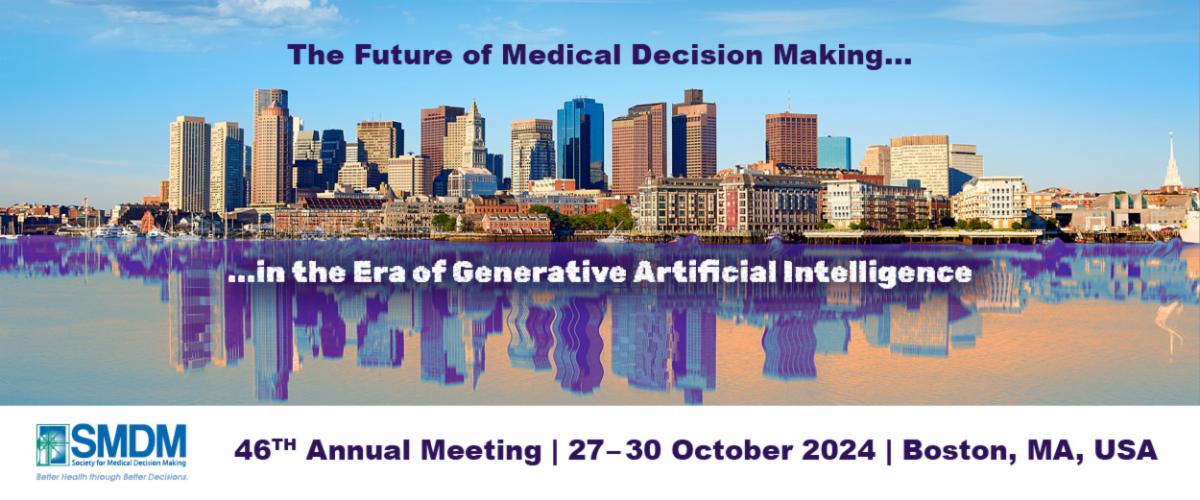 | |
Plans for the 46th Annual Meeting have been underway since last summer. We are pleased to report that we are on schedule and it is going to be a meeting you won’t want to miss. Why not? Here are our top four reasons:
- Our theme is “The Future of Medical Decision Making… in the Era of Generative Artificial Intelligence.” With AI becoming increasingly integral to our lives, from the news we read to the devices we use, this year's theme couldn't be more relevant. We'll dive into how AI is reshaping medical decision-making, offering insights and discussions that are both timely and critical for our profession. Stay tuned for additional details.
- This year marks our first time hosting the North American meeting on a college campus. The 2024 meeting will be held at the George Sherman Union at Boston University. The Union, renovated in 2020, is a vibrant student hub on the campus, featuring a food court, study lounges, and the auditoriums and rooms SMDM will utilize. Attendees will be provided a choice of hotels within walking distance of campus.
- In another first, we are excited to integrate group meditation and campus walking breaks into the schedule! Explicitly incorporating mindfulness and exercise into the schedule reflects our commitment to wellbeing.
- Did we mention Boston? Boston consistently ranks at the top of “best of” lists, not only for US cities but worldwide. Boston has something for everyone. From historical sites to art museums, plenty of parks and outdoor walks, family-friendly spots like the aquarium, you’re sure to find something to delight in while visiting Boston.
Thanks in part to our developing and stable relationship with our management company, ADG, our abstract timeline is on schedule this year!
The call for abstracts, short courses and symposia will open soon. Please note that the deadline is 17 May 2024. As SMDM makes the change in our Annual Meeting schedule, hosting the 47th Annual Meeting in Ann Arbor, Michigan only 8 months after the 46th Annual Meeting in Boston, we must keep firm to the 17 May deadline to avoid science compression.
Download our Prospectus to share with possible supporters of our Annual Meeting. We have opportunities for supporters from $1,500 to $15,000 and welcome an opportunity to discuss possibilities further.
| |
|
Are you an abstract author whose first language is not English, and would like a quick abstract review? Submit your abstract by 1 May 2024 for pre-submission review and feedback.
This pre-submission review is limited to identifying grammatical errors, inappropriate word choices, and ensuring that language is appropriate for an academic abstract submission. This program will not involve feedback on scientific content or research methods, since these will be reviewed separately during the main abstract review process.
The final abstract submission deadline is 17 May 2024. Abstracts will be returned by 8 May to allow time to incorporate suggested edits before the 17 May deadline. To be eligible for the Pre-Submission Abstract Review Program, please email abstracts to Cara McDermott by 1 May.
Please note that this program does not guarantee acceptance of the abstract by SMDM. If you have any questions, please contact Cara McDermott at cara.mcdermott@duke.edu.
| |
 | |
“SMDM’s 2025 Annual Meeting is going to be in Ann Arbor? Why would we want to go there?”
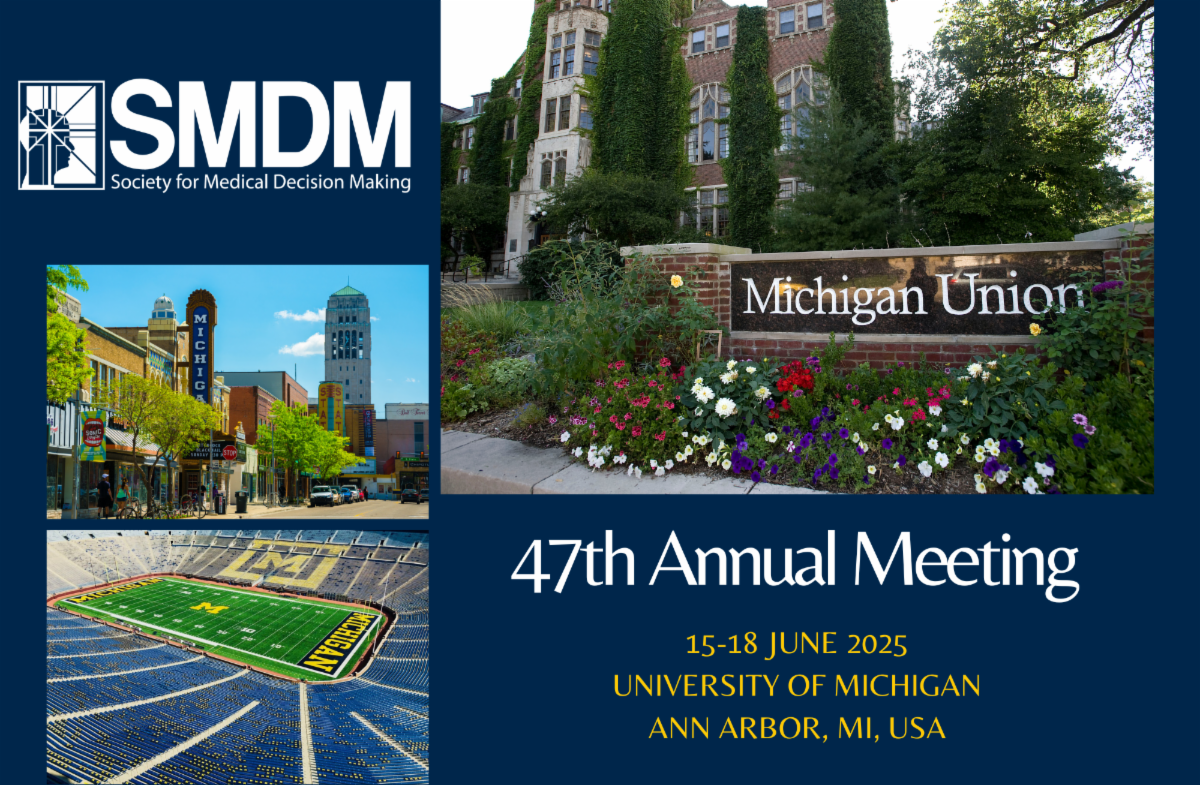
Well, I (Brian Zikmund-Fisher, Meeting Co-Chair) am a 20+ year resident of this city, and I’m quite serious when I say that June is the absolute best time to see this city!
June in Ann Arbor, Michigan means average high temperatures of 80°F (27°C,) with lows of 58°F (19°C). Humidity is low, and the daylight hours are long (sunset is around 9:15pm!). Plus, the average June has only 8 days with rain (and usually only passing rain at that).
While A2 is the home of the University of Michigan, the city is far more than just the university. This quintessential college community hosts world-class arts and culture (including free summer outdoor concerts), a vibrant and diverse set of dining options, trees everywhere, scenic trails for the lover of the outdoors, and bookstores for the bookworms. Want to really go exploring? You can literally rent a kayak and paddle your way down the Huron River through Ann Arbor and the University of Michigan campus.
All of that translates into a perfect setting for the 47th Annual Meeting, on 15-18 June 2025. Our sessions will be primarily in the architecturally stunning and recently renovated Michigan Union building, but you’ll also have opportunities to explore the campus and town. Enjoy the sessions, posters, conversations, networking, and karaoke in “Tree Town.” And, if you’re up for it, join us Monday night at “the Big House” – the Stadium Club at the 107,601 seat Michigan Stadium – for the social event (complete with run on the field!).
The University of Michigan campus is just 30 minutes from Detroit International Airport (DTW). As one of the largest hub airports for Delta Airlines and its codeshare partners, DTW’s offerings include direct flights from most major European and Pacific Rim airports as well as major US destinations.
Please note: The 47th Annual Meeting will be the first meeting on our new late spring / early summer schedule. The change in meeting schedule will impact the abstract submission deadlines and turnaround for Ann Arbor. The call for abstracts for the 2025 Ann Arbor meeting will go out on or around 1 November 2024, with submissions due in January 2025. Be sure to mark your calendar and plan on the earlier time frame!
Save the dates and plan to join us!
| |
|
By Eva Enns, PhD at University of Minnesota School of Public Health
We have recently been funded by CDC Center for Forecasting and Outbreak Analytics to establish the Midwestern Disease Modeling and Analytics Preparedness Center (MDAP), a collaboration between the University of Minnesota, Minnesota Department of Health, and the Minnesota Electronic Health Records Consortium, a consortium of the largest health systems in Minnesota. Over the next 5 years, MDAP will work with public health and health system partners to establish and pilot test mathematical modeling and data analytic tools to support decision-making during a pandemic or other infectious disease emergency. MDAP brings together academic experts in decision analysis, infectious disease modeling, data analytics, health informatics, machine learning, and geospatial analysis to work with state public health and health system leaders. We look forward to engaging with the SMDM community on this important work!
Read more here: Press release
| |
|
|
By Hal Sox, MD
The Third Edition of the textbook Medical Decision Making (authors Hal Sox, Mike Higgins, Gillian Sanders Schmidler, and Doug Owens) is now available for purchase. Earlier editions were published in 1988 and 2012. Six of the 15 chapters are entirely new, and the others have been substantially revised. 356 pages. Detailed information, including a table of contents for each chapter, is available at the John Wiley and Sons website.
| |
|
Editor-in-Chief
Netherlands Cancer Institute
| |
|
Deputy Editor
Aisha Langford, PhD
Wayne State University School of Medicine
| | | | |