|
Guardian Asset Management
Single Family Rental
Newsletter
| |
Single-family rents trend upward a
after previous cooldown
| | |
|
|
Single-family rents have risen by a mind-boggling 39.6% since the COVID-19 pandemic began in March 2020. More recently, these increases have been more of a mixed bag, depending on the metro area.
At the national level, rent growth is gaining speed again. Zillow‘s monthly rental report shows that U.S. single-family rents rose by 4.7% year over year in June and were 0.4% higher than in May. Additionally, rents rose on an annualized basis in 49 of the 50 largest metro areas. Previously scorching Austin was the only metro where rents fell year over year — but only by a modest 0.6%.
The typical monthly rent for a single-family home in June was $2,288. Cleveland registered the highest year-over-year single-family rent growth at 8.9%, followed by Milwaukee (7.7%); Cincinnati (7.6%); Louisville, Kentucky (7.5%); and St. Louis (7.2%). Four metros — Buffalo, New York (-1.6%); Austin (-0.1%); Hartford, Connecticut (-0.1%); and New Orleans (-0.03%) — saw rents fall on a monthly basis.
“More people move during the summer, which causes the rental market to heat up,” Skylar Olsen, chief economist at Zillow, said in the report. “Renters are being drawn to more affordable areas within the Northeast and Midwest. Commuting into New York City or Boston from places like Hartford or Providence might have been a deterrent before, but in this new age of remote and hybrid work, the savings seem worth it for many renters, even if it means an occasional painful commute.”
| |
SFR investors drive up rents, but don’t cause gentrification: Philadelphia Fed | |
|
Institutional investors in single-family rental (SFR) houses cause rents in a neighborhood to increase quickly, but their entrance into a neighborhood doesn’t cause gentrification.
That’s the conclusion from a working paper released Tuesday by the Federal Reserve Bank of Philadelphia. The paper examined the impact of an SFR company entering a neighborhood by using tax transfer records, deed transfer records, and data from multiple listing services from 2010 to 2021.
Rent increases can be dramatic when SFR investors enter a neighborhood. The study found that when investors first acquire a property, they raise the rent 60% more than the average increase.
After the initial big rent hike, increases were about 7% on average, which is more in line with the norm but still elevated relative to noninvestors. A higher share of investors in a neighborhood also pushes rent up in houses that are not owned by investors.
Investors also tend to target neighborhoods with a higher share of Black residents. They look for lower home values that are coupled with higher median incomes from residents. This gives investors a relatively cheap way into a neighborhood, but also provides room for residents to absorb higher rents given their incomes.
| |
|
21 Best Cities to Invest in Real Estate | | |
|
|
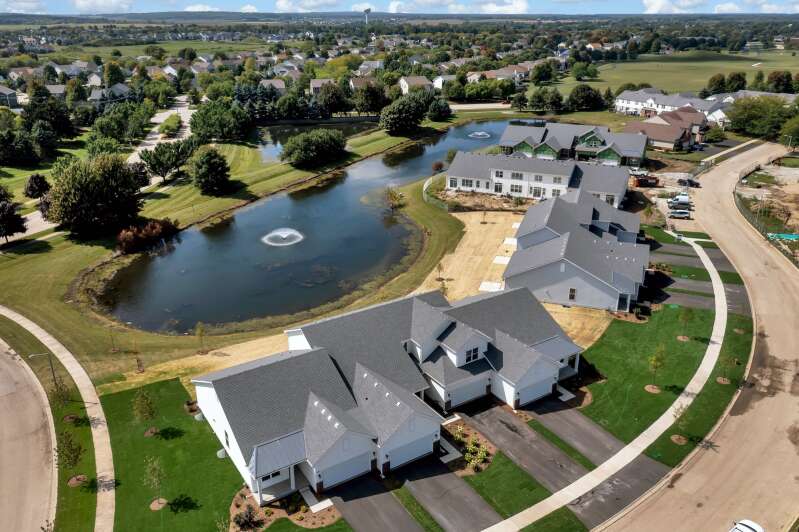
The single-family rental market in the US is very robust, according to Arbor's March 2024 report. While high benchmark interest rates have affected various commercial property types, the single-family rental (SFR) sector stands out for its resilience. Despite economic uncertainties, SFR homes maintain their value, with home prices remaining robust and delinquency rates staying at remarkably low levels.
SFR construction emerges as a beacon of strength within the sector. As the affordability of homeownership declines, developers pivot towards build-to-rent (BTR) projects. This shift has propelled the number of SFR/BTR construction starts to unprecedented levels, reflecting the increasing demand for rental properties.
According to data from the Atlanta Federal Reserve Bank, the affordability of purchasing a home has plummeted by approximately 37% since the beginning of the pandemic. Consequently, the allure of SFR as an affordable housing solution has intensified. The SFR sector's appeal extends beyond affordability, attracting a new wave of renters characterized by their demographics and lifestyle preferences.
| |
Miami Still Most Competitive Rental Market | |
|
RentCafe, Santa Barbara, Calif., analyzed the competitive state of the rental market, finding that Miami has retained its position as the most competitive rental market, followed by suburban Chicago and northern New Jersey.
Rounding out the top 10 most competitive markets at the start of the 2024 rental season are Grand Rapids, Mich., Milwaukee, Wis., Silicon Valley, Calif., Orlando, Fla., Orange County, Calif., Eastern Los Angeles, Calif., and suburban Philadelphia.
Nationwide, RentCafe pegs the “competitivity score” at 73.4 out of 100, meaning the apartment market is moderately competitive.
In order to determine that score, RentCafe looked at 137 U.S. markets, and uses factors including the number of days apartments are vacant, the percentage of rentals occupied, the number of renters competing for each vacant unit, the percentage of renters who renewed and the share of new apartments completed.
Across the U.S., 62.4% of renters re-signed their leases, up from 59.7% last year. RentCafe pointed to better deals and incentives to renew, as well as longer leases–all offered by buildings to remain competitive as more units come online.
| |
|
Here’s where U.S. rents are rising
— and falling — the fastest
| |
|
Many major U.S. cities have seen apartment prices soar in the past year, even as the typical American has seen pandemic-era rent inflation cool substantially.
For example, renters in Syracuse, New York, saw monthly rents for one- and two-bedroom apartments on the market jump the most relative to other big cities: by 29% and 25%, respectively, since June 2023, according to data in Zumper’s National Rent Report.
Zumper analyzed median asking rents for apartment listings in the largest 100 U.S. cities by population.
Rents have also risen by at least 10% for both one- and two-bedroom apartments in other major metros: Lincoln, Nebraska; Chicago; Buffalo, New York; Madison, Wisconsin; Rochester, New York; and New York City, according to Zumper.
Conversely, renters in other cities are seeing relief.
Asking rents for one-bedroom apartments have declined by at least 5% in Oakland, California; Memphis and Chattanooga, Tennessee; Cincinnati, Ohio; Colorado Springs, Colorado; Irving, Texas; Jacksonville, Florida; and Raleigh, Greensboro and Durham, North Carolina, according to the analysis.
| |
|
Counties and states are ending single-family zoning. Homeowners are suing. | | |
|
Marcia Nordgren says she bought her house — a cream-colored, four-bedroom Cape Cod nestled on a ridge in the D.C. suburbs — specifically because it was in “a leafy, low-density” neighborhood.
In the two decades since she and her husband purchased the property for $1.5 million, the area stayed that way. And that was by design: Local laws meant that only single-family houses could be built in this corner of booming Northern Virginia.
Last year, though, lawmakers in Arlington County tossed out those rules with a landmark zoning change that mirrors similar efforts in cities and suburbs around the country. Many of Nordgren’s neighbors can now replace their houses with buildings containing multiple small apartments.
No one on her block has done so, and the nearest property slated for such a transformation is nearly a mile away. But Nordgren maintains that the change has caused her potential harm — a claim that will be at the heart of a trial in Arlington Circuit Court beginning Monday. She and eight other single-family homeowners are set to argue that county officials failed to adequately study the impacts of such a plan before approving it.
| |
| | | |