President's Message

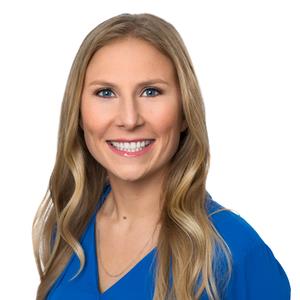
Emily Guglielmo, SE, PE, F.SEI

2023-2024 SEAOC President


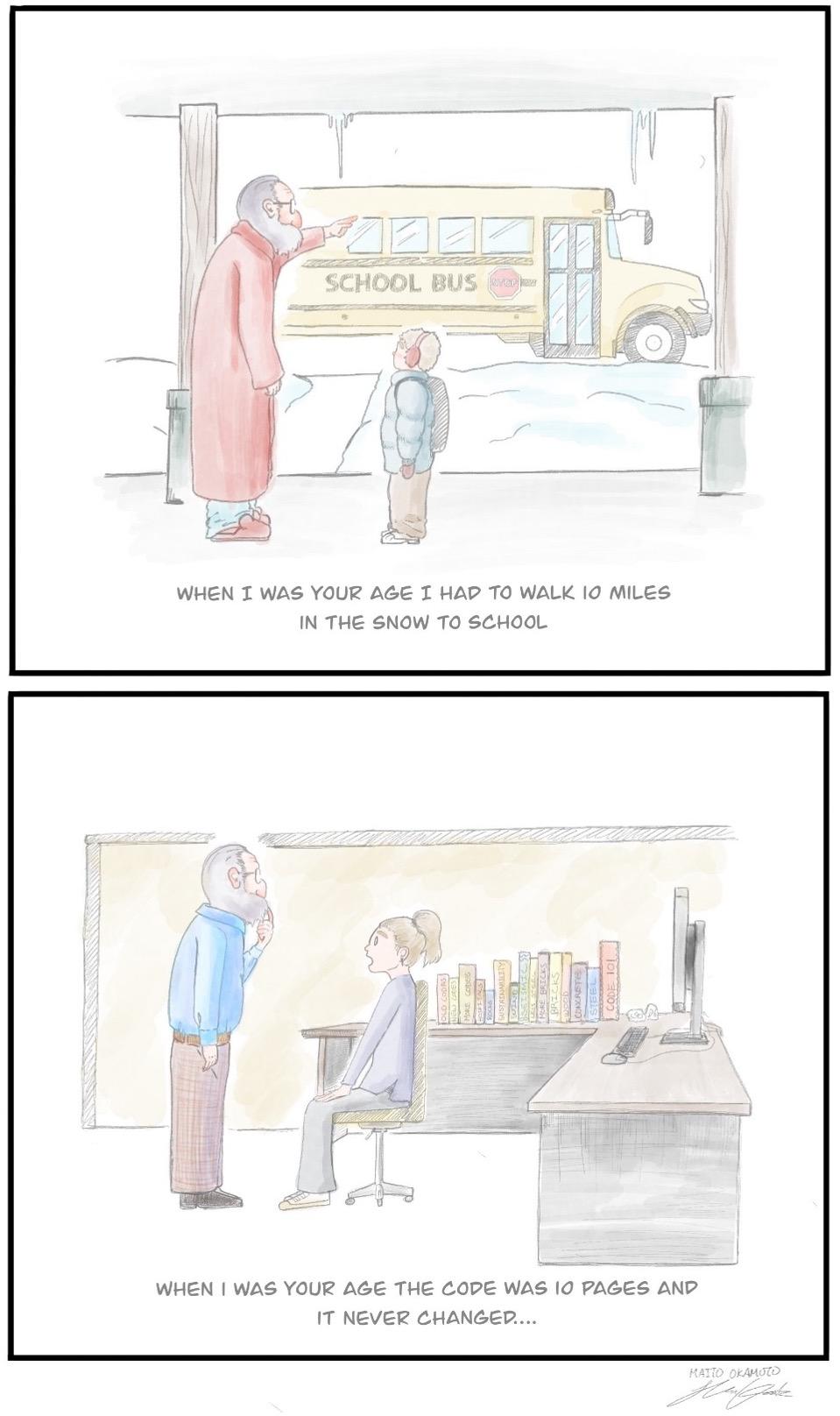
One of the most enduring refrains in structural engineering is a complaint about the complexity and perpetual evolution of our building codes. It's a sentiment often expressed with a hint of nostalgia for simpler times. This recurring reflection serves as a poignant reminder of our ever-changing professional landscape.

Consider the humble beginnings of the 1959 SEAOC Blue Book, a mere seven pages of text that laid the groundwork for our profession's seismic standards. Sixty-five years later, the challenges facing our profession may vary but the essence of remained the same: a skilled structural engineer is essential to interpret and apply the provisions to each unique structure.

"The code provides minimum design criteria in specific categories, but in broad general terms. Reliance must be placed on the experienced structural engineer to interpret and adapt the basic principles to each specific structure…. great latitude for the exercise of analysis and judgement must be given the responsible structural engineer.”

-1960 SEAOC Blue Book


This tension between providing specific guidance and allowing room for engineering judgment has persisted for decades. 


“Because of the great number of variables and the complexity of the problem, it is impractical and beyond the scope of this code to so detail... as to make it cover specifically all the variations in response, the dynamic characteristics of the structure, the variables in ground motion, the intensity of the earthquake, the distance to the epicenter of the seismic disturbance, and the types of soil.”

-1960 SEAOC Blue Book


Many factors that our founding fathers found too impractical and complex to codify are now embedded in our building code. If those factors were removed, it would presuppose that all practicing engineers possess a thorough understanding of (for example) the USGS research on near fault effects that underscores the current provisions. In this example, providing the latest science directly in the code facilitates our ability to incorporate the latest research with resultant increased public safety and reduced legal liability.


While we may sometimes pine for simpler times, we must recognize that complexity often mirrors progress. Each code revision represents an opportunity to incorporate new research findings, technological advancements, and lessons learned from past failures. This continuous evolution demands professional commitment to ongoing education and adaptability.


The precise balance between progress and practicality is difficult to achieve. Simplification shouldn't come at the cost of ignoring critical research and new change proposals should be rejected if they do not improve the code and associated safety. Today’s structural engineers must actively engage in code development, like the SEAOC trailblazers before us, who pushed boundaries while not losing sight of practicality.


As we celebrate National Building Safety Month, let us reaffirm our dedication to advancing our profession while upholding the highest standards of safety and integrity. Together, let's navigate the complexities of our evolving codes with wisdom, innovation, and a steadfast commitment to building a safer future for all.


Wind Paper is Now Available!


SEAOC's Wind Committee is please to release Report Regarding Special Wind Regions and Basic Wind Speeds in Southern California. The report is a continuation of the committee's efforts to define the Basic Wind Speed in each of California’s Special Wind Regions so that engineers and building officials do not need to guess as to what wind speed to use.


Special Wind Regions are defined by the ASCE 7 standard, which is published by the American Society of Civil Engineers (ASCE). Although many Special Wind Regions are located in remote areas with small populations, ASCE 7-22 includes a new Special Wind Region in Irvine, California that threatens to upend wind design in this highly populous region. The report provides recommended Basic Wind Speeds in the new Irvine Special Wind Region and eliminates a northern portion of the San Gabriel Special Wind Region.


The ultimate goal of this effort is The Committee hopes to incorporate the results of the studies into the online Hazard Tool maintained by the ASCE for the ASCE 7 standard.


If you are interested in participating with this ongoing effort, please contact Wind Committee Chair Gwenyth Searer at gsearer@wje.com.

SEAOC 2024 Convention President's Cup

Sponsor Your Team!

This year will see 5 teams competing for the President’s Cup – that’s right, our four SEAOC MOs and a team representing the NorthWest Conference. We all love a bit of healthy competition, and the planning committee has something great in store for us. Along with the fifth team this year, we’re also offering each team a BONUS for fundraising. The event this year will be hosted in a hotel ballroom and will include a time component. For each $100 in sponsorship, your choice of sponsored team will receive a time deduction. Signage at the event will include your logo and we’ll be sure to thank all the sponsors! If you’d like to sponsor the event without tying your sponsorship to a specific team, we’ll gladly accept and apply it evenly across all 5 teams. 


This event will be held on Friday afternoon after the final technical event of the conference. We look forward to everyone’s participation whether that be actually competing, cheering on your team or good-natured heckling of the other teams. 


To sponsor, please contact us at SEAOC2024@seaoc.org, indicate in the subject “President’s Cup Sponsor” and we can connect with you to ensure your payment makes it to your team. 


Looking forward to Seeing you all at the Convention in September!


Melissa Vickery (Convention Chair)

Megan Vandervort (Convention Vice-Chair)

Lauren Posey (Presidents Cup Lead Planner)


SPONSOR YOUR TEAM

Registration for this year's SEAOC Convention + Northwest Conference is now open!


Hyatt Regency at the 

Oregon Convention Center

Portland, Oregon

Sept. 4-7, 2024


REGISTER NOW

Early Bird registration rates available until May 26th.

This year's convention features:

  • 4+ Tracks of Technical and Professional Development Topics, Robust Pathways Program, AI Workshop
  • President's Cup, Business Lunch, Fellows Induction & SEE Awards
  • Thursday Dinner hosted by CSI & Friday Convention Dinner
  • Plus Much More!


LEARN MORE ABOUT THE CONVENTION

Become A Convention Sponsor


Sponsorship opportunities are still available. Click the button below to learn more and sponsor today!


BECOME A SPONSOR

Thank You to Our Convention Sponsors!


Anchor Sponsor

App Sponsor


Welcome Reception Sponsor

Friday Night Reception Sponsor


SEAOC Seismology - Creativity and Innovation in Structural Engineering Seismic Design


Please help the SEAOC Seismology Committee with our white paper on Creativity and Innovation in Structural Engineering Seismic Design.


While it may not be noticeable in the daily activities of a structural engineer, it could be argued that innovation is ubiquitous in structural engineering. Table 12.2-1 in ASCE/SEI 7 contains over 80 different lateral force resisting systems and the list continues to grow. This number of prescriptive lateral systems is substantially larger than what was in the first SEAOC Blue Book. However, some claim that this list of systems is too limiting (NEHRP Recommended Seismic Provisions 2020 Edition) and engineers can go outside of these prescriptive requirements using an alternative means of compliance and peer review. These innovations can range from small tweaks to prescriptive lateral systems, such as using high strength reinforcement in concrete shear walls, to lateral systems completely undefined in ASCE 7, such as straw-bale houses. The Provisions Update Committee (PUC), which reviews technical code change proposals to the ASCE 7 standard, has a task committee further investigating this topic by exploring the possibility of allowing engineers to be more creative and innovative without triggering a full alternative means of compliance and peer review.


The SEAOC Seismology Committee is assisting the PUC on this topic by writing a paper looking historically at different innovative lateral systems. For each lateral system, that paper will address the following questions: (1) what were the motivations for this unconventional lateral system, (2) how was this lateral system validated for its performance, (3) how did the system get through the permitting process (or building code), (4) is the system public or proprietary and (5) what challenges were faced when using this innovative lateral system. The committee is looking for volunteers to champion an innovative lateral system of their choice for our paper. Please reach out to SEAOC Seismology Chair Rahul Sharma through email (rsharma@hohbach-lewin.com) if you are interested in participating.


SEAOC Offers Webinar Series on NHERI TallWood Test


SEAOC is pleased to offer a six-part webinar series on the testing of a full-scale10-story mass timber structure last year at UC San Diego as part of the National Science Foundation (NSF)-funded NHERI TallWood Project. 


Webinars begin April 24 with an overview of the project by Drs. Shiling Pei and John van de Zindt of Colorado State University. Five ensuing sessions cover the findings and analyses from the more than 80 earthquake tests conducted in 2023. 


The research team and their industry collaborators designed and constructed the building with goal of achieving resilient performance, which requires the building to be damage-free under design level hazard and quickly repairable for MCE events. The structural system of the building remained fully functional after the run of tests. with only repairable damage to non-structural finishes and stair handrails. This seminar series will reveal key innovations and details utilized in the NHERI TallWood building that made this resilient performance possible. 


Background and major findings from the test program will be discussed first, followed by detailed presentations on the modeling and design methods for the mass timber rocking wall lateral system. Performance and design of the low-damage non-structural façade system and stair system will be presented, as well as a family of drift-compatible gravity connection system that hold the building up and plumb after repetitive earthquake attacks.


You can still purchase the full series and get the recordings from the first three webinars.


SERIES SCHEDULE


April 24

12 p.m. - 1:00 p.m.

NHERI TallWood Project: Overview and Major Findings

Dr. Shiling Pei, Colorado School of Mines and John van de Lindt, Colorado State University


May 1

12 p.m. - 1:00 p.m.

Non-Linear Analysis and Design of the 10-Story Rocking Wall Systems and Comparison with Experimental Results

Jeff Berman, University of Washington


May 8

12 p.m. - 1:00 p.m.

Design and Codification of Post-Tensioned Mass Timber Rocking Walls

Reid Zimmerman, KPFF


May 22

12 p.m. - 1:00 p.m.

Gravity Systems, Connections, Ancillary Supporting Tests at SST Lab

Steve Pryor, Simpson Strong-Tie


May 29

12 p.m. - 1:00 p.m.s

Performance of Nonstructural Walls Detailed for Drift Compatibility

Keri Ryan, University of Nevada Reno


June 5

12 p.m. - 1:00 p.m.

Performance of Full-Scale Resilient Stair Tower

Tara C. Hutchinson

REGISTER NOW

UPDATES FROM THE MEMBER ORGANIZATIONS

SEAOSC - Structural Engineers Association of Southern California

SEAOSC

Structural Engineering Excellence Awards

May 29, 2024 | 6:00 pm - 8:30 pm

LEARN MORE
SEAONC - Structural Engineers Association of Northern California

SEAONC

Annual Business Meeting and Honor Awards

June 11, 2024 | 5:00 - 7:30 pm

LEARN MORE
SEAOSD - Structural Engineers Association of San Diego

SEAOSD

Structural Engineering Excellence Awards Banquet

June 27, 2024 | 5:30 pm - 10:00 pm

LEARN MORE
SEAOCC - Structural Engineers Association of Central California

SEAOCC

SEE Awards Celebration

June 11, 2024 | 5:30 - 8:00 pm

LEARN MORE
Facebook  Twitter  Linkedin  Instagram  

Structural Engineers Association Of California

1215 K St., Ste. 1100

Sacramento, CA 95814

(916) 447-1198

Contact Us Today