Happy New Year! Access Healthcare Solutions is delighted to bring you the January, 2016
San Manuel Health Bulletin. This edition has been assembled with one focus in mind: Helping you off to a healthy start for the New Year.
Each January is a fresh start that can breathe new life into us and our aspirations - -
our health included. Here's to striving for better outcomes and wellness in 2016!
To your health!
Sincerely,
Dr. B.
|
|
Useful Exercise Tips When Hitting
The San Manuel Community Center Gym!
|
|
|
Useful Exercise Tips When Hitting
Gym Exercise Guidance For Beginners
|
|
Gym Exercise Guidance For Beginners
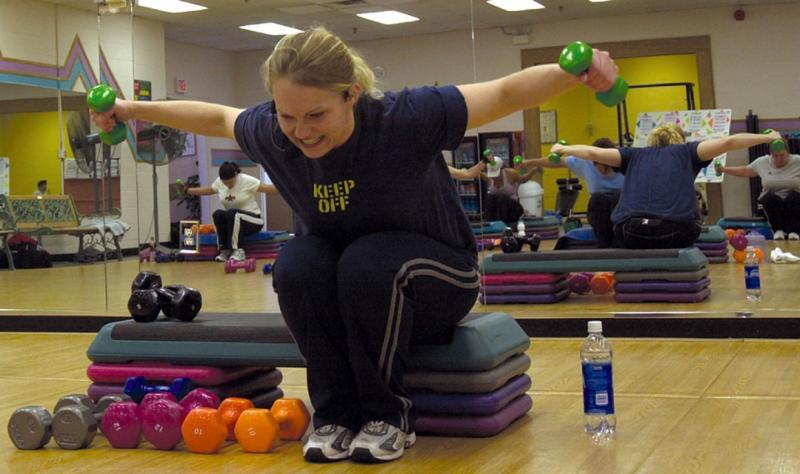
1. At the beginning, stick to machine weights rather than free weights, until you feel comfortable in the gym and have better understanding of weights. You can't go too wrong with machine weights.
2. Invest in one personal training session every 6 weeks. Trainers will give you a specific program that you can work on for 6 weeks and then if you get stuck with the program you have the reassurance that you have a trainer to ask.
3. Don't start weights too heavy. If you haven't done weights before, start light so you and your muscles get used to lifting weights. This will lessen your chances of injury and it will make you feel comfortable with the weights you are using.
|
|
|
|
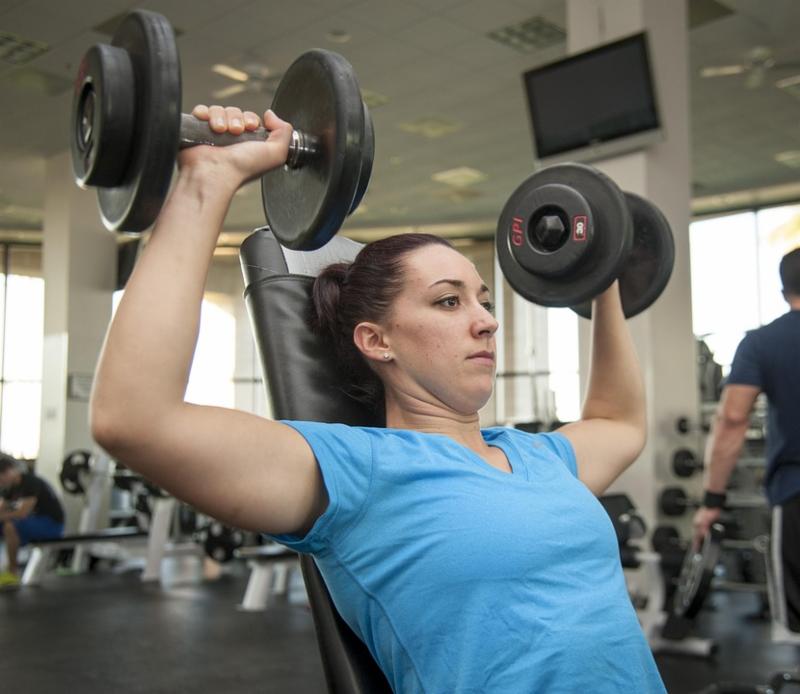
4. If you're just starting out at the gym this New Year, start off slowly but surely - - it's better for the long term. Start with working out for 30 minutes, focusing mainly on strength training with some interval training at the end. If you're new to the gym, begin with just the weights machines until you build up sufficient strength to deal with free weights.
5. A good full body work out would be 5 sets of chest press for 10 repetitions, leg press for 10 repetitions, seated row for 10 repetitions, bodyweight lunges for 10 repetitions and hanging knee raises for 10 repetitions. Upon completion, you can finish with a blast on the bike or the rowing machine using a Tabata interval training protocol, which is 8 rounds of 20 seconds as quick as you can followed by 10 seconds rest, repeated 8 times.
|
|
|
|
Tips For Regular Gym Goers: Improving Your Gym Workout
|
1. Use forced reps on your last sets:
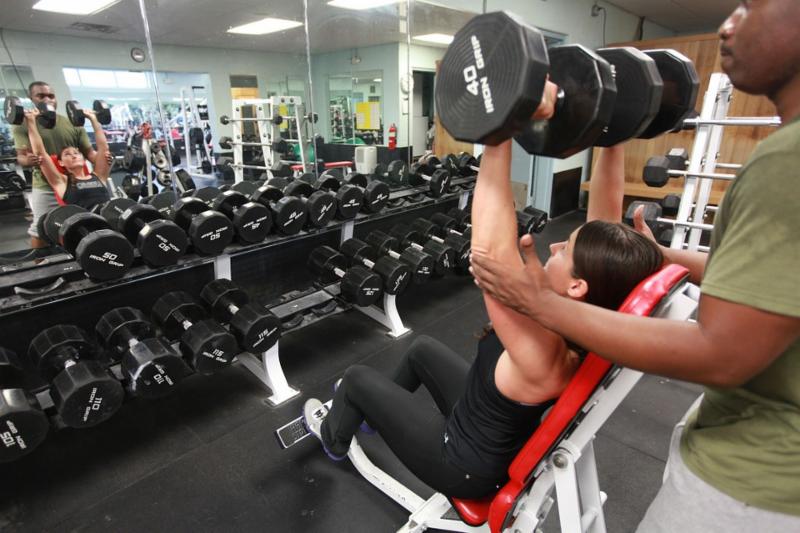
A Finnish study found that when subjects performed a workout with forced reps (a spotter helped them get through their sticking points to get a few more reps), their growth hormone (GH) levels were higher than without using forced reps. For the last set of each exercise after reaching failure, go for 2-3 extra forced reps, but utilize these sparingly to prevent overtraining.
|
|
2. Don't train to failure on every set:
Australian scientists have reported that training with one set to failure increases strength better than taking no sets to failure. However, when subjects did more than one set to failure, strength gains were lowered by almost half compared to the subjects doing just one set to failure.
|
3. Vary your rep speed:
In an Australian study, subjects performing fast repetitions (one second each on the positive and the negative portions of the rep) gained more strength than subjects using slow reps (three seconds each on the positive and negative) because fast-twitch muscle fibers have the greatest potential for strength increases. But the slow-rep subjects gained more muscle mass than the fast-rep subjects, likely due to the muscular time under tension and increased microtrauma. A good mix of both is the best way to maximize strength and size. Try changing from your regular controlled rep speed to 2-3 weeks of fast reps followed by 2-3 weeks of slow reps.
|
4. Don't train too heavy for too long:
Yes, training with a heavy weight that prevents you from getting more than 4-5 reps is good for strength and overall mass when done in conjunction with lighter training that allows you to get 8-12 reps. Yet too much heavy training may work against muscle growth.
Baylor University (Waco, Texas) scientists found that when athletes trained using their 6RMs (6 rep maximums), they had higher levels of active myostatin (a protein that limits muscle growth) than when they did the same workout using their 18RMs (18 rep maximums). Keep to your heavy rep ranges for no longer than 6-8 weeks, then switch to a lighter-weight, higher-rep scheme.
|
Meet the doctors of the Tribal Health & Wellness Concierge Program's Medical Advisory Board
|
|
This month's medical professional is Dr. Gregory Katz.
|
Dr. Gregory Katz
Internal Medicine
Greater Newport Physicians
|
Gregory Katz, M.D.
- Internist
Dr. Katz is a board certified Internal Medicine Physician who has been in practice since 1994.
Dr. Katz received his MD from the Albert Einstein College of
Medicine in 1991. He works in Newport Beach, CA and specializes
in Internal Medicine. Dr. Katz is affiliated with Hoag Memorial Hospital. He speaks English and Spanish.
General internal medicine physicians, or internists, are primary-care doctors who perform physical exams and treat a wide spectrum of common illnesses in adult men and women. One of every four physicians in the U.S. is an internist, many of whom are certified in one of 19 subspecialties, including cardiology, infectious disease and medical Oncology.
As a Primary Care Physician, Dr. Katz is usually the first contact for someone with a health concern.
|
|
A few articles this month on Diabetes
|
|
|
|
Bon Appétit! Keeping The Tribe Healthy at Mealtime & Beyond - Guidance on Nutrition
|
|
Monthly Articles and Guidance on Pediatrics
.
|
|
Hiking on the San Manuel Reservation:
A Good Workout that Benefits
The Body, Heart & Mind
|
|
|
Other benefits of hiking include:
- Building strength in your glutes, quadriceps, hamstrings, and the muscles in your hips and lower legs
- Helping to control your weight
|
|
Tips For Hiking Workouts
Start slow:
A short, local hike is best for beginners. Gradually work up to trails with hills or uneven terrain.
Use poles:
Digging into the ground and propelling yourself forward pushes your upper body muscles to work harder and gives you a stronger cardio workout.
Head for the hills:
Even a small hill will intensify your
heart rate
and burn extra calories. A 5% to 10% incline equals a 30% to 40% increase in calorie burn.
Bump it up:
Uneven terrain can work muscles while improving balance and stability.
Weigh yourself down:
Stock your day pack with extra weight. (Water's a good option.) A 10- to 15-pound day pack will boost your calorie burn by 10% to 15% while strengthening your lower back muscles.
Get into a groove:
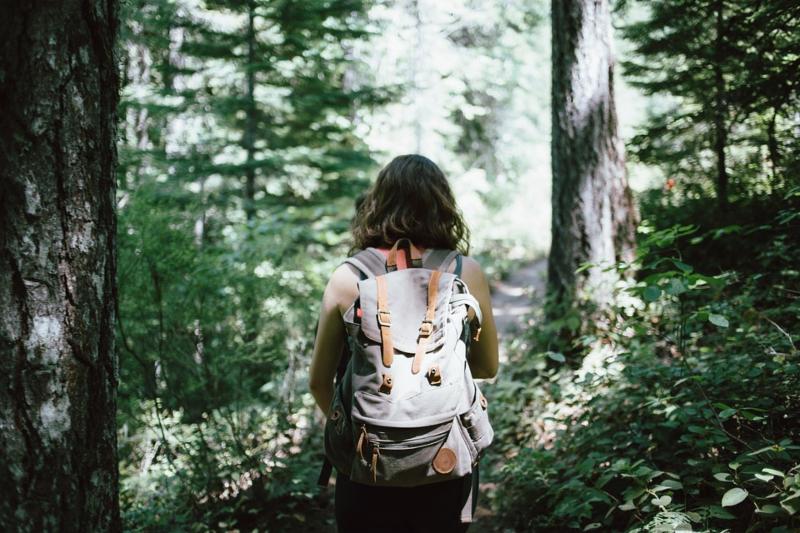
On the days you can't make it to the trails, power-walk on a hilly terrain while carrying various degrees of weight in a backpack - - it will keep your hiking skills and fitness level on track.
Not ready to scale boulders or climb a mountain? Don't push it:
Any type of
walking
at a brisk rate - - aim for a 15-minute mile - - has aerobic and health benefits. Start there, and work your way up to hills or trail walking. It's more important to do something you'll enjoy, whether it's an uphill battle in the woods or just a walk in the park.
|
|
|
|
Safe Hiking Tips
Bring a buddy:
It's best not to hike alone at first, especially on unfamiliar or remote trails. A partner or group can help you navigate and assist if you get hurt. As your skill level improves, you'll feel more comfortable going solo.
Know before you go:
Familiarize yourself with the trail map. Check the weather, and dress and pack accordingly. If storms are a possibility, rethink your plan. Follow marked paths and trails.
Pack smart:
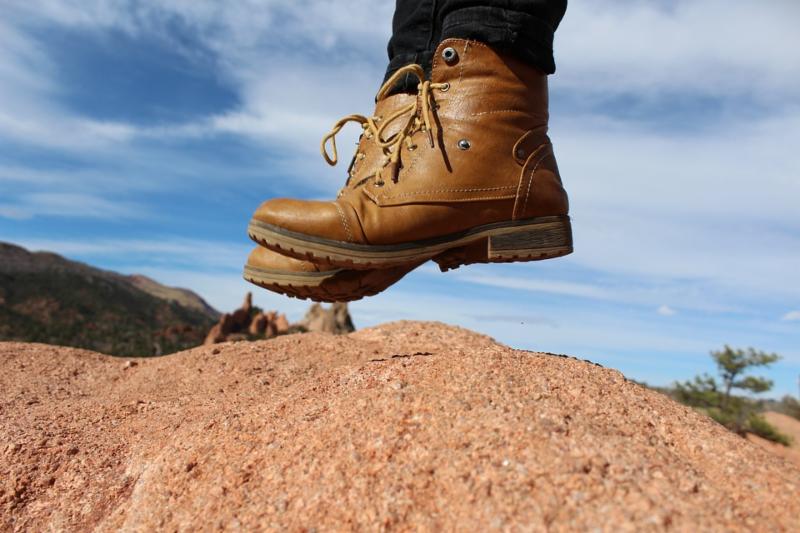
Carry a water bottle and sip frequently, and eat small, protein-rich snacks - - such as nuts, yogurt, and fruit - - along the way. Invest in a good pair of hiking boots (they'll offer better protection from the elements and from rugged, ankle-twisting terrain than regular sneakers), and break them in ahead of time, starting with short jaunts.
Sources: Health.com; WebMD.com
|
|
|
|
Monthly Guidance on Aging
|
|
|
Keeping The Tribe Informed About Cancer
To stop cancer's spread, take out its communication channels
Cancer Screening - - It's Your Decision
|
|
|
|
Learning About & Controlling Blood Pressure
|
|
|
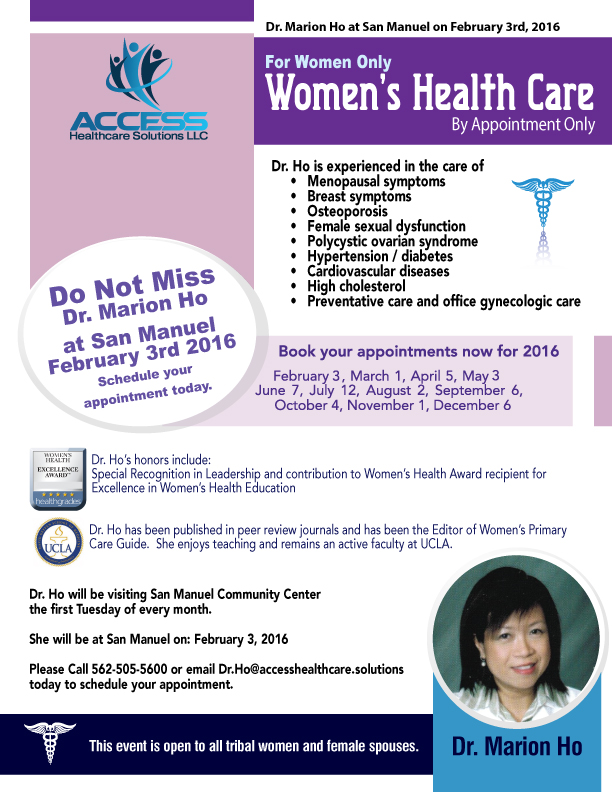
Dr. Marion Ho, a recognized expert on Women's Health and a member of the Tribe's Concierge Medical Advisory Board, will visit the San Manuel Reservation on January 5. Dr. Ho will be available to meet and discuss health issues facing women today.
An Associate Clinical Professor of Medicine at UCLA in the School of Medicine, Dr. Ho is a recognized authority on women's healthcare and speaks on women's health issues nationwide. Board Certified by the National Board of Medical Examiners and the American Board of Internal Medicine, Dr. Ho brings a strong background in research and clinical work.
Dr. Ho visits San Manuel on the first Tuesday of every month. Please call or e-mail today to schedule a time to meet with Dr. Ho.
The date is February 2, 2016
|
|
|
Did You Know?
... Nuggets of Health Wisdom For Maintaining Tribal Health
|
|
The concern with fast weight loss is that it usually takes extraordinary efforts in diet and exercise - - efforts that could be unhealthy and that you probably can't maintain as permanent lifestyle changes.
A weight loss of 1 to 2 pounds a week is the typical recommendation. Although that may seem like a slow pace for weight loss, it's more likely to help you maintain your weight loss for the long term. Remember that 1 pound (0.45 kilogram) of fat contains 3,500 calories. So to lose 1 pound a week, you need to burn 500 more calories than you eat each day (500 calories x 7 days = 3,500 calories).
|
|
|
Also, if you lose a lot of weight very quickly, you may not lose as much fat as you would with a more modest rate of weight loss. Instead, you might lose water weight or even lean tissue, since it's hard to burn that many fat calories in a short period.
In some situations, however, faster weight loss can be safe if it's done the right way. For example, doctors might prescribe very low calorie diets for rapid weight loss if obesity is causing serious health problems. But an extreme diet like this requires medical supervision. And it can be difficult to keep this weight off.
In addition, some diets include an initiation phase to help you jump-start your weight loss. For example, the Mayo Clinic Diet has a quick-start phase in which you might lose 6 to 10 pounds in the first two weeks. You can lose weight quickly with an approach like this because it combines many healthy and safe strategies at once - - no gimmicks or extreme dieting. After the initial two-week period, you transition into the recommended weight loss of 1 or 2 pounds a week, which is not only safe but also realistic and sustainable for the long term.
Answers from
Donald Hensrud, M.D.
, Division of Endocrinology, Diabetes, Metabolism, & Nutrition, Mayo Clinic
|
|
|
|