 |
Looking at yourself from a calm distance, you begin to see your own patterns and understand that so much of your behavior is habitual, knee-jerk reactions.
|
Having trouble viewing this email? Click here.
|
|
|
Richard Rohr's Daily Meditation
|
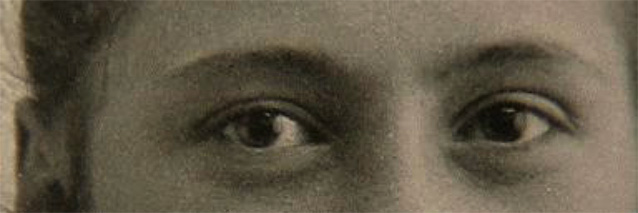
St. Thérèse of Lisieux, age 15 (detail), April 1888.
|
|
Mystics and Non-Dual Thinkers:
Week 4
|
Thérèse of Lisieux, Part II: Conversion
Tuesday, August 4, 2015
|
| As a child, Thérèse experienced both great love and great suffering. Having lost four babies prior to her birth, Thérèse's family truly cherished her. Thérèse's father called her "my little Queen." But due to her mother's breast cancer, Thérèse had to live with a wet nurse from the fragile age of three months to fifteen months. This early separation, along with the death of her mother when Thérèse was four, may have contributed to Thérèse being overly sensitive and needing to please others in order to feel secure and connected. She also experienced mild depression as she held her grief and her need for consolation inside. Thérèse often felt guilty for being dramatic or making a fuss about seemingly small things. It was as if she no longer had her feelings; her feelings had her. Thérèse described the years between her mother's death and age fourteen as "the most painful" period of her life. But God uses everything, and these wounds became sacred gifts that readied her for what she surprisingly called her "complete conversion." [1] Thérèse's conversion took place just before her fourteenth birthday when she, her father, and two of her sisters had returned from Midnight Mass early Christmas morning. Her tired father made a comment to her sister Celine which Thérèse overheard: "Well, fortunately, this will be the last year!" He was referring to the little charade they always played where Thérèse pretended to believe in Papa Noel and opened gifts with joy to please her father. Now she felt she'd been making him unhappy instead. Thérèse's sensitive heart was shattered. But then the miracle she'd been praying for happened. Instead of bursting into tears and running up the stairs to her room, as she would normally have done, she felt Jesus give her immediate strength and deep foundation. She was able to remain calm and participate joyfully in the family tradition, as if her father's criticism had not happened. Joseph Schmidt describes this new freedom: "By grace stripped of falseness, Thérèse now saw herself more clearly mirrored in the eyes of God, a child of God. . . . [She realized] the violence she was doing to herself by . . . being untrue to herself. . . . On that Christmas Day, she had been able to stand her ground emotionally, take the next step, and not be intimidated by her feelings." [2] She claimed it was a complete victory over her egocentric emotions for the rest of her life! Most of us never enjoy such a victory, or even deem it as necessary. It seems like such a little thing, but that is actually what makes it so important in the end. Thérèse was all about "doing small things with great love." An experience of inner freedom and grace allows you to be more compassionate both with yourself and with others. This is at the heart of much Eastern Meditation practice. Looking at yourself from a calm distance, you begin to see your own patterns and understand that so much of your behavior is habitual, knee-jerk reactions. Your immediate feelings are almost always due to childhood conditioning, but they are so deep in your unconscious that you have no idea why you're doing what you're doing. We are indeed unconscious. [3] Even St. Paul says that about himself (Romans 7:14-24). So much that we humans do, positive or negative, is automatic brain response; there is very little free-will involved. Every time we choose love, grace, and humility over our habituated brain reactions, we expand our realm of freedom. And love can only happen in the realm of freedom. Thérèse was a master at finding such freedom inside of very small spaces. Thus she called it her "little way." |
|
|
|
Gateway to Silence
"My way is all confidence and love." --St. Thérèse of Lisieux
|
|
References:
[1] Joseph F. Schmidt,
Walking the Little Way of Thérèse of Lisieux: Discovering the Path of Love (The Word Among Us Press: 2012), 40-46.
[2] Ibid., 56-59.
[3] Adapted from Richard Rohr,
Franciscan Mysticism: I AM That Which I Am Seeking (Center for Action and Contemplation: 2012),
CD and
MP3 download.
|
| "Transformed people transform people.
Francis and Clare were quite simply transformed people-- who still continue to deeply change us today." --Richard Rohr Explore the Franciscan path in a self-paced, online course
featuring audio and video teachings by Father Richard. The Franciscan Way:
Beyond the Bird Bath
October 7-November 25, 2015 Learn more and register at cac.org.
|
|
2015 Daily Meditation Theme
Richard Rohr's meditations this year explore his "Wisdom Lineage," the teachers, texts, and traditions that have most influenced his spirituality. Read an introduction to the year's theme and view a list of the elements of Fr. Richard's lineage in CAC's January newsletter, the Mendicant. |
|
Did someone forward this message to you?
Please do not reply to this email. For more info about:
* Technical Help with Daily Meditations, email techassist@cac.org.
Copyright © 2015 Center for Action and Contemplation
cac.org |
|
|
|
|
|

