|
|
|
The Laurita Rules for 401(k) Plan Providers.
Rules to live by.
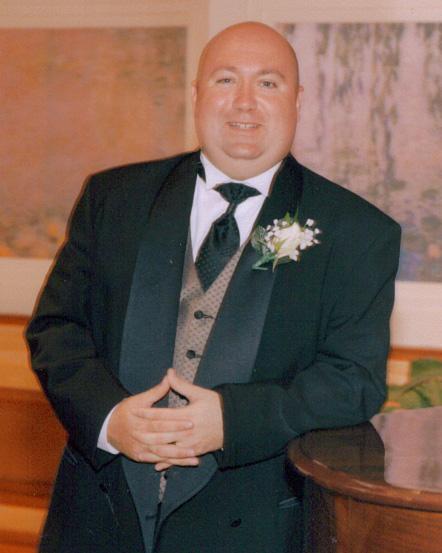 Once upon a time in the 401(k) world, I knew a man named Richard A. Laurita. I worked with Rich (as his friends called him) for two different third party administration (TPAs) firms for over 9 years and he had the most profound effect on my career than anyone I know. The lessons I learned from the way Rich conducted business continue to inspire me to this day. I believe that the way that Rich handled clients, advisors, brokers, and co-workers are lessons that any retirement plan provider can use to grow and maintain their business. Rich never lived to see 40 and he died more than 8 years ago, but I think understanding the way he conducted his business as to what I call "the Laurita rules" can certainly help your business as a retirement plan provider.
To read the article, please click here.
|
Broker-Dealers dealing with The New Fiduciary Rule: Some Guidance.
Some free advice.
 I've been hired by a couple of broker-dealers in how to develop a plan to comply with the new fiduciary rule. Unlike some of my competitors, all of my fees are based on a flat fee (cheap plug here).
I'm often asked how a broker-dealer can meet the standard of the fiduciary rule when it gets implemented. Don't expect me to give the store away and provide all the trade secrets in a secret blog, but I believe that the new fiduciary rule is going to radically change a broker-dealer's business when it comes to being a plan fiduciary.
Saying that you're just going to slap the fiduciary definition on yourself isn't enough and getting a best interest contract signed isn't enough because there are issues dealing with fees and individual brokers that have to be worked on. When it comes to trails from mutual funds being paid to brokers, I don't think many broker-dealers can get a handle on what fees are actually being paid, it's almost like peeling an onion when you're dealing with an alphabet soup of share classes and different forms of remuneration. Any broker-dealer is going to need to identify what fees they are getting if they have any hope of meeting that best interest exemption.
Another issue is what I call "the dumbest person in the room". I worked in many different types of businesses and I'm always concerned about the dumbest person in the room that could entail issues that could create potential liability. When it comes to a broker-dealer, there are many brokers who knew the ramifications of working with retirement plans and there are some who just don't have the knowledge and for one reason or another, won't get that knowledge. I believe that getting ready for the fiduciary rule is putting a system f checks and balances in place to avoid the broker-dealer getting sued because the broker who is "the dumbest person in the room" is doing something they aren't supposed to do.
These are just two ideas that broker-dealers need to think about before deciding what to do.
|
The Few. The Responsible. Those who can serve as Fiduciaries for Brokerage Firms.
April is coming.
 Most brokerage firms are staying mum about how they intend to meet their requirements under the new fiduciary rule in 2017, but some have tipped their hands and are going to go the approach that I thought they would.
State Farm, who happens to be the insurer for my cars, disclosed that they will only sell and service mutual funds, variable products and some bank products through a self-directed customer call center. That's going to affect 12,000 State Farm agents around the country licensed to sell securities, which is two-thirds of the company's 18,000 total agents. As of last year, State Farm managed $11.3 billion in assets it oversees in proprietary mutual funds.
State Farm is taking the approach that I'd advocate for any broker-dealer. Take on fiduciary responsibility and out it in the select hands of the people that are going to have the knowledge and training to be competent fiduciaries. I'm not going to denigrate 12,000 State Farm agents including my guy in Glendale, but their background is selling insurance. Let the call center handle investment products and let the insurance people sell insurance. It's going to minimize the liability for State Farm and it's going to help their clients by dealing with people in the call center that will have the training to make better investment guidance.
Take the power from the many and give it to the people who can be effective fiduciaries while being brokers at the same time.
|
The rules are the rules are the rules.
If you have them, make sure they're complied with.
 While I went to law school for a law degree and stayed an extra year to get a tax LLM degree, my feelings about the law is as simple as: "the rules are the rules are the rules." Maybe it's my stubbornness, but I believe that any policies, rules, regulations, and laws have to be adhered to. It's not just about the rules regarding retirement plans, it's also about the policies and procedures put in place at the workplace.
If you run a business, you need to put rules in place at the workplace to avoid anarchy in the workplace. I always say that one of the reasons I try to avoid hiring an employee is that I was an employee once too and I've seen firsthand how businesses became like summer camp when the bosses show the example by leaving early on Friday afternoon or are the first ones to leave when the offices have to close for inclement weather (sorry Dan).
Rules are about keeping order and adhering to the rules in the workplace are a sign of respect and respect for the leadership in that workplace. The problem with rules is when they are being completely ignored or when there is selective enforcement of those rules.
If as a boss, you tell people that they shouldn't be conversing on their cell phones at work unless it's an emergency, the rule has to be implemented to be fully. Allowing people to talk on the cell phone to chat with their friends make the rule an absolute joke and also make the people who implemented a rule like that, look foolish as well. The same can be said if the rule is selectively enforced and employees that the bosses like or are afraid of are given a free pass while the rules are enforced against others. I can assume you that from a labor law point of view, selective enforcement isn't good.
Respect is something that's earned and when you lose respect of the workforce, it only makes your role as a retirement plan provider that much harder because people work harder for people they have respect for and the inmates run the asylum if they don't.
|
|
|
| |
|
|
|
Avoid giving away your services for free.
Otherwise, it devalues what you do.
 As a former, recovering Vice President of a synagogue, I'm always interested in how other synagogues attract new members. When I was the Vice President, I was in charge of membership and I always tried to bring in new members while not trying to do that at an unreasonable cost.
So I saw an advertisement for a Reform synagogue just a village or two over that really was over the top in how they were trying to attract new members. The synagogue was going to give them a free year of membership, free Hebrew school for the children for a year, and a free meal too.
Trying to gain members is the same as attracting customers, so I always think it's an absolute mistake to give anything of substance away for free because not only does that substance cost you money it also implies to the person receiving the free stuff that the value of the stuff is free. So I think you can devalue your services as a retirement plan provider by going overboard and doing work for free because it gives the impression that your work has no value.
I remember years ago getting into an uproar with my mother because I didn't want to do my sister's boyfriend's taxes for free. I didn't mind if my sister used my software and let the return go in as self prepared, but I was adamant I wouldn't do it for free because it implies that my work wasn't worth it.
I always that instead of giving something of value for free, there is nothing wrong to expect some nominal fee back so that the potential client had some skin in the game. While my former synagogue allowed non-members to join the Hebrew school without joining the synagogue for a year, these parents were still responsible for book fees and other fees that were about $300 a kid. Even at $300 a child for Hebrew school, most parents wouldn't join the synagogue after that first year. It should be noted that one member who got in that way was yours truly.
Giving a free consultation or a nominal review of a retirement plan for free is the cost of recruiting new clients. However, giving away services that cost you money that your regularly charge your clients is an absolute mistake. That's just my two cents.
|
|
Will ERISA litigators live long enough to become the villains?
Time is going to tell.
 Everyone knows I love movies and the memorable lines that come from them. I'm a a big fan of The Dark Knight and the line uttered by Aaron Eckhart as Harvey Dent: You either die a hero or you live long enough to see yourself become the villain".
As an ERISA attorney who doesn't litigate and has been very outspoken about the abuses of the 401(k) industry, I see ERISA litigators as a group that has changed the retirement plan industry for the better. Their cases targeting high fees and revenue sharing have brought positive change to the 401(k) business and helped spur the Department of Labor to act with fee disclosure regulations and the new fiduciary rule.
My issue is that I'm concerned that once we see the end of the big 401(k) fee cases (see my earlier post on "Peak 401(k) Fee Litigation"), ERISA litigators are going to make some unpopular litigation decisions such as suing a plan sponsor for using a money market fund when they could have offered a stable value fund (I'm sorry, that actually happened) or sue Vanguard for high fees (sorry, that happened too). You get my point? Eventually, a plan sponsor is going to get sued for paying 5 basis points more than they should.
Like I say, ERISA litigators are going to have to eat too and they're going to start to become unpopular if they take unpopular causes just so they can get a piece of the action.
|

The Rosenbaum Law Firm Advisors Advantage, October 2016
Vol. 7 No. 10
The Rosenbaum Law Firm P.C.
734 Franklin Avenue, Suite 302
Garden City, New York 11530
516-594-1557
Fax 516-368-3780
Attorney Advertising. Prior results do not guarantee similar results. Copyright 2016, The Rosenbaum Law Firm P.C. All rights reserved.
|
|
|
|
|
|
|
| |
|