2023 Project Highlights:
Cowiche Creek Floodplain Restoration
| |
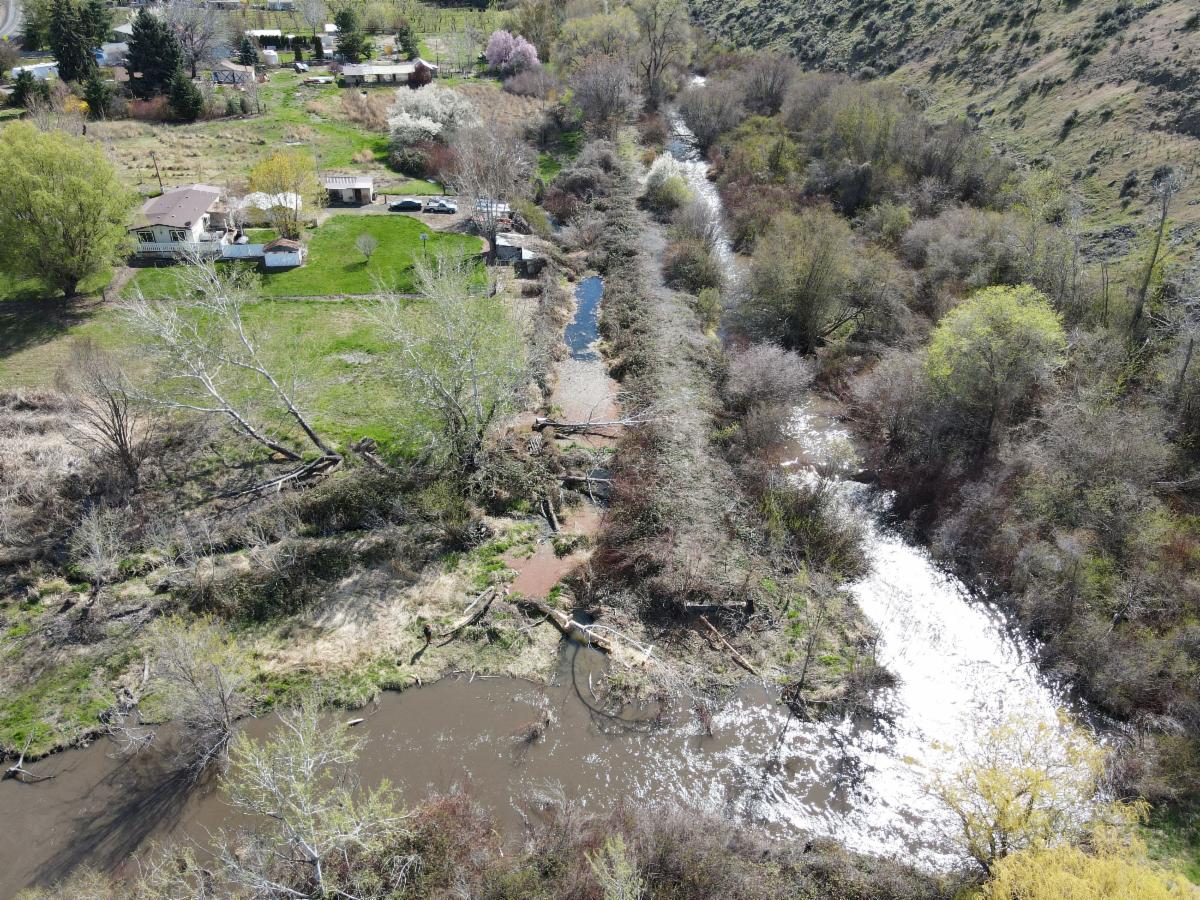
Railroad berm at Cowiche Creek prior to removal (looking upstream) | |
|
Habitat in lower Cowiche Creek is improving, thanks to a new restoration project above Powerhouse Road in Yakima. This fall, Mid-Columbia Fisheries’ contractor, Thayer Excavating, removed 870 feet of an old berm that was located on the streambank. This large berm caused the stream to function like a ditch, with fast flowing water, no room for high flows to spread out on the floodplain, no native riparian trees, and poor habitat for native fish.
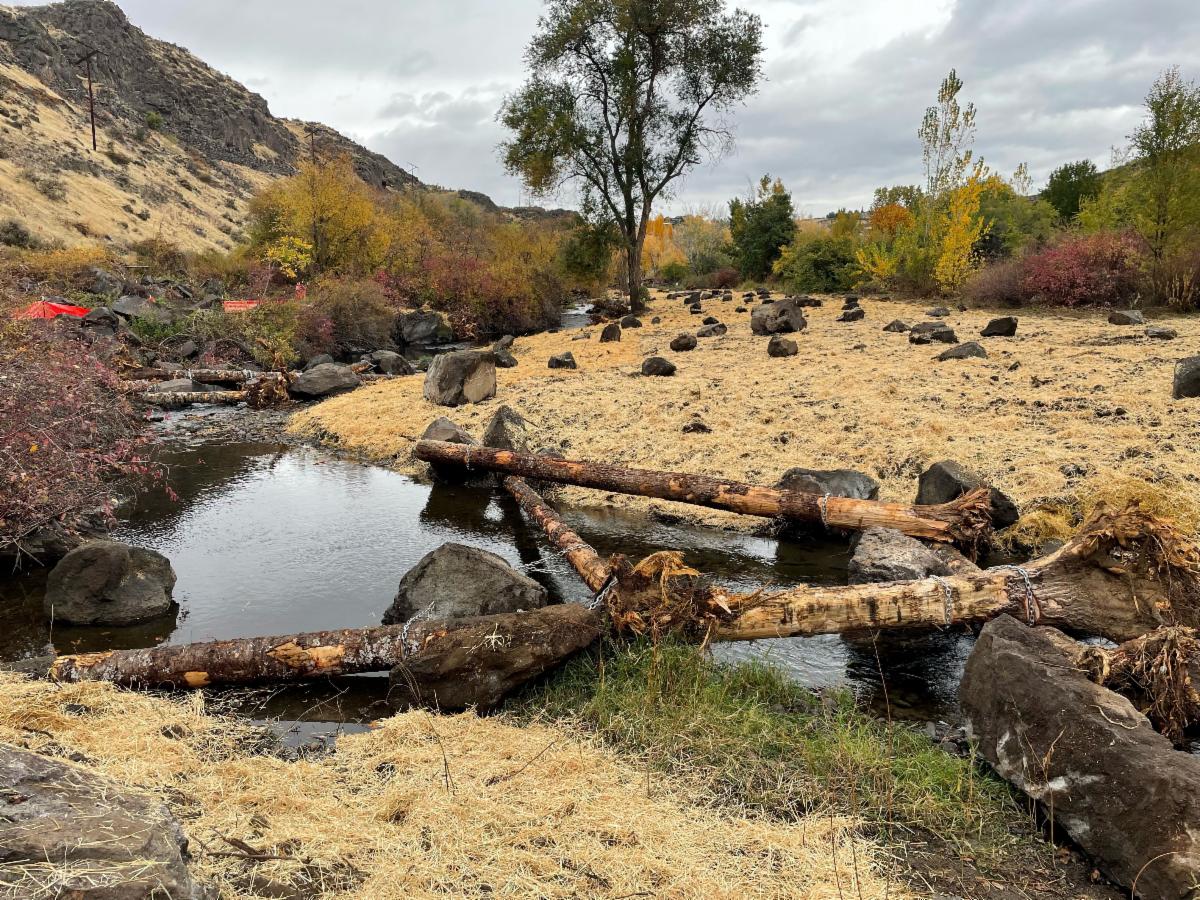
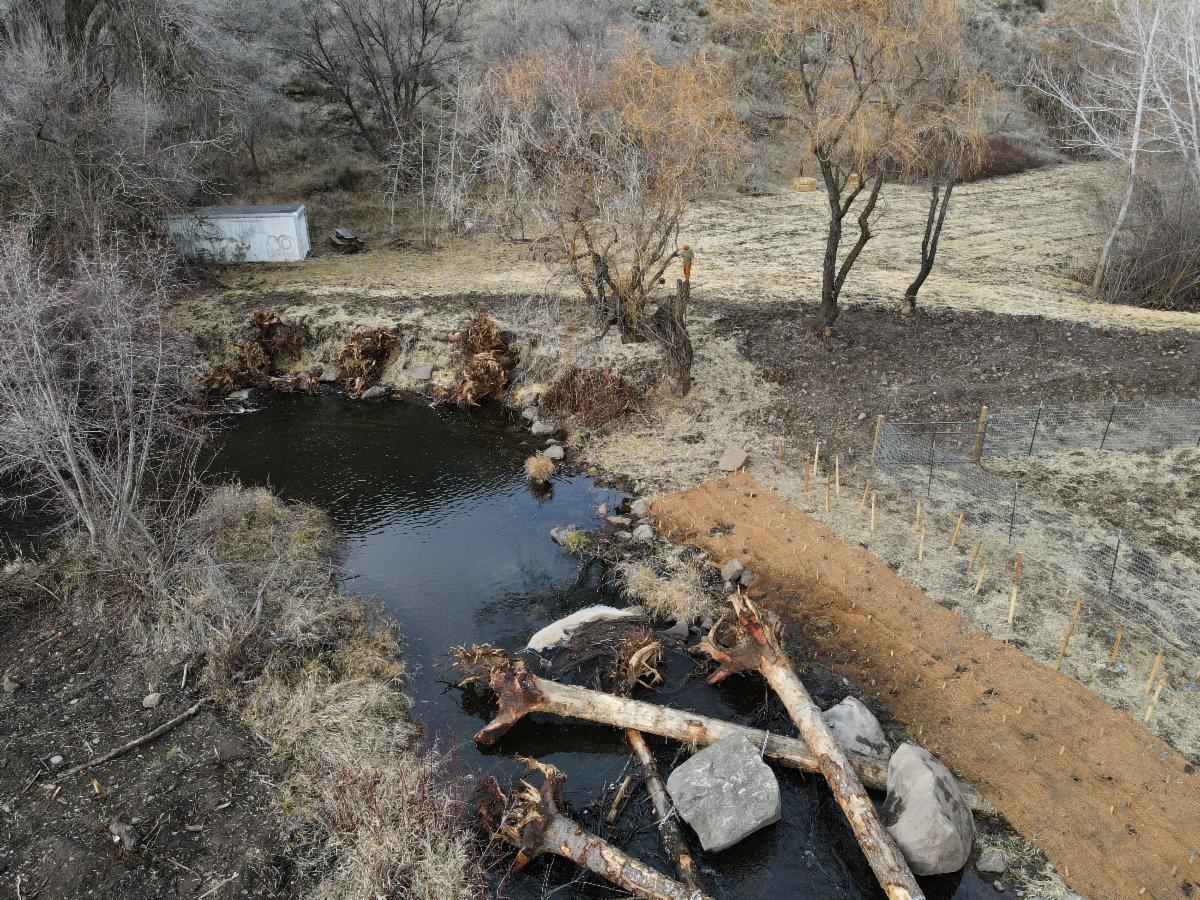
The project will improve habitat and water quality in several ways. In addition to the removal of the berm, wood was added to improve fish habitat, and approximately 3,000 native plants were installed in the footprint of the former berm. Among other benefits, the project will reduce peak flows in the area by allowing floodwaters to spread out over the floodplain and soak into the ground. As the plants grow, they will also provide numerous habitat benefits and further slow flood waters.
| |
Stream bank / former railroad berm area at Cowiche Creek after restoration (looking downstream) | |
|
Cowiche Creek is a tributary to the Naches River, in the Yakima Basin. The creek is home to coho salmon and steelhead. Mid-Columbia Steelhead are listed as Threatened under the Endangered Species Act. Mid-Columbia Fisheries has been working to restore habitat in Cowiche Creek for more than twenty years and we are excited to see this project happen.
We are grateful to the cooperating landowners, which include the City of Yakima and two private landowners. Appreciation also goes to our funders, the Salmon Recovery Funding Board and the Washington Department of Ecology's Water Quality Combined Funding Program.
| |
Aerial view of some instream habitat (logs) and part of the planting area at Cowiche Creek | |
New Yakima River Canyon Planting Project to Improve Habitat | |
Mid-Columbia Fisheries embarked on a new riparian restoration project along 1,200 feet of a side channel of the Yakima River just above the Yakima River Canyon in Kittitas County. The goal of the project is to improve water quality and fish and wildlife habitat. The new native forest will reduce sediment entering the Yakima River through surface flows during rainstorms, reduce stream bank erosion, reduce fecal coliform entering the river, increase floodplain roughness, and increase tree cover over the side channel to reduce water temperature. | |
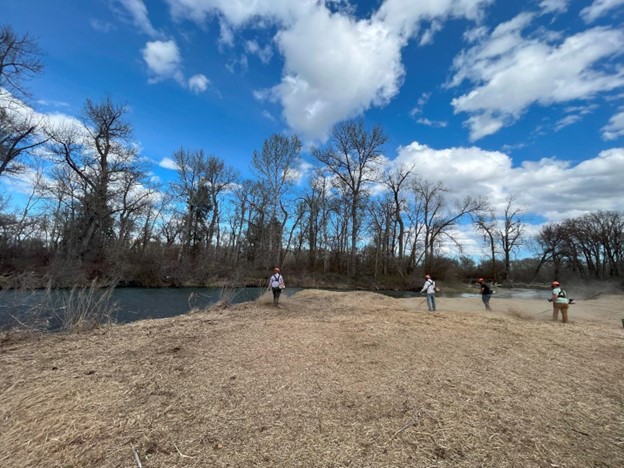
Mid-Columbia Fisheries' restoration crew cutting reedcanary grass in preparation for planting | |
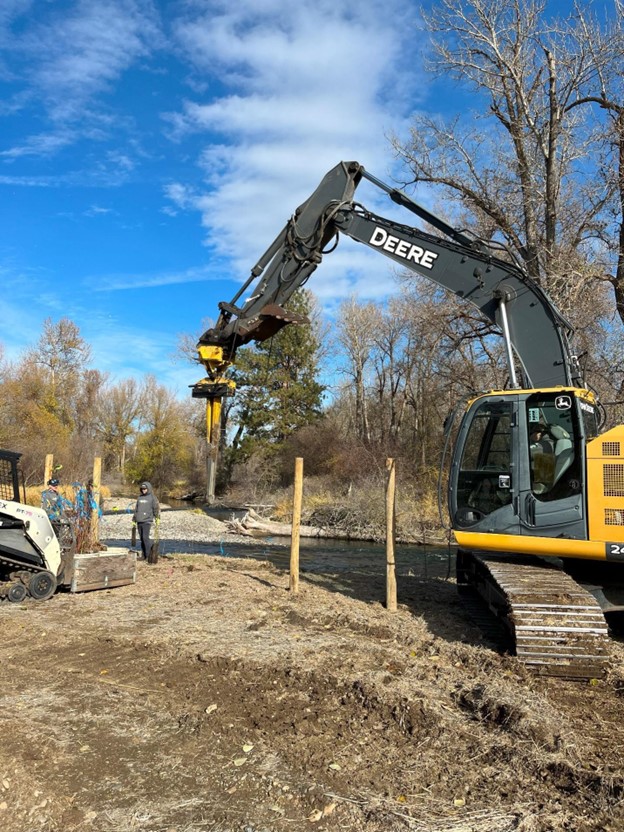
The work began in the spring of 2023 with weed control. This past fall, Mid-Columbia Fisheries hired Wildlands, Inc. to deep plant over 3,100 native trees and shrubs in the 3 acre site. Using a hydraulic ram mounted on an excavator arm, the roots of riparian plants are placed deep into moist soil (shallow groundwater), which will increase plant survival and eliminate the need to irrigate during the summer months. Mid-Columbia Fisheries’ restoration crew installed more than 2,200 feet of temporary high-tensile electric fence to protect the plants from cattle, deer, and elk. | |
Wildlands, Inc. in November 2023 installing plants deep into the soil
so that roots are in contact with moisture year-round. | |
|
Weed control and fence maintenance are planned for the next few years to help improve the survival of the seedlings. A lot of thought, effort and funds go into restoration projects, so an effective stewardship plan is key to a successful project!
We are extremely grateful to the landowner and lessee for their participation and support of the project. We also thank our funders: the Washington Department of Ecology Water Quality Combined Funding Program and the US Fish and Wildlife Service. Much appreciation goes to our contractor Wildlands, Inc. and the Kittitas County Noxious Weed Control Board for help with project implementation.
| |
Salmon in the Classroom 2024 is Underway! | |
Coho salmon eggs in one of our participating school's aquarium tank. | |
|
Mid-Columbia Fisheries reaches approximately 2,000 students from 20 schools each year with hands-on salmon education programming. We tailor education projects to meet the needs of participating teachers and individual school districts. In the Yakima Basin, February is salmon rearing time! The Salmon in the Schools program blends in-class lessons and engaging field trips to deepen students' understanding of the intricate interconnections between salmon, watersheds, oceans, and human impacts such as climate change and ocean acidification. During the fall, students attend spawning field trips, providing them with a firsthand experience of our migrating salmon completing their life cycle. Some schools further elevate the educational journey by participating in a hands-on experience by raising salmon eggs in classroom aquaria. During this time, many schools also participate in salmon dissections and science lessons centered on salmon, including salmon anatomy, why they are important, their habitat needs, and human impacts. This specialized curriculum, centered around the salmon life cycle, serves as a foundation of appreciation for salmon and their delicate ecosystems.
The program’s highlight is a spring release field trip where students get to release their reared salmon fry while applying what they learned over the course of the program by assessing salmon habitat parameters such as water quality and riparian cover to ensure they release their fish in the best spot. This experience not only gives students valuable insights into their local ecosystem but also a broader understanding of the environment we live in.
Yakima Basin Environmental Education Program is a key partner in this work, and also leads work with many other schools throughout central Washington. Benton Conservation District also brings salmon in the classroom to schools in their area, while the US Fish & Wildlife Service and Yakama Nation are supporting salmon in the classroom in the Columbia River Gorge and beyond.
Current funding for Mid-Columbia Fisheries’ Salmon In the Classroom Program is supported by: NOAA Bay-Watershed Education and Training (B-WET); the Washington Office of Superintendent of Instruction (OSPI), and the WDFW Watchable Wildlife program.
| |
We Are Looking for A Lightly Used Vehicle | |
Do you have a truck, SUV or hybrid in good working order that you'd like to sell for a fair price or donate to Mid Columbia Fisheries?
Then we are looking for you!
And as we are tax deductible, you can possibly save money on your taxes as well!
For more information please email
Margaret Neuman at fish@midcolumbiafisheries.org.
| |
|
Upcoming Project:
Teanaway River Restoration
| |
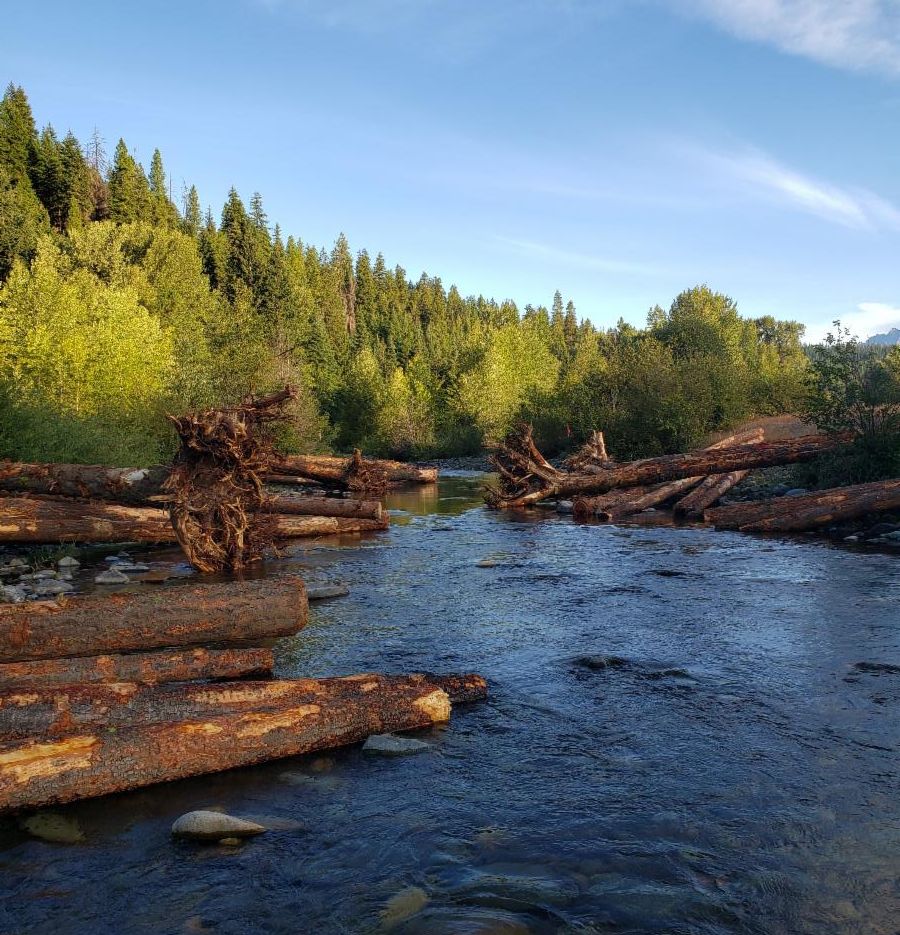
Mid-Columbia Fisheries is working with the Yakama Nation, the Washington Department of Fish and Wildlife and the Washington Department of Natural Resources to replenish large wood in the North Fork Teanaway River, downstream from the mouth of Stafford Creek. Mid-Columbia Fisheries will hire a contractor to place stockpiled wood in the river, where it will help to activate side channels and enhance riparian wetlands. The work is scheduled for late July and early August 2024. | |
Fun at the KEEN Winter Fair | |
|
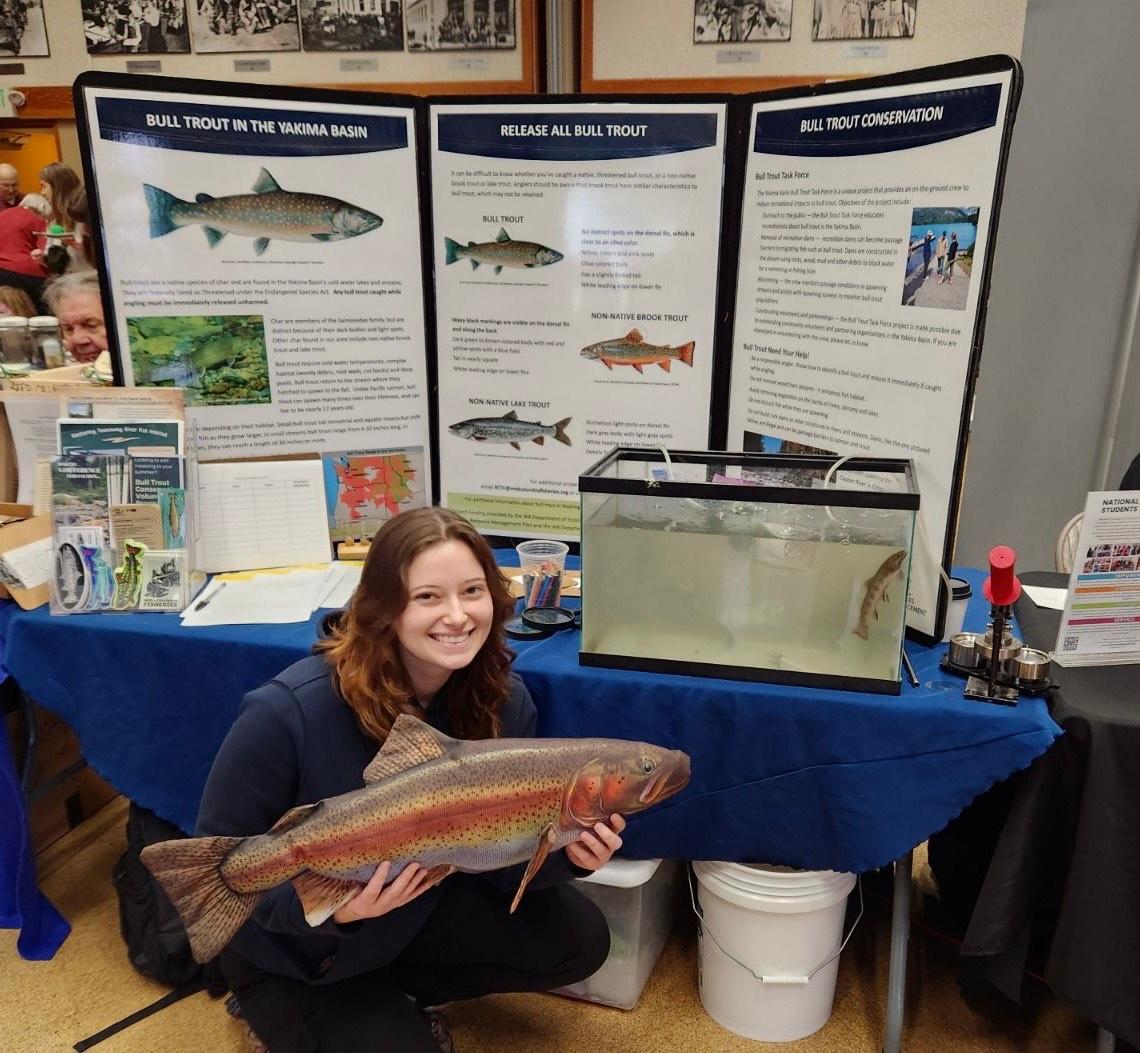
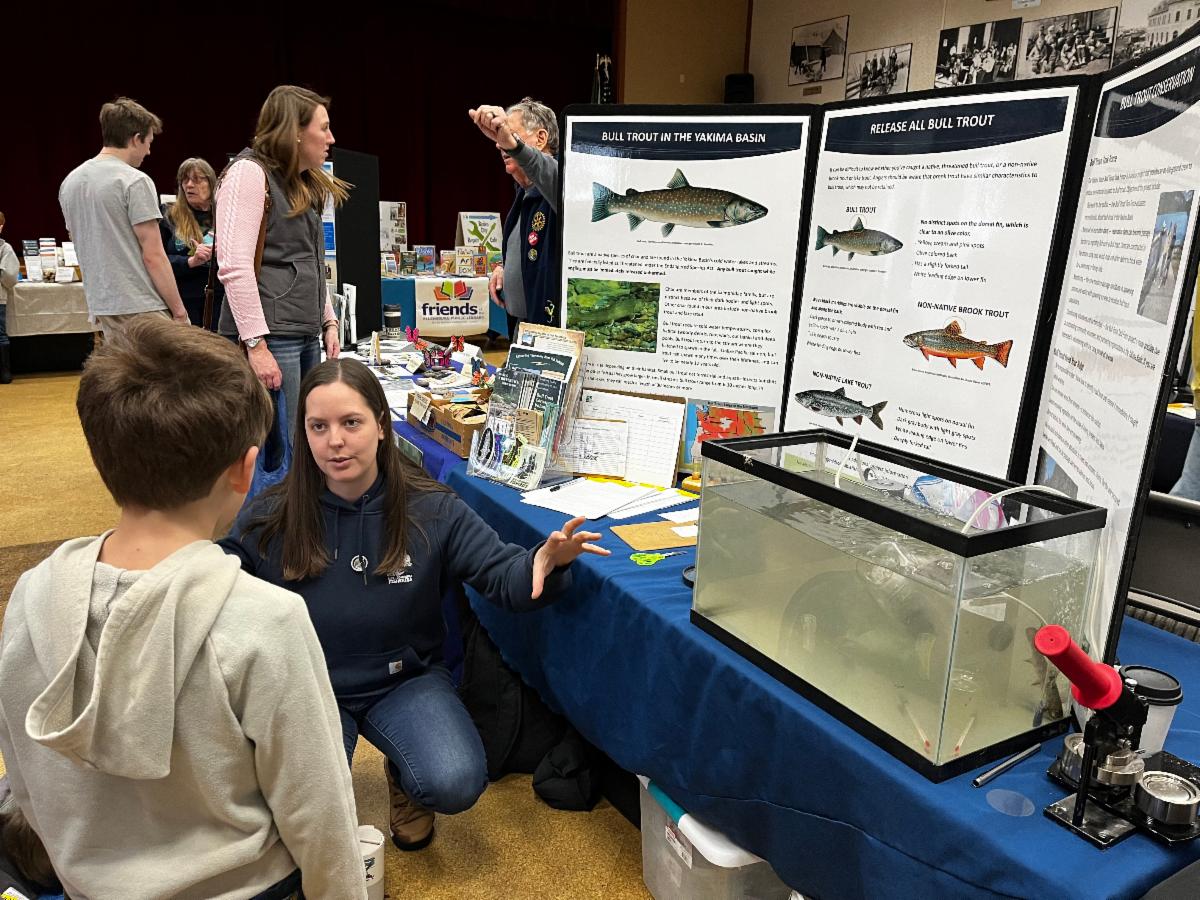
On January 27th, the Kittitas Environmental Education Network hosted their 13th annual Winter Fair in Ellensburg, WA. Our staff Aimee Taylor and Abrielle Teer enjoyed speaking with others on the behalf of Mid-Columbia Fisheries and our Bull Trout Task Force!
Visit KEEN's website for upcoming events in Kittitas County!
| | | |
|
Seasonal Restoration Technician - individual will perform restoration, stewardship, and other salmon enhancement related job duties (March/May through November 2024).
Seasonal Bull Trout Task Force Outreach Lead - individual will lead interns, assistants and volunteers in Bull Trout related outreach activities and assist on Bull Trout related field work (June through October 2024).
Seasonal Bull Trout Task Force Technician - individual will perform fish rescue, population surveys, and education and outreach activities related to Bull Trout (June through October 2024).
Paid Summer Internship - individual will assist on various Mid-Columbia Fisheries projects including Bull Trout surveys and outreach, restoration work and stewardship, and educational programming for local school students (July and August 2024).
| |
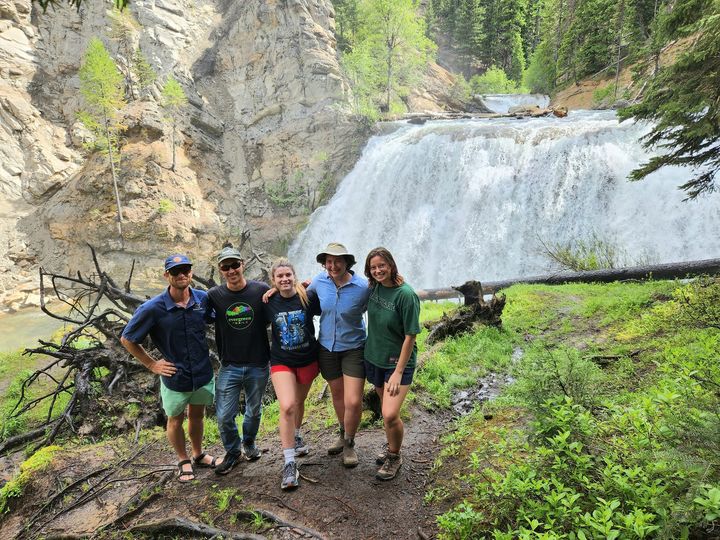
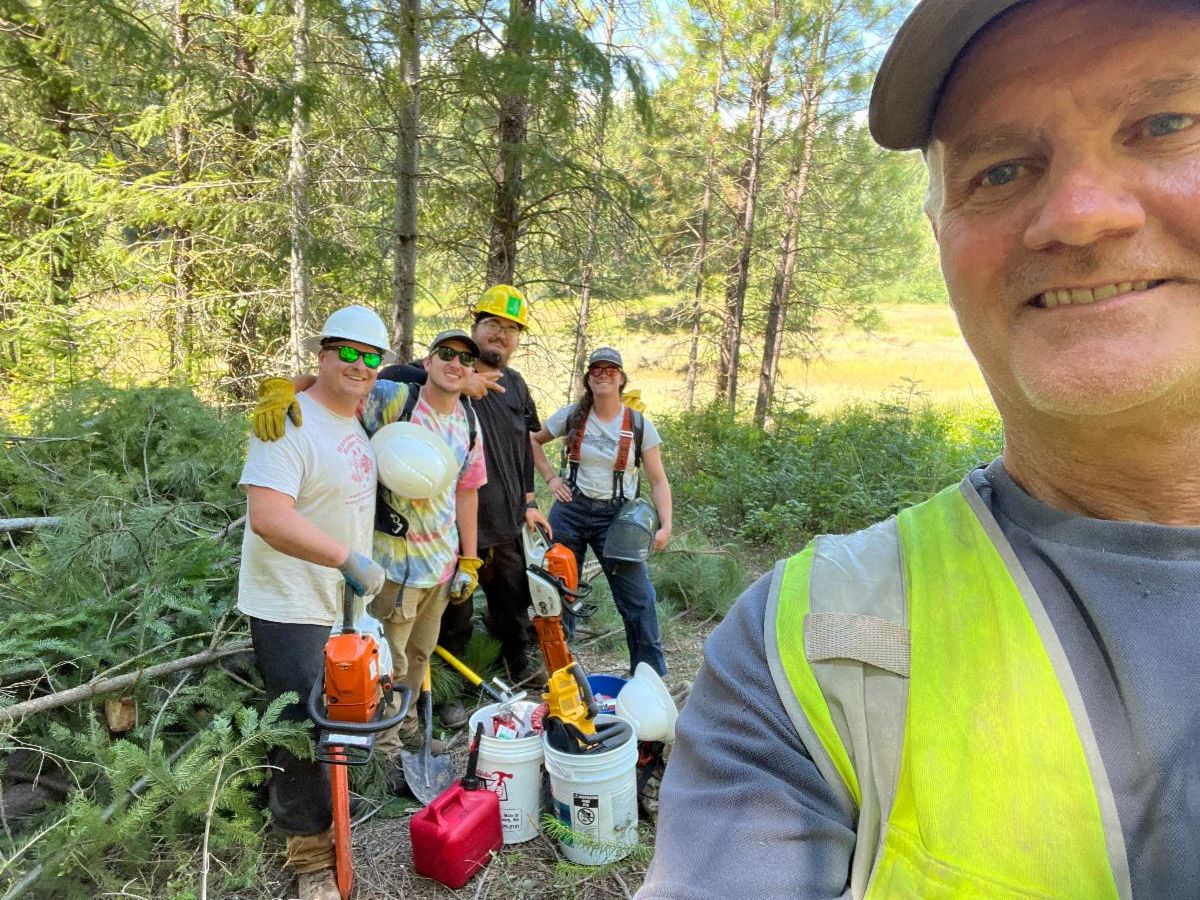
Come work with our amazing team! | |
We want to hear from you! | |
| What would you like to see more of in our newsletters? | | | | |
Mid-Columbia Fisheries Enhancement Group is dedicated to protecting and restoring wild salmonid populations, their habitats, and ecosystem functions that support native fish species through restoration, protection, education, and community involvement throughout our region. |
| | | |