Recipe of the Month

Grape, Gorgonzola, and Walnut Focaccia

April 2024

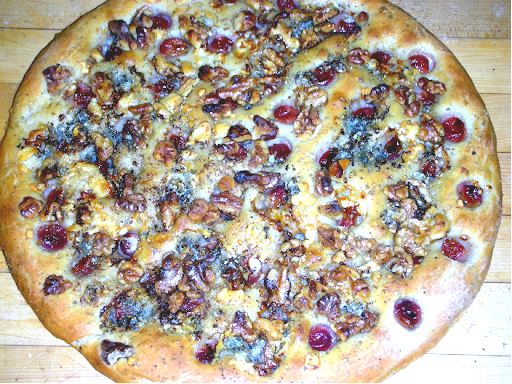
Pictured is the focaccia I made for a cooking class when I worked at Material Culture. Although it has been four years since I cooked there, I have many fond and delicious memories of special events, classes, supper clubs, and catered events held there.


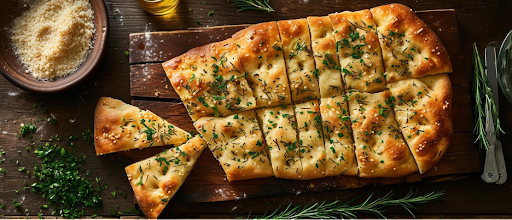
Focaccia is a flat leavened oven-baked Italian bread with an ancient history whether round, rectangular, or square. Its Latin name panis focacius means hearth bread. In the oldest recipes, the dough was flattened on stone slabs and cooked under hot ashes. Today focaccia is closely associated with the Mediterranean coastal province of Liguria and the city of Genoa in particular, where I enjoyed some of the best focaccia I’ve ever tasted.


However, many types of flatbreads may be called focaccia including Roman pizza bianca (with cheese and no tomato). Focaccia is left to rise after being flattened and dimpled generously with oil poured into the depressions giving it lightness and richness while pizza is baked immediately after shaping and classically does contain oil in the dough.

Focaccia Barese (from Bari in Puglia, Italy) dates back to the Phoenicians who kneaded millet, barley, water, and salt flavored with olive oil, spices, and honey, flattened it into a round shape and cooked it on a hot stone.

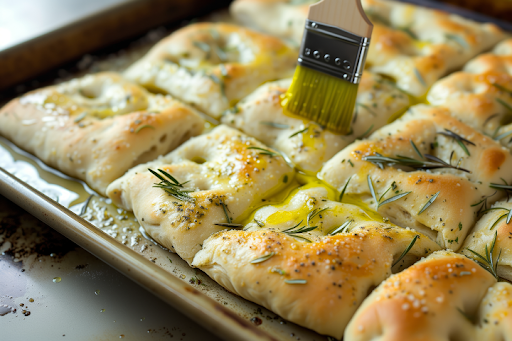
Focaccia Genovese (Genoa-style focaccia) has finger-sized depressions on its surface called ombrisalli in Genoese dialect that are filled with olive oil, and then sprinkled with coarse salt and often rosemary. Also known as Pizza Genovese and an iconic food of Genoa, it is a favorite for breakfast dipped in cappuccino or as a snack during the day.


Focaccia dolce (or sweet), is sprinkled lightly with sugar, and may include raisins or honey. Focaccia Veneta (Venetian focaccia) is made for Easter with eggs, sugar, and butter. In Rimini on Italy’s Adriatic Coast, piada dei morti (flatbread of the dead) is sweet focaccia topped with raisins, almonds, walnuts, and pine nuts eaten on All Souls' Day (Halloween). Focaccia al rosmarino is topped with fresh rosemary or sometimes sage and may be layered with potato.

Grape, Gorgonzola, and Walnut Focaccia

In this recipe, red grapes, potent but lusciously creamy Italian Gorgonzola, and soft-textured walnuts, top soft, light, and earthy part-rye focaccia. Red globe grapes would be fabulous here, though they do have seeds that must be removed. In their short fall season, inky blue Concord grapes bake up dark and sweet. While any blue cheese will work, Gorgonzola from Italy has a full-bodied flavor and super-creamy texture that really works here to balance the sweetness of the grapes. Its funky character balances the robust, earthy flavor of the rye.

Makes 1 large rectangular focaccia, 12 to 16 servings


¾ pound (3¾ cups) unbleached all-purpose flour

¼ pound (1 cup minus 2 tablespoons) dark rye flour

2 teaspoons fine sea salt

1 (¼-ounce) package (2¼ teaspoons) active dry yeast

1½ cups lukewarm water

¼ cup extra virgin olive oil

Freshly ground black pepper

¼ pound large red grapes, halved and pitted if necessary

3 ounces Gorgonzola cheese, cut into small bits

3 ounces (¾ cup) walnuts, roughly chopped

Line an (18 x 13-inch) half sheet pan (or other large baking pan) with parchment paper or a silicone baking mat.


In a medium bowl, whisk together the dry ingredients: flour, rye flour, and salt.


In the bowl of a standing mixer fitted with the paddle attachment, combine the yeast, ¼ cup of the water, and ½ cup of the flour mixture. Allow the mixture to rest until it is bubbling, about 10 minutes. Beat in the remaining flour mixture. Switch to the dough hook and continue beating until the mixture comes together in a rough and shaggy ball and is elastic, 5 to 6 minutes.


Transfer the dough to a large, oiled bowl; cover with plastic wrap or a damp cloth and allow the dough to rise until doubled in size, about 2 hours, at warm room temperature. The dough may be made one day, allowed to partially rise, then refrigerated overnight for use the following day or even punched down again and kept chilled for use the second day. Allow the dough to come to room temperature before proceeding.


Punch down the dough and use oiled hands to press the dough into the pan without folding it over (don’t worry if it doesn’t reach all the way into the corners). Leave the dough to rest and rise at warm room temperature for about 1 hour, or until light and puffy. Using your index finger, poke indentations over the surface of the dough about every inch or so. Brush the dough with the remaining olive oil and grind fresh black pepper over top.


Press the grapes into the dough, leaving a 1-inch border around the edges. Sprinkle the cheese and walnuts onto the dough, then mist with water from a plant mister. Allow the focaccia to rise at warm room temperature until soft and puffy, about 30 minutes.


Preheat the oven to 425°F. Bake the focaccia for 25 minutes, or until nicely browned. Remove from the oven, cool for about 10 minutes, then remove the focaccia from the pan and cut into squares to serve.


Store loosely covered at room temperature up to 2 days or wrap tightly in aluminum foil and freeze. Reheat frozen focaccia still wrapped in foil in a preheated 375°F oven for about 20 minutes.

Upcoming Culinary Tours With Aliza

Treasures of Northern Greece, Delphi & Athens Tour: September 6-16, 2024
Piemonte Food & Wine Lover's Tour: September 19-29, 2024
Provence and Les Hautes Alpes: October 18-28, 2024
Facebook  Twitter  Instagram  LinkedIn  YouTube
Email Aliza