|
Osher Lifelong Learning Institute at the University of Southern Maine |
| |
|
Director’s Message
“As I get older I’m more physically cautious but more emotionally courageous. The opposite of how I was as a teen and a young woman.”
—Louise Penny
Louise Penny fans love her mysteries because they are both about a puzzle to solve and a deep love for the imaginary community of Three Pines. In some ways, participation in OLLI is similar—you engage your mind through courses, workshops, SIGS, or other activities, and you find “your people” in a new, welcoming social group. Spring session is the perfect time to jump into a new adventure where you can be emotionally and intellectually courageous.
There may still be snow on the ground, but spring is in the air!
Here are a few highlights for this month:
- Registration is still open Spring classes, SAGE, and workshops
- The Staff Room: join a free forum for members to learn about becoming an instructor and also picking up tips and support from other instructors.
The Community Committee is planning trips and activities—stay tuned for good things coming soon.
—Donna Anderson, Director
| |
In this edition . . .
- Director's Message (above)
- Update from the OLLI Advisory Board Chair (below)
- Spring registration is still open
- SAGE presentations for March 2024
- Submit your work to Reflections 2024
- Volunteer for a community STEM program
- March trivia questions
- Science Reading Club Notes
- SIG Corner
- Passages
- March trivia answers
| | | |
|
OLLI's Spring Session
Registration is still open!
Click the button here to view the catalog and register for classes.
| |
|
SAGE this March
Tuesdays 9:30–11:30 A.M.
Hybrid: In-person in Wishcamper Room 102 or via your laptop or alternative device
| |
|
March 12: Gary Bergquist, Author and MIT-trained computer consultant
Becoming What We Watch: How Television Has Skewed Our Perception of Reality
Gary Bergquist is an MIT-educated expert in the field of highly abstract computer programming. In his book, Becoming What We Watch, Television’s Unintended Legacy, he discusses the biggest programming project of all, namely the programming of our children by television. For seven decades, television has presented us with a marvelous pseudo-reality into which we have willingly plugged ourselves. Gary will explain how the impact of this dual reality on our communal psyche has gradually skewed our views, emotions, political discourse, charity, religion, community involvement, drug abuse, and crime.
| |
|
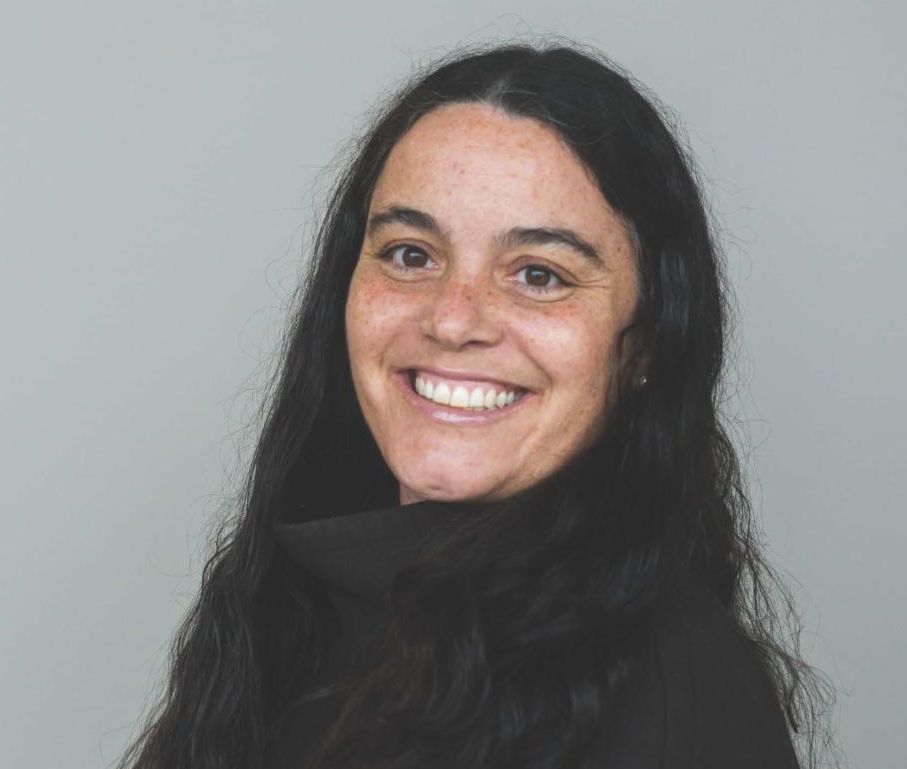
March 19: Rachel Walls, Principal, Rachel Walls Fine Art
Dahlov Ipcar’s Century (1917–2017)
Rachel Walls is the principal of Rachel Walls Fine Art, which represents the art estate of Dahlov Ipcar, an American painter, illustrator, and author, who lived most of her life in Maine. Rachel first met Ipcar when she came to her elementary school as part of a visiting artist program in 1986. They reconnected in 2010, and by 2015 Walls was representing Ipcar professionally. Currently, Walls is guest curating the exhibition Father and Daughter: William Zorach and Dahlov Ipcar, from March 7 to May 3, at the Maine Jewish Museum in Portland. In 2025, she will be co-curating an Ipcar exhibition at the Shelburne Museum in Vermont. Rachel will talk about the importance of Dahlov Ipcar’s long creative life, which lasted until she died in 2017 at the age of 99.
| |
|
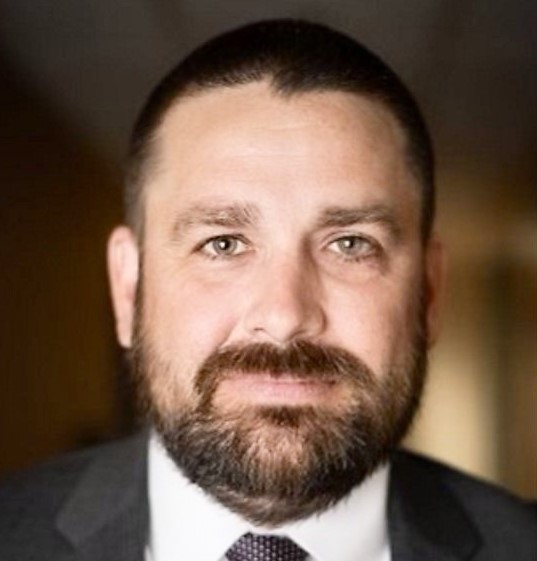
March 26: Ryan Scallon, Superintendent, Portland Public Schools
The Challenges and Opportunities Facing the New Superintendent of Portland Public Schools
Dr. Scallon officially started as the new Superintendent on July 1, 2023. To better understand the needs facing the school system, he held a series of “listen and learn” sessions with a diverse group of stakeholder groups, including teachers, students, parents, and community members. In his presentation, Scallon will share what he learned as well as provide insight into the school system’s new strategic plan and what he sees on the horizon for Maine’s largest and most diverse school district. Ryan holds a degree from the Wharton School of business, a master degree in educational administration from the University of Pennsylvania, and a doctorate in education from Temple University. He has experience as a teacher, principal, and administrator in diverse urban school systems in Philadelphia, New York, and Boston.
| |
|
April 2: Anne B. Gass, Maine Author and Independent Historian
“We Demand”: The Story of an Epic Cross-Country Road Trip for Women’s Voting Rights
Maine author Anne B. Gass will talk about her historical novel, We Demand: the Suffrage Road Trip. We Demand is based on the true story of three gutsy women who, in 1915, drove from San Francisco to Washington, D.C., on a desperate and dangerous mission to demand an amendment to the US Constitution enfranchising women. The talk is accompanied by slides from the original trip. Anne’s first book, Voting Down the Rose: Florence Brooks Whitehouse and Maine’s Fight for Woman Suffrage, is a nonfiction account of her great-grandmother’s work to win suffrage. Join us to learn about this fascinating journey that was just one piece of women’s 72-year-long fight for voting rights.
Our SAGE Series of eight presentations will again be a hybrid offering. This means you can attend a presentation in-person on the USM campus, in Wishcamper 102, or you may attend via Zoom from wherever you may be, in Maine or elsewhere. All presentations will be recorded and available to those who have signed up for the SAGE Series or for any single presentation for which they have registered ahead of time to attend online.
OLLI Members can subscribe to the entire Spring Series for $50, though the earlier the better because subscribers get the series of eight programs for the price of five single programs. The entire SAGE Series can be purchased on the OLLI website in the same manner as an OLLI class.
Single SAGE lectures cost $10 each and are open to the general public on a walk-in basis or by registering for online viewing. You do not need to be an OLLI member to attend a single lecture; however, when purchasing a single lecture for online viewing, you need to contact the OLLI office at 207-780-4406 no later than the Thursday prior to the lecture.
You can register by using this link: https://usm.maine.edu/osher-lifelong-learning-institute/registration/
| |
|
Reflections 2024 Submissions Are Open
OLLI members are invited to submit poetry, prose, photos, and other artwork to Reflections, OLLI’s annual art and literature journal.
Reflections, published in print and for the past few years also electronically, has been around almost since OLLI started. It provides an opportunity for OLLI members to share their artistic and literary talents.
Many of the contributions are inspired by, or the products of, the many writing and art courses OLLI offers.
There are four phases in the life of each issue of Reflections.
First, submissions are sent as email attachments to the submissions manager. The submitted piece and information about the contributor are assigned a number. Then the submitted piece and the contributor’s information are stored separately.
Second, the selections committee evaluates each submitted piece. The selection process is “blind.” The committee members do not have information about the contributors. The members of the committee come to an agreement about which submissions will go into Reflections.
Unfortunately, not every submission is selected. Every year, there are more submissions than we have room or budget for in the journal.
Third, the identifying numbers of the selections are then conveyed to the production manager. The production manager matches the submissions to the names of the contributors.
Four, after copy-editing and proofing the written submissions, the manager sends the entire package to the OLLI office for the designer and printer it has hired. The production manager works with the designer to answer questions and address any issues that might arise.
Rules for contributors
Every literary journal, including Reflections, has requirements for submissions. The requirements for submissions are below.
| | |
|
Submitting Your Work to Reflections 2024
Deadline: April 1 (May Be Extended)
Current OLLI members are invited to submit their creative works to the 2024 edition of Reflections:
A Journal of Art and Literature.
|
|
|
Volunteer for an entertaining STEM program in the community!
The 2024 Maine HS Science Bowl will be taking place on Saturday March 9th, 9:25am to 3:30pm or to 6pm ET as a head-to-head (NEW!) virtual competition, again hosted by People Making a Difference (PMD).
PMD has been successfully hosting virtual head-to-head National Ocean Sciences Bowl (NOSB) regional competitions since 2021, and recruiting and preparing its volunteers for officiating for many in-person regional middle and high school bowls annually for 25 years.
What are virtual head-to-head matches like to officiate?
Virtual head-to-head matches are quite similar to the in-person version with which you're probably already familiar, only we do everything in zoom and use a web-based lockout buzzer system with latency correction, allocate a few more seconds due to the extra time it takes for latency correction and doing things virtually.
and have a volunteer "Recognizer" official dedicated to running the buzzer system and calling on students who buzz in.
Moderators/Question Readers need to learn how to host the zoom meetings and make and use breakout rooms, and we provide useful "how-to" guides and 1:1 coaching in zoom for folks new to hosting. New moderators must usually complete two practice sessions successfully to prepare.
Science Judges must have STEM educations and/or experience to ensure the moderator is reading questions and answer choices accurately and take the lead to resolve any science challenges.
They do NOT switch reading questions with the moderator between matches given moderators' specialized zoom roles/preparations.
Timekeepers need to learn how to custom screen share the scoresheet and game clock in zoom, and we provide a useful "how-to" guide for this, too.
Scorekeepers use linked google sheets to keep score for each match - The running totals are calculated automatically, no more arithmetic is required!
All volunteers must complete PMD's 1-hour training (or watch a recording) AND at least one, 2-hour practice session via zoom on:
How Can I Help?
Learn more about officiating for the Maine High School Science Bowl and other NOSB ocean sciences regionals that PMD is hosting this winter at https://www.pmd.org
Please sign up BY 2/17 to officiate for the 3/9 Maine HS Science Bowl at http://pmd.org/s/030924.htm
and/or
by 1/13 for the 2/3 NOSB Bay Scallop Bowl
by 2/7 for the 3/3&4 NOSB Blue Lobster Bowl
by 3/2 for the 3/23&24 NOSB Shore Bowl
at http://pmd.org/s/NOSBvolunteer2024.htm
Lori Tsuruda
Regional Coordinator
2024 NSB Maine High School Science Bowl
2024 NOSB Bay Scallop, Blue Lobster, and Shore Bowls
| |
|
By Faye Gmeiner
February’s Trivia Nights were great fun. The range of topics was fascinating, thanks to Elizabeth Housewright. You can join us by registering on the OLLI website for the SIG-Remote-Trivia Game Night. We hope you’ll join us during March. No need to wear your mudproof boots, since you can play from your dry and cozy home!
The answers to the following questions can be found later in this newsletter.
1. What simple invention by Joseph Glidden in 1774 forever changed the way of life on the Great Plains?
2. Ulaanbaatar is the capital of what country?
3. What is the loudest sound ever recorded?
4. What President is on the $100,000 bill?
5. Mark Twain critiqued social inequality in this 1882 novel. What is its title?
6. What is the most teeth (natural, not implants) that a human can lose during their lifetime?
The eleven letter word that fits the hint in #2 above and has five a’s is abracadabra. I wonder if there is another word as long that has two sets of double a.
Answers to the trivia questions can be found below.
| |
|
News from the Science Reading Club
Every month Scientific American surprises us with its sometimes crazy, often unexpected, and always interesting insights into our world. We’d love to have you join us! Among other information from the February issue, we’ll be discussing these topics:
“Minds Everywhere”: This article on cognition starts with “Consider the slime mold….”
“The Mystery of Matter”: How physicists used a BINGO card to reveal results of experiments related to detecting new particles and fields.
“Sand Mafias”: China used more cement in three years (6.6 gigatons in 2011–13) than the US used in the entire 20th century (4.5 gigatons). Where is it coming from, and what are the implications?
“Science Agenda”: Does hospice care work the way you think (hope?) it does?
| | |
|
SIG Corner
March 2024
Carpe Diem
It all begins March 11th! Women’s Wisdom!
The Women’s Lunch Gathering will launch in the Forum at Wishcamper on Monday, March 11, immediately following the morning classes, and will continue for eight weeks. Please bring your lunch and plan on stimulating conversations on a wide range of topics.
This is an opportunity to make new friends and discuss topics of interest to you.
FMI: Email Pat Taub at pparee2011@gmail.com
P.S. Reminder to register for this SIG (Special Interest Group) under the SIG tab using the OLLI Registration system.
—Paula Johnson, OLLI Advisory Board SIG Coordinator
| |
|
Paul Vermel
OLLI member Paul Vermel died on February 14, five days shy of his 100th birthday. He is best known as the first full-time conductor of the Portland Symphony Orchestra, having taken the post in 1967 and serving until 1975.
Vermel had a wide and varied career as a musician and director. He and his wife, Carolyn Paulin, were married in 1978 in Illinois. They returned to Portland in 2014. He performed as one of several past conductors in the PSO’s 90th anniversary season.
Paulin has taught many music appreciation and music history courses at OLLI. Vermel was often a student in her class, sometimes gently correcting her about certain details.
Paul Vermel’s obituary appeared in the Portland Press Herald, with details from his life and career along with quotes from some of his musical colleagues.
| |
|
1. What simple invention by Joseph Glidden in 1774 forever changed the way of life on the Great Plains?
Answer: Barbed wire. Joseph Glidden (1813-1906) was born in New Hampshire, taught school for a while, and then worked his way west as a thresher to get to Illinois. Once there he acquired a farm. He first saw barbed wire at a fair and invented a practical machine for its manufacture, for which he received a patent in 1874. Within about 15 years, its use became so widespread that fenced pastureland had replaced open range in the United States. Wow, it’s impressive how quickly that huge task was accomplished and hard to imagine how much barbed wire it took.
2. Ulaanbaatar is the capital of what country?
Answer: Mongolia. Ulaanbaatar is the capital and largest city in Mongolia, with 1.6 million people, about half the country’s population. It is also the coldest capital city in the world. It has bitter cold and dry winters with temperatures that we Mainers hope never to feel—as low as 40 degrees below zero Fahrenheit. It’s a fascinating name (translation is “red hero”) that has five a’s. Can you think of another word that is eleven letters or longer with five a’s in it?
Hint: It seems like magic. (I’ve included one at the end of this list of answers.)
3. What is the loudest sound ever recorded?
Answer: Krakatoa (1883). According to Popular Science, the actual measurement from 100 miles away was 172 decibels (dB). That’s comparable to the sound of a gunshot (140 to 190 dB) at its source. Some have estimated its sound level at its source to have been 310 dB. Krakatoa’s eruption destroyed more than half of its land and killed more than 36,000 people. This one only has three three a’s! For more on loud noises, check out https://www.popsci.com/story/science/loudest-sounds-ever-measured/
4. What President is on the $100,000 bill?
Answer: Woodrow Wilson. Did you know that there used to be paper currency for very large amounts ($500, $1000, $5000, $10,000, as well as $100,000)? All but the $100,000 bill are still legal tender, though not many are in circulation. The $100,000 bill was ordered by FDR to address the hoarding of gold during the Depression. It was a gold certificate that was only used to transfer gold between Federal Reserve Banks and was only produced for two years (1934 & 1935).
5. Mark Twain critiqued social inequality in this 1882 novel. What is its title?
Answer: The Prince and the Pauper. Wikipedia describes Twain’s first book of historical fiction as a critique of social inequality and a criticism of the judging others by their appearance. Its subtitle, A Tale for Young People of All Ages, and its relevance to issues we continue to struggle with over 140 years later are tempting me to read it.
6. What is the most teeth (natural, not implants) that a human can lose during their lifetime?
Answer: 52. Most children have 20 primary teeth and most adults have 32 permanent teeth, including four wisdom teeth, for a total of 52.
For more info: https://my.clevelandclinic.org/health/body/24655-teeth
The eleven letter word that fits the hint in #2 above and has five a’s is abracadabra. I wonder if there is another word as long that has two sets of double a.
| | |
Are you considering submitting an article to the OLLI Newsletter? Get in contact with us! | |
Email ollinews@maine.edu
to submit your piece.
Phone:207-780-4406
Tim Baehr, Editor
Don King, Editor Emeritus
|
Deadline for the next issue is March 15. |
| |  |
Maine Senior College Network | | |
OLLI National Resource Center | | |
|
Non-discrimination Notice
The University of Maine, including USM, is an EEO/AA employer and does not discriminate on the grounds of race, color, religion, sex, sexual orientation, transgender status, gender expression, national origin, citizenship status, age, disability, genetic information, or veteran’s status in employment, education, and all other programs and activities. The following person has been designated to handle inquiries regarding non-discrimination policies: Director of Equal Opportunity, 101 North Stevens Hall, University of Maine, Orono, ME 04469-5754, 207.581.1226, TTY 711 (Maine Relay System).
| | | | |