Rail & Labor News from RWU
| |
Weekly Digest Number 15 - April 9th, 2024 | |
Welcome to the RWU Rail & Labor News! This news bulletin is produced and emailed out each Tuesday morning. We hope you find each week's news and information useful. If so, please share with co-workers, friends, and colleagues. If you like, you can sign them up to get all the news from RWU HERE. Or forward them the link. Got a hot tip? Please forward the article and a link to raillabornews@gmail.com. Note: If you read over this news bulletin each week, you will be sure to never miss the important news of what is going on in the railroad world from a worker's perspective! | |
Editor's Note: While this might be a step in the right direction, the FINAL Rule - largely patterned on the PROPOSED Rule released in July 2022 - appears to include the same pitfalls, drawbacks, and loopholes. While RWU is still studying the Final Rule prior to making an official comment, please read RWU's critique of the Proposed Rule from 9/15/2022 HERE and our Preliminary Unofficial Statement on the Final Rule HERE. | |
Thor Benson / April 2
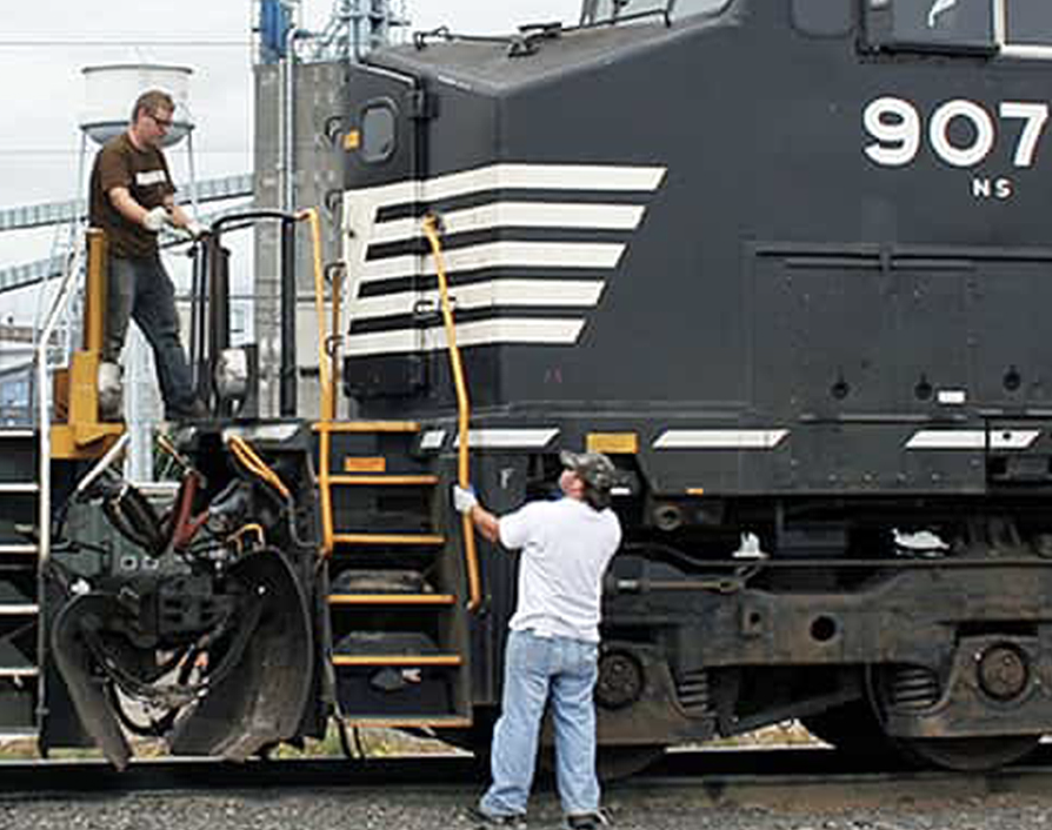
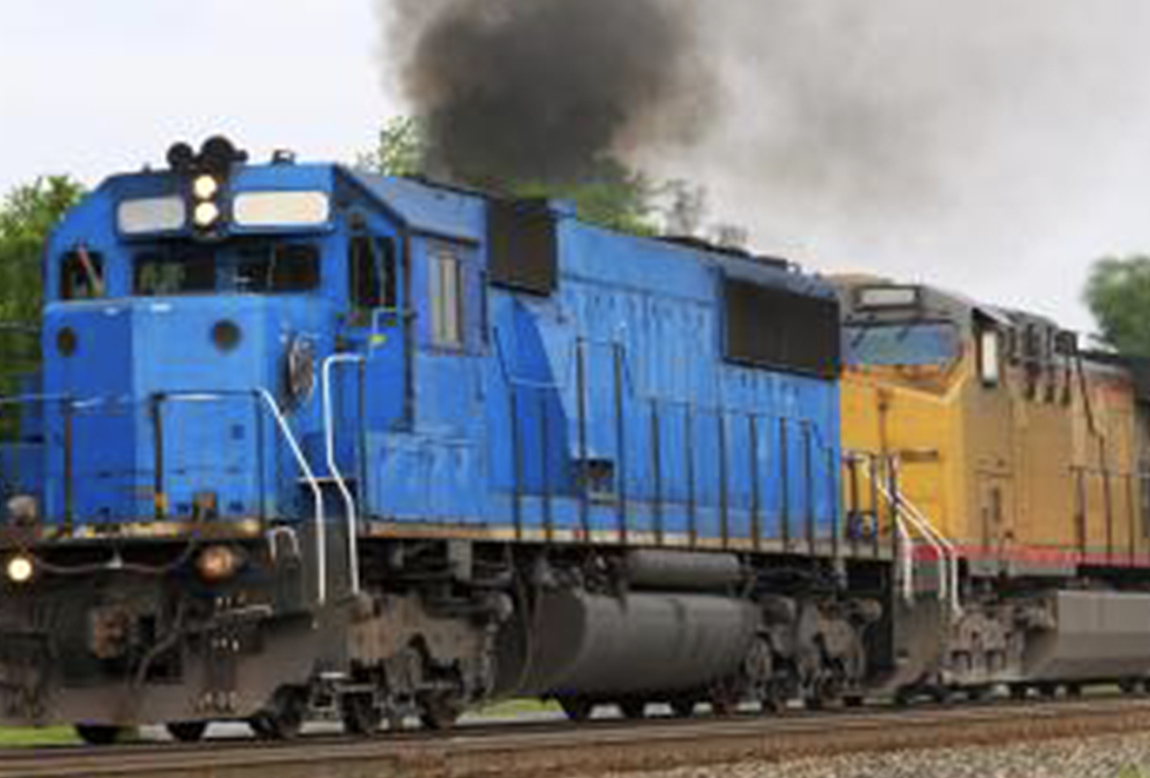
The Biden administration announced on Tuesday that at least two people will now have to be on board of the trains of the country's largest freight operators, which drew backlash from the industry and praise from safety advocates. The new rule is a response to a train derailment that caused an environmental hazard in East Palestine, Ohio last year. The train derailment caused a spill of toxic chemicals, and a fire ensued.
| |
Editor's Note: Hallelujah! A management consulting firm has come out and advised the rail carriers that they can do better by actually investing in the industry instead of milking it dry. However, one thing the firm may not understand: Wall Street and the Class Ones are addicted to short-term profits and PSR style railroading. It is unlikely they will change their spots. And even if they do, how long before they return to their "old" ways? Public ownership is the answer. | |
|
Class I railroads can continue business as usual and watch their earnings stagnate and profitability fall as their freight volume declines through 2030. Or they can make meaningful service improvements, become easier for customers to deal with, and launch new intermodal services that capture freight from trucks. Adopting a successful growth strategy will boost revenue, increase profitability, and produce the returns that will raise railroad stock prices.
| |
Editor's Note: While there is nothing new about CN's opposition to "open access," what is interesting here is the proposal to create a cooperatively operated network of rail lines in western Canada administered by unions, workers, farmers, and communities. | |
Progressive Railroading / April 4
Believing forced-access running rights would imperil light-density grain lines in Canada’s Prairie region, Canadian National Railway Co. on March 29 re-instituted an abandonment moratorium on western Canada grain-dependent branch lines. In the meantime, CN plans to continue working closely with Prairie Alliance for the Future (PAFF), a non-profit organization spearheaded by Brotherhood of Maintenance of Way Employes that plans to create a cooperative of rail workers, unions, farmers and rural communities to operate 1,000 miles of CN grain lines in Manitoba and Saskatchewan. PAFF would operate a low-cost grain network based on leased rail lines and hired-by-the-mile locomotives, designed to move grain from local communities to CN’s mainline.
|
|
Editor's Note: One cannot help but wonder just what Wall Street will be demanding from this (and other) shortline operators. The push for ever lower ORs and bigger short-term profits is not limited to the Class Ones. And how much rail infrastructure could have been built or maintained for Brookfield's $761MM cash-out? | |
|
John Kingston / April 02
Last week, in a report that is almost two reports in one, S&P Global Ratings reduced its rating on G&W debt even as it gave a strong outlook on the company’s North American short-line business. Moody’s also reduced its debt rating on G&W to Ba3 from Ba2. The immediate trigger for the downgrades is G&W’s refinancing of a financing package that involves a term loan and a revolving line of credit, actions that will result in $920 million in net additional secured debt. G&W is taking on the additional debt to fund a $761 million dividend payment to Brookfield Infrastructure, which owns G&W.
| |
Editor's Note: Any business - and that includes the railroad - must be prepared to some extent for inclement weather, washouts, derailments, earthquakes, climate change, bumper grain harvests, detours and more. PSR and the "lean and mean" approach to railroading in recent years makes very little provision for anything but a "routine" day, which - if you ask any working railroader - is a rarity. We need railroads that are prepared to handle whatever comes their way. | |
|
Increasing industry resiliency is absolutely critical, but we’re now in the midst of a high visibility proxy contest where one side is using the word and attaching negative connotations to it. We’ve no doubt the Ancora group also appreciates the criticality of resiliency, but the problem is that a large chunk of the institutional investor audience isn’t going to understand the mechanics and associated nuances of applying strong, but not excessive, resiliency to a Class I rail network. Since April 2022 they’ve been repeatedly (and correctly) told greater resiliency is a positive thing, but now it suddenly represents excess and waste and is to be avoided?
| |
Editor's Note: Artificial Intelligence will most likely be coming to a railroad near you in the coming years in some form or another. Rail workers and our unions must be prepared to deal with this important question. | |
|
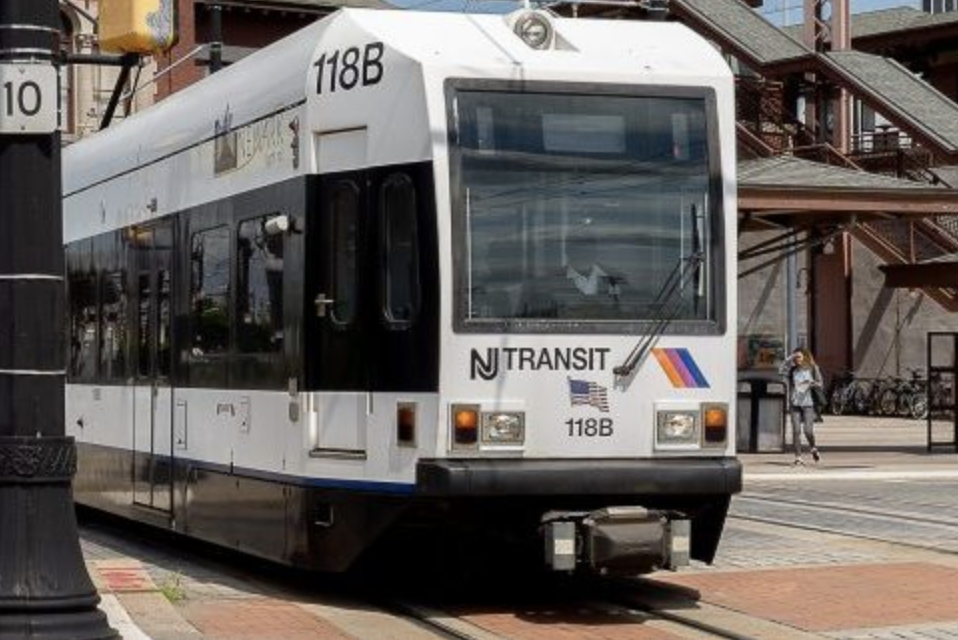
NJ TRANSIT has been awarded a federal grant to work with Rutgers University's Center for Advanced Infrastructure and Transportation (CAIT) to implement AI-powered safety systems on light rail vehicles at grade crossings. “By investing in innovative solutions for transportation safety, we can protect commuters and pedestrians and modernize New Jersey’s infrastructure,” said Congressman Rob Menendez, who represents the district where the project will begin. “I am proud to see NJ TRANSIT and Rutgers University use federal funding to implement AI-powered systems and enhance grade crossing safety along the Hudson-Bergen Light Rail.”
| |
Editor's Note: As climate change increases, this sort of thing may become more and more common. Class Ones have looked at 'water-by-rail' over the years but the cost to consumers is perhaps an order of magnitude higher than municipal water. That said hauling potable water is a much cleaner business than coal or crude oil, and unit train quantities could be upwards of 2MM gallons per train. | |
BNSF / April 2
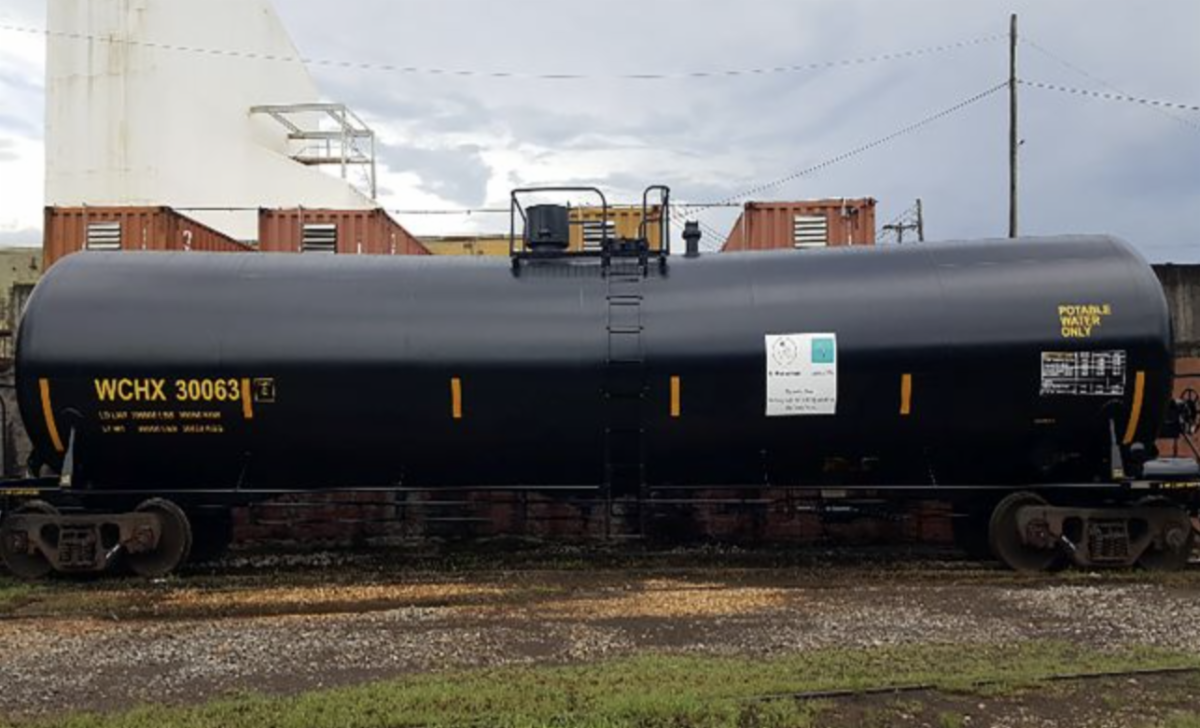
In the arid high desert of New Mexico, water is an increasingly rare commodity, especially in the eastern Navajo Nation, where many homes on the reservation have no running water. “I started making calls as we needed a source for water and tank cars to move them,” Drew Halter explained. “I know some car owners and we found some food-grade tank cars that the mission could lease.” They started out with five cars.The source for the water is in Helena, Mississippi, where it’s treated and tested. Once the lined tank cars are loaded with 21,000 gallons of precious water, they are moved west to Amory, Mississippi, where BNSF picks them up and takes them approximately 1,200 miles to a spur at Thoreau. Families can either come to the mission to collect water or the mission trucks it for home delivery.
| |
Editor's Note: RWU has previously reported on the rail carriers' stance on this new Minnesota state law. Regional news coverage continues to expose the carriers' hostility towards and open defiance of the state law. | |
The Flyover / April 3
Corporations can be really shitty community members. We’re seeing that now with Uber and Lyft threatening to leave rather than paying a minimum wage in Minneapolis, and with freight railways BNSF and CPKC refusing to pay for the safety assessments and emergency response training signed into Minnesota law in 2023. While derailments steadily dropped from 1975 to 2010, the numbers over the past 10 years have been stagnant, not improving. And some years have been significantly worse. “The 18 Minnesota derailments in 2020 were the lowest on record,” he writes. “But by 2023 that number had risen to 31 — a 72% increase.” It’s also worth noting that from 2014-17 railways were required to pay for safety assessments similar to the one now in place.
| |
Editor's Note: The is a lot of rank=ting and raving about this proposed CARB Rule. Just like with state two-person crew laws, the rail carriers are claiming they will stop serving the state or detour around it, or give up the freight to trucks. While none of this is likely, the carriers have the power to win allies of their shippers, workers/unions and other by threatening either withdrawal and/or dramatically increased rates. | |
|
The full membership of the Agricultural Transportation Working Group (ATWG), a consortium of close to 90 national and state/regional associations, is calling on the U.S. Environmental Protection Agency (EPA) to deny the California Air Resources Board (CARB) “In-Use Locomotive Regulation” request to mandate zero-emissions standards for freight locomotives in California. The proposed CARB regulations “pose a significant danger to U.S. agriculture and the broader U.S. supply chain. CARB’s proposal requires railroads and rail customers to meet untenable regulatory requirements without any solutions available on the market,” ATWG noted in its letter. “Specifically, zero-emissions locomotives would have to be purchased … but such locomotives are not yet commercially viable and won’t be in the foreseeable future.
| |
Editor's Note: This is sheer nonsense, but most be opposed by rail workers and our unions, because a lot of influential people who understand little about the railroad are starting to glom onto this flawed concept in the name of :rail revitalization: and "zero emissions," etc. Please read the RWU Resolution Against Autonomous 'Pod Trains" | |
VIDEOs: Parallel Systems Autonomous Pod Train is an Obvious Grift | |
RWU is releasing a resolution this week concerning supposedly autonomous 'pod trains'. These autonomy schemes do not play out well in the real world and to the left are a couple entertaining videos that explain why. Autonomy should be a mildly diverting sideshow but the California Air Resources Board got in way over their non-railroading heads to endorse Parallel Systems, a particularly ridiculous approach that has BS-ed its way to $6MM in federal funding and the support of BNSF and Genessee and Wyoming. | |
|
Editor's Note: It is a national disgrace that this man has been at the helm of the RRB for all of these years while this crap has been continuing, apparently for years. Good riddance. | |
BLET / April 4
On March 29, President Joe Biden fired Railroad Retirement Board Inspector General Martin Dickman after a year-long investigation found he had created a hostile work environment According to The Hill, the whistleblower investigation uncovered evidence that Dickman repeatedly engaged in abusive treatment of RRB employees, including using crude and inappropriate language like slurs, and “openly belittling his employees and RRB members.” Investigators reported that Dickman had attempted to impede their investigation, as multiple RRB employees expressed fear of retaliation from Dickman as a result of their interviews with investigators.
| |
Editor's Note: All railroad workers should take note of this study of so-called "safety culture" on the nation's railroads. Does the carrier you work for focus on worker behavior or hazard reduction/elimination? To learn more about RWU's Campaign for Real Workplace Safety HERE. | |
BLET / April 4
The National Transportation Safety Board is conducting a confidential survey of the Norfolk Southern workforce to evaluate the railroad’s safety culture. Surveys were sent to all NS craft employees on April 3, and the survey will conclude on April 19. The survey consists of 16 questions and should take about 10 minutes to complete. The survey will be sent from “NTSBSafetyCultureSurvey@qualtrics-survey.com.” The email’s “from” line will be “Stephanie Shaw NTSBSafetyCultureSurvey@qualtrics-survey.com.”
| |
Editor's Note: It is in everybody's interest - except the trucking industry - to stop bigger trucks. Rail workers have a special interest in combatting this menace. Jump on board this train! | |
CABT / April 7
Semitrailer trucks play a vital role in the U.S. economy and transportation system, but longer, heavier trucks endanger motorists, weaken our roads and bridges, and cost taxpayers billions of dollars every year in highway subsidies. A leading voice in opposing more dangerous truck configurations, the Coalition Against Bigger Trucks (CABT) is a national, nonprofit grassroots organization that has advocated for highway safety and sound transportation policies since 1995. Stand with over 3,500 law enforcement officers, EMTs, safety leaders, engineers, independent truck drivers and elected officials, and voice your opposition to bigger trucks on our nation’s highways.
| |
NEWS FROM AROUND THE LABOR MOVEMENT | |
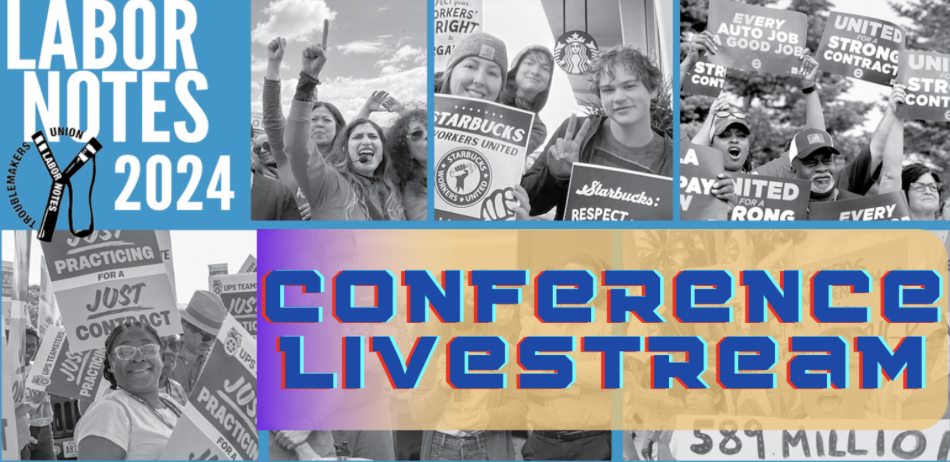
Editor's Note: While dozens of RWU members will be in attendance at the Labor Notes conference following our Convention in Chicago in April, others will be afforded the opportunity to join some of the important workshops and plenaries by livestream as well. | |
Labor Notes
"Check out our Eventbrite page to see the schedule of panels we will livestream during the Labor Notes 2024 Conference!
The livestream will capture the three main sessions each day and three featured panels. Please register to receive reminders during the conference. Our YouTube, Twitter and Facebook pages will also livestream selected events. We will post the recordings later on our website and YouTube channel.
The conference is currently past capacity, and we will not be taking walk-in registrations. But we want everyone to be able to hear from the nurses, auto workers, teachers, Teamsters, public sector workers, and Starbucks workers who will be speaking, including the closing session on Sunday with UAW President Shawn Fain."
| |
Editor's Note: Sarah Nelson spoke briefly at the RWU convention in 2022, and is a forward thinking voice for transportation workers. Like railroaders, airline workers are similarly straightjacketed by and labor under the Railway Labor Act. | |
|
"As a union member for nearly 30 years, Sara Nelson has been a leading voice for worker rights and a strong supporter of health care as a human right and Medicare for All, free from corporate profit. Her articulate expression of all the best that our union movement has to offer has impressed millions. She will speak about what a single payer health care system means for workers and for unions and the role unions must play for us to finally win this battle."
| | | | |