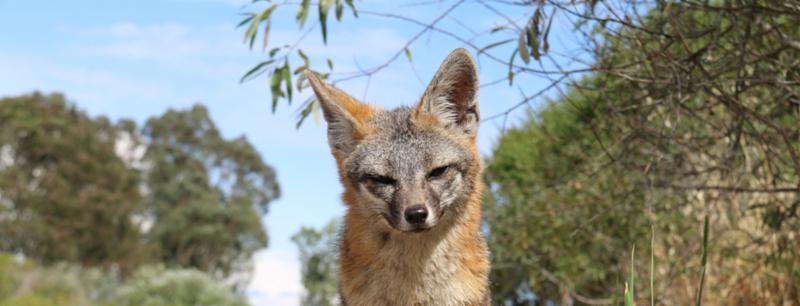
Urban Wild Life Research Project |
|
Please donate so that we can successfully move forward with the corridor project. Our vision for the Baylands is to make sure wildlife can thrive in the urban landscape. Restored corridors will enlarge the habitat which will reduce transmission of the kind of disease that killed 25 foxes in 2016 and will encourage better genetic diversity. We have identified the first area to plant vegetation and are in the process of working with other entities to create safe habitat for gray foxes and other wildlife. It needs ongoing funding for expert consultants and materials. Please consider a monthly donation if you are able, and we are grateful for any support you provide! |
|
Gray Fox Report for February 2022 |
|
by William C. Leikam, President/CEO/co-Founder
A 501(c)(3) Nonprofit Corporation
|
|
Gray Fox Denning Practices
|
|
Early in my study of the gray fox and knowing so little about their overall behavior, I was stunned when one early morning all the foxes: Two adults and four pups vanished. They had been there the day before, the pups wrestling, chasing and having mock sex over beneath the edge of the brush. I remember thinking, “Well, they are just back there in the brush and unwilling to come out.” I relaxed, went about my business, came back the following day, no foxes appeared. On the third morning I was dismayed that for three consecutive mornings no foxes showed up. That had never before happened. I stewed over it for days on end. I searched back in the brush, over on Fox Hollow Hill and over near the office complex along Embarcadero Road but without any luck. For about a month I continued looking until one morning I decided that it was futile. It wasn’t until March of 2010, the following year that I saw the pair far up the road walk back into the brush right near the old natal den.
That was my initiation into gray fox dispersal. The pups had dispersed and the adults had left for what I came to call their “vacation”. In 2011 Bold was born and as a first-year fox she didn’t want to have any dealings with the young males that came around until in 2012 she met the male I was to call Gray. That was the year that Bold fought her father Squat and took over his territory.
|
|
April 2012 Mama Bold and Gray had their first litter of pups back under the brush in the old natal den that had been in use, according to Kris, one of the men working at the water treatment plant, for at least 23 years. The litter must have been about a month old when suddenly they all disappeared. Vanished. Once again, I was stunned by the sudden disappearance of the gray fox family. I went looking. About a week later, I discovered that they had changed their den area to back under the alkaline saltbush behind the water treatment plant, probably all of a thousand feet away from their natal den.
I was thereby given a lesson on den moving. The foxes tended to remain in an area for several weeks, then move to a new location. I wondered why they shifted locations from time to time. I speculated that when they have pups, they move so that if there was a predator lurking in their territory that by moving, they kept that predator “guessing” as to their where-abouts just as they had done with me.
|
|
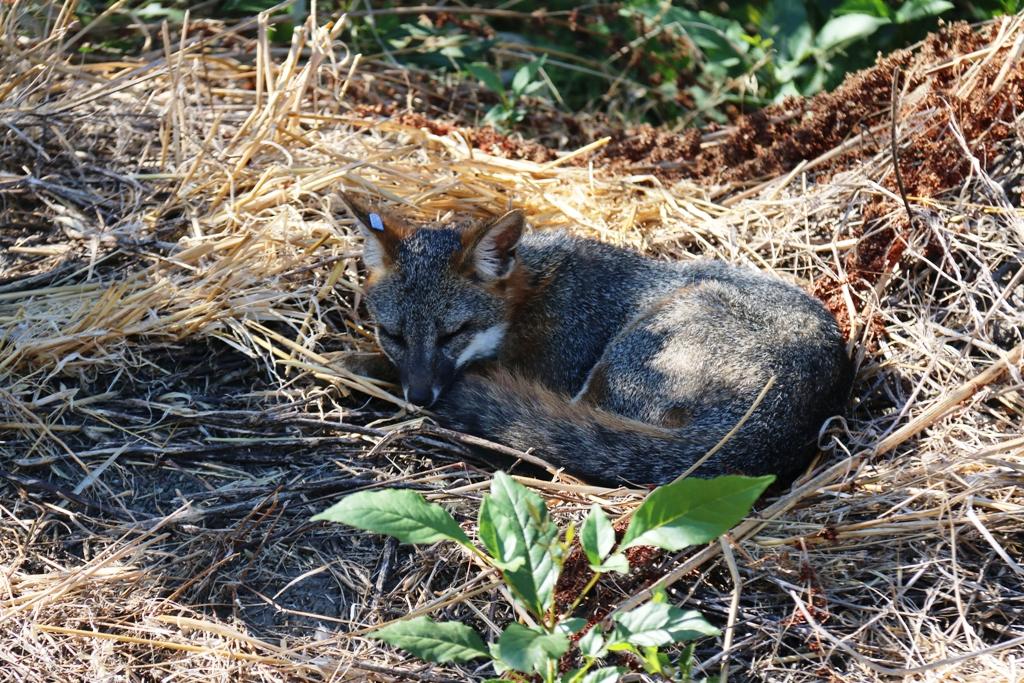
Up until this year with the male Laimos and Big Eyes, for three years they had remained in their natal den location and so on any given day it was easy to locate them, observe and document their behavior, but about a month and a half ago, these two stopped showing up in their usual locale, or in the big clearing back in the brush. They still showed up on my trail cameras, but seeing either of them live was a different matter. My field assistant Kelcey and I kept looking until we noticed that along Pond Road, scat began turning up more and more. I suspected that they had moved their location there because over in the clearing, it seemed as if raccoons had taken over and Laimos and Big Eyes simply moved out.
When they do vanish like that, it is still time consuming to relocate them, but eventually something will happen, either live or via one of our trail cameras, and when that happens once we have their new location, we can document their behavior as we did this morning.
|
|
Gray Foxes General Health |
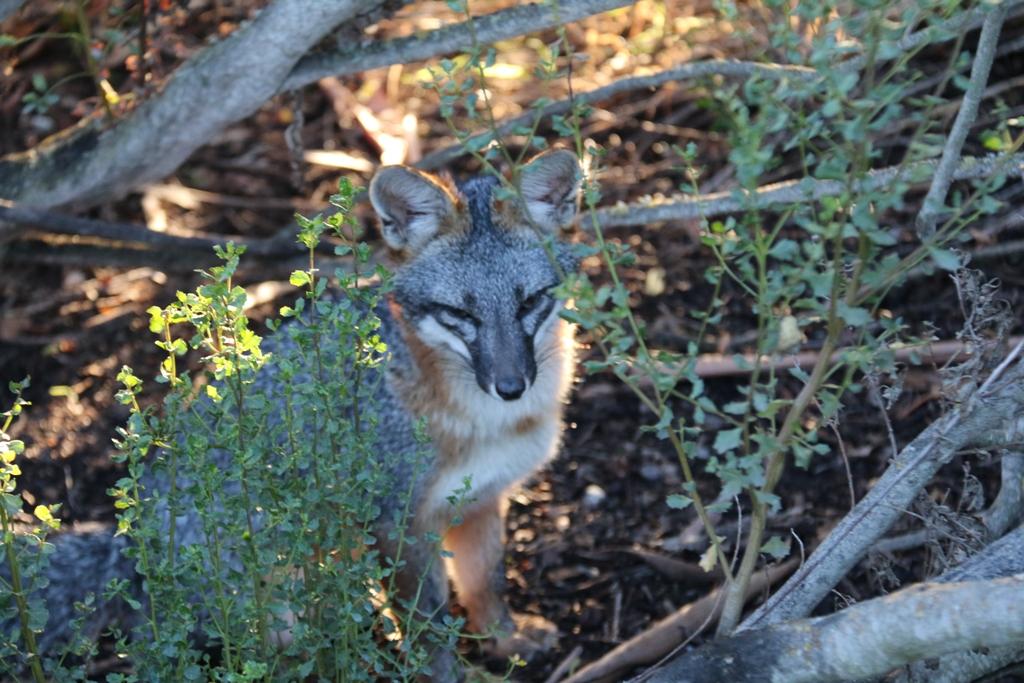
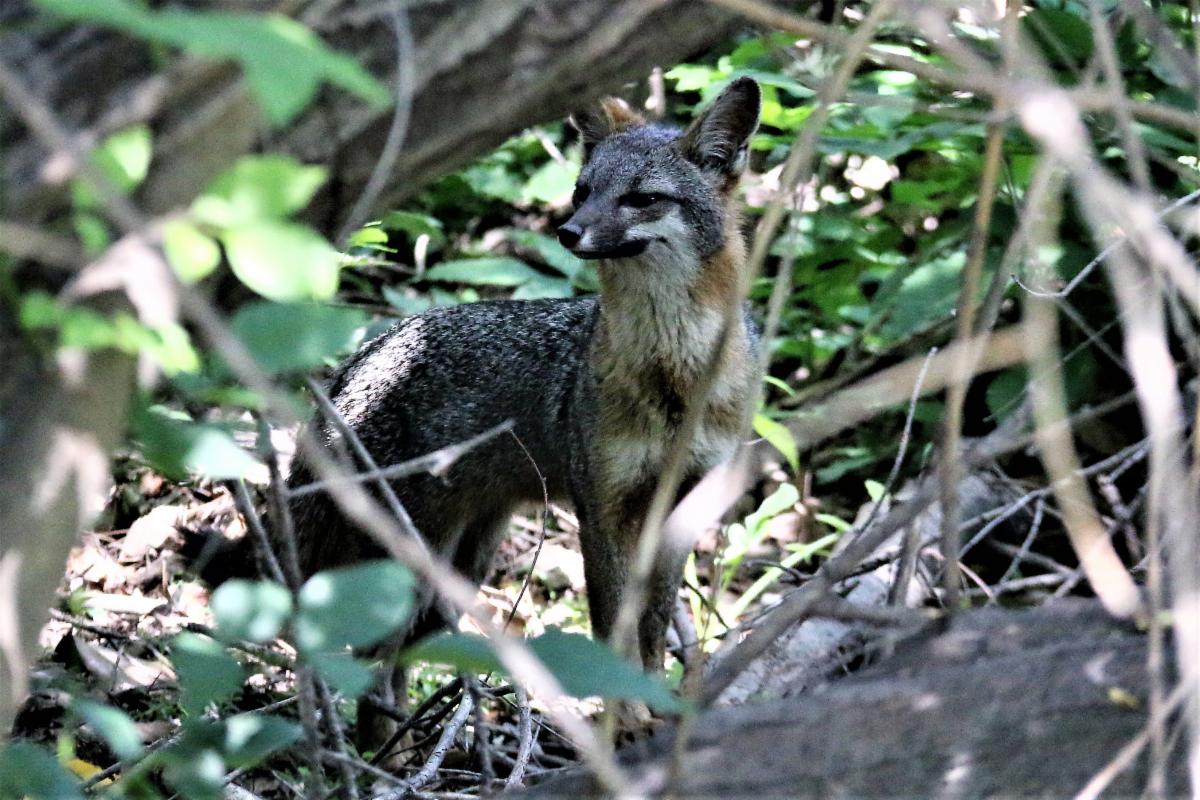
These two foxes appear to be in good health. |
|
Total Numbers Of Gray Foxes in the Palo Alto Baylands Preserve |
As of February, 2022, we have two adult gray foxes living in the Palo Alto Baylands Nature Preserve.
Total Numbers of Gray Foxes in the Palo Alto Baylands Nature Preserve: As of this date, we have two adult gray foxes living in the Palo Alto Baylands Nature Preserve.
|
|
II. Updates for the Urban Wildlife Research Project |
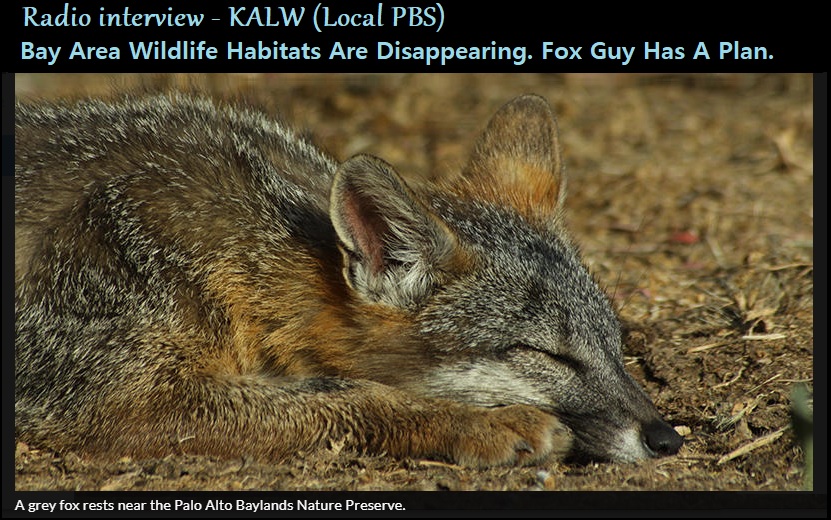
Bay Nature Magazine – How to be a Fox, the article about Bill and his ethological approach to his study of the gray fox is online here: https://baynature.org/article/how-to-be-a-fox/ Many are calling this a major article in the wildlife press.
LIVE & ONLINE Bill is schedule to make an online presesntation for the Mt. Diablo docents and rangers on March 16th. In addition, in April 2022 he will present at the Point Reyes Birding & Nature Festival. More on that coming up. He has an additional live event coming up also in April and on May 7th live at Safari West https://www.safariwest.com/ in the Elephant Room.
You can access Bill’s PowerPoint presentation Corridors & Connections: Sustaining the Health of All Wildlife presented during the October 24th P-22 Urban Wildlife Festival here: https://www.youtube.com/watch?v=Dh4MQL1D1Cc
NEW - To find out more about us, search Urban Wildlife Research Project, UWRP, gray foxes, wildlife connection, linkages, corridors and several documentaries including the video clips.
|
|
III. Gray Fox, Baylands Goals |
Within the permit that allows the Urban Wildlife Research Project to conduct its study of the behavior of the gray fox at the Palo Alto Baylands Nature Preserve, the objectives covered area:
- Monitoring of urban gray fox Denning sites in Palo Alto Baylands.
This is being accomplished during the period when the gray foxes use a den site. It is one of the prime locations for gathering most of the behavioral data of the litter and for adults alike.
- Assessment of status and population trends of Baylands urban gray foxes
Since January 2019 a pair of resident gray foxes have claimed territory at the Palo Alto Baylands Nature Preserve.
- Identification of habitat features that promote the presence of urban gray foxes
After considering this and talking with people who know how to restore habitats, we need to assess what kinds of plants, including the Alkaline Saltbush, would grow best along the edge of the saltwater channel and alongside the marsh. We need to grow a permanent habitat that contains the corridors and plant it as soon as possible. We’ll keep an eye on this as this is a critical link between the southern region of the Baylands and the northern region.
- Assessment of reproductive success and identification of factors that promote successful reproduction
Open the pinch-point along Matadero Creek by developing thickets that link one area to another, instead of the present “islands”.
- Identification and assessment of possible dispersal travel routes.
Presently there can only be guesses as to dispersal travel routes. We intend to make this important question much more concrete when we attain our collaring/take/capture permit from the Department of Fish & Wildlife.
|
|
-------------------------------------------------------------------
Sincerely,
Bill Leikam – The Fox Guy
CEO & President,
Urban Wildlife Research Project
A Nonprofit 501 C3
UrbanWildlifeResearchProject.com
|
|
UWRP Needs Your Help Today... |
|
|
|
Please consider making a gift today to insure gray foxes and all wildlife continue to live alongside us on our beautiful land. - UWRP
|
|
Thank You to Our Partners |
|
|
|
|
|
|