|
Insights From the Alliance
Cultivating the Future: Equipping Rural Community College Students for the Age of AI in Agriculture and Beyond
| |
|
Imagine a farmer using a smartphone app to analyze drone footage of their crops. The app, powered by artificial intelligence, identifies areas of stress and recommends adjustments to irrigation or fertilizer use. This scenario, once only theoretical, is becoming a reality thanks to AI. A recent article published by Inside Higher Ed highlights how AI is taking root in agriculture, offering a glimpse into the future our students might soon inhabit. The piece discusses how AI-driven technologies are revolutionizing farming practices, from optimizing crop yields to improving sustainability. This is particularly relevant for our community colleges, many of which serve agricultural regions.
You can read the full article here: AI in Agriculture. The article underscores the importance of preparing our students for a world where AI is integral to agricultural success. By incorporating AI into our agricultural programs, we can ensure that our students are not only aware of these advancements but are also equipped to leverage them in their careers.
Gemini, Llama 2, Chat-GPT, and Claude 3 are terms that, a couple of years ago, would have had me asking, “What are you talking about?” when brought up in conversation. Today, these names immediately capture my attention and curiosity, as I am eager to learn the latest about artificial intelligence tools. AI is a rapidly evolving field, and while staying ahead of the curve may seem daunting, it is imperative for community colleges to embrace the changes brought on by artificial intelligence. By doing so, we can ensure that our students are equipped with the knowledge and skills necessary to thrive in this new technological landscape.
The growth of AI presents both challenges and opportunities for higher education. On the one hand, AI can enhance learning experiences by personalizing education, automating administrative tasks, and equipping students with cutting-edge skills that are highly sought after in the job market. On the other hand, integrating AI into our curricula and operations requires careful planning, significant investment, and ongoing support for educators and students. The need for substantial funding to acquire AI technologies, the necessity of training faculty and staff to effectively use these tools, and addressing concerns around data privacy and ethical use of AI are pressing concerns that higher education must address.
For community college leaders, navigating the future of AI involves recognizing both its potential and its threats. A report titled Artificial Intelligence and the Future of Teaching and Learning, published by the US Department of Education in May 2023, provides examples and recommendations for moving forward with this ever-evolving technology.
It’s crucial to invest in faculty development, ensuring our educators are well-versed in AI and its applications. Supporting human-AI collaboration, maintaining a human-in-the-loop approach is critical to ensuring that AI systems enhance rather than replace human judgment. Educators and AI technologies should work together to improve educational outcomes. Collaborating with industry partners can provide valuable insights and resources, helping to align our programs with real-world needs. Student services personnel can leverage AI for more efficient advising, personalized student support, and predictive analytics to identify students at risk of falling behind. At the same time, we must remain vigilant about the ethical implications of AI, such as data privacy, accountability, job displacement, and the potential for AI to perpetuate biases. It will be critical to develop guidelines and guardrails for AI use in education through institutional policies and procedures.
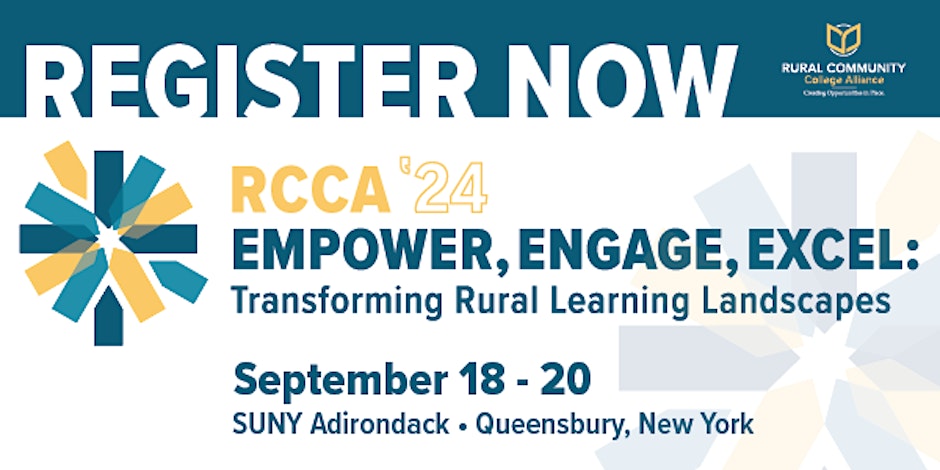
By fostering an environment of continuous learning and adaptation, we can help our students thrive in an AI-driven world while also safeguarding the culture and livelihoods of our rural communities. If you will be at the RCCA Conference in September you can hear more about AI and the transformation of education from one of our keynote speakers, Bill Daggett, who will talk with us about “Future Focused Instruction with AI for Education." Hope to see you there!
| |
|
RURAL COMMUNITY COLLEGE ALLIANCE (RCCA)
2024 NATIONAL CONFERENCE
AWARDS
Empower, Engage, Excel: Transforming Rural Learning Landscapes
In recognition of the strength of rural community colleges, the RCCA Board of Directors has established two additional awards since last year’s conference. Rural community colleges are the backbone of the rural economy and quality of life for our students and their communities.
Innovation & Access
Community colleges are uniquely positioned to promote and deliver on innovation and access. This award acknowledges and showcases innovative/access programs and projects that have had a significant influence upon institutional and student success and that demonstrate a commitment to excellence.
Community Engagement
This award acknowledges exemplary community partnerships, community engagement, and outreach programs and initiatives that have had a significant influence upon institutional and student success and that demonstrate a commitment to excellence in
connecting with our communities.
Workforce Development & Innovation
Rural community colleges are vital in promoting workforce development and being catalysts for innovation. This award acknowledges programs and projects that have significantly impacted institutional and student success and demonstrate a commitment to excellence in workforce development and innovation.
Rising Star Award
The Rising Star Award recognizes the emerging leaders within rural community colleges who exhibit exceptional promise and dedication to advancing the mission of their institutions. This award celebrates those who are poised to make significant contributions to the future of rural community colleges.
Our members are encouraged to self-nominate or nominate a fellow colleague for these awards.
The information requested is as follows:
• Name of Institution
• Name and Contact Information of Nominator and College Role
• Identification of the Award for the Nomination
• Summary of Program, Initiative, or Partnership (150 words maximum)
• Data that validates the effectiveness of the summary.
The deadline for Nominations is August 5th, 2024.
Please send nominations electronically to Christopher Breitmeyer, RCCA President, at president@ruralccalliance.org.
| | |
Member Spotlight: Northwest Mississippi Community College | |
|
Building Strong Community College Industry Partnerships in Rural Settings
Some of the most dynamic and responsive industry partnerships are developed between rural community colleges and local employers.
When colleges, employers, and communities work together to create these place-based opportunities, they can develop workforce education and training programs and career pathways that put students on a path to good jobs, meet the workforce needs of local employers, and improve the economic prosperity of rural communities.
| |
 |
FY2025 LHHS Funding Levels
The committee report for the FY 2025 Labor-HHS-Education funding bill was released and outlines the program-by-program funding levels. While the bill includes some positives for our institutions, ACCT expresses deep concern regarding proposed cuts to many crucial programs for community colleges, prompting our joint opposition with AACC in a letter to the committee outlining these concerns.
Below is an overview of the proposed funding levels that are most of interest to community colleges:
Department of Education (ED) – The bill includes a total of $68.1 billion in discretionary appropriations for ED, a cut of $11 billion – 14 percent – below the FY 2024 enacted level.
-
Eliminates funding for Child Care Access Means Parents in School, a cut of $75 million from FY 2024 levels.
-
Eliminates funding for Basic Needs Grants program, a cut of $10 million from FY 2024 levels.
-
Includes $117 million for Strengthening Institutions Program, an increase of $5 million from FY 2024 levels.
-
Includes $615 million for Federal Work Study, a 50% cut of $615 million from FY 2024 levels.
-
Includes $455 million for Federal Supplemental Educational Opportunity Grants, a 50% cut of $455 million from FY 2024 levels.
-
Level funds the maximum Pell Grant award for the second year in a row.
Department of Labor (DOL) – The bill includes a total of $10.7 billion in discretionary appropriations for DOL, a cut of $3 billion – 22 percent – below the FY 2024 enacted level.
-
Eliminates funding for WIOA Youth Job Training state grants, a cut of $948 million that would eliminate job training and employment services for youth who face barriers to employment.
-
Eliminates funding for the Women’s Bureau, a cut of $23 million below the enacted level (including elimination of the Women in Apprenticeship & Nontraditional Occupations program).
-
Includes $174 million in funding for WIOA Adult Job Training state grants, a cut of $712 million from FY 2024 levels for adults who face barriers to employment
-
Includes $150 million for Registered Apprenticeships, a cut of $135 million from FY 2024 levels.
-
Level funds the Strengthening Community College Training grants.
Next Steps – The House Appropriations committee is currently marking up the bill and it is expected to pass favorably along party lines. ACCT will continue to monitor the legislation and urge House members to to adopt funding levels that adequately support our students and campuses. For further information, you may refer to the bill text, Republican press release and summary, Democratic press release, summary, and fact sheet.
| | | |
Resources and Opportunities | | |
|
Jump Start your Science Career: DOE Applications for 2025 Student Internships Now Open
Students and Recent Graduates Will Conduct Research and Technical Projects at National Laboratories
Applications are currently being accepted for the Spring 2025 term of two programs offered by the Department of Energy (DOE) Office of Science (SC): the Science Undergraduate Laboratory Internships (SULI) program and the Community College Internships (CCI) program. The application deadline for the two programs is 5:00 pm (ET) October 2, 2024.
Through the SULI and CCI programs, undergraduate students and recent graduates discover science and technology careers at the DOE national laboratories and gain the experience needed to transition from internship to employment. Interns work directly with national laboratory scientists and engineers, assisting them on research or technology projects that support the DOE mission.
SULI is open to full-time students attending four-year institutions and community colleges or recent graduates within two years of receiving their bachelor’s degree or associate degree, while CCI is exclusively for community college students. Both programs are stipend-based and are offered three times annually in fall, spring, and summer terms.
Two workshops are planned to provide strategies for submitting a compliant application followed by office hours to answer administrative questions. These workshops will introduce the program and application process for each program. The office hours are open to CCI and SULI applicants and letter-of-recommendation writers to answer questions pertaining to uploading transcripts, submitting letters of recommendation, and general questions. Attendance is optional at the workshops and office hours.
SULI and CCI are managed by the Office of Workforce Development for Teachers and Scientists (WDTS) in the Office of Science.
More information can be found on the WDTS website
| |
Join Rufus Glasper, President of the League for Innovation in the Community College, Darin R. Hobbs, Vice President of Learning & Employment Records at Western Governors University (WGU) and Dan McFadyen, Managing Director and Margo Griffith, Principal Skills Consultant from Edalex for an informative and practical webinar, that will share a roadmap to skills visibility and recognition, and provide an overview of the technology solutions that can enable Community Colleges to act swiftly and at scale to address skills gaps. | | | |
|
Serving as a Bridge: Community College Skills-Based Hiring Playbook Webinar
Community colleges and government agencies are natural partners in advancing economic mobility through alternative routes for skilled individuals (STARs). ACCT and Opportunity@Work will discuss insights from their Skills-Based Hiring Initiative during an upcoming webinar, introducing two new resources: the Community College Skills-Based Hiring Playbook and a case study on Charting New Career Pathways in Maryland.
The Playbook is designed to help community college leaders create clear, lucrative pathways for STARs, while the case study highlights lessons from Maryland’s Skills-Based Hiring Initiative. A community college leader will also share strategies for implementing the Playbook effectively.
Join us on August 15 at 2:00 PM ET.
| | | |
Resources to Support Student Economic Independence | |
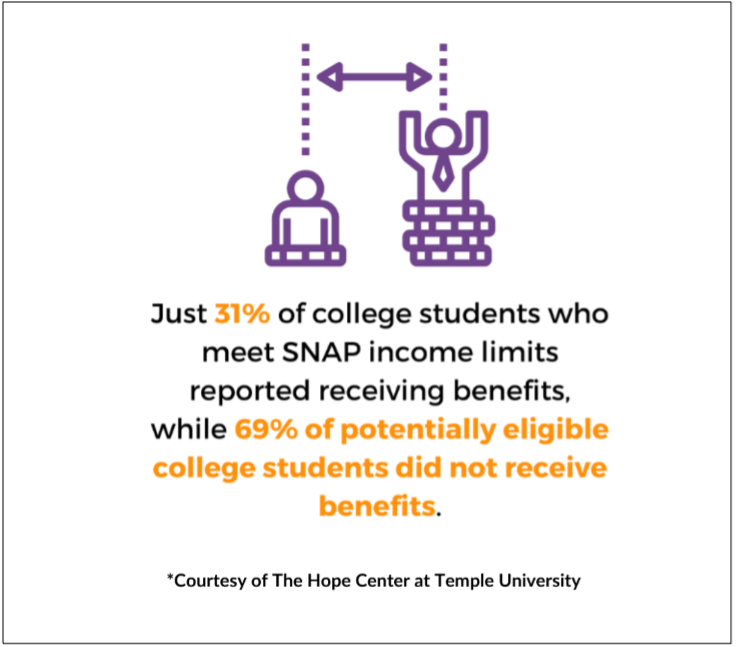
The Association of Community College Trustees (ACCT) is excited to extend an invitation for members to apply to participate in our SNAP Employment and Training (E&T) project focused on strengthening institutional offerings that support students in new and creative ways.
The project is open to rural or rural serving community colleges and state or regional systems and associations.
As a SNAP E&T third-party provider, community and technical colleges are eligible for partial reimbursement of costs that support students, such as:
- Books
- Course registration fees
- Medical services, including vision and dental
- Equipment, tools, safety clothing, uniforms
- Testing and credentialing fees
- Transportation fares, gasoline, auto repairs
- Childcare expenses
- Personal hygiene items
- And more!
Don’t miss this great opportunity to leverage this under-utilized funding stream. Join a cohort of institutions for extensive technical assistance from national experts, a series of mini-trainings, a plethora of additional resources, and a small stipend.
- Applications will be reviewed on a rolling basis until the cohort is full.
- Seeking seven rural/rural serving community colleges and two states/system/intermediary applications.
Funding for this project was provided by United States Department of Agriculture (USDA).
USDA is an equal opportunity employer and provider.
| | |
Follow the RCCA Facebook Page | | | | |