|
|
|
|
| Seafood Industry Research Fund A 501(c)3 organization established in 1964 |

Dear Seafood Industry Professional,
Welcome to the second quarter Seafood Industry Research Fund (SIRF) newsletter! In 2017 SIRF has committed to funding projects that have a major impact on our industry. We are excited to share with you in this newsletter the following stories:
-
SIRF will soon launch an updated and newly redesigned website. The new site will be more mobile-friendly and feature updated content.
- Dr. Sarnoski's second phase of work is underway developing and optimizing a dye based indicator strip testing method for tuna and mahi-mahi decomposition testing.
- The SIRF Board has approved a second phase of funding for aquaculture probiotic research conducted by Hampton University.
We could not fund exciting research without your support. Thank you for your continued
contributions. To view
SIRF sponsored research, please visit
www.sirfonline.org
Sincerely,
Russ Mentzer, Chairman
Seafood Industry Research Fund
|
Current Research & Funding
|
SIRF Website Redesign
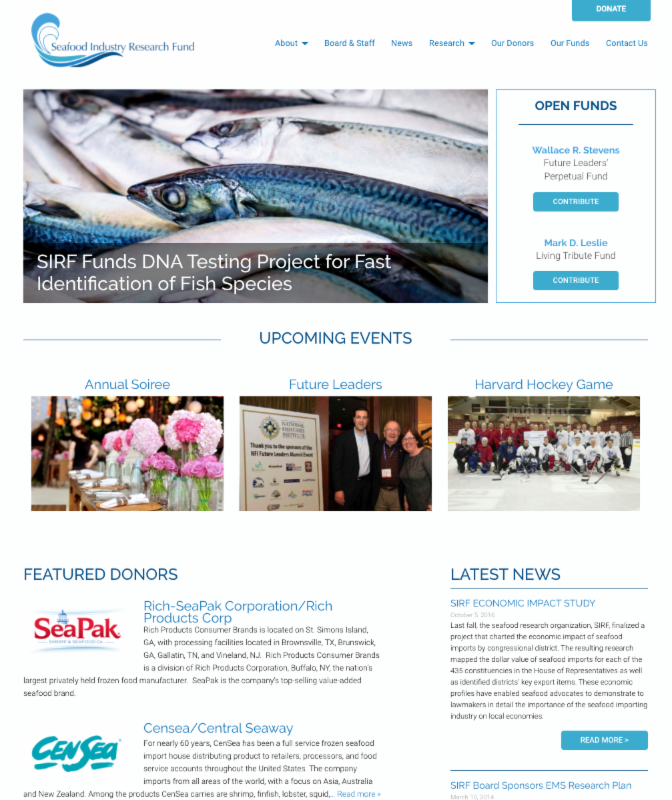
The Seafood Industry Research Fund (SIRF) is excited to soon launch a newly redesigned website. Working with digital marketing agency SocialCompass of Brunswick, Georgia, SIRF has reformatted its web-presence to curate a visitor experience that is accessible, interactive and educational.
With an average of 60% of website visits coming from devices, the new SIRF site is mobile responsive. A repositionable screen size provides phone and tablet users with a streamlined layout allowing for easier navigation and access to reorganized content.
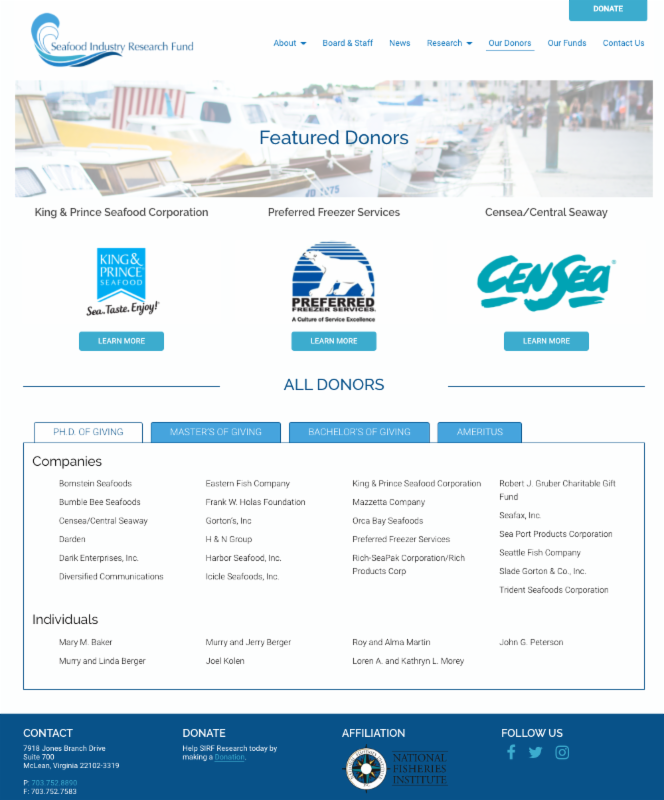
Emphasizing SIRF's active role in fostering seafood advancements, the new website will feature robust, informational content. On the home page, visitors can browse videos, news-stories and social media posts. The integration of new content forms is designed to draw users further into the site where they can find archived projects, in-depth research stories and information on how to support SIRF's mission.
"Our donors are SIRF's most valuable resource," said SIRF Chairman Russ Mentzer. "With the new website, SIRF aims to keep our donor-base fully informed on our research status. With engaging content, the new website will provide ample incentive and opportunity for visitors to continue their support."
The website is in final stages of production and is scheduled for launch in late-July/early-August.
|
|
Mahi-mahi and Tuna Rapid Testing Spoilage Indicators: Phase II
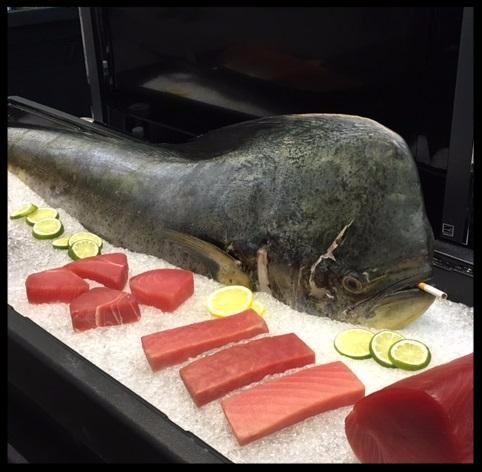
The second phase in a SIRF project led by Dr. Paul Sarnoski of the University of Florida focuses on developing and optimizing a dye based indictor strip testing method to aid in quality control and regulatory decision making.
|
|
|
Dr. Paul Sarnoski, UF leading SIRF sponsored decomposition research
|
The first phase of this project examined tuna and mahi-mahi samples in the development of an analytical field tool to rapidly and objectively determine decomposition. His research involved testing for histamine and other biogenic amines which can result in time-temperature abused tuna and mahi-mahi. As histamine producing finfish, these two species were targeted because of the risk they pose for scombroid poisoning. Histamine, as well as other biogenic amine compounds that can act as indicators in scombroid poisoning, were measured through several methods. A major finding in the first phase of the research was that results generally showed an increase in histamine as the quality of both mahi-mahi and tuna decreased.
|
|
|
Dr. Sarnoski's research seeks a rapid assessment test for spoilage in mahi-mahi and tuna
|
After the study's initial phase, Sarnoski proposed to SIRF further research optimizing and validating a dye testing method against official methods of analysis for biogenic amines. The optimized indicator strips will allow industry to perform rapid and inexpensive decomposition testing.
"Decomposition issues for mahi and tuna remain a bugaboo for importers," said NFI SIRF-lead Margaret Malkoski. "Dr. Sarnoski's continued inquiry into these species will provide tools for supply chain protection against the costly effects of spoilage and substandard product."
The estimated completion time for the project's second phase is December 2017.
|
|
SIRF Board Meeting: June 5th, 2017
The SIRF Board met June 5th working through a full organizational agenda. Communicating via conference call, the board covered a number of business items including the non-profit's financial health, donation progress and research project portfolio.
SIRF's NFI staff lead, Margaret Malkoski, provided an overview of SIRF's funded research, detailing the status of studies focusing on DNA Barcoding, Techniques for Rapid and Simple Assessment of Mahi-mahi and Tuna Quality, Seafood Species Shelf Life Testing and Antibiotics in Seafood.
On the call, the SIRF Board moved to approve the second phase of a project focusing on probiotics and aquaculture. Conducted out of Hampton University, the study seeks to establish a standard procedure for the future testing of probiotic quality related to disease resistance in farmed fish. Hampton University researchers are testing 9 probiotics in their ability to promote animal health, improve water quality and boost the immune system. The recently approved second phase of research will fund an assessment on the viability of probiotic microorganisms to live and thrive under specific conditions.
"SIRF funds projects with potential," says SIRF Chairman Russ Mentzer. "Our choices in research reflect the board's shared vision in supporting efforts that lead to developments for the seafood industry. We are glad to continue funding for Hampton University's efforts as they look for a better understanding of probiotics' role in successful aquaculture."
|
|
SIRF Through the Years
With a coming website redesign, SIRF is giving its mission of seafood innovation a new face while keeping its roots firmly planted within industry history. As an organization, SIRF began as the Lewis Goldstein Memorial Fund in 1964. The fund was established as a tribute to Lewis Goldstein of Philadelphia's Liberty Fish Company. An NFI Chairman, Mr. Goldstein died in a plane crash during his term in office. The subsequent fund opened in his name provided a means to honor Mr. Goldstein and set a precedent of memorializing seafood professionals who had made a lasting impact on the business community.
|
|
| The Lewis Goldstein Memorial Fund, established to honor its late namesake (second from left) who died in plane crash while serving as NFI Chairman |
Over 53 years and more than 50 funds later, the Lewis Goldstein Memorial Fund has transformed from the Fisheries Scholarship Fund during the 1980s into its
current state as the Seafood Industry Research Fund (SIRF). In 2012, current Chairman Russ Mentzer led a rebranding strategy to further align the research organization's image with its mission. The new SIRF-era has seen a redoubled focus on funding scientific research directly linked to industry improvements within relevant fields of aquaculture, food safety and seafood nutrition.
|
|
|
Julie Child was honored as NFI's Person of the Year in 1992. She accepts a contribution from Fisheries Scholarship
Fund Chairman Murry Berger on behalf of Boston University's School of
Gastronomy
|
Since achieving an original endowment milestone of $1 million in 1994, SIRF has expanded its coffers to over $3.7 million in 2017. The generosity of the seafood industry has enabled SIRF to fund 360 grants totaling $3.3 million since 1964. The initial outpouring of support for the Lewis Goldstein Memorial Fund continues to this day with recent funds like the Mark D. Leslie Living Tribute Fund raising $76,900.
Help continue SIRF's mission of funding forward-thinking seafood research by donating to any of
our open funds . Thank you for your SIRF support
|
|
|
|
| |
|