July 26, 2023

As the State Legislature remains on break for the summer, things remain relatively quiet in Trenton. In addition to some possible Senate Judiciary Committee hearings to fill seats in the judiciary next month, the State Senate and Assembly are likely to resume committee hearings and voting sessions in September.

State Legislative Seat Changes Reach a Minimum of 29

With Assemblyman Joe Egan’s decision to not seek re-election after his 22-year tenure in the Legislature following his recent primary election, the minimum number of seats that will see new occupants reaches 29. BioNJ will focus our efforts on engaging new members following the election on November 7.


  • Senate

Fred Madden (D, LD-4)

Jean Stanfield (R, LD-8)

Christopher Connors (R, LD-9)

Sam Thompson (R/D, LD-12)

Steve Oroho (R, LD-24)

Sandra Cunningham (D, LD-31)

Nicholas Sacco (D-32)

Nia Gill (D, LD-34)           


  • Assembly

Beth Sawyer (R, LD-3) – Lost Senate Primary, LD-3

Paul Moriarty (D, LD-4) – Running for Senate, LD-4

Gabriela Mosquera (D, LD-4)

DiAnne Gove (R, LD-9)

John Catalano (R, LD-10)

Dan Benson (D, LD-14)

Sadaf Jaffer (D, LD-16)

Joe Egan (D, LD-17)

Parker Space (R, LD-24) – Running for Senate, LD-24

Hal Wirths (R, LD-24)

Mila Jasey (D, LD-27)

Ralph Caputo (D, LD-28)

Angela McKnight (D, LD-31) – Running for Senate, LD-31

Pedro Mejia (D, LD-32)

Angelica Jimenez (D, LD-32)

Raj Mukherji (D, LD-33) – Running for Senate, LD-32

Annette Chaparro (D, LD-33)

Britnee Timberlake (D, LD-34) – Running for Senate, LD-34

Thomas Giblin (D, LD-34)

DeAnne DeFuccio (R, LD-39)

Kevin Rooney (R, LD-40)

Pandemic All-Hazards Preparedness Act Makes Progress

Without “Reasonable Pricing” Provision

Earlier this week, the Pandemic and All-Hazards Preparedness Act (PAHPA) moved through committees in both the House and Senate. Of particular concern were proposed provisions referred to as “reasonable pricing” in the Senate, which would have required companies that receive funding from BARDA and/or CDC to set the prices of any medications they invent using those resources to set prices at the lowest among G7 countries. This proposed policy would fundamentally undermine the successful Bayh-Dole Act, which has rendered the U.S. the dominant source of biomedical innovation worldwide.


In addition, the bill includes a clean five-year reauthorization of the Material Threat Medical Countermeasure Priority Review Vouchers Program (PRV), which expedites the availability of medications that are devised to prevent or treat harm from biological, chemical, radiological or nuclear agents.


In the run-up to markup of the bill, BioNJ conveyed our concerns to members of the New Jersey delegation and emphasized how central the Bayh-Dole Act has been to the creation of new and more effective therapeutics.


Given that the pricing provisions have not been incorporated into PAHPA, these are positive developments that would help to ensure that this legislation preserves important components of the life sciences ecosystem in the U.S.

Study Finds that State Bans of Co-pay Accumulator Adjustment Programs (CAAPs) are Associated with Reduced Out-of-Pocket Costs and

Increased Treatment Adherence 

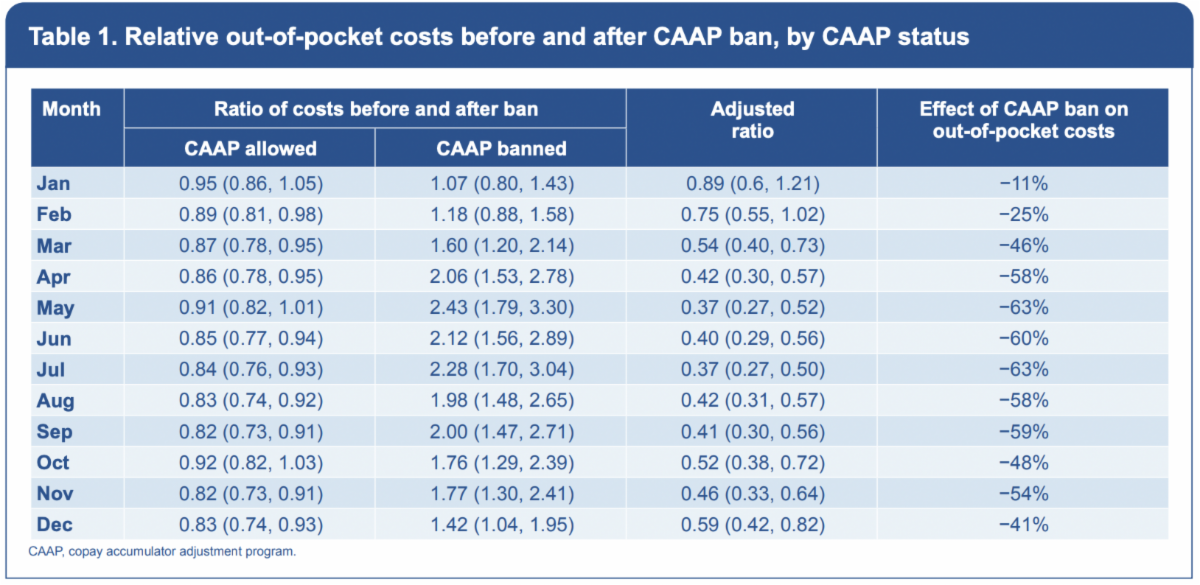
The study was a retrospective cohort study using administrative claims from the IQVIA Pharmetics Plus database for Patients with fully insured commercial plans who received autoimmune or multiple sclerosis drugs between January 2017 and December 2021. This assessment compared Patient liability and treatment adherence/persistence in states that have implemented CAAP bans during this study period, including Arizona, Georgia, Illinois, Virginia and West Virginia. Currently, a total of 19 states have banned co-pay accumulators.


As highlighted in the study summary,

  • Co-pay assistance helps to offset the cost of prescriptions to Patients by reducing their cost-sharing requirements. 
  • Co-pay accumulator adjustment programs (CAAPs) have been employed by commercial payers in the U.S. to encourage Patients to choose lower-cost drug options by restricting the amount of co-pay assistance that can count toward a Patient’s annual cost-sharing limit.
  • In response to the proliferation of these programs, some states have enacted legislation banning the use of CAAPs.

Among the study’s findings were meaningful reductions in out-of-pocket costs, along with increased treatment adherence, following CAAP bans relative to periods preceding the implementation of prohibitions (Table 1). BioNJ has advocated for passage of the HELP Copays Act at the federal level, a bipartisan bill in both chambers, which would work to address this issue.

Centers for Medicare and Medicaid Approach to Accelerated Approval Program Debated in the House

On July 18, the House Committee on Energy and Commerce Health Subcommittee held a hearing entitled “Innovation Saves Lives: Evaluating Medicare Coverage Pathways for Innovative Drugs, Medical Devices and Technology.” Recent decisions from the Centers for Medicare and Medicaid (CMS) regarding drugs that received accelerated approval were discussed, with bipartisan recognition that the life sciences industry is a critical source of hope for Patients. However, the hearing demonstrated that there remain opportunities to convey to federal policymakers the value of accelerated approval to Patients who depend upon newer and more effective treatments and therapeutics.

We Work for Health Summit Held in Washington, D.C.

On July 12-13, We Work for Health (WWFH) held its Annual Summit in Washington, D.C. BioNJ’s Vice President, Government Affairs, Ian McLaughlin, Ph.D., joined a group of Patient advocates on the Hill, visiting the offices of members of the New Jersey delegation. WWFH highlighted the concerns of Patients and Members to lawmakers and staff and focused on the ramifications of the small molecule penalty in the IRA, problematic treatment of secondary indications for therapeutics targeting rare diseases, the benefits of the HELP Co-pays Act and the exacerbating effect that provisions in the “SMART Prices Act” — as well as the potential inclusion of problematic provisions in the PAHPA reauthorization. 

We Need Your Help: Support BioNJ Policy and Advocacy Efforts

BioNJ is the voice of New Jersey’s life sciences sector in Trenton and Washington. BioNJ’s Public Policy Support Series sponsorship opportunities are now available for 2023. Help ensure BioNJ continues to deliver our message of improved Patient access and enhanced innovation through a Public Policy Support Series Sponsorship.  


Click here for more information.

Thank You to Our Public Policy Sponsors

BioNJ | www.BioNJ.org

Facebook  LinkedIn  Twitter