|
Reminiscent of the DNRC's flawed analyses of the Montana Artesian Water Company's water bottling plant along the Flathead River, for Cooper Farms' new water right application DNRC appears to have followed the very same inadequate process that the MT Supreme court identified as unlawful. Specifically, the agency has presumed that shallow groundwater is hydrologically disconnected from a deeper aquifer, and based on this assumption curtailed the scope of its inquiry to potential impacts on nearby water rights and nearby surface waters.
In response, the North Shore Water Alliance (NSWA), 25 local land owners, Citizens for a Better Flathead (CBF), and Water for Flathead Future (WFFF) have retained Missoula attorney, Graham Coppes of Ferguson & Coppes, PLLC, to defend these local residents’ water rights from encroachment and potential contamination. As Jennifer Tipton, President of North Shore Water Alliance stressed, “I've lived on my family's property in Lower Valley for almost my entire life. Many families have lived here for generations. Several families are some of the very first to settle in the Flathead Valley. We are extremely invested in protecting the waters in this special place we call home."
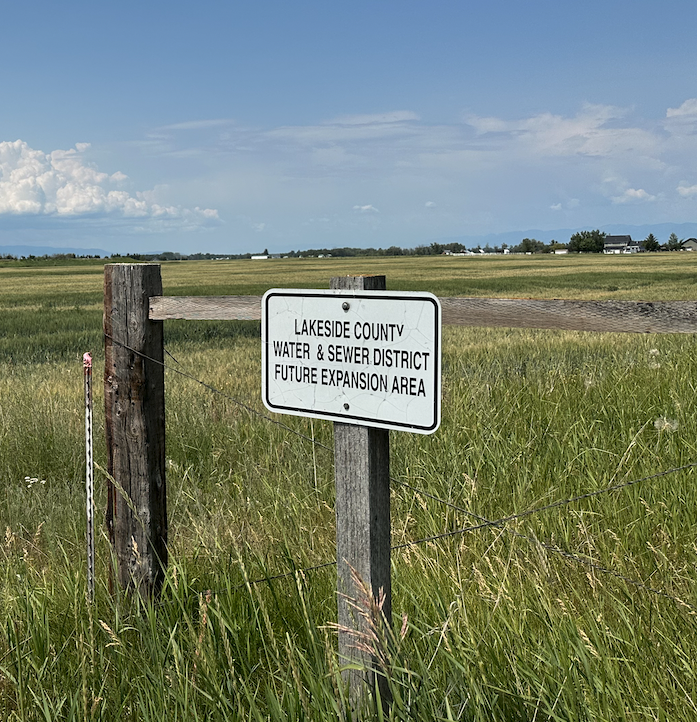
Mayre Flowers, Executive Director of CBF, emphasizes the unique character of this proposed water permit when placed in the context of the neighboring Lakeside County Sewer and Water District’s (LCSWD) plans for major expansions and changes to its operations. Lakeside has submitted plans to substantially grow their collection and disposal of sewage, primarily through a new high-infiltration groundwater discharge. These major new pollution discharges to shallow groundwater have the potential to migrate offsite and, in conjunction with a new high-volume groundwater withdrawal, potentially contaminate existing wells and nearby surface waters. Ms. Flowers says “In a case resembling the left hand not knowing what the right hand is doing, the LCSWD is proposing to expand and change the existing sewage facility which shares a northern property boundary with the proposed Cooper Farms subdivision. LCSWD is seeking the permits required to inject wastewater from semi-treated human effluent into the ground at the very same time that the DNRC is proposing to grant a water permit to extract large quantities of water for domestic consumption just down gradient from the injection sites. There has clearly been a major failure to fully analyze how these two projects would interact that puts many current and future county residents at grave risk.”
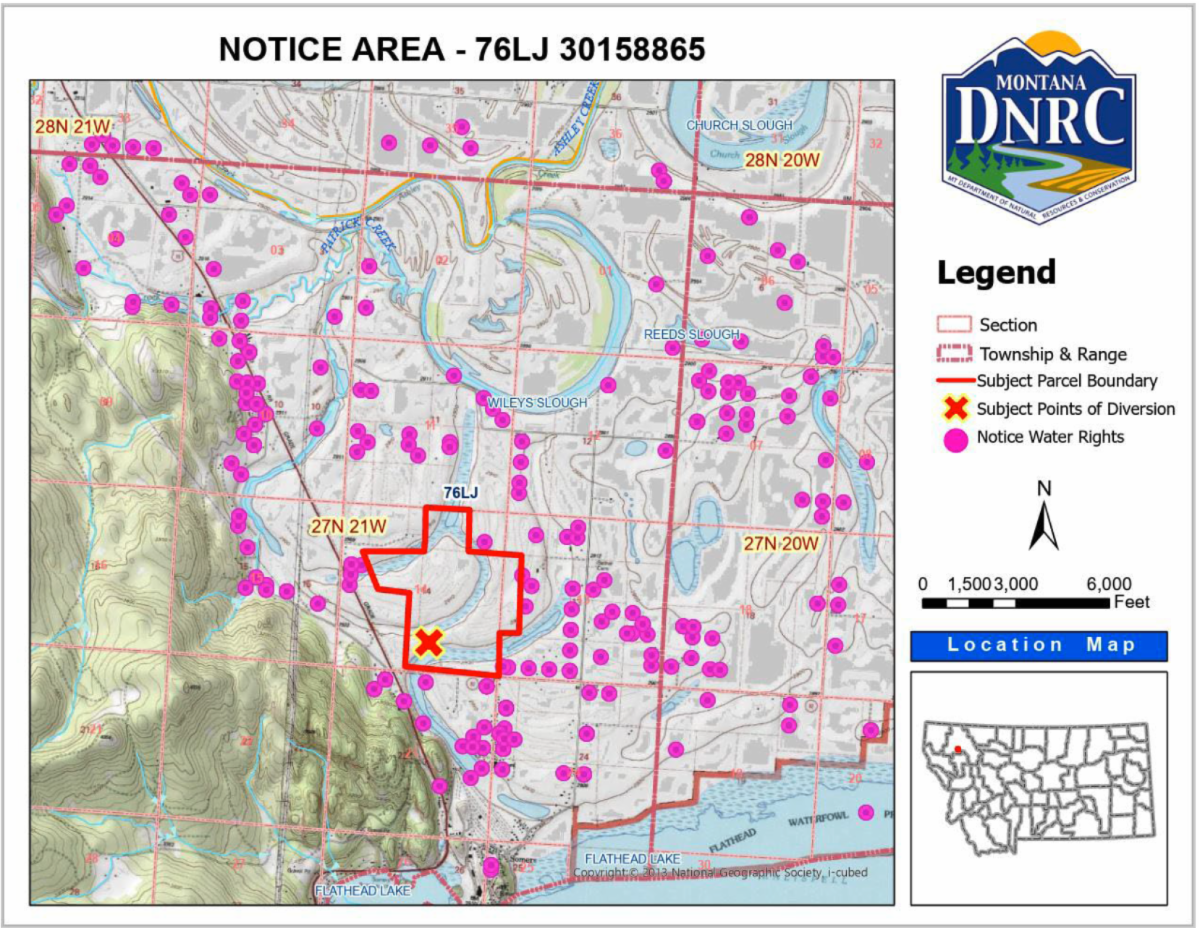
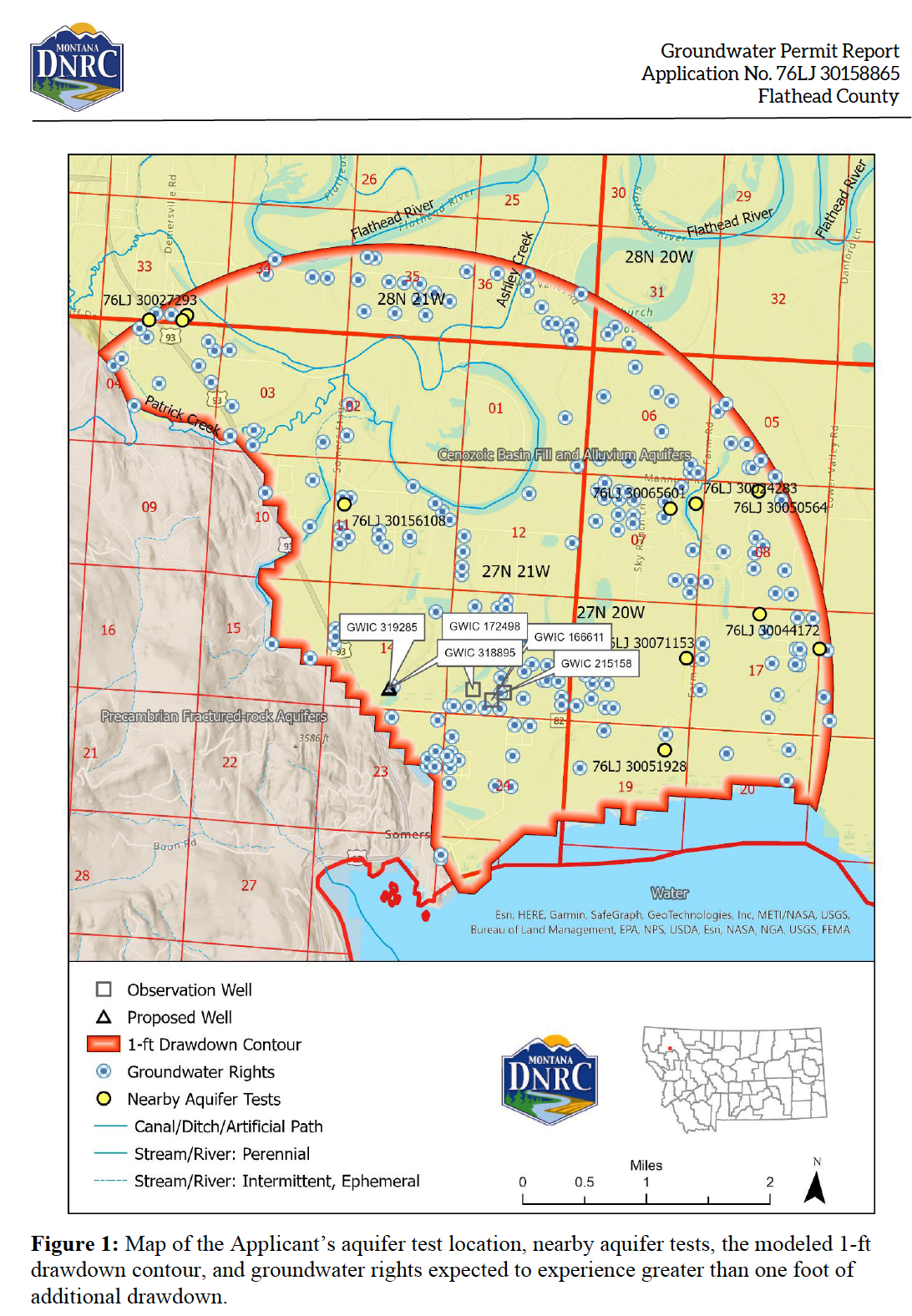
Cooper Farms' new 300 gpm water right has been recommended for approval by the DNRC pending the legally required opportunity for well owners and others to file legal objections. DNRC estimates the area of impact, wherein drawdown to wells and surface waters could be observed, to radiate 3.6 miles from the new well. They have asserted that only wells 300 feet or deeper would be affected by this well’s operation and that it will not impact shallow wells or surface water. The objections filed on November 9th strongly contest these beliefs since the DNRC’s assertions rely on the same methods that the MT Supreme Court recently struck down in the water bottling case.
The residents of this area and the greater Flathead are currently stuck in a regulatory limbo wherein their right to a “clean and healthful environment” is not being safeguarded by the state agencies that are tasked with assuring the safety and well-being of the public.
Background on Lakeside Water & Sewer District's Proposed Expansions:
Flathead County’s Septage Treatment and Composting Facility, also proposed to be located adjoining the expanded LCSWD treatment facility, is expected to handle septic wastewater (septage) from some 30,000 septic tanks across the county. In addition, the composting facility will receive large volumes of biosolids from the three municipal sewage plants in the valley. Composting this human waste requires pressing out the liquid, projected to be some 60,000 gallons per day, and piping the wastewater just across the property line to the LCSWD treatment facility for partial treatment[1]. From there, the partially treated effluent will be injected into the soil on LCSWD property, just north of Cooper’s Farms, and approximately one mile north of Flathead Lake, where it will percolate into the groundwater. This concentration of effluent to be injected into the shallow and loose alluvial sand deposits that are found at this site is troubling, as these poor soils will act as the region’s most massive septic system without any public knowledge or analysis of how this new pollution will, in truth, affect local residents or local water quality, both current and future, not to mention public health.
Both CBF, NSWA, and WFFF acknowledged that “while we must find ways to more safely dispose of the septic waste and biosolids that are generated in Flathead County and the three cities, concentrating the disposal of these wastes in the shallow soils and likely hydrologically-connected ground water just one mile north of Flathead Lake is a classic example of the wrong activity at the wrong place. Additionally, we appreciate that the county, in their latest new RFQ, is requesting a fresh look at the Flathead County’s Septage Treatment and Composting Facility, and is asking for proposals that include alternatives to generating compost from this human waste and the contaminants it would likely include. We hope this generates some additional proposals to use this waste instead as an energy source.”
Jennifer Tipton, added that the Flathead County residents NSWA, CBF, and WFFF represent, “don’t want to be forced into becoming unwitting subjects of this willy-nilly experiment wherein failure results in the potential decimation of our health and livelihoods. The task of the state and local agencies marshalling these projects toward completion is to provide solid, substantial, and verifiable assurances to the public that these projects will not affect us to our detriment. Without the DNRC actually studying the situation at hand and gathering real evidence of what exists under the surface of the well’s large impact area, the lives of the residents, present as well as Cooper’s Farms future inhabitants, are being discounted simply for the convenience of the DNRC’s failed methods.”
[1]Medicine Residue Is everywhere in our rivers and lakes—and fish are behaving strangely: Up to 80 percent of streams in the U.S. alone are contaminated with chemicals, including pharmaceuticals. https://www.caryinstitute.org/news-insights/media-coverage/medicine-residue-everywhere-our-rivers-and-lakes-and-fish-are-behaving ; Contaminants of Emerging Concern (CECs) are chemicals and toxics that have been found in waterbodies that may cause ecological or human health impacts and are not currently regulated. In wastewater, one of the most common types of CECs are pharmaceuticals and personal care products. https://ecology.wa.gov/water-shorelines/water-quality/wastewater/contaminants-of-emerging-concern Biosolids: mix human waste with toxic chemicals, then spread on crops https://www.theguardian.com/environment/2019/oct/05/biosolids-toxic-chemicals-pollution
|