|
The Wild World of Beef
The beef market is currently at record highs. It's a complicated scenario where there has been a perfect storm of situations that have taken prices thru the roof.
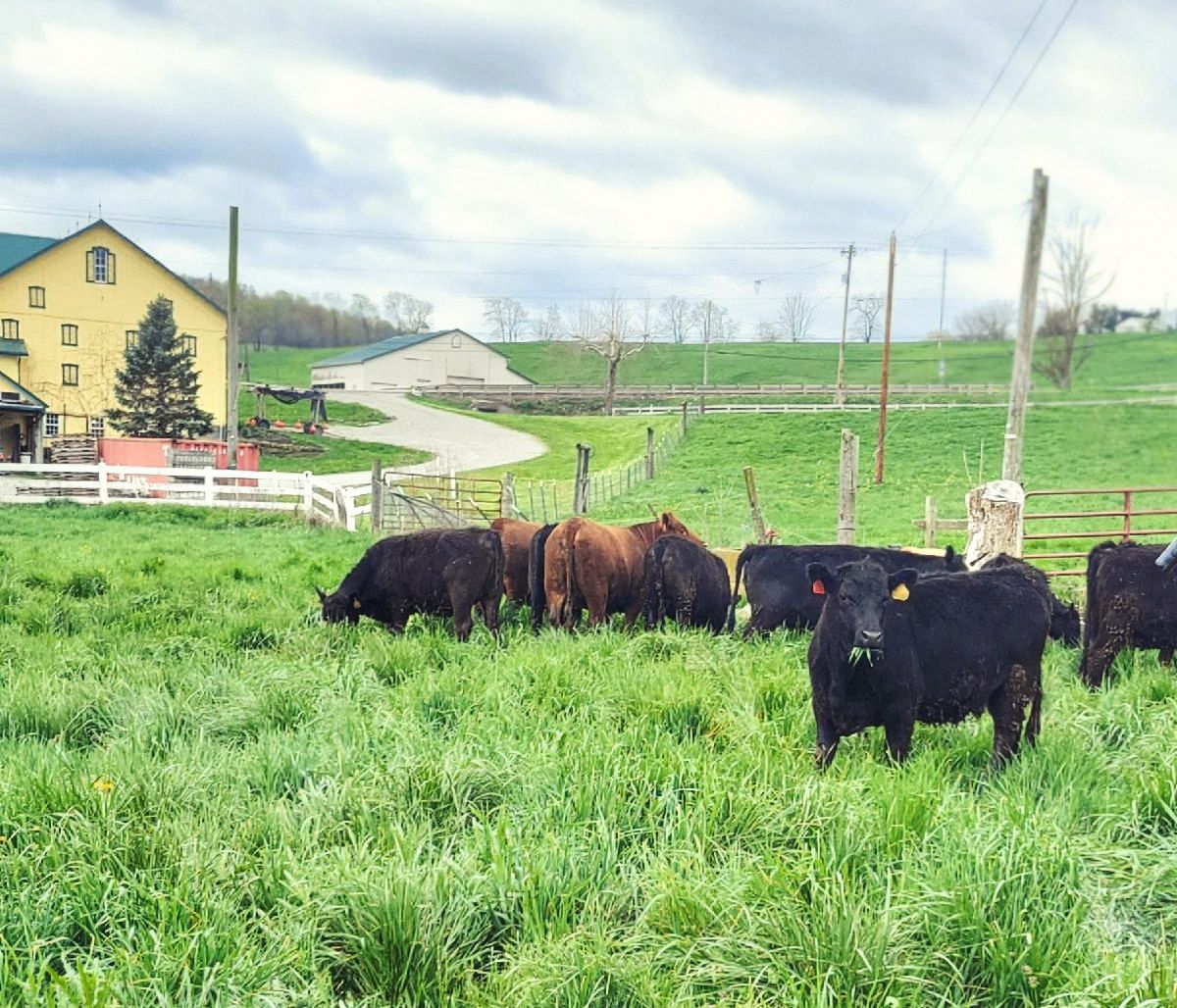
Myself and my network of growers are slightly insulated from it, but not 100%. Me for example. Right around Covid my "brood cows" were getting old. My genetics weren't what I wanted, and I wanted to make some changes. I started culling out cows just as the market constricted.
Now, I have to buy what's called "feeder calves." These are calves that have been weaned from the momma cow and either put on grass or feed.
The inventory of calves is low
A big portion of our nation's beef comes from out west - Kansas, Iowa, Colorado, Texas, Nebraska, etc. Pasture - or range - is more plentiful and land is cheaper. Paddocks out west might be 5,000 acres each - where as here they are a fraction of that. Our land is more productive, but way more expensive.
The west has been dealing with drought and wildfires badly the last several years. The operations out west don't have the feed to maintain their herds, so inventories are down, constricting supply.
So the big feedlots out west have to look to the East to find calves. There are buyers who go to "sale barns" all around. They ship calves out west to put on feed and kill at the big integrated packers.
This is driving up feeder calf prices and finished beef prices
Feeder calves before Covid hoovered around $140 to $160 per cwt. That's per 100#, so $1.40 to $1.60 per lb. Calves are grouped by weight. 300 to 400#, 400# to 500#, etc. The smaller the calf, the higher the price per lb. I usually look for fall calves that are weaned in the spring and not started on feed (corn) yet. 400 to 500#.
If I buy a fall 2023 calf to finish, I put it on grass in spring 2024. I'll have to overwinter it and harvest it in fall thru Christmas 2025. So two seasons on pasture and 1 winter in the barn. In the past, $2 per lb was where I needed to be to keep our prices were they are. That was a generous price.
Last spring, feeder cattle were $2.10 to $2.25. I couldn't buy anything at $2. Cattlemen were excited about the prices and wouldn't part with anything. I was gambling that the market would open up in the fall as guys didn't want to feed hay over the winter. I was wrong. By fall, I had to pay $2.25 to $2.40 to get feeders. But I needed something to fill my barn and eat my hay.
Then this spring, the situation is worse. There were a group of 19, 500-600# medium frame steers I wanted recently at a spring feeder calf auction in Zanesville. They had been going around $2.75 to $3 lately. I bid $3 on the whole group. I was outbid at $3.17. The next day, the Paris KY auction was averaging $3.22.
Let's do the math
I don't know how this all shakes out. Fat cattle are going for record highs too right now. $1.87 per lb was last week's prices for choice cutters. Let's say the price goes up to $2 for easy math. A finished steer coming off a grass operation may only be 1,200#. That's $2,400.
The calf at 600# and $3.17 was $1900. That's a $500 margin to pay for 18 months of feeding. $27 per month.
I've heard that many of the big feedlots out west are operating a half capacity just because they can't make the math work. They have a ton of buying power and their decisions can greatly influence the industry. Are they trying to restrict finish supply and drive up fat cattle prices further to support the expensive calf price? Are they trying to keep inventories of corn and beans high so that prices on feed come down, giving them a chance to increase margins?
It surely make for interesting talk around the community and a real life case study in economics.
|