|
Why are dogs at risk at PCACC?
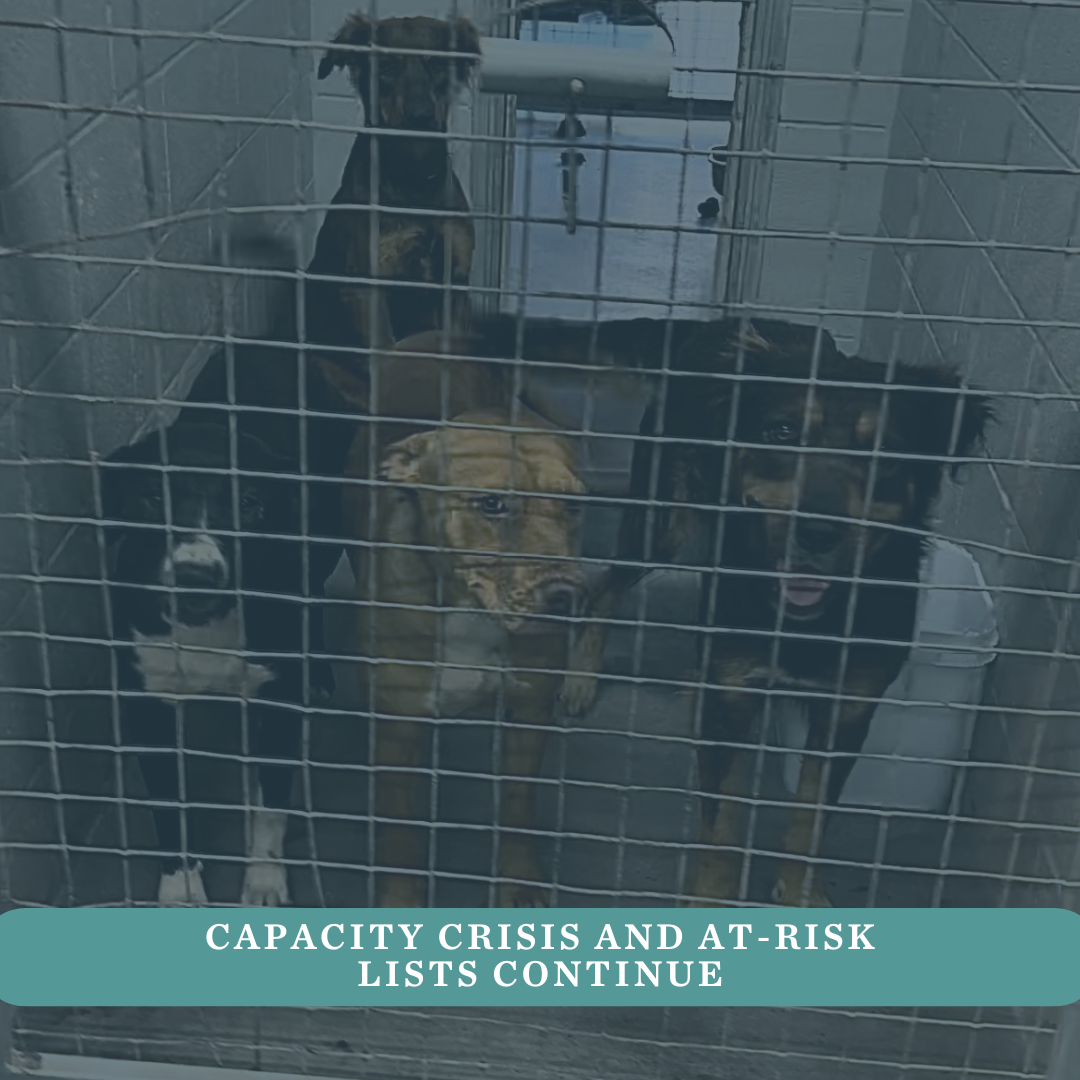
Like many shelters nationwide, we are experiencing a capacity crisis due to the overwhelming number of dogs in our care. Adoptions are slow, fosters are scarce, and the number of strays is substantial. Our shelter is also currently undergoing a renovation and has been working on a large hoarding case for the past year.
Does this mean PCACC is no longer a no-kill shelter?
The shelter’s views have not changed; we are still committed to prioritizing lifesaving. Despite our struggles, our community and partners continue to come through for us. Our shelter remains above a 90% live release rate, making us a no-kill shelter. The shelter intakes thousands of animals annually; over 90% find placement with adopters, fosters, rescues or are returned home. The less than 10% of animals that don’t are typically critical or terminal medical cases or animals that pose a risk to the community. Since releasing at-risk lists, we have successfully found placement for those animals.
What efforts has PCACC made to avoid euthanasia deadlines?
Our shelter has been actively voicing the growing struggles at the shelter for well over a year through social media, news media, and more. We are constantly pleading with our rescue partners, fosters, and supporters for the dire help we need. We have offered stipends to boost fostering and rescue pulls, and we have been charging little to no-cost reclaim fees for strays, as well as waived adoptions. We have multiple kennels co-housing dogs, dogs living in office spaces, and any extra room that can fit a kennel. We host drop-in volunteers daily to get every dog walked daily to help alleviate animal stress. The shelter coordinates daily playgroups to get many dogs out each day for exercise, socialization, and play to help keep dogs happy.
Which animals are at risk?
Staff and volunteers work diligently to try and keep the animals physically and mentally healthy. However, the shelter is an aversive environment for most, especially for those staying for prolonged periods. This makes it difficult for dogs to keep sane; some dogs at the shelter are in constant fear or stress and may require more resources than most adopters are capable of or willing to take on. These dogs are typically placed on at-risk lists. A committee of several staff members discusses what dogs need immediate placement.
How is this affecting staff and volunteers?
Everyone at the shelter struggles to see animals they care about placed on time-sensitive deadlines. No one at the shelter wants to euthanize, and we are being as proactive as possible by networking, pleading, and advocating for these animals to anyone who will listen. Thanks to the community, euthanasia has been minimal, but it is a lingering gray cloud over the shelter.
How can I help?
If you can’t foster or adopt, please consider volunteering, networking, educating yourself on the animal welfare crisis, learning about your local animal shelters and their programs, and advocating, advocating, advocating!
|