|
There is nothing more genuine than the love of a pet. Whether as a buddy or emotional support companion, pets are essential to their owners' lives. And when that pet goes missing, nothing can be more devastating. This is why, in appreciation of National Pet Month, we're focusing on the importance of celebrating our pets and ensuring they're always safe at home, where they belong.
While outfitting your pet with a collar and nametag can make it easy to identify, it's only a temporary ID since it can easily be lost or removed. For this reason—and many others—microchipping your pet is your best safeguard. Simply put, the chip is like a permanent fingerprint. Regardless of where your pet may wander, it bears a permanent ID that can be traced back to its owner.
Studies show that microchipped pets are much more likely to be returned to their owners. According to the American Humane Society, approximately 10 million cats and dogs go missing yearly. The percentage of non-microchipped dogs returned was less than 22%, while those microchipped was over 52%, and the rate of cats not microchipped was less than 2% versus 38% of those microchipped.
All About Microchipping
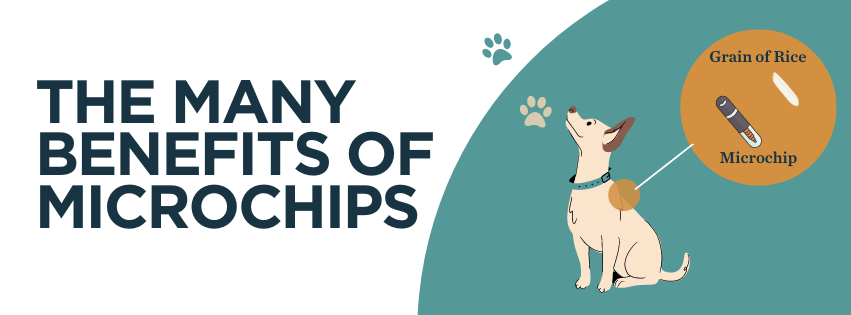
When implanted in your pet, the microchip acts as a tiny transponder the size of a grain of rice. Using a needle, the chip is inserted under your pet's skin between the shoulder blades (no anesthesia is required). The chip can be easily read by a special scanner available to animal control officers, animal shelters, and most veterinary clinics nationwide. Once a pet's home location is identified, the facility contacts the microchip registry to obtain the necessary information to contact the pet's owner. Many shelters, rescues, and veterinary clinics automatically register the chips when implanted. (Please be sure to ask the facility you use.)
Is Your Pet Already Microchipped?
If you need to know if your pet has already been microchipped or needs to update your contact information, speak with your vet, breeder, shelter, or rescue from which you obtained your pet. Even if you're unsure of the origin of your pet's prior owner, the scanner can identify your pet's personal ID number, which can be easily traced to the microchip's manufacturer. You can also use the "universal lookup tool" to locate your specific registry. For details, click here.
Be Proactive
There's no time like the present to protect your pet if it becomes lost. For more information on microchipping your pet - and many other important topics about caring for your pet - we encourage you to check out the following pet resources:
|