|
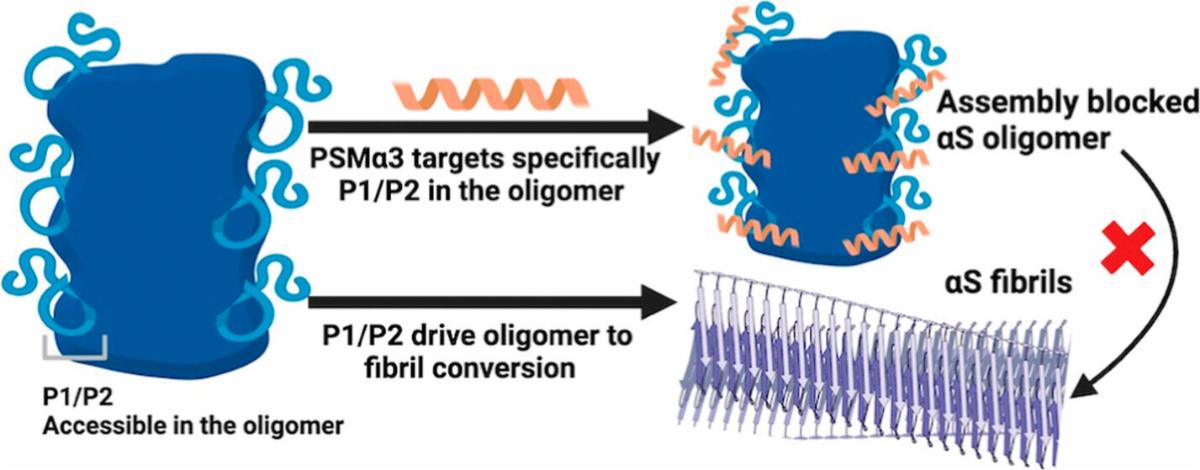
Researchers from the Autonomous University of Barcelona have identified a region in the early aggregates, or oligomers, of the alpha-synuclein protein that can be targeted to prevent its conversion into the toxic amyloid fibrils that accumulate in the brains of people suffering from Parkinson's disease.
The study was also relevant in delving deeper into the molecular mechanisms behind familial Parkinson's. This variant, which usually affects people of a younger age, is frequently associated with mutations located within the P2 region of the alpha-synuclein, such as the G51D mutation, which produces one of the most aggressive forms of the disease. Click here to learn more.
|