|
PSOM Update: Core Facilities Newsletter
Summer 2024 Newsletter
| |
The Perelman School of Medicine is proud to support our integral research core facilities and research teams. | |
|
In this issue:
- Announcements
- Animal Core Subgroup Forming
- Luellen Fletcher Receives ABRF Lifetime Achievement Award
- Diane McGarvey Receives ISBER Leadership Award
- Core Facilities Spotlight
- Biostatistics Analysis Center
- Cell and Animal Radiation Core Facility
- Clinical Research Collaboration Unit
- Molecular Pathology & Imaging Core Facility
- Neurobehavior Testing Core Facility
- OCRC Tumor BioTrust Collection
- Small Animal Imaging Core Facility
| |
|
Announcements: Animal Core Subgroup Forming
| |
|
Dear Core Facility Directors,
We are organizing a group of core directors/staff to participate in a group to share our concerns unique to animal experimentation. The goal is to share how we interact with IACUC and ULAR so that we can better streamline the processes. Exchanging core SOPs would also be an issue that may be beneficial. In addition, the group would seek to promote your core's expertise in working with animals in a humane and conscientious way. If you are interested, please contact Dr. Tim O'Brien.
Thank you,
Tim
obrienw@pennmedicine.upenn.edu
W. Timothy O'Brien Ph.D.
Director, Neurobehavior Testing Core
http://www.itmat.upenn.edu/NBTC.html
| |
|
Announcements: Luellen Fletcher Receives ABRF Lifetime Achievement Award
| |
|
Luellen Fletcher, Associate Director of the Path BioResource, recently received a Lifetime Achievement Award from the Association of Biomolecular Resource Facilities, in honor of her extraordinary contributions to ABRF, including through the Career Development Committee.
Her steadfast efforts to create Mentoring programs that engage the next generation of Core personnel (and ABRF members) have influenced careers and shaped future leaders for the association and core facility professionals.
Please join us in congratulating Luellen on receiving this tremendous and well-earned award!
| |
|
Announcements: Diane McGarvey Receives ISBER Leadership Award
| |
|
Diane McGarvey was recently honored with a Leadership Award from the International Society for Biological & Environmental Repositories (ISBER).
The ISBER Leadership Award is designed to honor ISBER members who have demonstrated exceptional leadership to further the mission and goals of the society and/or significant, long-standing contributions to the society. ISBER recognizes contributors who have played critical roles in developing and executing ISBER’s vision and mission.
As Director of the Eastern Division of the NCI-Cooperative Human Tissue Network (CHTN) here at Penn, Diane and her team have published on tissue procurement, preservation, and post-preservation processing methodologies. The CHTN is an NIH/NCI funded resource to provide human tissues and fluids from routine procedures to investigators who utilize human biospecimens in their research. Unlike tissue banks, the CHTN works prospectively with each investigator to tailor specimen acquisition and processing to meet their specific project requirements. Through a prospective procurement model, the CHTN satisfies investigator requests with tissue collected specifically for the client’s protocol.
The CHTN's core mission is to serve the public good in fostering biomedical research by collecting and distributing high quality, well-characterized human biospecimens to the scientific community.
Let’s all congratulate Diane on this remarkable and well-deserved achievement!
| |
|
Dear Investigators,
We hope this message finds you well, and that all your research efforts are thriving.
For those of you who don’t yet know us, the BAC is a service center that continues to support hundreds of investigators throughout the Penn community with high-quality biostatistical analysis and programming. We are available to start work quickly and can handle all requests in a timely manner: modeling/coding in R, SAS and STATA, table creation, data creation/handling from large databases like Penn Data Store, Medicare/Medicaid, and Optum, high-resolution graphical output, clinical trial data monitoring, study design, grant support, power calculations, manuscript writing and editing. Initial consults to discuss possible collaborations are fast and free. We’ve developed long-term relationships with many prolific researchers, and with entire departments which allow anyone in the department to work with us under the same funding. Some of these departments: Radiation Oncology, Social Policy and Practice, Penn Dental, CHOP GI.
Recent staff additions have been a huge boon to our cumulative skillset. We now can offer coding/analysis in Python, machine learning, and deep learning! We continue to prioritize growth via trainings and by adding new staff with unique expertise.
The BAC provides data analysis and management services for research in the areas including but not limited to clinical trials, genomics, large prescription and diagnostic databases, and observational epidemiological studies. These services include:
| |
|
Analysis and Programming
- Primary or Secondary Biostatistical Analysis
- Statistical Modeling including Survival Analysis and Time Series
- Development and Production of Monitoring Reports for Clinical Trials
- Creation and Handling of Large Databases (Such as Penn Data Store, CMS)
- Data Management and Cleaning
- Collaboration on Study Designs or Grant Development
- Development of Study Designs (all sizes and complexities)
- Sample Size Calculations / Power Calculations
- Budget Estimates / Letters of Support
- May be able to Assist Pairing with Biostatistics Faculty Member (for more complex grants)
Manuscript Support
- Creation of High-Resolution Tables, Charts, and Graphs
- Writing the Statistical Methods Section
- Editing and Checking
- May be able to Assist Pairing with Biostatistics Faculty Member (for more complex grants)
| |
|
Research Domain Experience (but not limited to)..
- Anesthesiology
- Gastroenterology
- Pediatrics
- Cancer
- Infectious Diseases
- Pulmonary/Critical Care
- Cardiovascular Medicine
- OB/Gynecology
- Psychology
- Dermatology
- Orthopedic Surgery
- Radiation Oncology
- Emergency Medicine
- Pathology/Laboratory Medicine
- Rheumatology
- Urology
| |
|
Lastly, we will soon be saying farewell to one of our best analysts—Lynne Taylor, who has been with the BAC since 1999, will be retiring at the end of July. She earned a PhD in Measurement & Evaluation from Penn, joined us several years later, and has since delivered invaluable work on countless studies with scores of publications. Lynne also was always willing to help by taking on additional projects or helping a co-worker with methodological advice. She’ll be greatly missed—thank you so much, Lynne!
| |
|
BAC Collaboration
- Contact Us: Submit a request for consult here: https://somapps.med.upenn.edu/forms/cceb/view.php?id=31624 or reach out with questions: appelsc@pennmedicine.upenn.edu and/or mkallan@pennmedicine.upenn.edu.
- Once we receive your request for consult, we will respond within 24 hours to schedule a time to discuss in more detail.
Thank you!
Scott Appel and Michael Kallan, BAC Co-Directors
| |
|
Recent Publications Include:
FLASH Proton Radiation Therapy Mitigates Inflammatory and Fibrotic Pathways and Preserves Cardiac Function in a Preclinical Mouse Model of Radiation-Induced Heart Disease.
Kim K, Kim MM, Skoufos G, et al. Int J Radiat Oncol Biol Phys. Published online February 15, 2024. doi:10.1016/j.ijrobp.2024.01.224.
Proton FLASH Radiotherapy Ameliorates Radiation-induced Salivary Gland Dysfunction and Oral Mucositis and Increases Survival in a Mouse Model of Head and Neck Cancer.
Chowdhury P, Velalopoulou A, Verginadis II, et al. Mol Cancer Ther. 2024;23(6):877-889. doi:10.1158/1535-7163.MCT-23-0663.
p53 promotes revival stem cells in the regenerating intestine after severe radiation injury.
Morral C, Ayyaz A, Kuo HC, Fink M, Verginadis II, Daniel AR, Burner DN, Driver LM, Satow S, Hasapis S, Ghinnagow R, Luo L, Ma Y, Attardi LD, Koumenis C, Minn AJ, Wrana JL, Lee CL, Kirsch DG. Nat Commun. 2024 Apr 8;15(1):3018. doi: 10.1038/s41467-024-47124-8. PMID: 38589357; PMCID: PMC11001929.
Analysis of intestinal epithelial cell responses to Cryptosporidium highlights the temporal effects of IFN-γ on parasite restriction.
Pardy RD, Walzer KA, Wallbank BA, Byerly JH, O'Dea KM, Cohn IS, Haskins BE, Roncaioli JL, Smith EJ, Buenconsejo GY, Striepen B, Hunter CA. bioRxiv [Preprint]. 2023 Nov 16:2023.11.14.567008. doi: 10.1101/2023.11.14.567008. Update in: PLoS Pathog. 2024 May 8;20(5):e1011820. doi: 10.1371/journal.ppat.1011820. PMID: 38014210; PMCID: PMC10680692.
| |
|
For more than 20 years, the Clinical Research Collaboration Unit at Penn, or CRCU, has been providing the services and expertise essential for the conduct of clinical research projects. Situated within the Center for Clinical Epidemiology and Biostatistics, or CCEB, the CRCU has experience supporting all phases of multi-center, randomized clinical trials and cohort studies.
Using state-of-the-art tools and technology, the CRCU offers project management support, data coordination, and research computing tailored to meet the specific needs of your project. We specialize in study design and development, site management and training, data collection, processing, and quality control, regulatory requirements and reporting, database development, administration, security, and data storage.
One of the projects the CRCU is supporting right now is called RURAL, or Risk Underlying Rural Areas Longitudinal Cohort Study. This study aims to address critical gaps in our knowledge of heart and lung disorders in rural counties in the southeastern US. Using a mobile exam unit, the RURAL team travels to rural counties to recruit participants and research their health. This six-year research project seeks to understand why people born in rural communities in the South live shorter and less healthy lives than their counterparts elsewhere in the country.
Broad goals of the RURAL Cohort Study include:
- Identifying the frequency of and risk factors for heart and lung diseases in the RURAL communities
- Identifying unique factors contributing to health disorders in these communities — including psychosocial, economic, and familial factors — and how they interact together
- Identifying potential solutions by examining differences between higher and lower risk rural counties
RURAL is the first study the CRCU has managed that uses a mobile exam unit for data collection. Data is collected using a variety of technologies such as wearable devices, mobile phones, imaging and clinical monitoring devices. The CRCU team has developed innovative methods to enable integration and visualization from these many data sources and collection methods.
More than 3639 people have been enrolled so far across Alabama, Kentucky, Louisiana and Mississippi. The NIH recently awarded the project a six year renewal to continue this important research.
| | |
|
|
5th Floor Blockley Hall
423 Guardian Drive
Philadelphia, PA 19104
| |
The Molecular Pathology and Imaging Core (MPIC) is pleased to announce that the pricing of their Xenium is now only $360 per day, in an initiative to make this technology more accessible to researchers on campus. The Xenium allows you to observe subcellular spatial gene expression within tissues using up to 5,000-plex panels. The Xenium in MPIC is available for self-service use, and MPIC provides all third-party equipment and reagents, allowing researchers to readily perform spatial biology on their samples for an affordable price – a standard panel requires only 4 hours of simple hands-on time spread out over 2 days. Contact MPIC’s Technical Director, Kate Bennett, at bennk@upenn.edu if you’re interested in utilizing this exciting piece of equipment! | |
|
The Neurobehavior Testing Core is excited to announce our newest service: EEG recording in mice. Eight recording units are contained in light-tight, sound attenuating cabinets for the careful environmental control required for sleep and seizure studies. The core can perform the electrode implantations surgeries or train personnel from your lab to do so. The Pinnacle Technology system uses specific pre-amplifiers to collect seizure activity or typical brain wave patterns associated with wakefulness, REM and Non-Rem sleep. In addition, SireniaTM software is available in the core. The software provides automated characterization of EEG waves to enhance facilitate analysis.
The initial application of the equipment will be for assessing sleep and seizure activity. High definition digital recordings, synchronized to the EEG signal allows for the design of unique of experimental investigations. In the near future, the core will add automated sleep deprivation, CNS region–specific monitoring of metabolites and non-tethered recording of mice actively behaving.
The Neurobehavior Testing Core is grateful for the generous funding support from the PSOM Biomedical Research Core Facilities, the Chronobiology and Sleep Institute, the Department of Neuroscience, the Institute for Translational Medicine and Therapeutics and the Autism Spectrum Program for Excellence.
To accommodate core users, the equipment requires scheduling in advance and allow for training. Please contact W. Tim O’Brien (obrienw@pennmedicine.upenn.edu) to discuss experimental design, reservations and costs. We look forward to helping with your lab’s EEG recordings and the many other behavior procedures available at The Neurobehavior Testing Core.
| |
|
The Ovarian Cancer Research Center Tumor BioTrust Collection collects fresh cancer tissue specimens, as well as plasma, serum, peripheral blood mononuclear cells (PBMC), blood and other biological samples from various cancer cases with a focus on gynecologic cancers. We also house formalin fixed paraffin embedded (FFPE) samples including tissue microarray (TMA) construction and immunohistochemistry. Samples collected through the Penn Legacy Tissue Program (PLTP) (e.g., rapid autopsy) are also available and a quote can be provided upon request.
We will also work with investigators to prospectively collect specific samples to support their research within Penn research community as well as in outside academic institutions. We will be working with biotech/bio-pharma companies if it is within the confines of a collaboration.
We are excited to announce that we have partnered with Pancreatic Cancer Research Center since 2022 to help launch and develop their new rapid autopsy program while we further develop and support our established program. Ultimately, we would like to have our Penn Legacy Tissue Program (PLTP) expanded to other disease/cancer sites at Penn and encourage them to engage with us without fully investing into establishing a formal program like ours. Please contact for more information.
| |
|
We are offering the following sample types:
- Fresh Tumor Tissue
- Frozen Tumor Tissue
- Enzyme Digested Tumor Cells
- Serum
- Plasma
- Peripheral Blood Mononuclear Cells (PBMC)
- OCT
- Formalin Fixed Paraffin Embedded (FFPE)
- Tissue Microarray (TMA)
- Samples from rapid autopsies
More info about the core and pricing can be found at: https://www.med.upenn.edu/OCRCBioTrust/
| |
Representative Publications:
CD137+ Tumor infiltrating lymphocytes predicts ovarian cancer survival.
Elizabeth A Tubridy, Monika A Eiva, Fang Liu, Dalia K Omran, Stefan Gysler, Erica G Brown, Allison G Roy, Yuyan Zeng, Jinhee Oh, Quy Cao, Sarah B Gitto, Daniel J Powell Jr PMID: 38290413 DOI: 10.1016/j.ygyno.2024.01.029
Performance of computational algorithms to deconvolve heterogeneous bulk ovarian tumor tissue depends on experimental factors.
Hippen, A.A., Omran, D.K., Weber, L.M. et al. Performance of computational algorithms to deconvolve heterogeneous bulk ovarian tumor tissue depends on experimental factors. Genome Biol 24, 239 (2023). https://doi.org/10.1186/s13059-023-03077-7
Functional neuronal circuits promote disease progression in cancer.
Restaino AC, Walz A, Vermeer SJ, Barr J, Kovács A, Fettig RR, Vermeer DW, Reavis H, Williamson CS, Lucido CT, Eichwald T, Omran DK, Jung E, Schwartz LE, Bell M, Muirhead DM, Hooper JE, Spanos WC, Drapkin R, Talbot S, Vermeer PD.
Science Advances 2023 May 10;9(19):eade4443. doi: 10.1126/sciadv.ade4443.
Ultrasensitive detection of circulating LINE-1 ORF1p as a specific multi-cancer biomarker.
Taylor MS, Connie W, Fridy PC, Zhang SJ, Senussi Y, Wolters JC, Cheng WC, Heaps J, Miller BD, Mori K, Cohen L, Jiang H, Molloy KR, Norden BL, Chait BT, Goggins M, Bhan I, Franses JW, Yang X, Taplin ME, Wang X, Christiani DC, Johnson BE, Meyerson M, Uppaluri R, Egloff AM, Denault EN, Spring LM, Wang TL, Shih IM, Jung E, Arora KS, Zukerberg LR, Yilmaz OH, Chi G, Matulonis UA, Song Y, Nieman L, Parikh AR, Strickland M, Corcoran RB, Mustelin T, Eng G, Yilmaz ÃH, Skates SJ, Rueda BR, Drapkin R, Klempner SJ, Deshpande V, Ting DT, Rout MP, LaCava J, Walt DR, Burns KH.
BioRxiv 2023 Mar 17:2023.01.25.525462. doi: 10.1101/2023.01.25.525462. Preprint
Folate Receptor Beta as a Direct and Indirect Target for Antibody-Based Cancer Immunotherapy
Allison G. Roy, J. Michael Robinson, Prannda Sharma, Alba Rodriguez-Garcia, Mathilde A. Poussin, Cheryl Nickerson-Nutter, and Daniel J. Powell, Jr.
https://pubmed.ncbi.nlm.nih.gov/34070369
Intra-Tumoral Nerve-Tracing in a Novel Syngeneic Model of High-Grade Serous Ovarian Carcinoma.
Barr JL, Kruse A, Restaino AC, Tulina N, Stuckelberger S, Vermeer SJ, Williamson CS, Vermeer DW, Madeo M, Stamp J, Bell M, Morgan M, Yoon J-Y, Mitchell MA, Budina A, Omran DK, Schwartz LE, Drapkin R, Vermeer PD. Cells. 2021; 10(12):3491.
https://doi.org/10.3390/cells10123491
Systematic analysis of CD39, CD103, CD137, and PD-1 as biomarkers for naturally occurring tumor antigen-specific TILs.
Eiva MA, Omran DK, Chacon JA, Powell DJ Jr.
Eur J Immunol. 2021 Sep 10. doi: 10.1002/eji.202149329. Epub ahead of print.
https://pubmed.ncbi.nlm.nih.gov/34505280/
CAR-T cell-mediated depletion of immunosuppressive tumor-associated macrophages promotes endogenous antitumor immunity and augments adoptive immunotherapy.
Rodriguez-Garcia A, Lynn RC, Poussin M, Eiva MA, Shaw LC, O'Connor RS, Minutolo NG, Casado-Medrano V, Lopez G, Matsuyama T, Powell DJ Jr.
Nat Commun. 2021 Feb 9;12(1):877. doi: 10.1038/s41467-021-20893-2.
https://pubmed.ncbi.nlm.nih.gov/33563975/
Inhibition of relaxin autocrine signaling confers therapeutic vulnerability in ovarian cancer.
Burston HE, Kent OA, Communal L, Udaskin ML, Sun RX, Brown KR, Jung E, Francis KE, La Rose J, Lowitz JK, Drapkin R, Mes-Masson AM, Rottapel R.
J Clin Invest. 2021 Feb 9:142677. doi: 10.1172/JCI142677.
https://pubmed.ncbi.nlm.nih.gov/33561012/
Combining PARP with ATR inhibition overcomes PARP inhibitor and platinum resistance in ovarian cancer models.
Kim H, Xu H, George E, Hallberg D, Kumar S, Jagannathan V, Medvedev S, Kinose Y, Devins K, Verma P, Ly K, Wang Y, Greenberg RA, Schwartz L, Johnson N, Scharpf RB, Mills GB, Zhang R, Velculescu VE, Brown EJ, Simpkins F.
Nat Commun. 2020 Jul 24;11(1):3726. doi: 10.1038/s41467-020-17127-2.
https://pubmed.ncbi.nlm.nih.gov/32709856/
| |
Contact Us
Ovarian Cancer Research Center Tumor BioTrust Collection
Ehay Jung, Technical Director
Smilow CTR 08-191A
3400 Civic Center Blvd
Philadelphia, PA 19104
Phone: 215-746-5137
| |
|
Addition of two advanced imaging systems to the Small Animal Imaging Facility (SAIF)
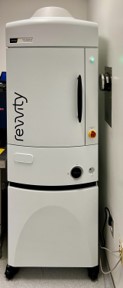
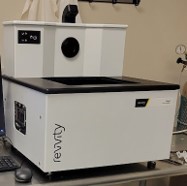
The Small Animal Imaging Facility (SAIF) is delighted to announce the addition of two advanced imaging systems to our research core: the IVIS Spectrum In Vivo Imaging System and the VEGA Preclinical Ultrasound System from Revvity. These cutting-edge machines are now available for your research projects and are designed to elevate the quality and depth of your imaging studies.
| |
|
IVIS Spectrum In Vivo Imaging System
In vivo optical imaging is a fast and user-friendly technique that allows for the non-invasive examination of molecular and biological disease processes. It facilitates the discovery and development of new drugs using bioluminescent or fluorescent reporters. Bioluminescence and fluorescence imaging each have distinct advantages for small animal imaging. Bioluminescence imaging (BLI) employs luciferase genes, resulting in minimal background interference from animal tissues. This technique ensures high specificity, precise quantification, and is effective for detecting and tracking biological processes, such as tumor growth, deep within tissues. Fluorescence imaging (FLI) excels in monitoring and quantifying the behavior of biological targets at the cellular level.
| |
Vega Ultrasound System
The Vega™ ultrasound system is Revvity's latest addition of advanced preclinical in vivo imaging technologies. Vega is a hands-free automated ultrasound platform, which simplifies the imaging process while maintaining high standards of precision and accuracy. It is capable of delivering high-resolution imaging of 3 mice within minutes, significantly enhancing efficiency and throughput in preclinical research settings. The automation and speed of Vega allow researchers to obtain detailed anatomical and functional information rapidly, making it an invaluable tool for a wide range of preclinical studies.
| |
Contact SAIF Optical and Ultrasound Technical Director, Ching Huang, at chinghu@pennmedicine.upenn.edu for pricing and training information if you’re interested in utilizing this equipment. | |
|
Have you used any core products, services or facilities?
We encourage you to complete a survey to provide us feedback on your experience.
Copyright © 2024 PSOM Biomedical Research Core Facilities, All rights reserved.
| | | | |