|
"We are a community dedicated to leading and promoting the use of statistics within the healthcare industry for the benefit of patients"
| |
|
|
PSI offers a range of opportunities to learn about statistical techniques used in the Pharmaceutical industry, as well as valuable personable skills. Sessions range from a couple of hours to all day events. Upcoming events and how to register can be found on our Events page.
In 2023, the PSI events team are planning to run sessions on Meta-Analysis & Indirect comparisons, Master Protocols & Platform Trials, and Bayesian methods in confirmatory studies / Bayesian borrowing. Once details are finalised, they will be available on the events website above.
| |
|
Book club
PSI are running a book club, which is free to attend for all members! We will be reading and discussing non-technical books which are relevant to our roles as statisticians within the medical industry. Participants will be split into smaller discussion groups so members can network with each other and practice exercises to help implement their learnings. Our next book is “Dare to Lead” by Brené Brown.
| |
|
|
Lunch & Learn
Join the PSI Careers Lunch & Learn webinars to get a glimpse into the career path you could follow as a Statistician working within healthcare. These 1 hour webinars include a panel discussion from Statisticians and industry experts who share their knowledge and advice on a wide range of career related topics including:
- What managers are looking for when recruiting (available on Video on Demand)
- The impact of career breaks (available on Video on Demand)
- Progress up the career ladder (available on Video on Demand)
- How AI will impact the industry (future session)
Join us. You might be surprised at what you can learn in an hour....
| |
|
PSI Career Young Virtual Meet
Date: Tuesday 7th March 2023 12:00-13:00 GMT
Location: Online
Who is this event intended for? New professionals - those with 5 years or less of experience in the industry (including students and placement students)
What is the benefit of attending? An opportunity to meet statisticians from across the pharmaceutical industry in a relaxed and informal setting.
This networking event is aimed at statisticians that are new to the pharmaceutical industry who wish to meet colleagues from different companies and backgrounds. The session will be split into two; in the first half we will have talks from those new to the industry sharing their experiences. This will then be followed by breakout rooms in the second half, where small groups can discuss their own experiences and for an opportunity to develop connections in the industry outside of their company.
To register for the session, please click here.
| | |
|
|
Join us at the PSI Conference 2023 to be held at the Novotel London West in the UK. The conference will be face-to-face from Sunday 11 to Wednesday 14 June 2023.
Registration for the conference is now open. Click the button to see more details and register now!
There is a Student Day Pass option available for Monday 12th June.
| |
|
What is EFSPI? This is what I asked ChatGPT before writing this paragraph for the PSI Student Newsletter. The answer I got made me curious: “EFSPI stands for the European Federation of Software Process Improvement. It is an international non-profit organisation that promotes the improvement of software processes and practices in Europe.”
Really? Is this what EFSPI stands for?
| | |
|
|
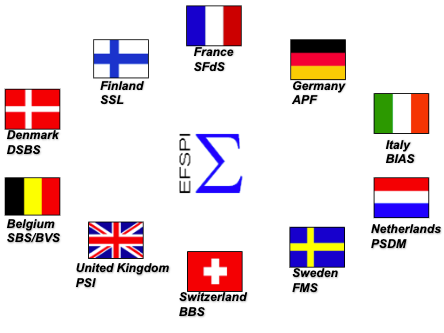
EFSPI is the European Federation of Statisticians in the Pharmaceutical Industry. The federation was officially launched in August 1992 and is registered in Denmark since 2018. EFSPI is a non-profit organisation, serving as an umbrella to constituted groups of statisticians. There is no individual membership, but we currently represent 10 statistical associations including more than 2000 pharmaceutical statisticians in Europe.
| |
- We promote professional standards of statistics and the standing of the statistical profession in matters pertinent to the European pharmaceutical industry.
- We offer a collective expert input on statistical matters to national and international authorities and organisations.
- We exchange relevant information and harmonise attitudes to the practice of statistics in the European pharmaceutical industry and within the member groups.
And there is much more we do!
We are committed to further transform EFSPI into a modern federation that makes a difference today and into the future, and especially attract the next generation of statisticians and statistical leaders. If you want to learn more about our Member Groups, the EFSPI Council, our current priorities and work, please visit our website at www.efspi.org and follow us on EFSPI LinkedIn. We count on you. Please engage with us by reacting to our posts, commenting, and sharing the information with your networks. There is simply no better way to get input from the ‘NextGen’ than connecting with you and actively listening to all of you!
Justine Rochon, EFSPI President
| | |
|
|
PSI CALC hosted the latest edition of our MEDMathS (Medicine Empowered by Data, Maths and Statistics) event on Wednesday 9th November 2022. This webinar is targeted at undergraduate and postgraduate students, aiming to:
- Introduce the world of medical statistics
- Provide an awareness of career opportunities that exist within medical statistics
- Demonstrate how PSI can help in pursuing such a career
Over 90 students attended from a wide range of backgrounds and were highly engaged with 25+ questions being submitted during the presentation! You can read a few examples of the questions below.
If you missed MEDMathS then don’t worry – you can view a recording of the webinar on the PSI website here until the end of April, and we will be running it again in the autumn.
| |
|
Q&As
Q: What degree level and subject is usually required for a job in medical statistics?
A: For a job in medical statistics, an MSc or PhD in statistics, mathematics, data science or other relevant numerical-related degree is recommended. For programmers, a BSc is often sufficient.
Q: Do you recommend learning R, SAS or other statistical software?
A: Knowledge of statistical software is advantageous as it may set you apart from other candidates when applying for a job. However, it is not mandatory since many companies offer on-the-job training for R, SAS and other software.
Q: Does the work as a medical statistician tend to be monotonous, or is there variety to your days?
A: There is great variety in the work of a medical statistician since they are required to provide input to such a large range of topics and areas. For further information, check out this 5-part podcast series which sees 8 statisticians talk about the day-to-day life working as a medical statistician (https://theeffectivestatistician.com/category/psi-calc-podcast/).
Student's feedback
"The talk was absolutely informative. As a first-time attendee I got to the learn the areas where I need to focus on, so that I can start my career as a Data Scientist in the field of Biomedicine and Diseases."
"I enjoyed learning the modules that will be helpful to progress into a medical statistics career as this will help me plan my module choices better."
| | | |
|
|
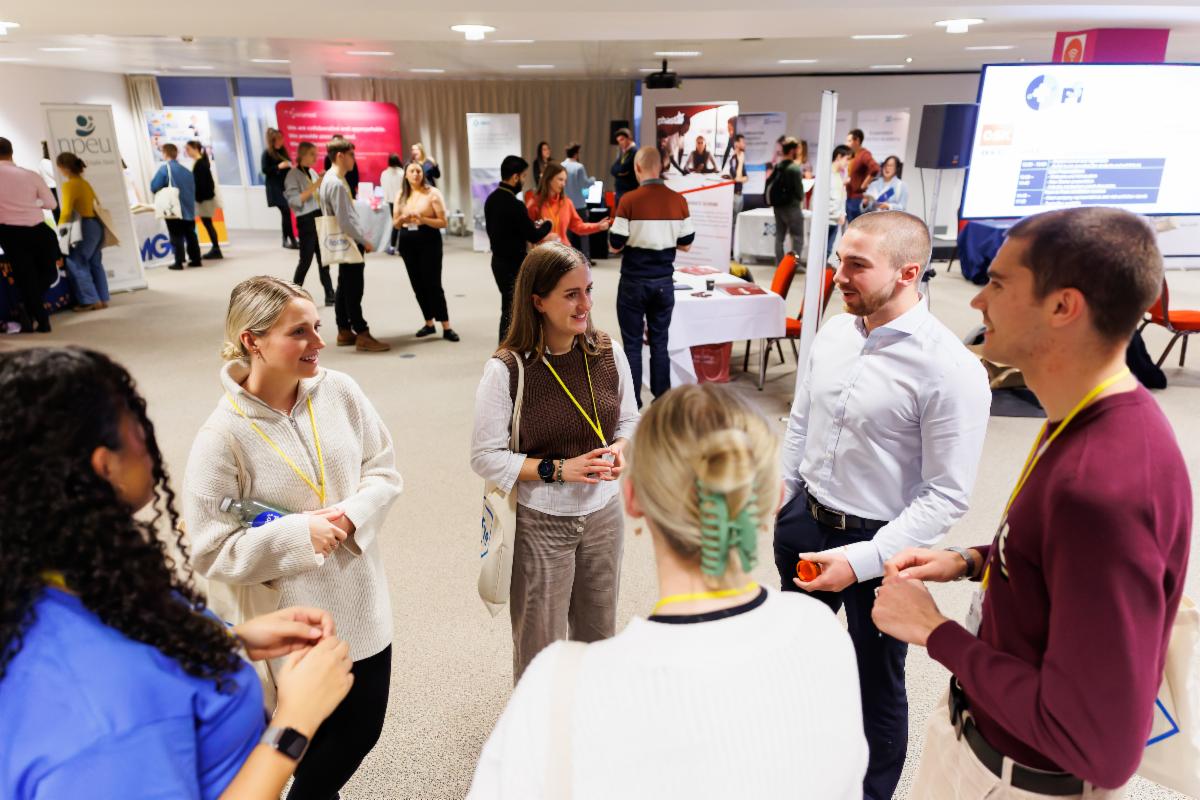
Every year PSI holds a Medical Statistics Careers Event for students. The event aims to showcase the range of careers available to you in the field of Medical Statistics. We were delighted to be back in-person on 7th December 2022 after two virtual events, hosted by GSK, at GSK House in Brentford, London.
| |
|
The event kicked off with lunch followed by an introduction from the PSI chair Chrissie Fletcher and the Careers and Academic Liaison committee chair Amanda Darekar. We heard from New Starter to the industry Ellie Van Vogt, NIHR Fellow at Imperial College London, about applications of machine learning to clinical trials. Next up was the panel discussion with representatives from five organisations, who covered a range of roles and experience levels: from left to right, Lauren Desoysa (University of Sheffield), Ben Webb (AstraZeneca), Yolanda Barbachano (Quanticate), Will Holmes (Roche), Lydia Buckley (Labcorp). The panel shared insights into their day-to-day work, their proudest achievements, biggest challenges, what they wished they’d have known as a student and answered questions from the audience.
The real value of a face-to-face event comes from the opportunity to speak to lots of potential employers in the exhibitor session. The event featured 9 pharmaceutical companies, 8 Contract Research Organisations (CROs), 3 Clinical Trials Units (CTUs) and 2 professional societies. In addition, there were 3 universities advertising postgraduate study opportunities. Company representatives included people with decades of experience as well as people who have joined the industry recently. This enabled attendees to gain several different perspectives about what their next steps could be.
| |
Student testimonials
Here’s a write-up from Emily who attended the event:
| | | |
|
|
"I attended the PSI Medical Statistics Careers Event as a current placement student at UCB working in Late Development Statistics. Having really enjoyed my placement so far, I am keen to pursue a career working in statistics in the pharmaceutical industry. Therefore, this event was a great opportunity for me to speak to lots of different companies and hear about their options for graduates. I particularly enjoyed the chance to speak to such a range of people, from those just starting out in their career to those with many years of experience in the industry. Overall I came away from the day with so much useful advice and feeling very excited about all the different options that will be available to me in the future!"
Emily Howard, University of Bath
| | |
We also spoke to several students on the day. Here’s what Alex, Zac, Angus and Lucy had to say... | | |
|
What was your favourite part of the event?
"I really enjoyed the panel event. Having a panel of people from different parts of the industry, being able to ask them questions and hear them answer other people’s questions. It’s been really helpful because I’ve been able to hear things I haven’t heard before, particularly from people at CROs or CTUs because I’m not as used to hearing about what they do in their jobs."
Alex Zimmermann, MSc Medical Statistics, LSHTM
| |
| | |
|
|
Are you enjoying the event?
"I’m really enjoying the event. It’s nice to have face-to-face talks with companies to really get a feel of who they are, what they do, what their values are, what they’re looking for. Just having that conversation to find out, is this the right company, and the right place, and the right job, for you."
Zac Atter, MSc Statistics, University of Southampton
| | |
|
Are you enjoying the event?
"Yeah I am, it’s been great. It’s been really well organised and there’s a good variety of different companies to talk to and get a bit of an insight into the industry for those of us who haven’t had quite as much experience yet."
Angus Jennings, NIHR Pre-doctoral fellow, University of Leicester
| |
| |
|
Has the event been useful to understand more about your potential career path?
"Yes, I definitely think that it’s been really useful in that sense. There are quite a few career paths for statisticians in this industry and it can be difficult to know what you want to do. What I’ve found from this event is that everyone says it doesn’t matter where you start out, you can switch around. It’s quite a small industry and everyone comes across each other all the time anyway. So it’s been really comforting."
Lucy Abell, NIHR Pre-doctoral fellow, University of Leicester
| | |
|
If you missed out on the event you can catch up with the recording of the talks and panel discussion on the PSI website. If you will still be a student next academic year, look out for the next PSI Medical Statistics Careers Event in late 2023.
Thanks to GSK, Roche, ICON and Phastar for sponsoring the event.
| |
How Statisticians are valued by non-Statisticians in the Pharmaceutical Industry | | |
As a Statistician in the Pharmaceutical industry, you get to work with a lot of different people with different areas of expertise. Here, a Regulatory Strategist and a Data Quality Lead express how Statisticians help them… | | |
|
|
"Statistics is one of the main pillars of medical research. Statisticians are involved in early interactions with regulatory authorities (e.g., the Food & Drug Administration [FDA] in United States) right through to the submission of data for drug approval. Therefore, the interaction between statistics and my department, regulatory affairs, is of the utmost importance for successful clinical development. It requires statisticians with a comprehensive range of skills including strategical thinking and strong communication to act as a ‘go-to person’ in our project teams. A truly exciting and important function!"
Dr Igor Knezevic, Global Regulatory Strategist, Bayer
| | |
|
“Statisticians are pivotal in ensuring we're collecting the right data to answer all questions in the process of drug development, right from protocol development to final data delivery and approvals. They have a key voice in how the clinical studies are conducted as one of the core clinical study team members working with colleagues from across the company including scientists, regulatory, and operations, as well as working with external collaborators. Their expertise is absolutely vital to ensure we can not only get our medicines to patients as quickly as possible, but also anticipate and plan projects for the future.”
Hollie Cook, Data Quality Lead, Roche
| |
| |
Where do Statisticians make a difference? | | |
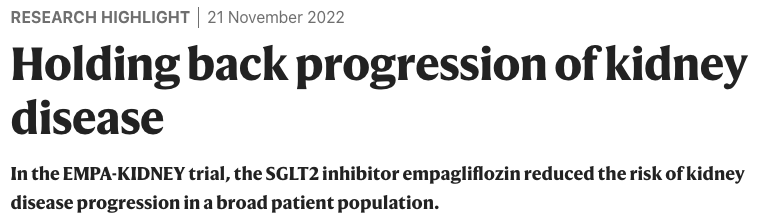
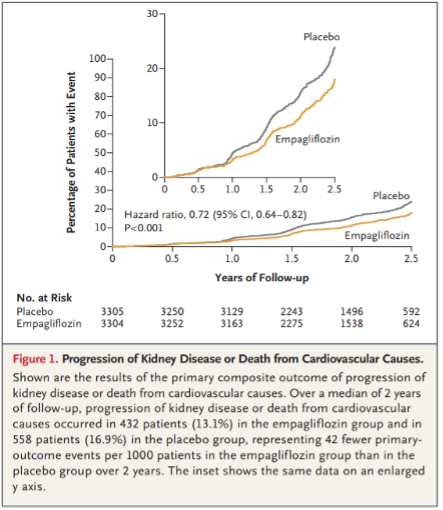
Working as a statistician within the medical field provides you with the opportunity to contribute to high impact research to improve patients’ lives. An example of a recent nature article is shown below, where a medicine was being investigated to treat kidney disease. | |
Chronic kidney disease (CKD) can progress to kidney failure, necessitating dialysis or transplantation — with substantial impacts on quality of life, healthcare burden and cardiovascular morbidity and mortality. | |
Below are excerpts from a clinical trial paper investigating empagliflozin against placebo in patients with CKD, where we have highlighted areas where statisticians are involved with the trial. | |
|
Randomisation and Masking
Patients were randomly assigned to receive empagliflozin (10 mg once daily) or matching placebo. Randomization was performed with the use of a minimization process with a 10% stochastic element.
Study Design and Sample Size
A first occurrence of a primary-outcome event among 1070 patients would provide the trial with 90% power (at a two-sided P value of 0.05) to detect a risk of a primary outcome event that was 18% lower in the empagliflozin group than in the placebo group.
Statistical Methodology
A Cox proportional-hazards regression model with adjustment for baseline variables specified in the minimization algorithm (age, sex, history of diabetes, eGFR, urinary albumin-to-creatinine ratio, and geographic region) was used to estimate the hazard ratio and 95% confidence intervals.
Data Analysis
The Nuffield Department of Population Health at the University of Oxford performed the analyses with the use of SAS software.
| |
Special Interest Groups (SIG) | | |
|
PSI has several SIGs which provide a forum for members to discuss topics of mutual interest, keep updated on developments in a particular area of industry, to organise events on their specialist field and/or to collaborate on developing the science of that field.
The SIGs are a useful community that statisticians in the industry can reach out to and/or join at any time during their career in the industry.
To see which SIGs are currently in place, and for further information on any of the SIGs, take a look at their pages on the PSI website: SIGS (psiweb.org)
In this newsletter, we have a spotlight on the data visualisation SIG.
| |
|
SIG Spotlight: Data Visualisation
For many years one session at the annual PSI conference had been dedicated to data visualisation. Interestingly, a core group of data visualisation enthusiasts turned up to nearly each of these sessions. And this core group was the origin of the visualisation special interest group (VIS SIG), which formed just before the pandemic hit (click here to learn more).
At the PSI Conference in 2022, it was the first time the VIS SIG could organise an in-person session at a conference. Unfortunately, due to ongoing travel restrictions many SIG members could not join the conference but were at least very actively involved in the preparation work. This resulted in 4 high-quality presentations covering various aspects of data visualisation given by Alexander Schacht, Steve Mallet and Bodo Kirsch. Many of these presentations included examples from the flag ship event of the VIS SIG – the Wonderful Wednesday Webinar (WWW) series. This monthly challenge (see more about WWW here) runs now for over 3 years and has created a treasure of data visualisation examples which highlight different aspects of data visualisation principles and approaches (check out the VIS SIG blog to explore this treasure). All these use typical data sets and their challenges from clinical trials and other data sources we as statisticians in pharma work with.
| | |
|
PSI student membership
PSI student membership is free to join and has many benefits during your journey to becoming a statistician in the pharmaceutical industry: Join PSI (psiweb.org)
PSI run many webinars which are free to members (but cost for non-members), so as a free PSI Student member you can also join these events for free.
Keep your contact details up to date
If you are finishing your studies at the end of this academic year, please remember to change your email address to a personal one on your PSI account, so you don’t miss important updates and continue to receive our regular emails. To edit your contact details, you can log into Glue Up and go to “My profile”: https://app.glueup.com/my/profile/.
Job Vacancies
Many companies employing statisticians advertise their job vacancies on the PSI website. Career Opportunities are updated on a regular basis, and is always worth a look to see what options are available.
| | |
Follow us on social media | psiweb.org | |
| | | |