Are you interested in Greylock?
Preservation Alert: Greylock going to Sheriff's Sale 9/13
After years of abandonment, Chestnut Hill's magnificent Greylock estate, located at 209 W. Chestnut Hill Avenue, will be up for  sheriff's sale on September 13 for  $98,000, with taxes of about $90,000.

CHHS  holds two easements on Greylock and is interested in working with potential buyers to balance the interests of potential development and continued preservation.

If you are interested in being a part of the future of Chestnut Hill's historic Greylock estate, please contact CHHS at info@chhist.org.

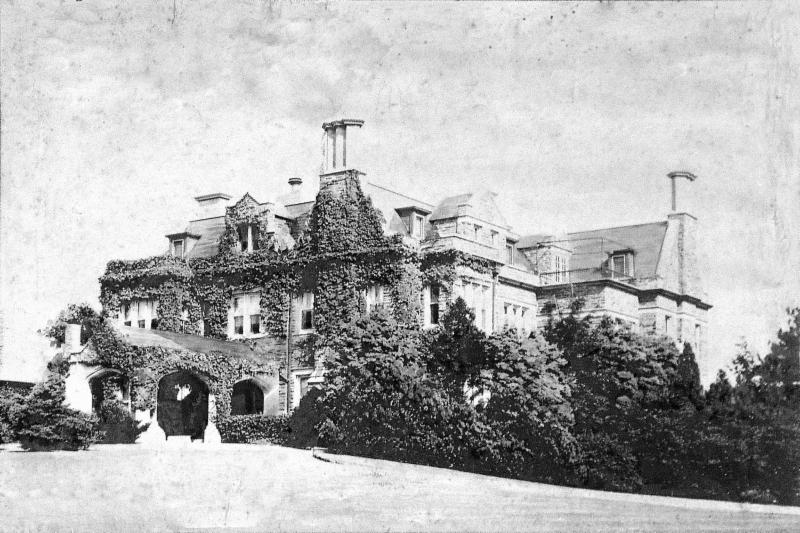
Easements, or donated development rights, are among the most effective and important tools for protecting precious  architectural and natural resources.  The conservation easement on Greylock preserves open green space, protects the property from land development, and helps to control surface water run-off within the Wissahickon Watershed. The façade easement on Greylock protects the exterior of the main building and the carriage house, both listed as "Significant" buildings within the Chestnut Hill National Register Historic District. Read more about what this means for Greylock .

Interested in an easement for your property? Learn more about the Easement Program.
The Chestnut Hill Historical Society and the  Friends of the Wissahickon jointly sponsor the Easement Program for Chestnut Hill, surrounding communities, and the Philadelphia section of the Wissahickon watershed. 
 
Henry Laughlin, a pioneer in the steel industry, helped make Pittsburgh a national center of steel production. When he retired to Philadelphia, he hired Pittsburgh architect William J. Carpenter to design Greylock, built in 1909, at 209 West Chestnut Hill Avenue, pictured here c. 1920. The main entrance drive, located on Crefeld Street, led up to the front of the house, pictured here. A gate lodge, now a residence at 8838 Crefeld Street, was built at the main entrance drive. The stone for the exterior walls was quarried on the 10-acre estate. The 25-room house was equipped with an elevator. From 1919 to 1922 he deeded land on both sides of Germantown Avenue to Chestnut Hill Hospital. 

From CHHS Curator/Archivist Liz Jarvis' book, Chestnut Hill Revisted, 2004
Staff  |   Board of Directors  |   Visit us in our 1857 former parsonage
Visit our partners to learn more about what's happening in this vibrant community: