|
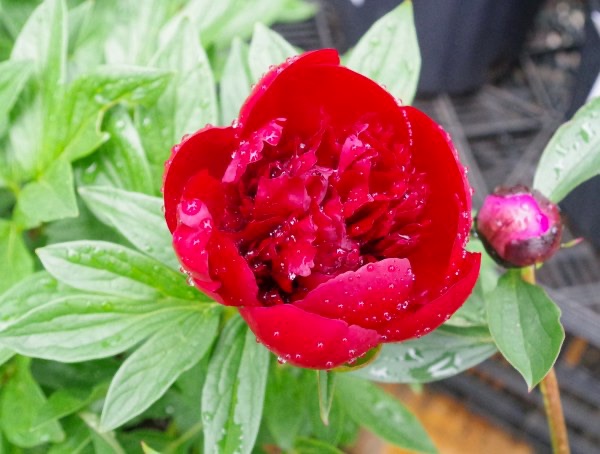
This is one of my very favorite peonies- 'Red Charm'. Mine just opened yesterday.
It is an incredible color. I can't stop photographing it! We have a large peony selection now, and great cages to hold them.
| |
|
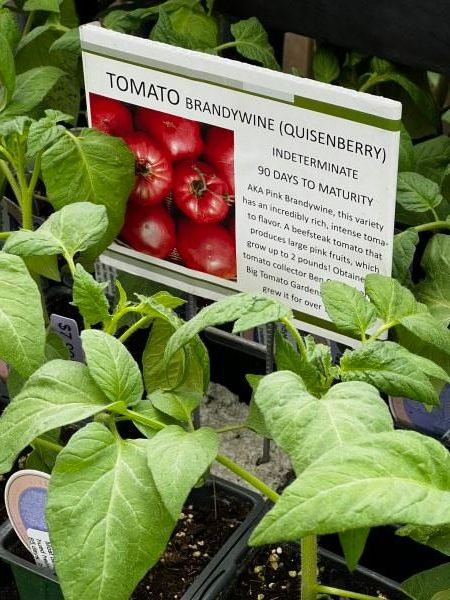
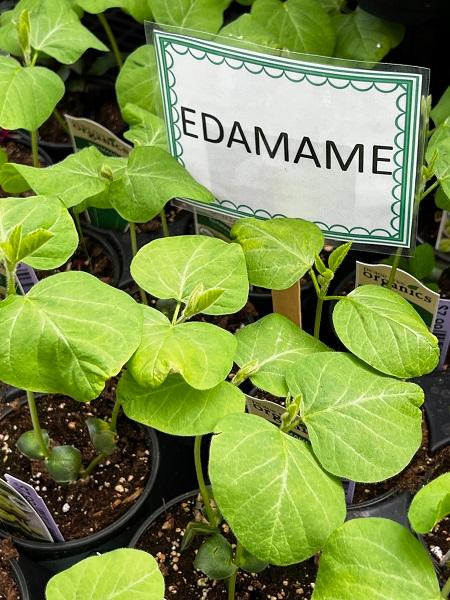
We've got TONS of ORGANIC veggie seedlings
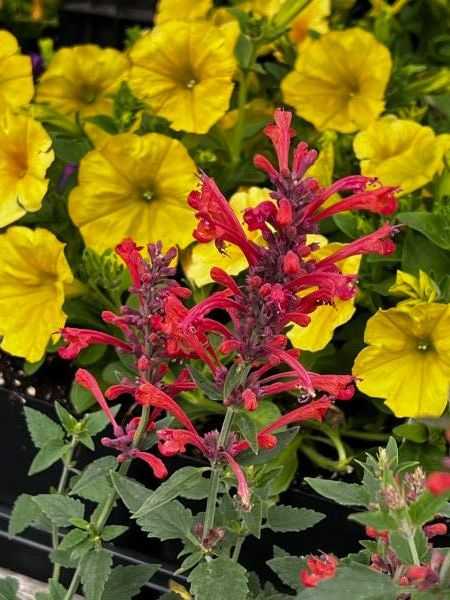
AWESOME unusual annuals
Herbs, perennials, shrubs, vines, and natives galore...
| |
|
Hello Jaime,
We welcome the SUNSHINE at last for this glorious week in May. It's time to literally watch your plants double in size before your eyes. It's time to finally bring your houseplants outside. It's time to get your warm season veggies, herbs, and annuals planted. Yes, even BASIL can go in now.
Natureworks is overflowing with the healthiest, happiest plants. Restocking is happening today as we had a crazy busy weekend. I filled my car with lots of different peppers, tomatoes, eggplants, basil, and my favorite annuals to entice the hummingbirds to my deck. Gradually, I am getting my beds prepared, my pots and Smart Pots filled and amended, taking lots of breaks in between to sit and soak in the beauty that this time of year offers.
My peonies and irises are starting to flower. Columbines surprise me, popping up in unexpected places. Camassia and Allium bulbs are blooming. I am eating the lettuce I planted a few weeks ago, parsley too. My potatoes are finally going in the ground, and I am asking my husband to help me put up the chicken wire fence for the sugar snap peas that are growing fast.
| |
|
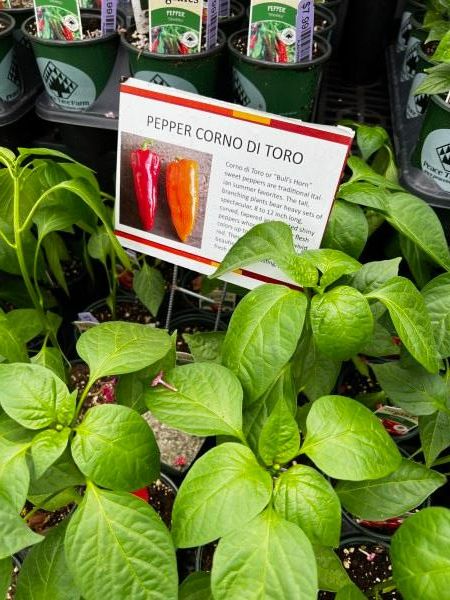
I find peppers super easy to grow in pots. I use 10 gallon Smart Pots, clay pots, and even old metal sap buckets with holes drilled in the bottom. Peppers love the heat and are a pretty plant, great for edible landscaping.
Click to see our SmartPots online.
| |
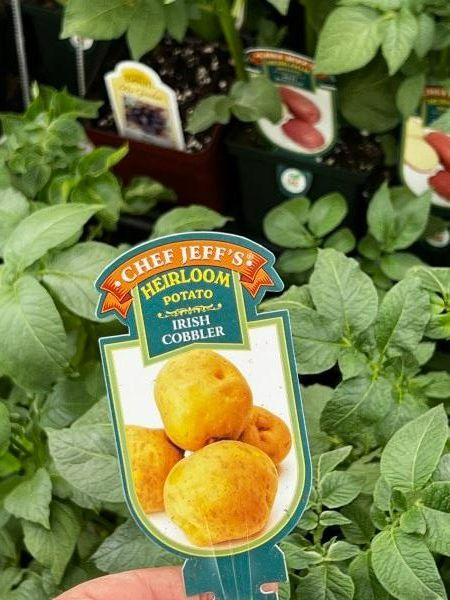
Natureworks still has some organic seed potatoes in stock, but this year we also have already started plants! There is nothing like digging your own potatoes and eating them that same day. We have several varieties in stock NOW. | |
How We Plant our Organic Veggie Seedlings | |
|
The way we plant our organic vegetable seedlings is very basic. We amend the soil with Coast of Maine Quoddy lobster compost and Sustane 4-6-4 organic granular fertilizer. I simply mix these two amendments in a bucket and then add it to each planting hole.
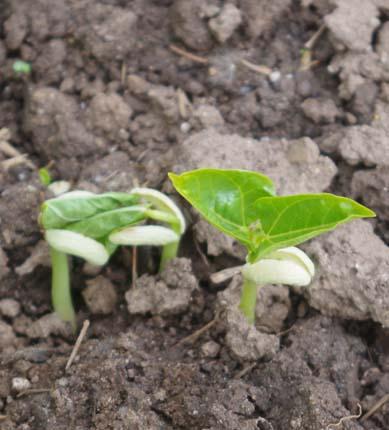
If I am sowing seeds, I turn over the soil with a sturdy digging fork, rake it smooth to get the lumps and rocks out, make a furrow with the pointed end of my hoe, sprinkle the compost/organic fertilizer mixture in the furrow, and plant the seeds. I do this slowly and carefully (I find sowing seeds incredibly relaxing), trying to space them as the package says.
| |
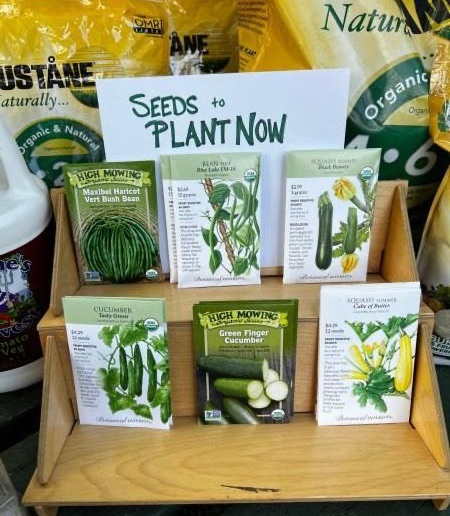
Our seed racks have been restocked and it is prime time to direct sow beans, sunflowers, cucumbers, squashes, melons, zinnias, Tithonia (Mexican sunflower), and more. Keep on sowing seeds to continue your harvests throughout the summer. You don't have to sow an entire package at once. Space it out!
Sometimes I sow seeds in flats, let them sprout, and then move them into the garden. This is helpful for sunflowers if you find them being eaten by birds. Another option is to cover your seed bed with either floating row covers or mesh netting until the seeds are established. I do that as well.
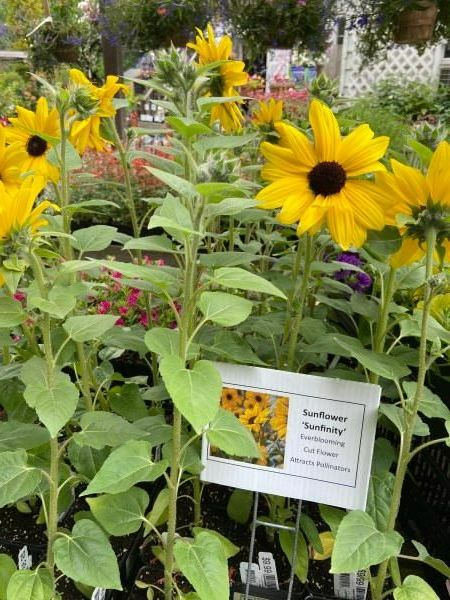
| Speaking of sunflowers, I was chatting with Amber (who runs our annual department) and she said "make sure to tell everyone about our 'Sunfinity' sunflower plants." They bloom and bloom all summer long AND the ones we have on our benches are big, beautiful, and already in flower! | |
We have so many weird, wild, and wonderful unusual annuals. I am not sure that our customers understand many of them. Because we plant up so many containers for our landscape clients, our retail customers, and ourselves, we know what we want and we are all a bunch of total garden geeks! Annuals bloom all summer and are perfect not only for containers, but also to add a punch of color to the garden, especially as the early spring bulbs and perennials fade away. Just like bulbs, annuals can DOUBLE the color in your garden. | |
|
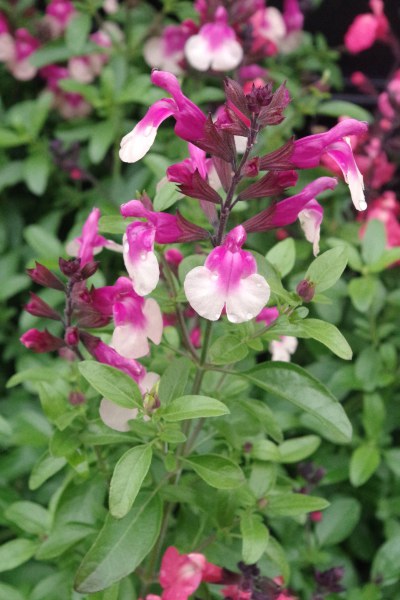
Salvias are a mainstay of my annual plantings. There are so many to choose from. They don't mind the heat and humidity, in fact, they hail from Central and South America. They are hummingbird magnets! Above is Salvia 'MIrage Rose Bicolor'. It grows 12-14" tall.
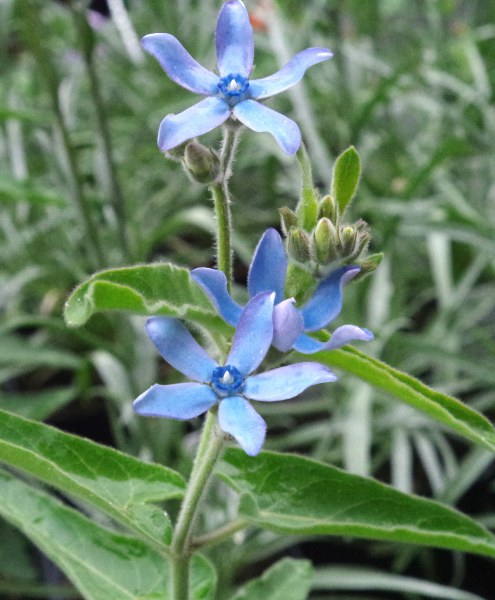
| One of the bluest annual flowers we sell is Oxypetalum caerulea. This is actually in the milkweed family and it does provide larval food for monarchs. It blooms until hard frost. | |
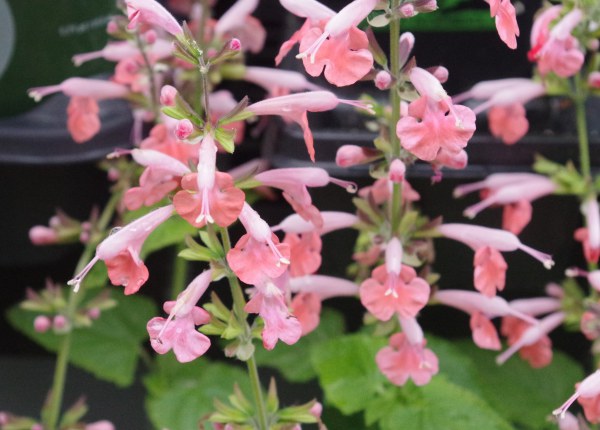
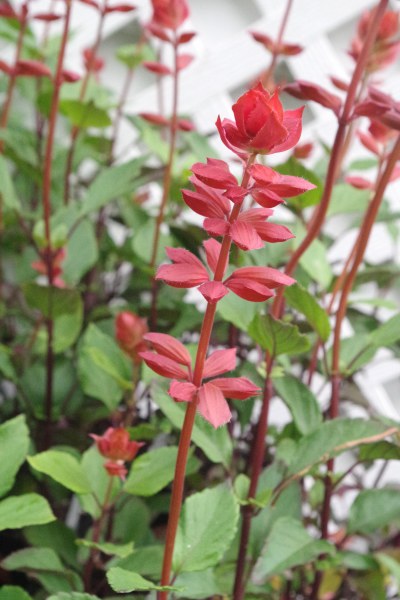
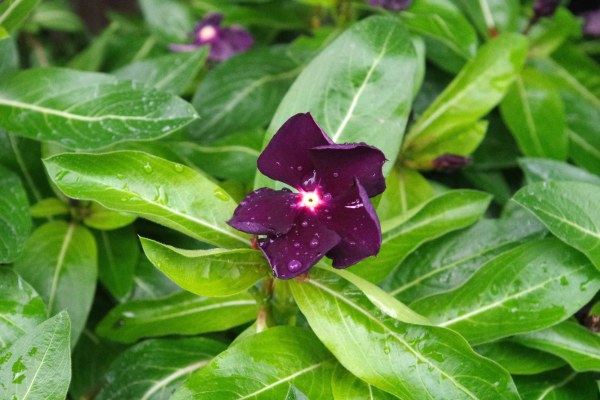
Salvia coccinea is a species of annual salvias that I have been planting for decades. This is Salvia coccinea 'Cherry Blossom'. This exquisite color goes so well with true blue flowers. | Salvia buchananii 'Fashion Orange' has large tubular flowers on 20-24" stems. | If you want deep purple annual flowers, try this Vinca 'Tatoo Blackberry'. I did! I brought it home on Saturday. | |
Amber's Annual Suggestions | |
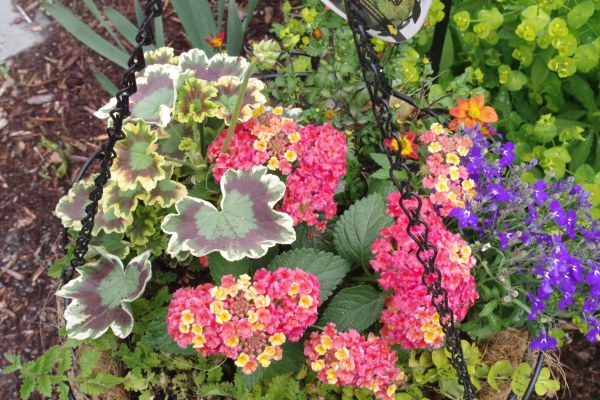
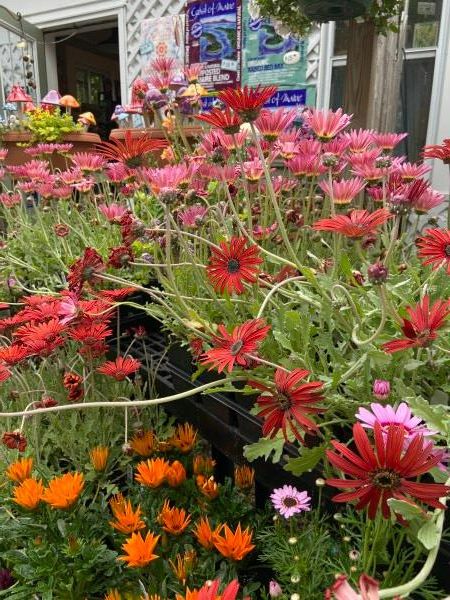
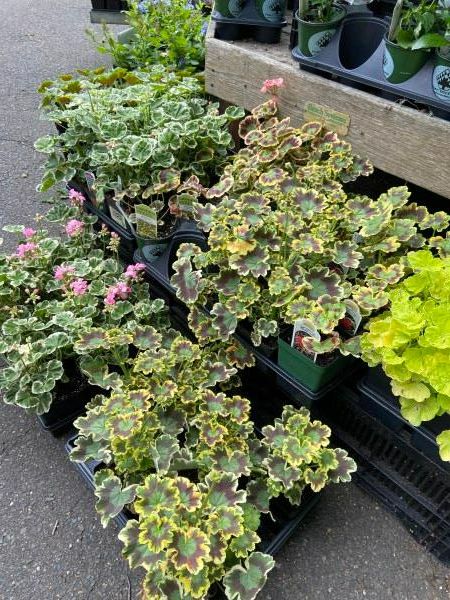
We have so many unusual Pelargoniums (annual geraniums) in stock this year. Many have variegated leaves, and 'Contrast' has brilliant golden yellow leaves. We also have lots of scented geraniums including variegated 'Nutmeg' and 'Old Fashioned Rose'. | Amber says "I LOVE Arctotis, and it shows because we have tons of it!" Arctotis is an amazing African daisy that can be planted out in early April and will continue until hard frost. We have red, orange, and pink. | |
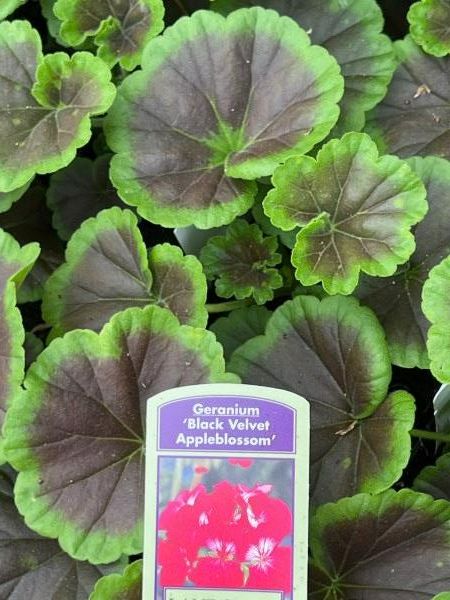
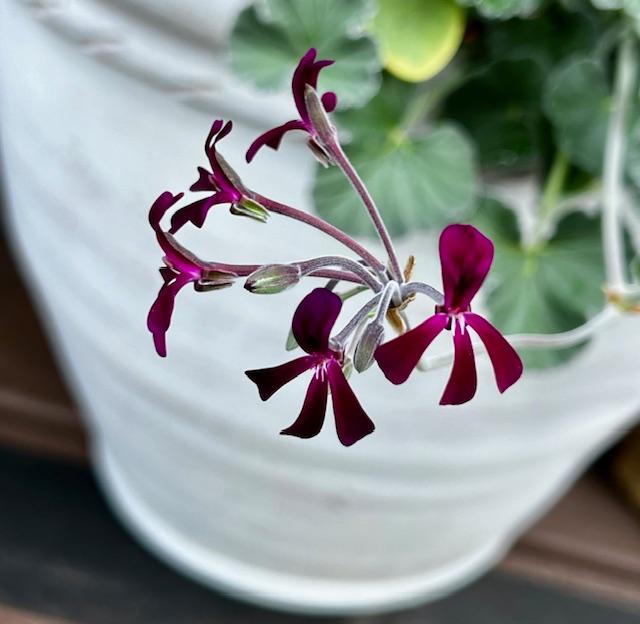
Diane snapped this photo of Geranium 'Black Velvet Appleblossom'. This is one I would have outside all summer but for sure I would bring it into the house for my winter windowsill. | |
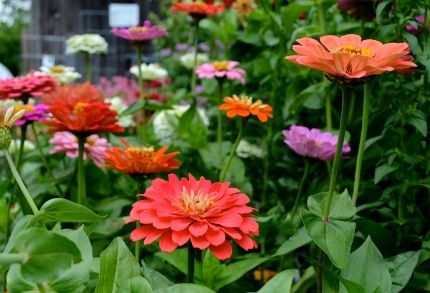
Zinnias are on Amber's top ten list. Of course! They are such a clasic summer cut flower. We have Benary's Giant zinnias in all colors including pink, red, orange, purple, lime, white, and coral. | |
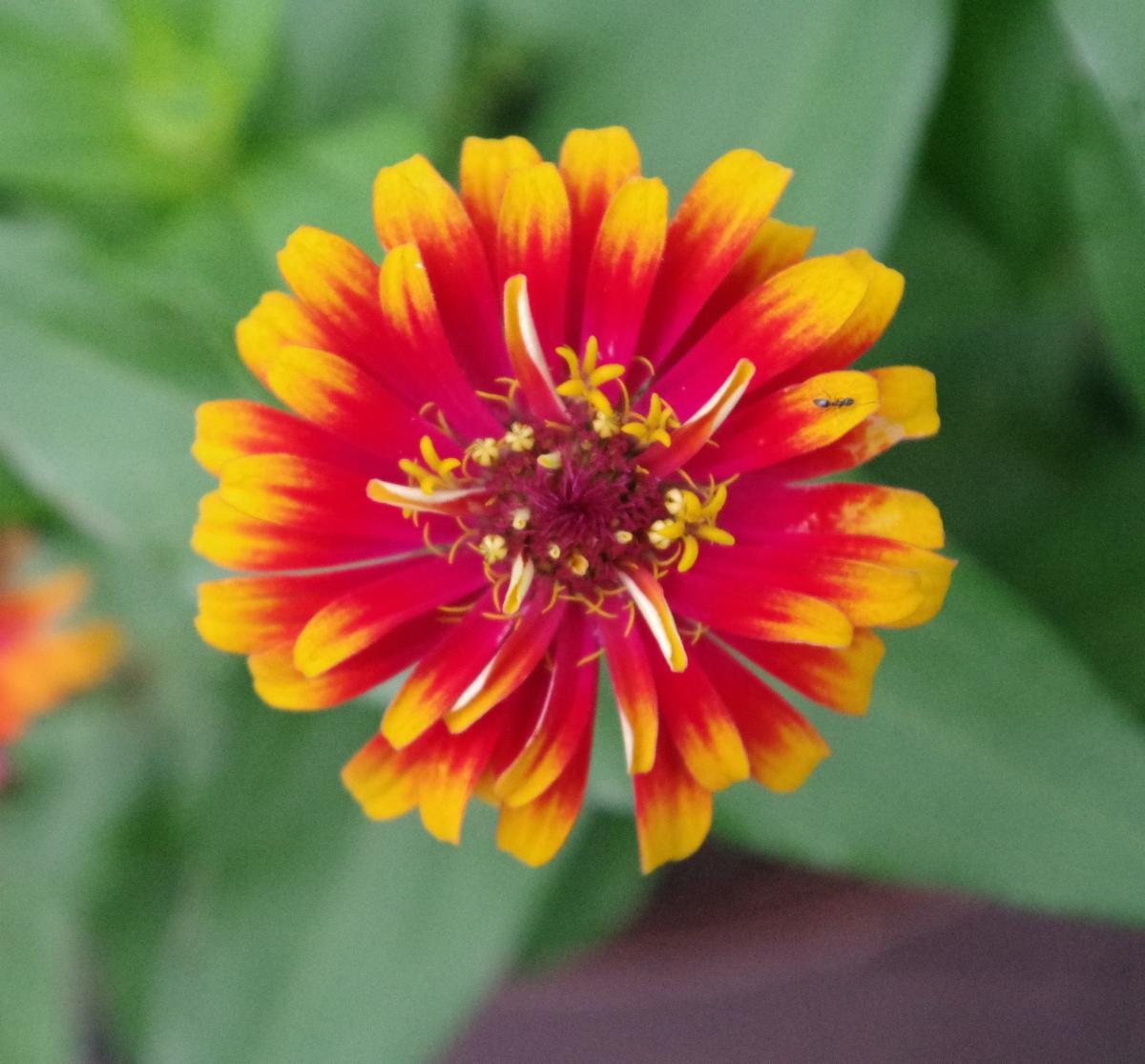
'Zowie' zinnias are arriving Thursday. We contract with our grower to produce this very wonderful variety. The seed is expensive and hard to get, it sells out fast. Silly me, I bought 1000 seeds this year to be sure I got some! | |
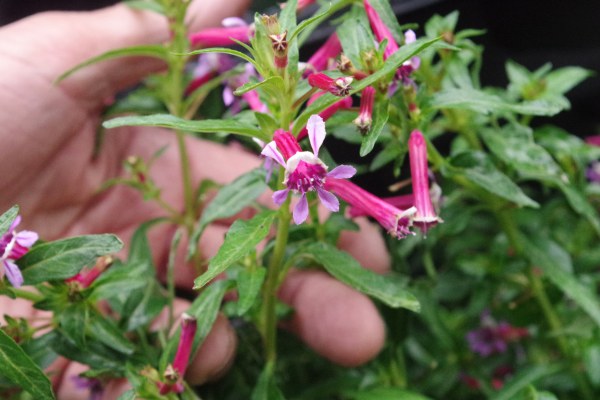
That is my hand holding this Cuphea ignea. Don't be fooled by the tiny flowers, they are beloved by hummingbirds. I love the way the petals fold backward, making it easy for their beaks to get to the nectar. | |
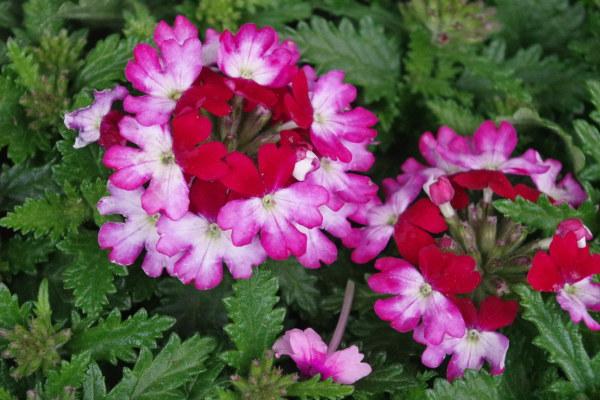
This is another annual I brought home last Saturday. It is Verbena 'Beats Purple and White'. This series has been developed to "beat the heat" and thrives in our hot summers. What a color! | |
|
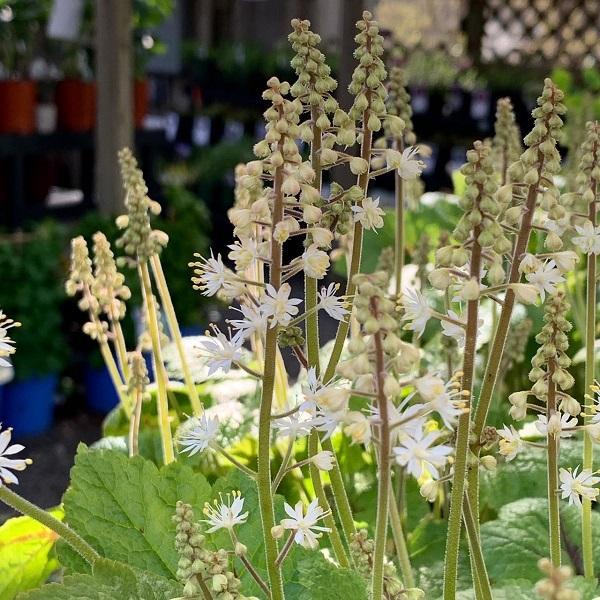
In the world of perennials, I am loving all of the Tiarellas. Tiarellas, or foam flower, prefer woodland conditions, humus-rich, moisture retentive soil and dappled to full shade. They bloom for many weeks in late spring and attract hummingbirds.
Right now we have in stock;
'Running Tapestry', 'Brandywine' and 'Timbuktu'.
Other native shade plants I adore that have arrived are Chelone glabra, and more Violas!
| |
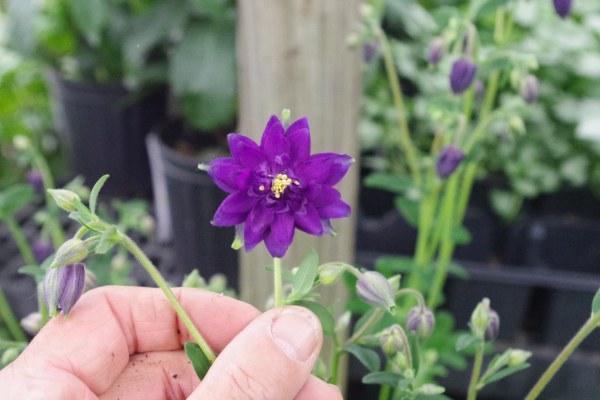
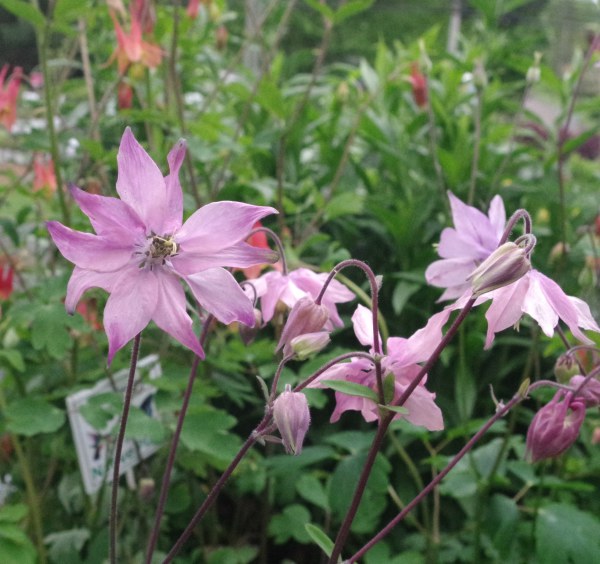
May is columbine month. This is Aquilegia 'Blue Barlow'. I have this one at home (it was given to me by a dear friend) and now it is seeding around and popping up in unexpected places and in unexpected colors! | |
At Natureworks, I can't take my eyes off of Aquilegia vulgaris var. clematiflora. What a totally unique flower form. It turns out that this has no petals, only sepals, 10 or more of them. It will grow 2-3' tall. | |
|
Garden TIP from Nancy
There is a trick to being successful with all columbines, including our native Aquilegia canadensis.
DO NOT DEADHEAD THEM!
They are considered short-lived perennials.
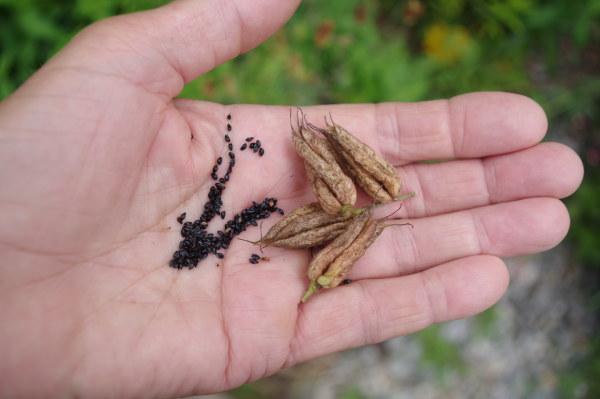
BUT, they self-sow prolifically and, once you have them, you will always have them somewhere if you know how to recognize the babies. Let the flowers turn into seed pods and let the seed pods ripen until they are brown. When they are ready, if you shake them, thousands of tiny black seeds will drop out. I "anoint" my gardens by sprinkling seeds everywhere. Some folks save the seed and winter sow it in milk jugs.
If your columbines look a bit ratty as the seeds are ripening, don't worry. Plant later blooming perennials or good foliage plants nearby. Then, once you have harvested the seed, cut the flower stalk and any tired, tattered leaves right down to the ground. In late summer, fresh leaves will emerge.
| |
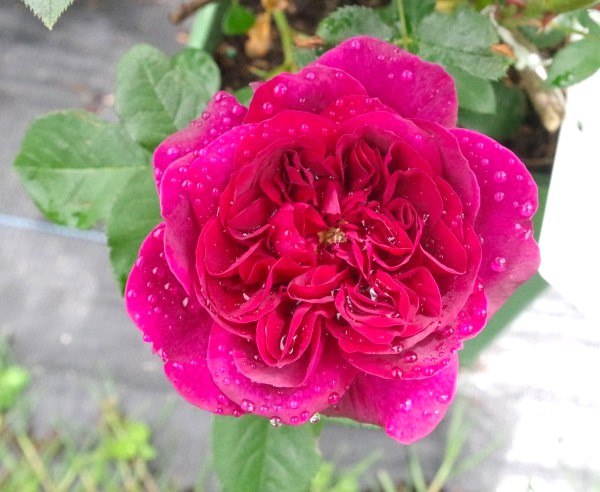
This is one of my favorite David Austin roses. It is called 'Darcy Bussell' and I have had it growing in my garden for a long time. Hundreds of petals, such a great cut flower. We have this variety and tons of other gorgeous roses in our nursery yard this week, including several climbers. | |
Is Something Bugging You? | |
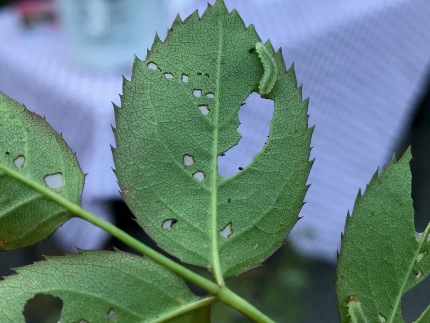 | |
Sawfly season has started. Sawflies are the larval stage of an insect that is related to bees and wasps. The larvae of various sawflies can do a lot of damage to our plants really quickly. Above is a closeup of a rose sawfly. THEY ARE ON ROSES NOW.
One of of customers just came in because he needed to deal with sawflies on the candles of his Mugho pines. Untreated, they will eat the entire candle, which is all of the new growth for this year. There are sawflies specific to roses, evergreens, twiggy dogwoods, columbines, and perennial hibiscus, to name a few. Be on the lookout!
Sawfly larvae are NOT caterpillars and therefore, B.T. (Bacillus thuringensis) will NOT control them. If you find an unacceptable amount of sawfly damage and do want to control them, spray with Neem or Pyrethrin AT DUSK after the pollinators have stopped flying. Spray ONLY the affected plants. NEVER blanket spray your garden. There are so many good bugs in our organic gardens that help control the bad bugs. Blanket spraying (even with an organic spray) kills them all.
| |
|
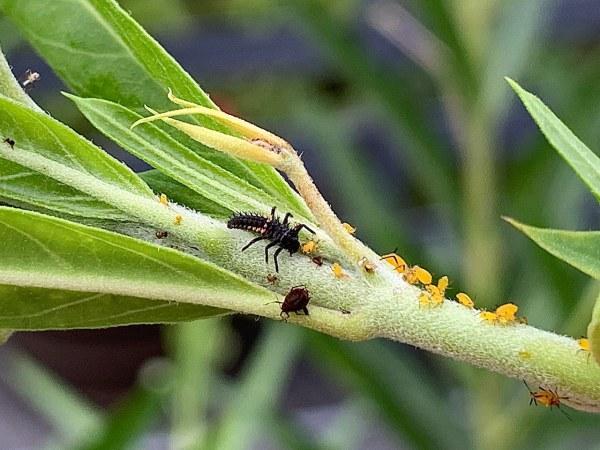
Aphids are also on our plants in great numbers all of the sudden. That is because they love young, new growth and they love a warm spell after a rainy spell which means the plants are growing fast.
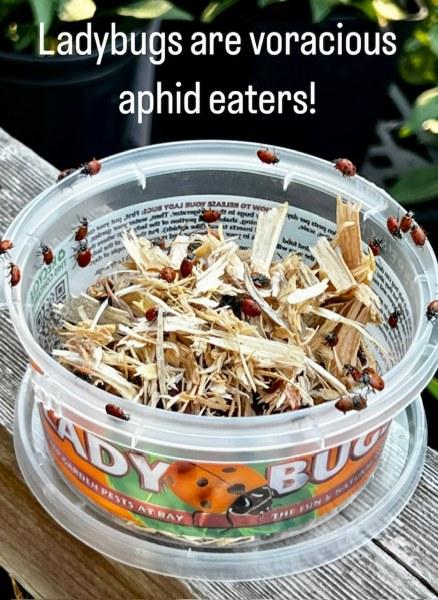
We sell live ladybugs. Release them onto your plants and they will eat the aphids! Or, maybe you already have them. Above is a picture of the LARVAL STAGE of a ladybug eating aphids on milkweed. See? You never know what is on your plants unless you identify it. If you had sprayed this plant, no more ladybugs!
| |
|
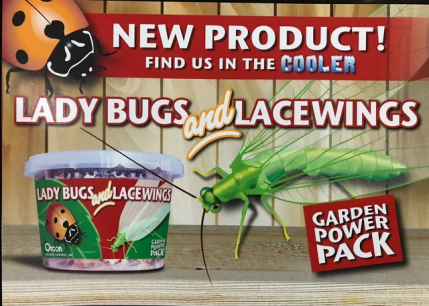
JUST ARRIVED! More ladybugs, beneficial nematodes and a new product for us,
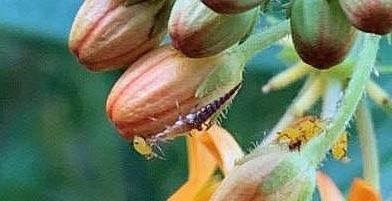
Ladybugs AND Lacewings! Below is a photo of a lacewing larvae. It is having an aphid on Asclepias tuberosa for lunch!
| |
OUR FAVORITE NATIVES THIS WEEK | |
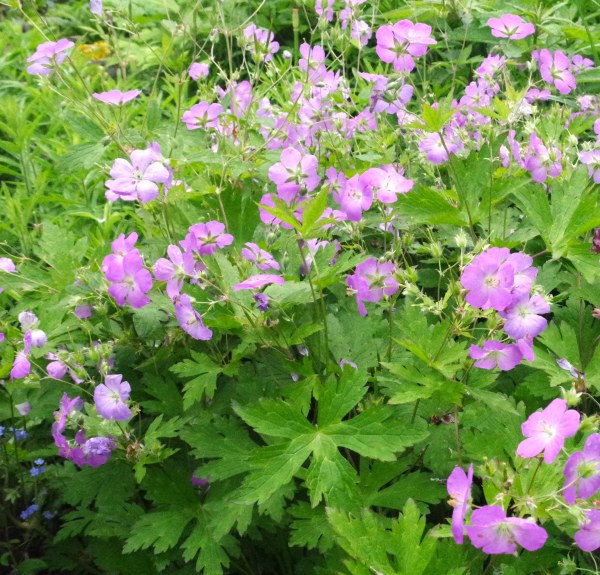
I was very happy to see that our native cranesbill, Geranium maculatum, is arriving this week. I love this plant and I have been seeing it growing along Rt.17 on my ride home for a while now. I took this picture on Saturday in the Natureworks gardens. We had one plant growing there and now we have two. They self-sow, which is a total gift to native plant lovers. It is important to realize that this perennial does not have excellent foliage later in the summer. You will observe that, in our gardens, we surround it with later blooming perennials such as asters and Cimicifuga. | |
|
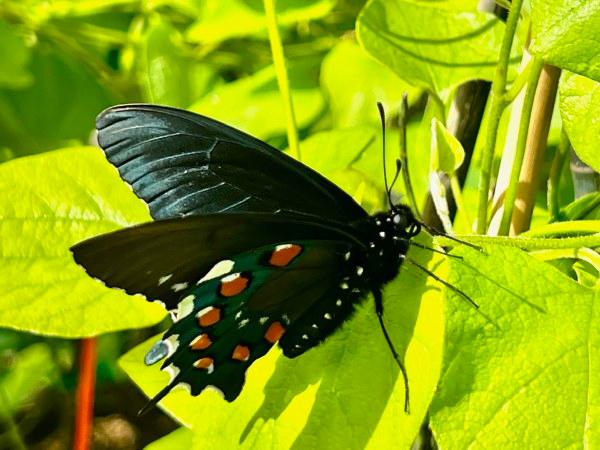
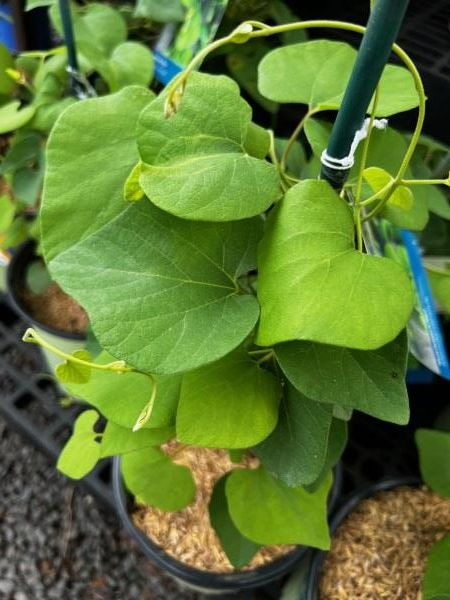
If you follow us on Facebook or Instagram, you will have seen the really cool video that Diane St. John posted over the weekend. We have chrysalises of pipevine swallowtail butterflies that are starting to eclose (be born). Diane has had these hibernating at home in her garage all winter! Their larval food plant is a native vine called Dutchman's pipe vine (Aristolochia macrophylla) and we have it in stock on our benches and growing up onto our lath house! The flower isn't real showy (it looks like a pipe), but the big heart shaped leaves are awesome and will grow in sun or shade. Pipevine swallowtails lay their eggs on the Pipevine plant, then turn into a chrysalis, then a beautiful butterfly. Plant some Pipevine to attract them to your habitat too.
Click HERE TO WATCH our Pipevine Swallowtail release this past week.
| |
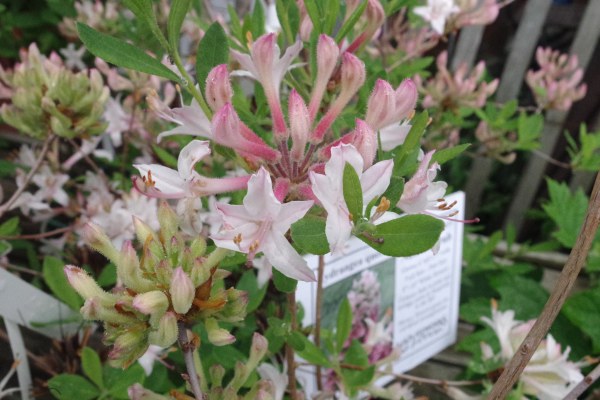
I am a lover of upright, deciduous, native azaleas and have an ever-growing collection in my yard. This is my next purchase, Azalea atlanticum. It has very fragrant white flowers that bloom in the spring. For me, one of the best features of many native upright azaleas is their fragrance. This is often called the dwarf coastal azalea as it only grows 2-5' tall! It is hardy to zone 6. | |
Are you ready for the monarchs to arrive? | |
|
All butterflies need two things: nectar flowers and larval food plants. When it comes to monarchs, most of us know that monarchs need milkweed. Actually, they need plants in the genus Asclepias which includes common milkweed (and YES we have it in stock), swamp milkweed, orange butterfly weed, tropical milkweeds (orange, yellow, and variegated), and a few more oddball annuals such as Oxypetalum and Gomphocarpus physocarpus.
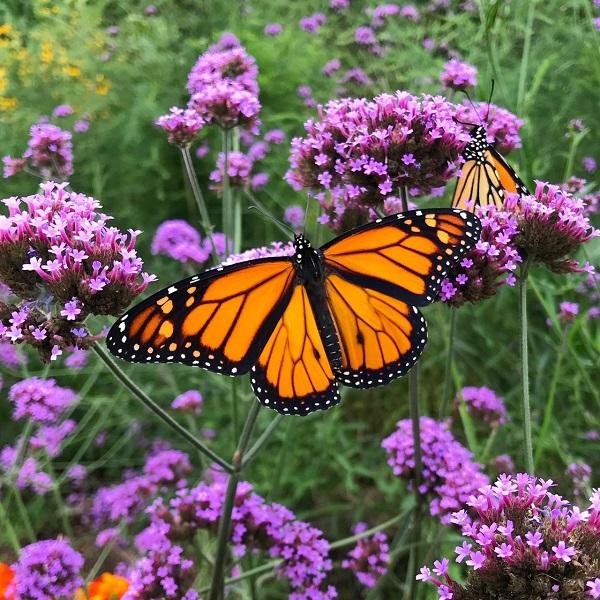
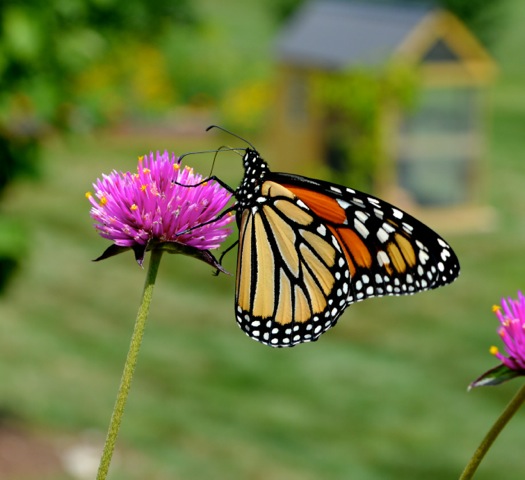
Diane took this picture last year of a male monarch butterfly nectaring on one of our very favorite butterfly flowers, Verbena bonariensis. This blooms from now until hard frost and the more you cut it for bouquets, the more it branches.
|  | Another very floriferous annual that will surprise you is Gomphrena 'Fireworks'. This is a globe amaranth with incredible flower power. Don't be fooled by the plants you see on our benches. That is how they look in May, not real big, maybe one flower. BUT, once you plant this, it will start cranking out flowers with long stems that the monarchs can't resist. They are also great fresh cut and dried flowers. | |
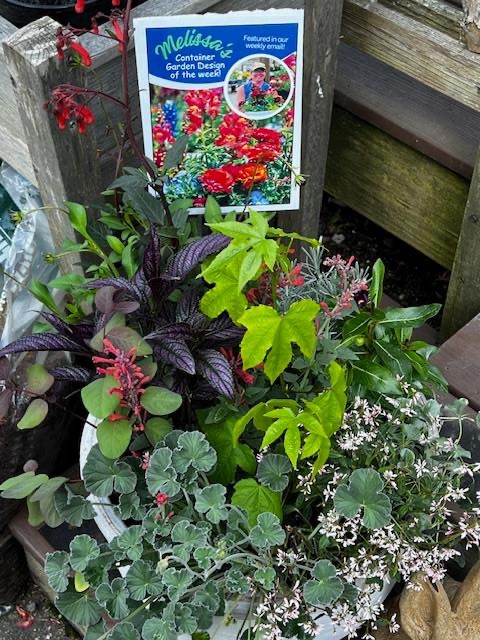
Melissa's Container Garden Design of the Week | |
|
Melissa has been working on one of our garden maintenance teams for many years. She is now splitting her time between the crew and the retail store. She is famous for the container gardens she designs and installs for our clients. We welcome you to bring your containers here to plant or come in to treat yourself to some new ones and let us help you fill them with beautiful cool season plants.
This week's container garden features many beautiful silver foliage plants such as Dichondra 'Silver Falls' and Helichrysum 'Icicles'. We BOTH adore Pelargonium sidoides with silver leaves and lovely deep red flowers. I love the fact that she picked up the iridescent purple color of the Strobilanthes and married it with Vinca 'Tattoo Blackberry'. And then there is the chocolate cosmos and Euphorbia 'Starblast Pink' with tiny pinkish white flowers and burgundy leaves. Agastache 'Kudo's Coral' , Breynia 'Hawaiian Snowbush', and Abutilon 'Biltmore Ballgown' complete this amazing planter. Come in and see for yourself. We are sure you will be intrigued by the many unusual annuals that Melissa has chosen this week!
| |
|
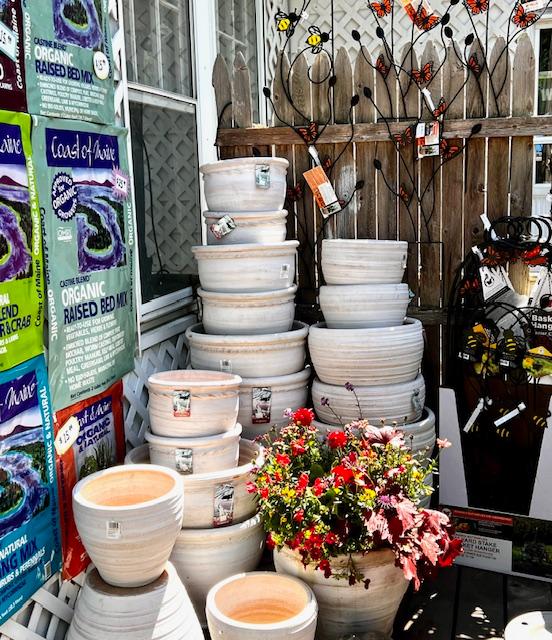
All our in stock clay pots and saucers are 20% off now through Sunday, June 2nd.
See end of email newsletter for details.
| |
|
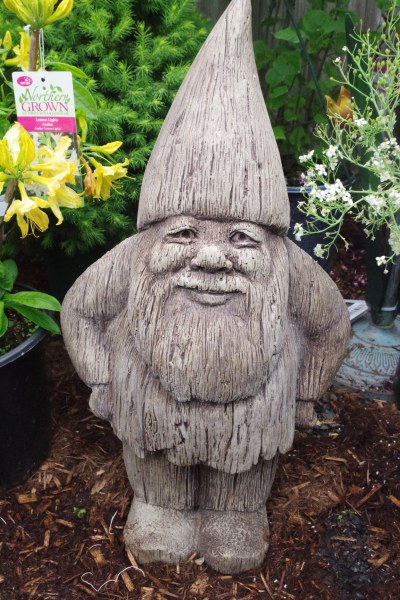
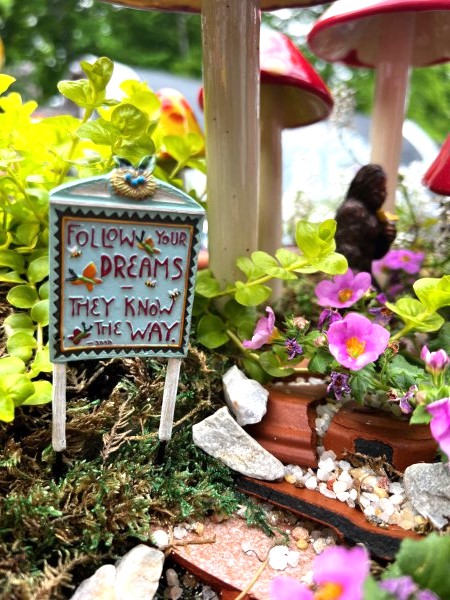
This gnome statue has been supervising us for weeks now. Isn't he cute? Why not take him home to hang out in your garden?
I have absolutely zero control when I arrive at Natureworks in May. I leave with a my car filled every time. You will too. Why not? If you are ever going to go garden crazy, this is the time to do it.
Our OPEN DAYS are:
Wednesday-Saturday 10-5, Sunday 10-4
We are closed on Monday & Tuesday each week to restock.
I don't know about you, but I don't think there are enough hours of daylight to allow me all the time I need to do the planting I hope to accomplish this week and over the Memorial Day weekend.
So out into the garden I go. Come for a visit soon, bring your friends, bring your camera too. You will be happy you did...
| | |
|
SPRING SALES
Our Beautiful Deroma Clay Pottery 20% off!
Available in white-washed clay and natural clay. Saucers on sale too!
On sale through Sunday, June 2nd
Summer Bulbs 30% off
(Dahlias, Caladiums, Pineapple Lilies, Gladiolus) In stock only.
On sale through Sunday, May 26th
| | |
|
Visit our social media pages for more inspiration!
Facebook and Instagram are updated constantly!
| | | | |