Optics & Photonics Enable
"Rise of the Robots"
Optics and Photonics Applications from Dan Hull
|

Improved dexterity of modern robots has enabled them to be considered for sophisticated applications in health care, defense, stocking supermarkets and transporting elderly people. Doing so safely and efficiently in the future will rely less on improving robotic motion than on improving the way robots acquire and process the sensory data used to guide that motion. As robots enter our world, they must become aware of their surroundings. Optics and photonics will play a key role. To learn more, read the article in the July/August 2018
Optics & Photonics News.
|
|
A New Cloak of Invisibility by Gordon Snyder
|
 |
As Harry Potter fans, 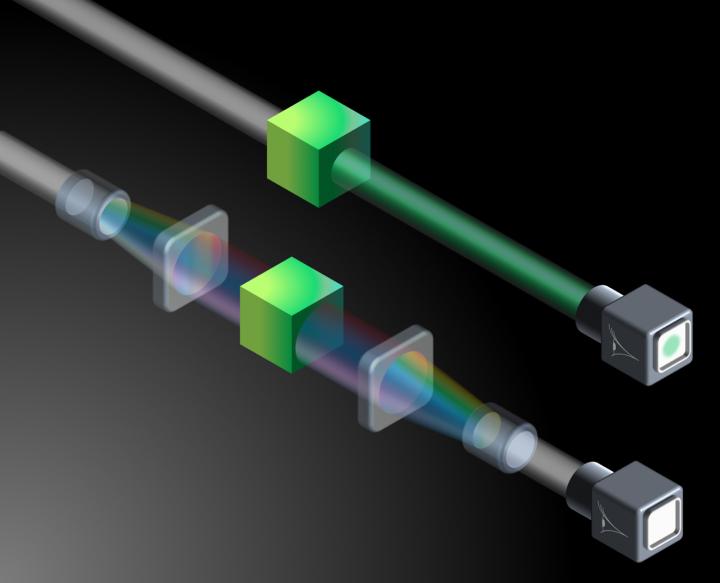 my two daughters, wife and I were especially intrigued by the Cloak of Invisibility. You may recall the cloak had been handed down to the eldest in each new generation of Potters, which included Harry's father James Potter. Following James's death, at the hands of Lord Voldemort, Hogwarts headmaster Albus Dumbledore kept the cloak in his safekeeping until Harry enrolled at the school. Once enrolled, Dumbledore gave the cloak to Harry as a Christmas present anonymously, with the instructions to "use it well."
In the latest issue of Optica, The Optical Society's journal for high impact research, a new approach to invisibility cloaking is described that initially can be used to secure data transmissions and help improve sensor technologies. The new technology is based on the manipulation of the frequency of light waves as they pass through an object, a fundamentally new approach that overcomes critical shortcomings of existing cloaking technologies.
Most existing cloaking devices involve altering the paths that light follows so that waves propagate around, rather than through, an object. Another approach, called "temporal cloaking," adjust the propagation speed of the light in a way that the object is temporarily concealed as it passes through the light beam during a prescribed length of time. In either method, different colors of an incoming light wave must follow different paths as they travel through the cloaking device and end up taking different amounts of time to reach their destination. This alteration of the wave's temporal profile can make it apparent to observers that something is not as it should be.
Current fiber optics based telecommunications networks use broadband signals to move information around. The new technology has the potential to be used to selectively make different wavelengths of light invisible on a fiber, preventing a hacker from probing a fiber connection with broadband light and collecting a transmission. The new cloaking device technology shifts colors toward regions of the spectrum that will not be affected by propagation through the object. For example, if the object reflects green light as in the figure, then light in the green portion of the spectrum might be shifted to blue so that there would be no green light for it to reflect. Then, once the wave has cleared the object, the cloaking device reverses the shift, reconstructing the wave in its original state.
It may be a while until we can get our hands on a Cloak of Invisibility like the one Harry used. In the meantime, and with regards to this emerging technology, it is best to follow Dumbledore's instructions to "use it well."
References:
Spectral cloaking could make objects invisible under realistic conditions:
https://www.eurekalert.org/pub_releases/2018-06/tos-scc062518.php
Full-field broadband invisibility through reversible wave frequency-spectrum control: https://www.osapublishing.org/optica/abstract.cfm?uri=optica-5-7-779
|
|
|
Converging Networks in Enterprise Buildings
|
The number of wireless devices accessing the internet through Wi-Fi in today's public access buildings is increasing exponentially. From personal wearable devices, to cell phones, tablets, and building management and video surveillance systems, these devices stress even the most robust network infrastructures. Additionally, public buildings such as schools, hospitals, courthouses, hotels, convention centers etc., must provide signal coverage to emergency first responders. Both large and small businesses are looking for solutions that will provide a smooth and interruption-free communication experience for their customers. A single mode fiber network with a distributed antenna system (DAS) and small cell technology can solve this problem and facilitate the convergence of IT, industrial automation, security, building climate control, and other future networks.
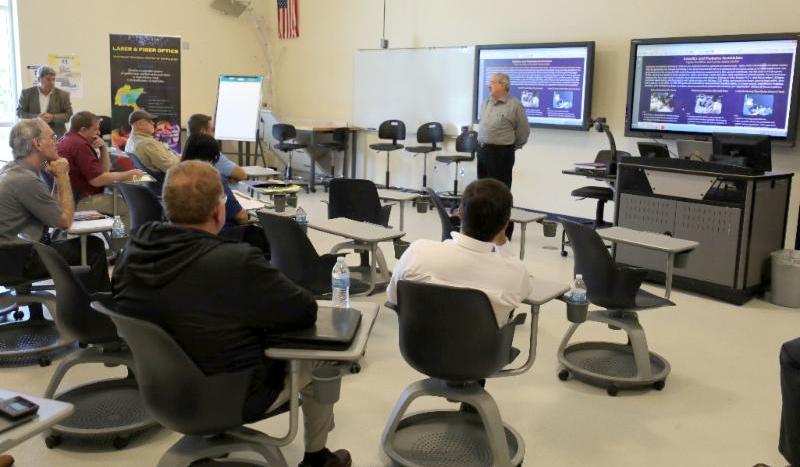
These and other emerging topics were covered at the one-day seminar hosted by LASER-TEC in partnership with PCS Fiber, Corning Optical Communications, Spider Cloud, and Notora at Indian River State College (IRSC) on June 26, 2018. Participants included personnel from construction and building management companies, IT and telecommunications from local utilities, US military testing range engineering, and IRSC staff and faculty. "LASER-TEC provides training for incumbent workers in these emerging technologies at the Fort Pierce campus and also online. This ensures that the current workforce can quickly update its skill-sets to meet the swift changes in these ever-growing fields," said Dr. Chrys Panayiotou, Principal Investigator of LASER-TEC.
To learn more about LASER-TEC, please contact Dr. Chrys Panayiotou at 772-462-7621 or cpanayio@irsc.edu.

|
|
|
|
MPEC Hosts Nuts, Bolts & Thingamajigs Camp
|
The Midwest Photonics Education Center (MPEC) hosted 15 campers at Indian Hills Community College (IHCC) in June for the Nuts, Bolts & Thingamajigs Summer Manufacturing Camp. The campers ranged in age from 12-16 and participated in a four-day hands-on camp utilizing the engineering design cycle as they designed and built a variety of products and participated in multiple activities.
Campers used digital fabrication tools, CAD software, and CNC machines to produce fidget spinners and engrave a nameplate. The campers also utilized an Epilog 75 Watt laser engraving system to cut and engrave parts. Campers assembled a robot kit, a laser kit, and a USB solar charging unit using a soldering iron and hand tools. The campers toured 7 of the ATC advanced manufacturing programs and participated in various other hands-on activities including welding and virtual welding. Campers also had the opportunity to tour 3 local manufacturing plants.
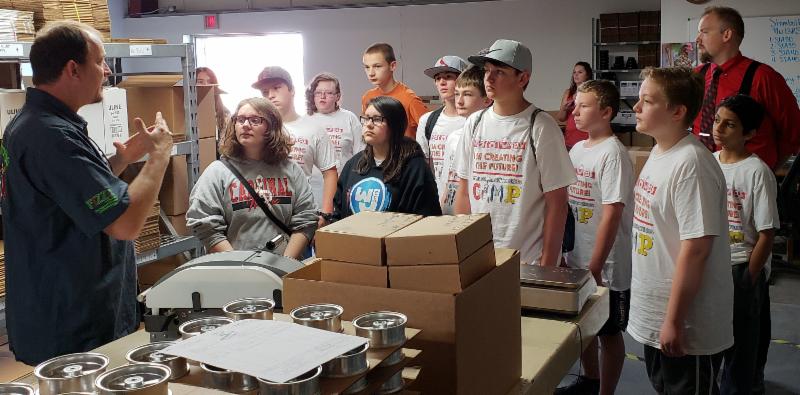
The first company was Frog Legs Inc. and Fizzix Manufacturing where owner Mark Chelgren discussed entrepreneurship, product design, and wheel chair suspension forks and caster wheel production manufacturing. The second company was Agri-Industrial Plastics Company in Fairfield, a plastic blow molding manufacturer, where campers learned about the blow molding processes and saw several robots in action. The third company was John Deere in Ottumwa. Campers toured the Deere production facility where agricultural products such as round and square balers, mower conditioners, and windrowers are manufactured.
 |
|
Pictured is Frog Legs, Inc. owner and entrepreneur, Mark Chelgren (left), and NBT campers along with Laser Instructor, Michael Shay (right).
|
Collaborations between MPEC, Agri-Industrial Plastics Company, John Deere, and Frog Legs Inc. made the camp possible. Nuts, Bolts & Thingamajigs was sponsored by the MPEC and funded by a grant from the Foundation of the Fabricators & Manufacturers Association (FMA) Nuts, Bolts, and Thingamajigs Foundation and MPEC.
Since 2003, FMA's foundation, Nuts, Bolts, & Thingamajigs, has awarded grants annual to trade schools and community or technical colleges capable of hosting a summer camp program for kids ages 12-16. Summer camps have been a successful way of introducing middle and high school students to the fascinating, high-tech career choices available to them in today's automated manufacturing industry. NBT grants provide a 3 year funding cycle as follows: Year 1-$2,500, Year 2-$1,500, Year 3-$1,000. Grants can be used to fund materials, supplies, travel, printing, publicity, contracted services, salaries, and other camp related expenses. Interested schools can apply for NBT grants from
July 1, 2018 through December 1, 2018 and learn more information at
https://www.nutsandboltsfoundation.org/grants.
|
|
|
|
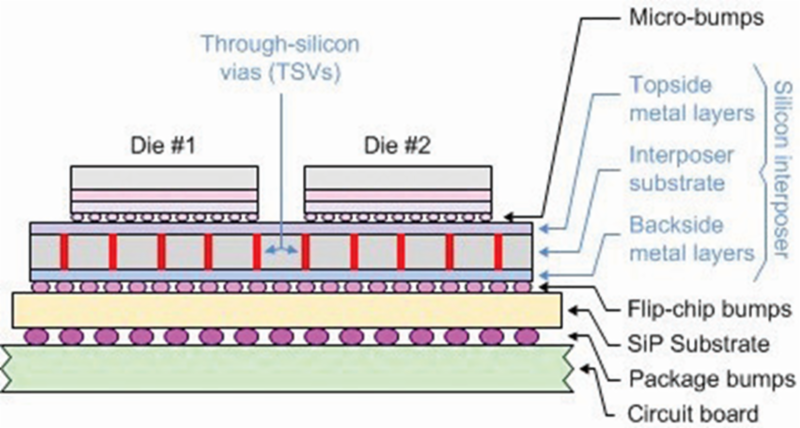
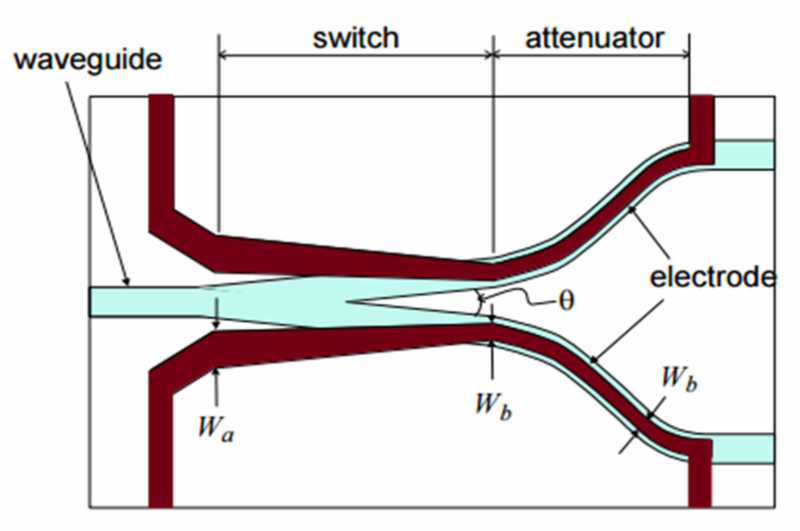
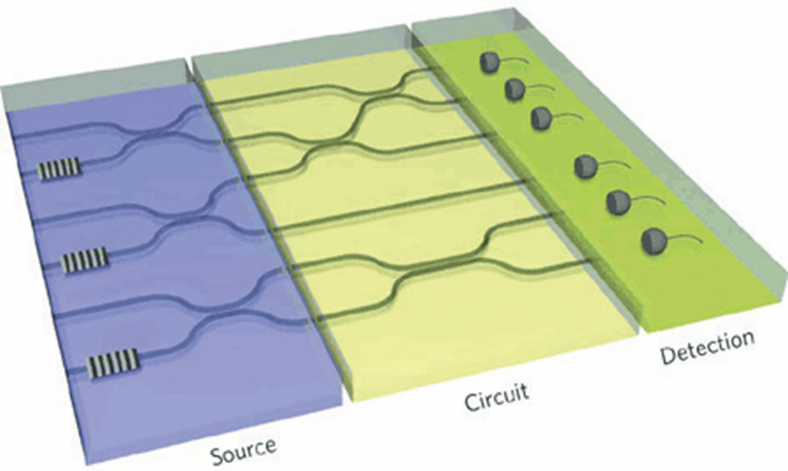
Figures and Images for Integrated Photonics
|
Did you know? OP-TEC has compiled PowerPoint slides containing the figures and images from the Integrated Photonics textbook.
Figures and Images for Instructors (PowerPoint and PDF): One download contains separate files for each module, allowing for ea
sy use and organization. Click here to access the resource.
|
|
|
|
Indian Hills Community College
Ottumwa, IA
|
|
Indian Hills Community College
Ottumwa, IA
|
| WomenTech Educators Video Blog |
Now Accepting Questions on How to Recruit & Retain Women in STEM & CTE
Have questions about how you can increase your enrollment of female students in your STEM/CTE courses? Need help overcoming a recruitment or retention challenge specific to your program and school?
Now is your chance to get your question answered in a personal video from Donna Milgram-IWITTS Executive Director and developer of the WomenTech Educators Training. Answering questions is Donna's favorite part of providing professional development to help educators move the needle for women in STEM and CTE, so she can't wait to get started!
Send in a question by July 3rd, and Donna will start answering questions in her new "Ask Donna" video blog launching the week of July 9th. Donna's coaching is usually limited to WomenTech Educators Training School Teams, so don't miss this opportunity to *Ask Donna* your questions on broadening participation. Keep an eye on your inbox here for Donna's first video!
|
|
|
The national and regional photonics centers will host the next annual in-person OPCN network meetings and photonics industry site visits at the HI-TEC Conference, July 23-26, 2018 in Miami, FL.
The HI-TEC Conference provides a wonderful opportunity for educators to learn, network, give presentations, share best practices, and disseminate project resources with other STEM educators.
OPCN meetings and events are being planned for the HI-TEC Preconference on Monday and Tuesday, July 23-24. The general conference keynotes, presentation sessions, and exhibits will take place on Wednesday and Thursday, July 25-26. Be sure to visit the photonics booths #18-19.
As in previous years,
OP-TEC will be offering conference registration codes for OPCN representatives to attend. OPCN Coordinators and Members will receive priority for these free registrations. Actively reporting OPCN coordinators may also request reimbursement for airfares following OP-TEC guidelines.
We hope that all OPCN members will be able to attend July 23-26 in Miami!
|
|
|
|
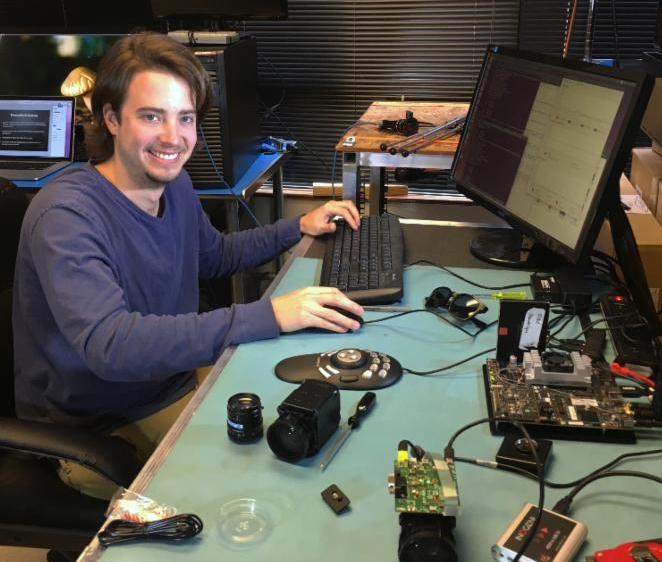
Originally pursing a degree in mechanical engineering with a concentration in motorsports,
Alex Voytik
. soon realized these industries weren't the best fit for him. Alex sought advice from his mother was an electronics professor at Central Carolina Community College (CCCC).
"My mom told me Laser and Photonics Technology was an emerging program with smaller class sizes," Alex recalls. After researching and hearing about previous graduates from CCCC's Laser and Photonics Technology program," he says, "it was clear that there was a multitude of opportunities and plenty of room for a successful career upon completion of the program." A conversation with laser and photonics professor Gary Beasley gave him the information he needed to make a decision.
Alex's biggest challenge in the Laser and Photonics Technology program was simply keeping up with his work and studies.However, Alex's dedication to finding a career drove him to succeeding and in 2015, he graduated from CCCC with an associate of applied science degree in laser and photonics technology.
Alex works as a camera systems engineer for Aqueti, Inc., a startup company in Durham, North Carolina,and a world leader in large-array camera video capture and rendering. He describes his work this way: "My role is fabricating and creating cameras and operating them on live television. I also help with tea
r down and maneuvering of the equipment from location to location."
Alex expects his work to expand and change as the field grows. "If you are looking for a career that's always changing and really interesting, plus you enjoy working hard," he says, "then a career in lasers and photonics is for you."
|
|
|
The Committees of the Optics and Photonics College Network are dedicated to sharing expertise, best practices, resources, and advice on issues of importance to photonics technician educators at colleges throughout the United States.
|
Professional
Development
Committee
Anca Sala, Chair
|
Student Recruiting
Committee
Chair TBD
|
Program Assistance Committee
Gary Beasley, Chair
|
Equipment Committee
Frank Reed, Chair
|
For Previous Issues of the OPEN Newsletter please visit OP-TEC's
News Page.
|
|
|
|