The Ohio Water Resources Center Newsletter
Issue 5 | Volume 6 | May 2024
| |
|
The National Competitive Grants Request for Proposals (RFPs) has been announced by the U.S. Geological Survey (USGS). Three distinct funding opportunities have been announced: National Competitive Grants (General), Aquatic Invasive Species (AIS) and Per-and Polyfluoroalkyl Substances (PFAS). The goals of the National Competitive Grants programs include encouraging collaboration between the USGS and university scientists in research on substantial national and water resources issues, promoting the distribution of research results from projects funded under the program, and assisting in the training of scientists in water resources.
The Water Resources Research Institutes hosted a webinar that focused on the full proposal process and funding priorities. A recording of the webinar is available.
Please note the May 30th deadline listed on the RFPs is for institutes, such as the Ohio Water Resources Center (Ohio WRC), to apply. For Ohio investigators, project proposals must be submitted via email to the Ohio WRC (ohiowrc@osu.edu) by May 16th, 2024 at 5 p.m. To allow us to plan, researchers interested in applying are highly encouraged to reach out to the Ohio WRC as soon as possible.
| |
The first PFAS National Drinking Water Standard was finalized | |
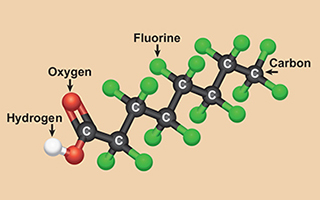
On April 10, 2024, the Environmental Protection Agency (EPA) issued the first national, legally enforceable drinking water standard for certain per- and polyfluoroalkyl substances (PFAS). PFAS are a large group of chemicals commonly used in everyday products that are resistant to heat, oils, stains, grease, and water. PFAS molecules are composed of a chain of linked carbon and fluorine atoms. Due to the strength of carbon-fluorine bonds, these manmade chemicals are extremely difficult to degrade. PFAS are often referred to as “forever chemicals” because they persist in peoples' bodies and in the environment without degrading over time.
Legally enforceable levels were established for several PFAS individually or in mixtures. The MCL for PFOA and PFOS individually was set to 4 parts per trillion (ppt). The MCL for PFHxS, PFNA, and GenX individually was set to 10 ppt. A hazard index was established for mixtures in which two or more of the following PFAS are detected: PFHxS, PFNA, GenX, and PFBS.
Public water systems (PWSs) must follow several requirements in the next five years to comply with the new regulations. By 2027, PWSs must complete initial monitoring of these PFAS and provide the public information regarding the concentrations of these PFAS in their drinking water. If the drinking water shows non-compliance, PWSs must implement solutions to reduce the levels by 2029. Beginning in 2029, PWSs must take action to reduce PFAS in drinking water if the MCLs are violated and notify the public of non-compliance. It is estimated that 6-10% of the PWSs will have to take action to reduce the levels of PFAS. The final regulation is expected to reduce exposure for approximately 100 million people, prevent thousands of deaths, and reduce tens of thousands of illnesses.
| | | |
Studies reveal presence and distribution of PFAS | |
Per- and polyfluoroalkyl substances (PFAS) present a unique water-quality concern because they can stay in the environment for a long period of time. It is of interest to understand where PFAS are present in water and at what levels.
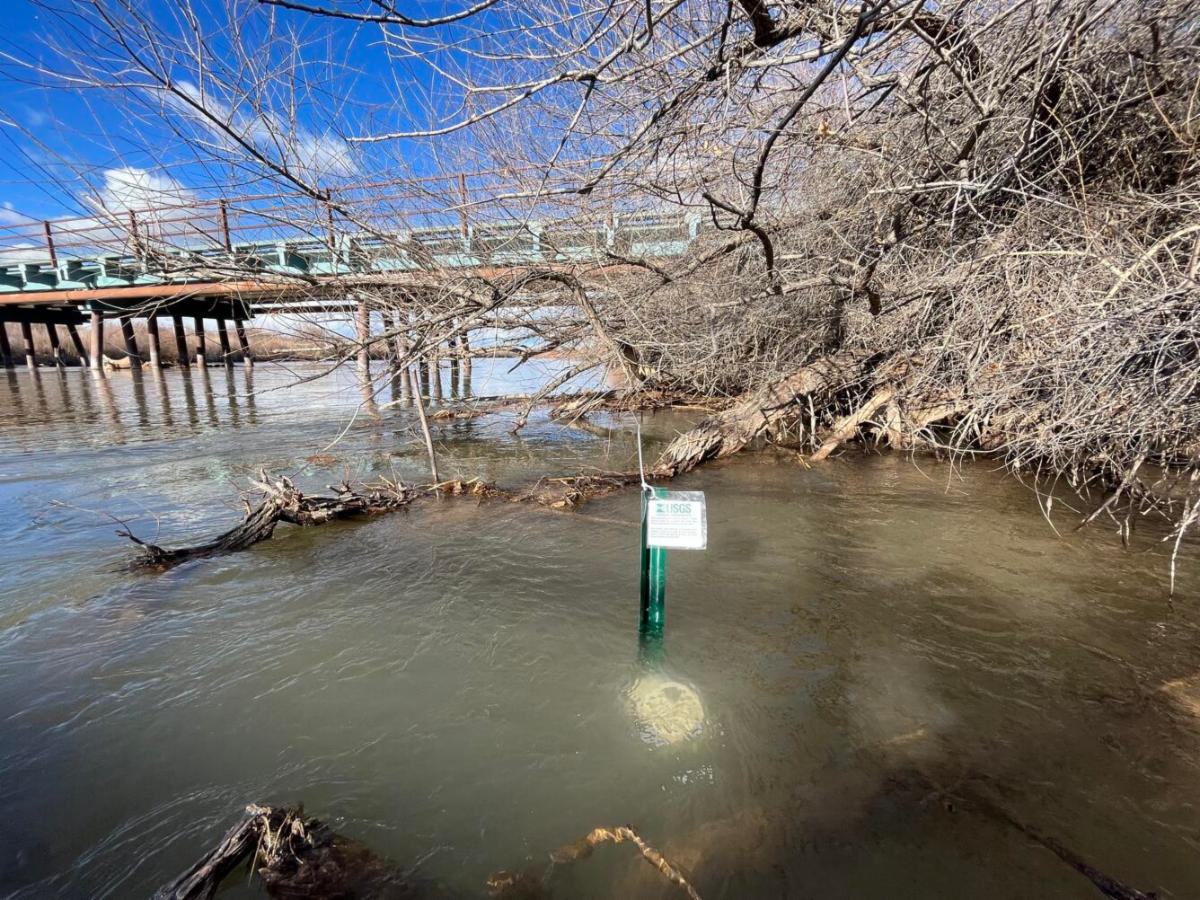
To understand the presence of PFAS in groundwater wells and surface water sites in New Mexico, the U.S Geological Survey (USGS) performed an initial study in New Mexico in between August 2020 and October 2021. Results showed PFAS in all major rivers with the highest concentrations being downstream of urban areas. A follow-up USGS study examining water quality in New Mexico also found that urban areas significantly contributed to the levels of PFAS in the Rio Grande. PFAS levels were about 10 times higher in the river downstream of the urban area compared to upstream. The levels of PFAS can change over 24 hours due to wastewater discharge, stormwater that washed PFAS off streets, and other sources. This research highlights how urban areas can impact the quality of river systems.
| | | |
|
What's in your tap water? Report reveals contaminant levels in Columbus
Via NBC4i, Apr. 8, 2024
River rise: all five dams stored water after heavy rainfall
Via Dayton Daily News, Apr. 8, 2024
EPA: flood leads to fishkill and pause in cleanup efforts
Via Morning Journal, Apr. 8, 2024
Marietta begins cleanup, recovery following flood
Via News and Sentinel, Apr. 8, 2024
PFAS destruction solutions advance as EPA drinking water standard looms
Via Waste Dive, Apr. 7, 2024
Improved testing for PFAS in Cleveland water will begin later this year
Via limaohio.com, Apr. 19, 2024
| |  |
|
ODNR to test local drinking water for fracking waste contamination
Via Athens County Independent, Apr. 9, 2024
Department of Energy announces $75 million for the National Alliance for Water Innovation to advance desalination and water reuse technologies
Via US DOE, Apr. 11, 2024
As bans spread, fluoride in drinking water divides communities across the US
Via USA Today, Apr. 10, 2024
Ohio EPA awards grants for environmental education
Via SpectrumNews1, Apr. 17, 2024
Ohio EPA, ODNR to perform comprehensive water study in central Ohio
Via Highland County Press, Apr. 19, 2024
| | |
|
Proposal of section 401 and Wetlands Water Quality Standards Rules (OAC Chapters 3745-1 and -32)
The Ohio EPA proposes to amend the following rules of the Ohio Administrative Code (OAC): Water Quality Standards (WQS) rules package and Section 401 rules package. The Agency invites all interested parties to comment on these rules and will hold combination in-person and virtual public hearing per package. During the hearings, the public may submit written and/or oral comments on the record about the proposed rules. Both hearings will be held on May 9, 2024. The Wetlands WQS package hearing will be held at at 1:30 p.m., with the Section 401 hearing to follow at 2:15 p.m. The in-person hearings will be located at the State Library of Ohio, 274 E. 1st Ave., Columbus, OH 43201. Virtual attendees must register in advance for the WQS and Section 401 hearing separately. All comments received at the hearing or via email must be submitted to dsw_rulecomments@epa.ohio.gov by close of business on May 9, 2024.
Ohio EPA: Rulemaking Governing Maximum Contaminant Levels and Point-of-Entry Devices
Ohio EPA Division of Drinking and Ground Waters (DDAGW) is soliciting comments on rules within OAC 3745-81 of the Ohio Administrative Code. DDAGW has reviewed these rules to satisfy the five-year rule review requirements. Comments can be submitted by email to ddagw_rulecomments@epa.ohio.gov. Comments should be received at the above address by the close of business, May 15, 2024.
Ohio EPA: Draft TMDL Modification for Upper Sandusky River Watershed
Ohio EPA has released a draft modification of the Upper Sandusky River Watershed Total Maximum Daily Load (TMDL) document for public review and comment. The Upper Sandusky River Watershed TMDL document was approved by U.S. Environmental Protection Agency on September 29, 2004. Total phosphorus and fecal coliform TMDLs for Upper Sandusky assessment unit are being modified to account for a new discharger. Total phosphorus TMDL for the Lower Tymochtee Creek assessment unit is being modified to account for a new discharger. Comments are due by 5:00 P.M. on May 20, 2024 by email to EPATMDL@epa.ohio.gov.
| |
|
Call for Abstracts: WMAO 53rd Annual Meeting
Water Management Association of Ohio (WMAO) is hosting their 53rd Annual Meeting and Symposium - Navigating Troubled Waters: Past, Present, and Future from November 19-20, 2024. Full abstract submittal information can be found here. Presentation submission for 20-minute presentations is July 17, 2024 and student poster presentation abstracts are due October 18, 2024.
| | |
|
Request for Proposals: USGS 104G Funding Opportunities
The USGS Water Resources Research Act Program is requesting proposals for three distinct funding opportunities: National Competitive Grants (General), Aquatic Invasive Species (AIS) and Per-and Polyfluoroalkyl Substances (PFAS). For Ohio investigators, project proposals must be submitted via email to the Ohio WRC (ohiowrc@osu.edu) by May 16, 2024 at 5 p.m.
| | |
|
Conference: 2024 Ohio Stormwater Conference
May 8-10, 2024 • Sandusky, OH
The conference will be held at the Kalahari Resort and Conference Center located in Sandusky, Ohio. Environmental issues, new technologies, regulatory information and pollution prevention will be covered during the conference. The conference is built for those who are working to comply with municipal, industrial, and construction NPDES stormwater permits. Registration information can be found at their website.
Webinar: Diversity in Water event
May 9, 2024 • Virtual
The Diversity in Water Speaker Series invites leaders in Ohio's water industry from diverse backgrounds to discuss their careers. The next speaker is Tya Darden, Environmental Manager with the Ohio EPA, Division of Drinking and Ground Waters. Register to attend the virtual event held on May 9, 2024 from 5:30-6:30pm.
Webinar: Freshwater Science - Discovering a Potential Treatment for Health Effects of Algal Toxin Exposure
May 16, 2024 • Virtual
Hosted by Ohio Sea Grant, Stone Lab and the Harmful Algal Bloom Research Initiative, Dr. Steven Haller and Dr. David Kennedy will be discussing their research involving a potential treatment for microcystin exposure through probiotics. Microcystins are a health concern due to the potential to cause severe organ injury. Register in advance to attend the webinar.
Conference: 2024 AWRA/UCOWR/NIWR Water Resources Conference
September 30-Octobter 2, 2024 • St. Louis, MO
Hosted by the American Water Resources Association (AWRA), the Universities Council on Water Resources (UCOWR), and the National Institutes for Water Resources (NIWR), the conference will be held in St. Louis, MO focusing on water-related research, management, extension, and education topics. Registration will open soon.
| |
|
Get in Touch
Email: OhioWRC@osu.edu
Phone: 614-292-2807
Website: https://wrc.osu.edu
Address: 475 Hitchcock Hall
2070 Neil Avenue
Columbus, OH 43210
Follow us on Twitter
| | |
| | | |