The Ohio Water Resources Center Newsletter
Issue 6 | Volume 6 | June 2024
| |
|
On Tuesday, May 7th, over 600 fifth-grade students from schools across Columbus and Franklin County attended the annual Central Ohio Children's Water Festival at Franklin Park Conservatory & Botanical Gardens in Columbus, Ohio. The Central Ohio Children's Water Festival is a collaborative volunteer effort from Ohio EPA, City of Columbus, OSU, and local consulting companies. A goal of the festival is to promote environmental awareness of our valuable water resources.
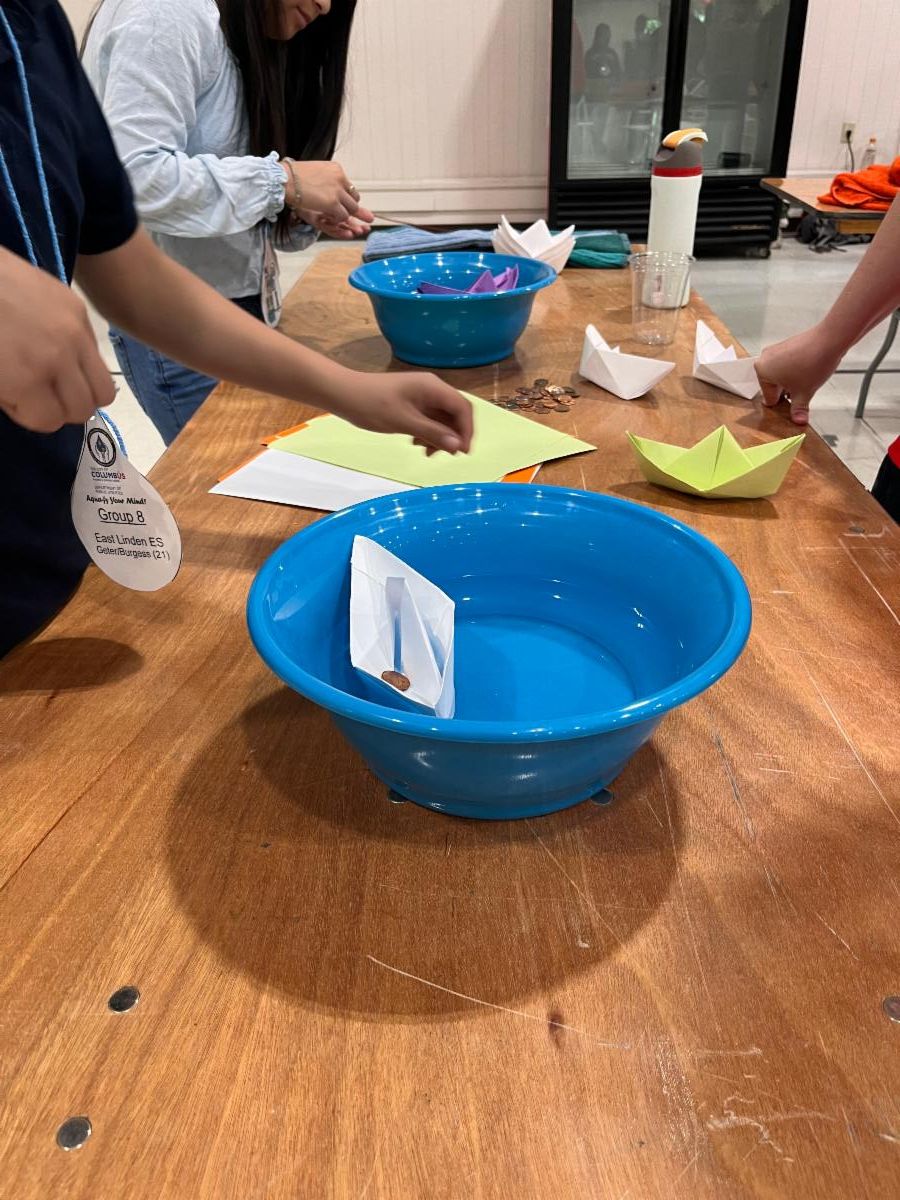
Throughout the day, students rotated through activities, including interactive displays, hands-on workshops, and fun presentations allowing the students to learn about the irreplaceable resource of water and its characteristics. The Ohio WRC provided one of the 25-minute workshops teaching the students about buoyancy and how it relates to density. Students were challenged to determine if items would float or sink based on the principles of buoyancy. Students made origami boats, followed by a friendly competition to determine how many pennies were needed to sink the paper boats.
| |
The influence of surface water-groundwater exchange on fate and transport of emerging contaminants | |
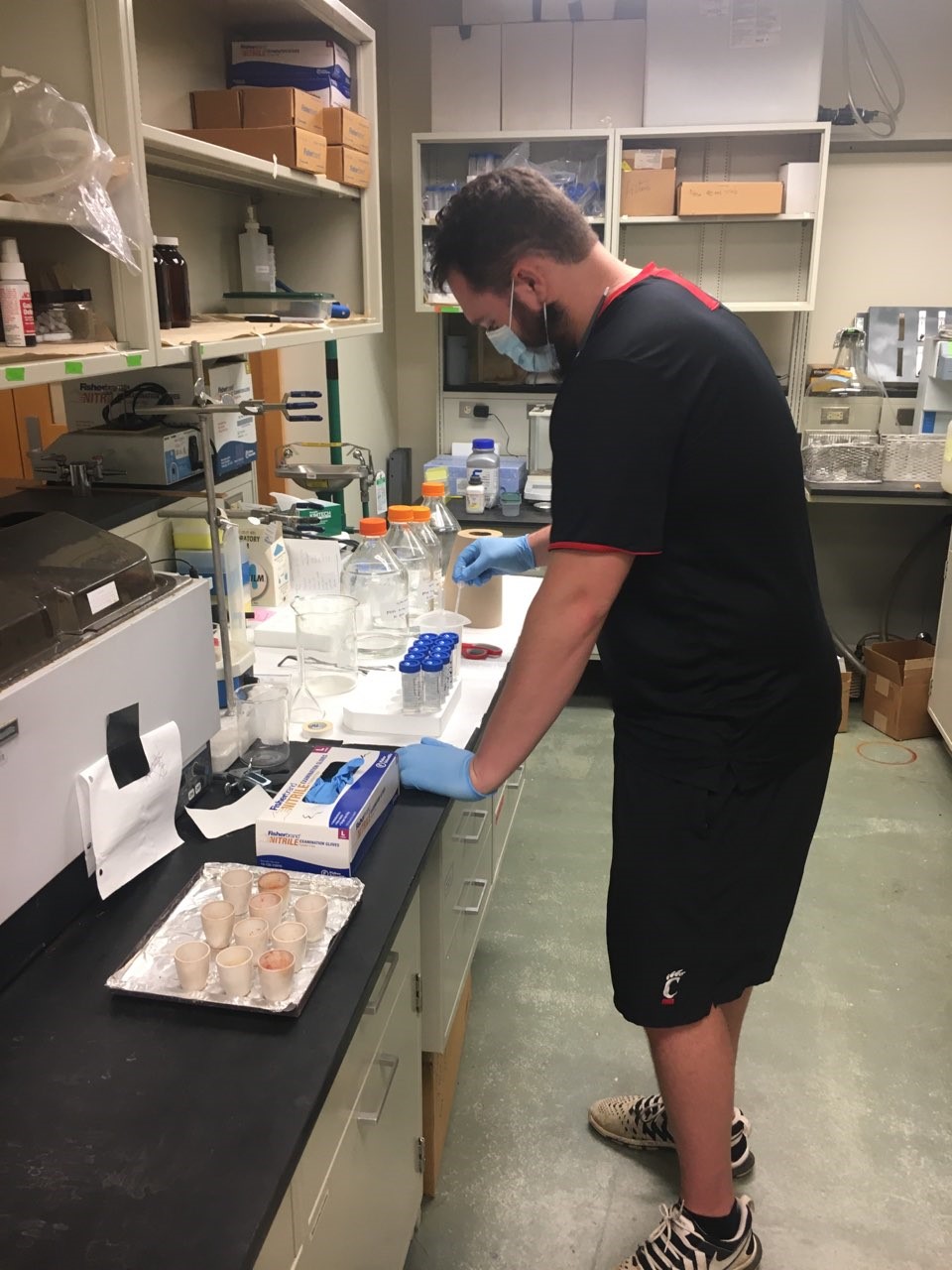
Dr. Reza Soltanian, an associate professor at the University of Cincinnati, completed an Ohio Water Resources Center funded project via a 104B subaward. Dr. Soltanian and his team investigated the fate and transport of emerging contaminants, per- and polyfluoroalkyl substances (PFAS) and volatile organic compounds (VOCs), in buried-valley aquifer systems. Hotspots of chemical activity and sorption occur in the hyporheic zone as river water and groundwater meet sediment surfaces. It is unclear how sedimentary heterogeneity and river stage fluctuations control the fate and transport of contaminants as they are transported between rivers and groundwater. The goal of Dr. Soltanian’s work was to use field monitoring and modeling to understand what aspects of sediment heterogeneity control the fate of contaminants in the hyporheic zone.
Dr. Soltanian and his team used a wide variety of techniques to characterize the fate and transport of contaminants including field studies, laboratory experiments, and computer modeling. Additionally, a customized portable gas chromatograph was developed to take VOC measurements in-situ while PFAS sorption experiments were performed to understand interactions of PFAS within the buried-valley aquifer. Results showed distinct zonation of water quality parameters and VOC concentrations which signify the important role sedimentary heterogeneity plays in controlling chemical gradients and biogeochemical hotspots. The work by Dr. Soltanian advanced the understanding of contaminant dynamics and pushed forward the methodologies and approaches used in studying emerging contaminants.
| | | |
USGS research brings new focus to strategic monitoring of wildfire impacts on water quality | |
After a wildfire, overland water flow during rainfall events can increase due to loss of canopy vegetation and changes in soil properties. This can result in flooding, erosion, and the transport of ash, pollutants, and debris to surface water.
The impacts of wildfires on water quality can be minimal to large depending on the amount of sediment, nutrients, and metals transported after rainfall. These constituents are detrimental to water quality and can result in the loss of reservoir storage capacity, stream habitat degradation, and increased treatment costs for drinking water providers.
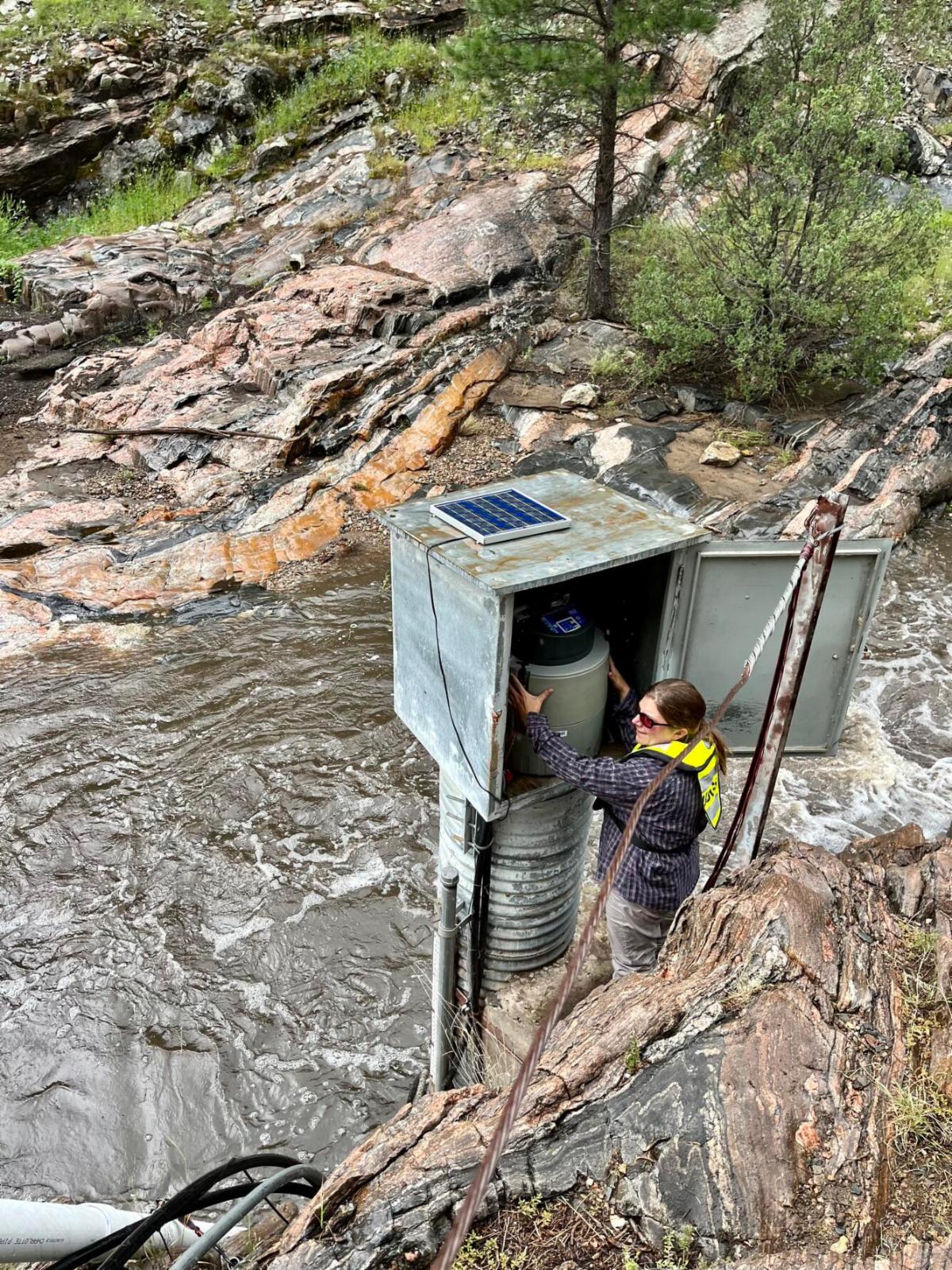
The impacts on water quality can be delayed because constituent transport is contingent on high-intensity rainstorms. This delay complicates efforts to assess water quality post-wildfire. To alleviate these complications, the USGS has developed a strategy for selecting water sampling locations and methodologies for data collection. By following the actions developed by the USGS, water effects on human, wildlife, and environmental health post-wildfire can be determined. The research by the USGS will provide water providers, reservoir operators, land managers, and emergency response agencies with guidance to mitigate changes in water quality after a wildfire.
| | | |
|
(P)FASten your seatbelts
Via Harvard Law Today, May 1, 2024
Just how dirty is your reuseable water bottle
Via News 5 Cleveland, May 14, 2024
Lake Erie technology boosts Cleveland economy, helps people get employment
Via Cleveland 19, May 1, 2024
Vance led legislation to protect Great Lakes passes Senate Committee
Via WFMJ 21, May 1, 2024
University of Cincinnati launching study on Ohio drinking water
Via Spectrum News 1, May 2, 2024
EPA announces more than $184 million for Ohio lead pipe replacement
Via EPA, May 2, 2024
| |  |
|
Ohio awards $1.17M to counties, local governments to help prevent salt runoff into water supply
Via Spectrum News 1, May 2, 2024
Pleasantville receiving OWDA low-interest loan to improve water storage tanks
Via Lancaster Eagle Gazette, May 7, 2024
H2Ohio award $2.2 million across 250 communities
Via Spectrum News 1, May 16, 2024
Agreement reached between EPA, DOJ, Norfolk Southern East Palestine derailment
Via News 5 Cleveland, May 23, 2024
Ohio Department of Natural Resources has new wetland project going near Sandusky Bay
Via The Blade Toledo, May 24, 2024
| | |
|
Proposal of Water Quality Standards Beneficial Use Designations Wave 3 (OAC Chapter 3745-1)
The Ohio EPA proposes to amend the following rules of the Ohio Administrative Code (OAC): 3745-1-10, 3745-1-13, 3745-1-14, 3745-1-24, 3745-1-27, 3745-1-28. The Agency invites all interested parties to comment on these rules and will hold combination in-person and virtual public hearing per package. During the hearings, the public may submit written and/or oral comments on the record about the proposed rules. The hearing will be held on June 6, 2024. The in-person hearing will be held in the Summer Conference Room at Ohio EPA, Suite 700, 50 W. Town Street, Columbus, OH, 43215. Virtual attendees must register in advance. All comments received at the hearing or via email must be submitted to dsw_rulecomments@epa.ohio.gov by close of business on June 6, 2024.
Ohio EPA: Rulemaking Governing Public Water Licenses
Ohio EPA Division of Drinking and Ground Waters (DDAGW) is soliciting comments on rules within OAC 3745-84. Ohio EPA will be holding a virtual and in-person public hearing on the rules on June 5th, 2024 at 10:30 AM. Stakeholders will be able to comment in-person within the Ohio EPA Summer Conference Room at the Lazarus Government Center, 50 West Town Street, Suite 700, Columbus, Ohio 43215. Virtual attendees must register in advance. Comments can be submitted by email to ddagw_rulecomments@epa.ohio.gov. Comments should be received at the above address by the close of business, June 5, 2024.
| |
|
Call for abstracts: WMAO 53rd Symposium
Water Management Association of Ohio (WMAO) is hosting their 53rd Annual Meeting and Symposium - Navigating Troubled Waters: Past, Present, and Future from November 19-20, 2024. Full abstract submittal information can be found here. Presentation submission for 20-minute presentations is July 17, 2024 and student poster presentation abstracts are due October 18, 2024.
| | |
|
Request for Applications: Service Line Inventory Assistance Program
The service line inventory development and lead service line replacement planning assistance opportunity is intended to provide support to public water systems free of charge to complete their service line inventory. Request forms are due June 28, 2024 by 3pm. More information and the form can be found here.
| | |
|
Webinar: Freshwater Science - A HABs primer
June 18, 2024 • Virtual
Hosted by Ohio Sea Grant, Stone Lab and the Harmful Algal Bloom Research Initiative, Dr. Chris Winslow will discuss up-to-date information on topics such as nutrient sources in the Maumee River watershed that drive blooms, the progress toward meeting nutrient load reduction goals, and best practices for farmers. Register in advance to attend the webinar.
Conference: 2024 AWRA/UCOWR/NIWR Water Resources Conference
September 30-Octobter 2, 2024 • St. Louis, MO
Hosted by the American Water Resources Association (AWRA), the Universities Council on Water Resources (UCOWR), and the National Institutes for Water Resources (NIWR), the conference will be held in St. Louis, MO focusing on water-related research, management, extension, and education topics. Registration will open soon.
| |
|
Get in Touch
Email: OhioWRC@osu.edu
Phone: 614-292-2807
Website: https://wrc.osu.edu
Address: 475 Hitchcock Hall
2070 Neil Avenue
Columbus, OH 43210
Follow us on Twitter
| | |
| | | |