|
by Cheryl Lowe
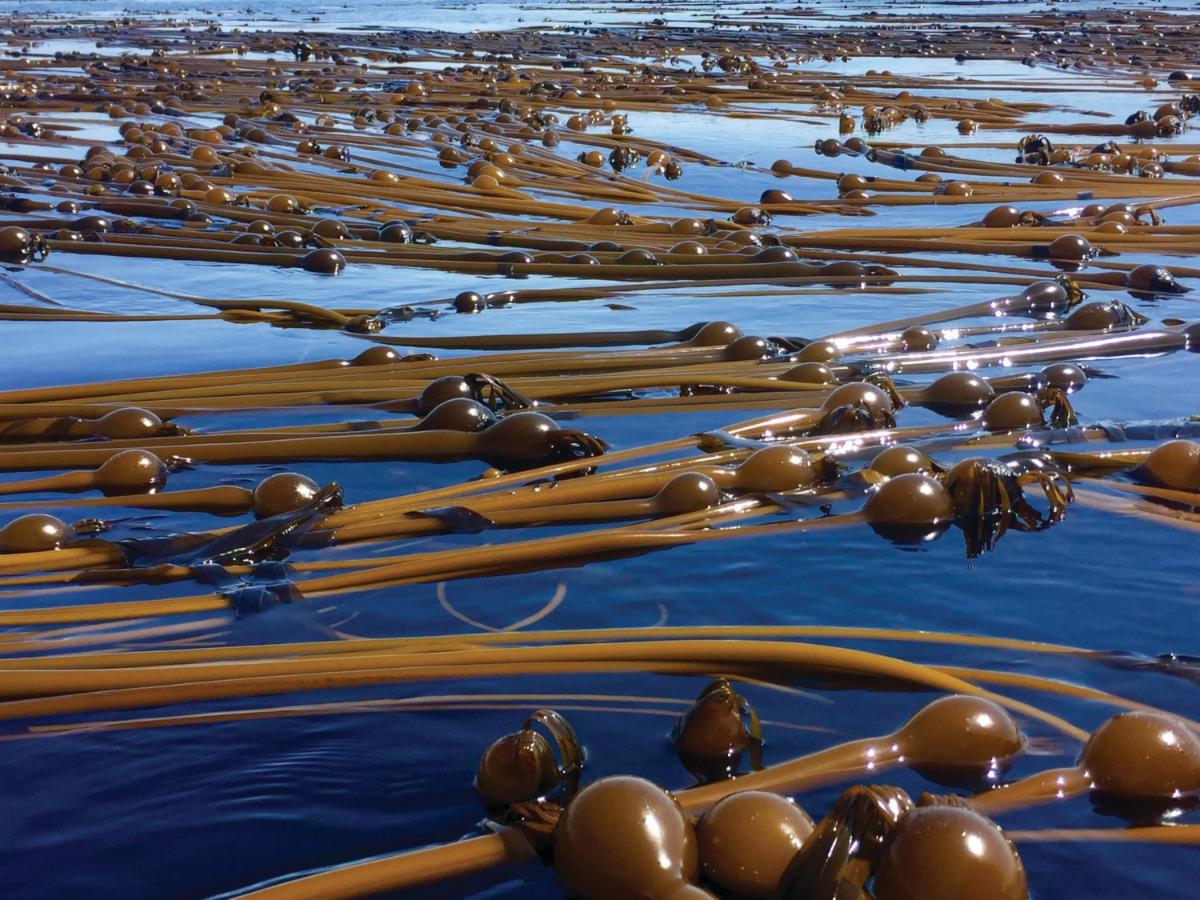
After a recent storm, I found piles of colorful kelp on the beach. As a plant-loving land-lubber, finding kelp that has washed ashore makes me feel connected to the underwater world of kelp forests and their graceful, undulating blades beneath the waves. But why did I think this would be a good topic for the NOSC newsletter article? Let me explain.
After juvenile salmon head downstream and make the transition to salt water, they seek out shelter, food and refuge from predators. Kelp forests and eelgrass beds serve as critical nursery grounds for young fish. Healthy populations of small fish support stable marine bird and mammal populations, so the importance of kelp moves up the food chain.
Unfortunately, floating bull kelp beds, especially in south and central Puget Sound, have been declining. Scientists have been trying to understand why and what can be done to change it. Last month, the Northwest Straits Commission published their 2023 update to the 2020 Puget Sound Kelp Conservation and Recovery Plan. I used the report to dive a little deeper (without getting wet) into why kelp is such an attractive habitat, especially for juvenile salmon, juvenile rockfish, and forage fish such as sand lance, herring and surf smelt.
| |
|
Food
Young fish love to eat zooplankton, and it turns out a lot of fish prefer specific zooplankton species called harpacticoid copepods. These are a group of zooplankton known to be associated with kelp and seagrasses. So, if you were a young fish, you’d find the best eating, plus some good hiding places from predators, in and immediately adjacent to kelp forests.
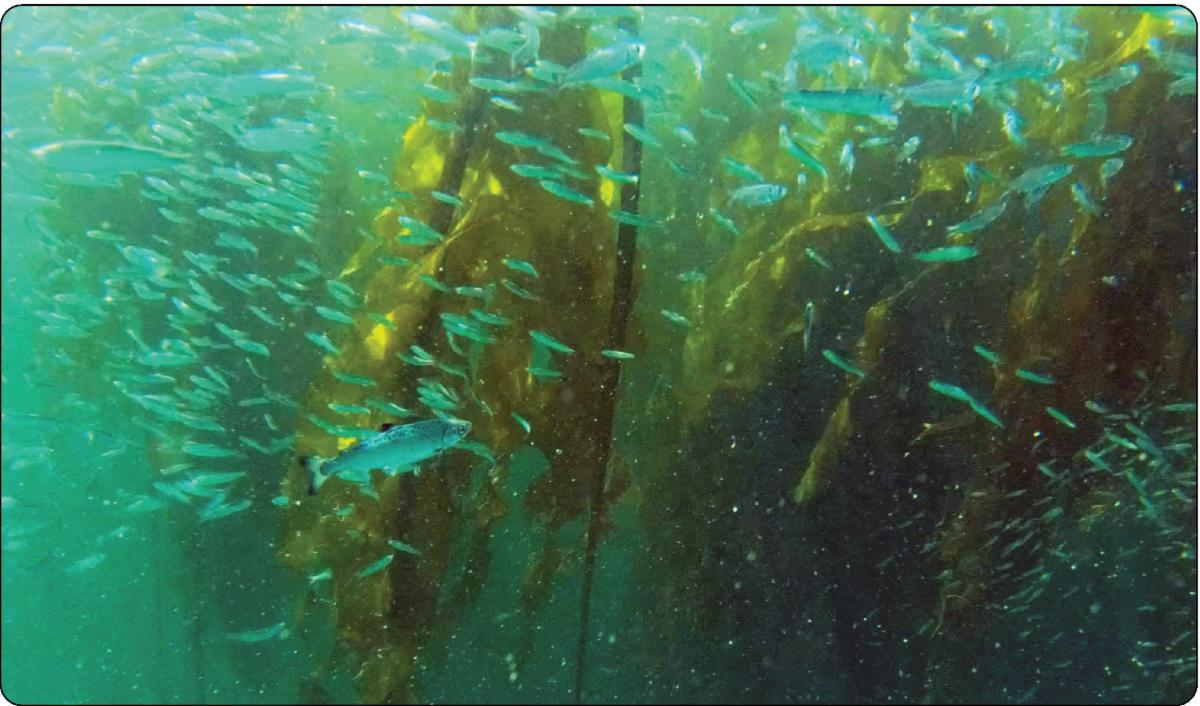
Once juvenile salmon get a little bigger, they start feeding on small fish, like young herring and sand lance, leading to faster growth and a greater chance of survival. This shift in their diet usually happens in nearshore habitats, often in and near kelp beds. Some experts think that the dark background of kelp forests makes it easier for juvenile salmon to see the silvery sides of young Pacific herring, and the tangled kelp blades might make it more difficult for small schools of herring to evade their predators.
Scientists studying the marine food web have traced kelp-derived carbon (∂13 C) isotopes in a variety of North Pacific fish. They found kelp-derived carbon compose anywhere from 15% to over 90% of the carbon in certain species of rockfish, salmon and greenlings, demonstrating how important kelp is in the larger marine food web.
| |
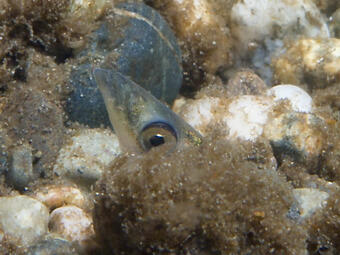
Upper right: Pacific sand lance sticking head out of sediment. Photo courtesy of USGS. Above: Juvenile and adult Chinook salmon feeding on the large schools of young-of-the-year herring within kelp beds. Photo courtesy of Frontiers in Ecology and the Environment | |
|
Safe Haven
One article I read suggests that because bull kelp forests can occupy a range of water depth from very shallow to about 90 feet, they may also provide extensive vertical shelter, enabling juvenile fish to explore more expansive areas while still providing protection from predators. Detached kelp, or drift mats, are also important vegetated habitats offshore.
The Northwest Strait Commission’s Kelp Plan lists references to a number of studies, including a recently published study of juvenile salmon and forage fishes in the nearshore kelp beds of Crescent Bay and Freshwater Bay in Clallam County. (Shaffer et al, 2023) J. Anne Shaffer and her colleagues compiled and analyzed seven years of snorkeling data to give us a glimpse of fish activity in the underwater world of floating kelp. I’m sure there are lots of entertaining online videos of forage fish and juvenile salmon in kelp forests, but for me, this article and related ones helped me visualize life in our own local kelp beds.
The majority of salmon, herring, surf-smelt and sand lance they observed were juveniles. In the two bays they studied, they observed only juvenile coho and Chinook. I found it interesting that juvenile chum and pink salmon were not seen in any of the seven years of this study. The authors suggest this might be related to and is consistent with which fish species were/are successfully spawning in the nearby Elwha River during the time period of the study.
Kelp in Decline
The 2020 Puget Sound Kelp Conservation and Recovery Plan reports that “Cumulative impacts from human stressors threaten kelp. These impacts include degraded water quality from pollution, nutrient loading, increased turbidity, and sediment deposition; introduction of invasive species; and alterations to food-web dynamics from commercial and recreational fishing. Additionally, warming ocean waters and other impacts from climate change pose new and intensifying threats to kelp resilience that often exacerbate the negative effects of other stressors.”
| |
|
Connection to Our Work
All that sounds discouraging, but there is something we can do to help. Fresh water inputs into marine waters, especially in nearshore bays, can be an important source of cooler water to reduce impacts of warming oceans. In other words, shaded riparian streams help keep kelp beds healthy. So, the trees and shrubs that NOSC volunteers and staff have planted in riparian restoration areas over the years not only benefit salmon in the streams but continue to do good work by keeping kelp beds healthier.
So, if you find kelp washed up on the beach or just enjoy watching shorebirds diving and catching fish in the kelp beds, take a moment to picture in your mind the copepods in the kelp forest, sand lance and herring darting about, juvenile salmon and rockfish chasing them, and the connections you have helped make when you support stream restoration work by the Salmon Coalition and others.
Juvenile fish among Bull Kelp. Photo courtesy of The Pacific Salmon Foundation
| |
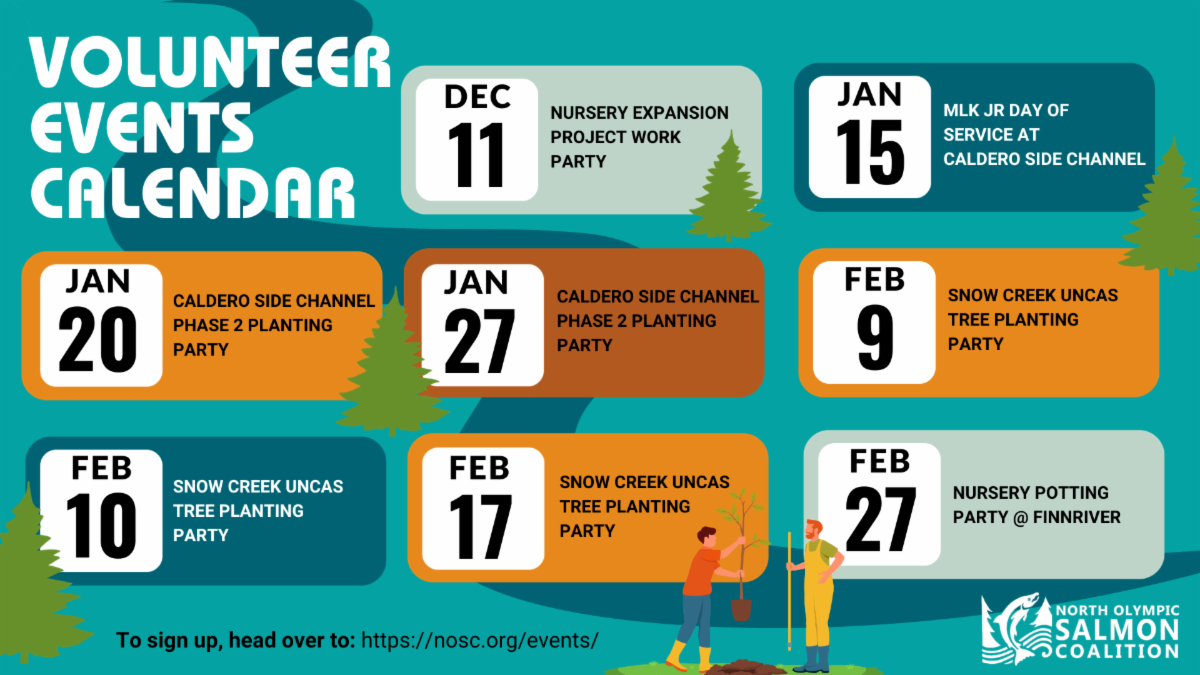
Upcoming Nursery Expansion Work Party | |
|
We are expanding our nursery in partnership with Jefferson County Conservation District to make room for more riparian plants along our waterways! Come work alongside our Washington Conservation Corps crew as we break ground on the new expansion and prep the site for installment of potted trees and shrubs.
Refreshments, gloves and tools will be provided.
Event will take place from 1:00-3:00pm at Finnriver Cidery. For more information and to sign up click the RSVP button below.
| |
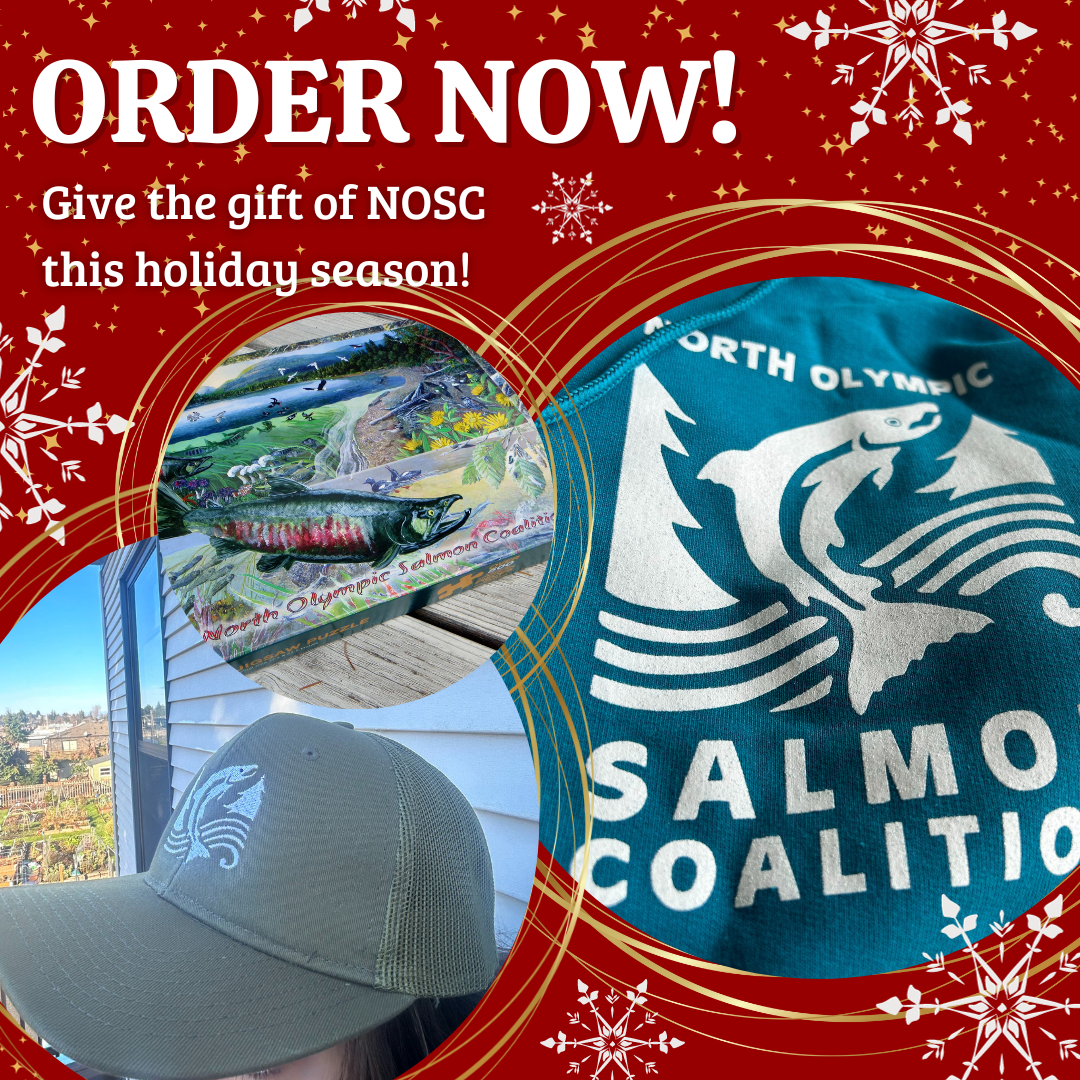
Order NOSC Merchandise for the Holidays! | |
|
Give the gift of NOSC this holiday season!
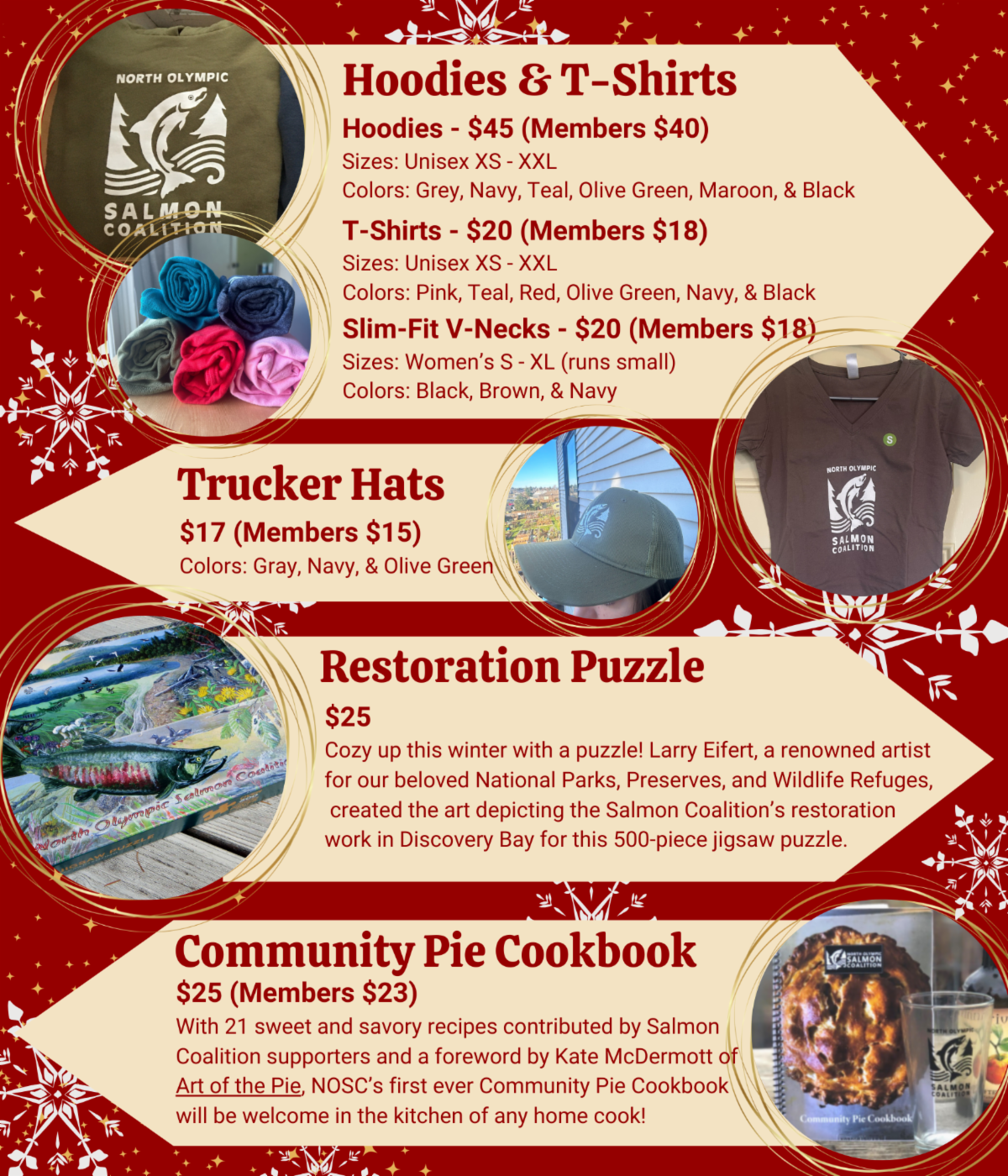
We will be accepting pre-orders for NOSC merchandise for pick-up from 12 – 5pm in Chimacum on December 11th and Port Angeles on December 18th. Email outreach@nosc.org to pre-order. Please include what size you are looking for and we can let you know what colors are available.
A NOSC membership is a great gift for the service-minded individual who doesn’t need another “thing” or you can make a donation in the name of a friend or family member.
Visit Donate | North Olympic Salmon Coalition (nosc.org) for more information on gifting a Membership.
| |
Chum Spawner Survey Recap | |
 | 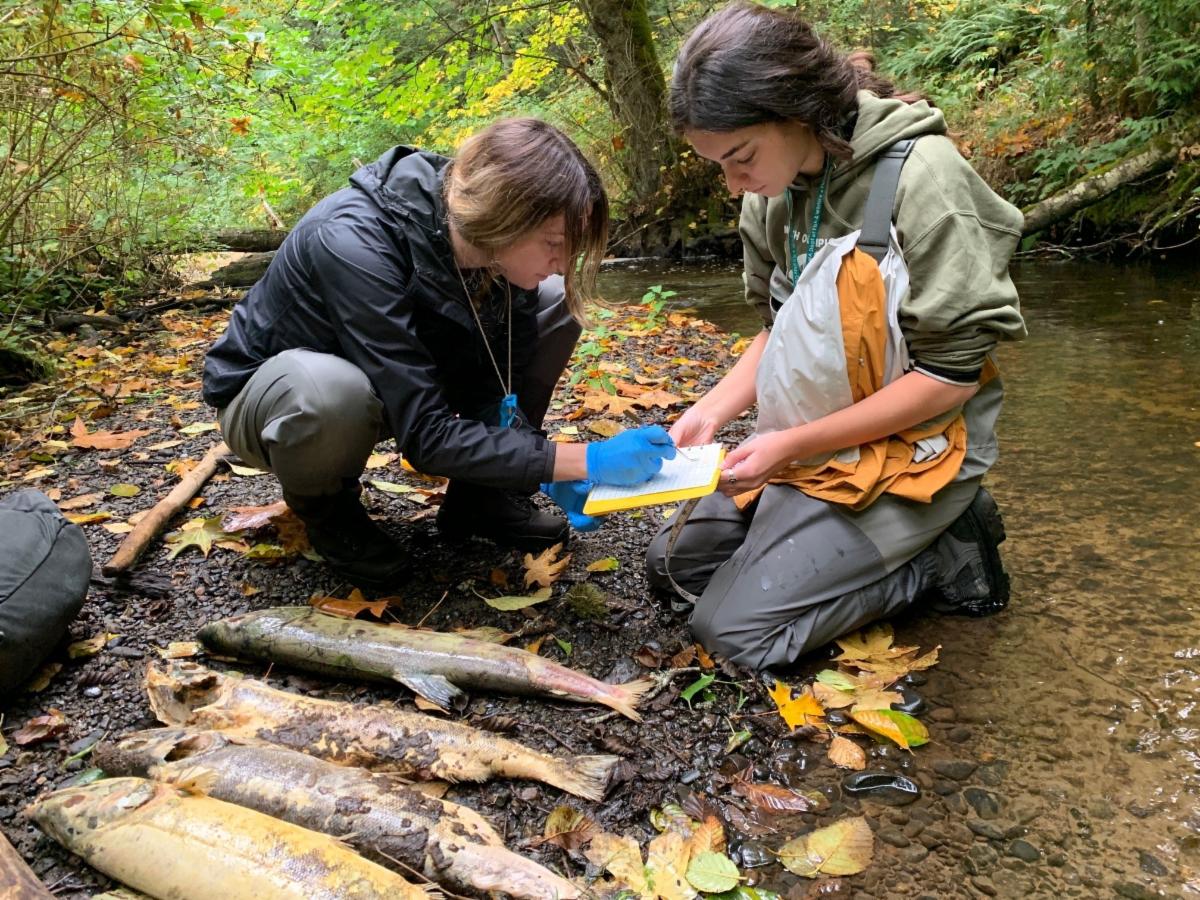 | The 2023 summer chum survey season on Chimacum Creek has come to a close. Beginning in late August and ending in late October, 31 intrepid volunteers walked the lower reaches of the creek in search of ESA-listed Hood Canal summer chum salmon, tallying both live and dead fish, while also taking scale samples from carcasses. This data will be sent down to the Washington Department of Fish and Wildlife’s fish ageing lab in Olympia. One of the most important things WDFW scientists can deduce from scale samples is age. Like the rings of a tree, salmon scales form distinct patterns, called annuli, as the fish grows. Scientists can use these scales, along with other data collected by volunteers, to deduce not only age, but also the ocean conditions the fish experienced in their time at sea. This information is used to inform future management decisions and can provide insight into whether former decisions and restoration efforts are having a positive impact on population health. Both the Salmon Coalition and Chimacum Creek’s summer chum would like to extend a hearty thank you to all the volunteers who contributed to another successful season!
Outreach and Education Associate, Rachel Dooley, and volunteer Marissa Cox sample summer chum salmon on Chimacum Creek. Photo by Peter Jacobsen.
| |
Welcome 2023-2024 Washington Conservation Corps Members! | |
|
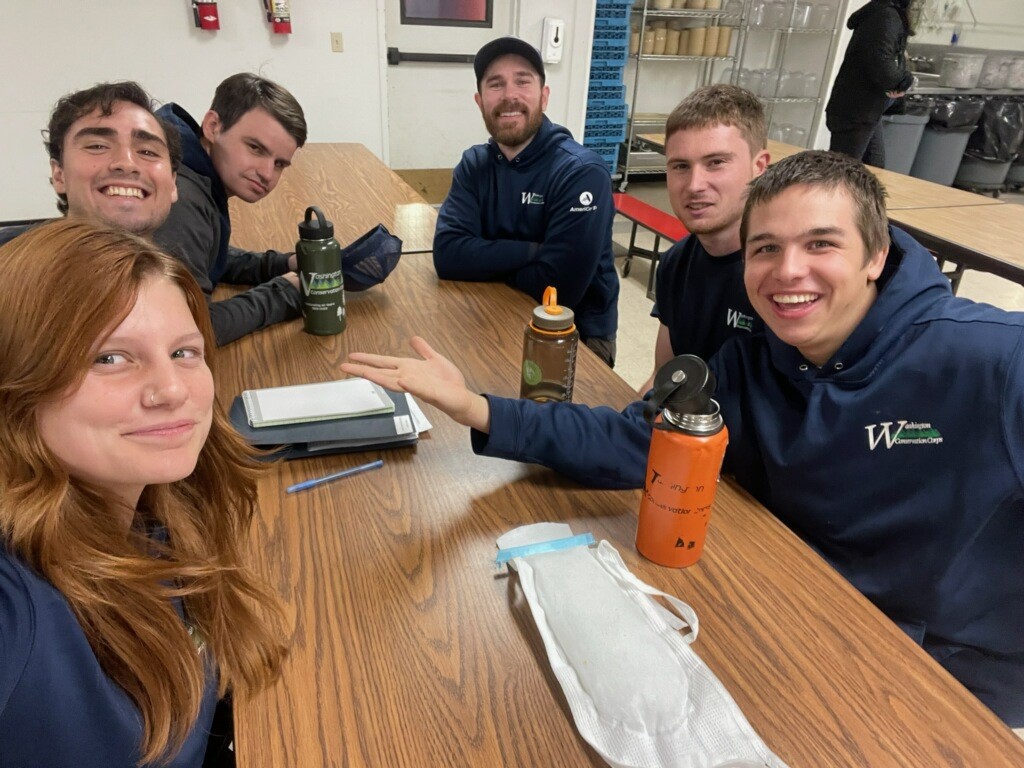
Meet our 2023-2024 WCC Crew!
We are pleased to introduce this year's WCC members! These hardworking folks are the on-the-ground brains and muscles behind many of our education, outreach, and restoration projects. They are out in the field working hard whether it’s icy and cold or just rainy and cold.
Mackenzie Murphy (front left) is originally from San Clemente, California and has always loved hiking, camping, and all things involving nature. After working in an Emergency Room as a nurse for 3 years she realized she wanted to change her career more towards animal welfare and environmental conservation. So she made the move up to Washington State to continue her education and has loved it here ever since!
Andre Oliviera (middle left) likes extra toasty Cheezits. He tries to have good energy and spreads it as much as he can. Andre likes rap/hip-hop music and his favorite animal is the macaw.
Matt Olson (back left) grew up in Silverdale, Washington and spent most of his time exploring the forests and rivers of Washington. After receiving his B.A. in environmental science from Western, he decided that he wanted a career in restoration. In his free time, he enjoys rock climbing and backpacking.
Kris Clark (back right) is the NOSC crew supervisor. He is a passionate environmentalist who aims to help where he can. When he is not working outdoors, he is probably playing outdoors with his wife and Newfoundland dog (which is often mistaken for a bear). They spend most of their time on, or in the water, but are always up for a good mountain hike.
Reece Kjeldgaard (middle right) hails from Port Townsend, Washington. He grew up riding his bike, playing music, sailing, and exploring in the woods. His heart has led him to joining the local WCC restoration crew. Outside of work, he can be found practicing Judo, or hiking somewhere in the mountains.
Carlos Allen Avila (front right) grew up in the area and has been dedicated to preserving it since he could walk. He is an avid outdoorsman and constantly works to learn how things work. When he isn’t outdoors, he is whipping up a tasty treat or developing computer programs
| |
|
Rachel Dooley (left) will serve as our Education and Outreach Associate. After completing her bachelor's degree in Environmental Science and Management at the University of Wisconsin - Stevens Point, Rachel began working for non-profits with a focus on environmental stewardship. Following her graduation she spent a year with a river cleanup organization living on a barge on the Mississippi and Ohio River. A summer of seasonal work as an outdoor educator in Yellowstone National Park solidified her desire to teach and she decided to pursue environmental education work in Washington state. In her free time, Rachel likes to create stained glass art, read memoirs, journal, hike, and kayak.
| |
Thank You for Your Support! | |
|
We had a great time at our Wine Tasting Fundraiser for the Salmon in the Schools elementary education program. We are excited to announce we exceeded our goal of raising $8,000 to support the delivery of the program to 6 elementary schools across the peninsula this school year.
Salmon in the Schools educates the next generation of salmon stewards by helping schools raise salmon in their classrooms, engaging students in hands-on activities and experiential learning about salmon in their community.
| |
|
If you’d still like to give to support Salmon in the Schools, it’s not too late! Donations can be made online, via mail, or through investment and retirement portfolios. Find out more details through the donate button below. | |
Save the Date - It's Almost Bingo Season! | |
|
Every January the Hilltop Tavern in Port Townsend dedicates NOSC as the beneficiary of Wednesday night’s Bingo! Bar Stool BINGO is $1 per round or $10 to play all 10 rounds – prizes for winners and fun to go around! All proceeds from Bingo in January will be donated to NOSC!
Join NOSC from 7pm-9pm at the Hilltop Tavern in Port Townsend (2510 West Sims Way) every Wednesday in January.
| |
Header photo: John Gussman | |
Base funding for the RFEG program comes from a grant from the U.S. Fish & Wildlife Service's Partners for Fish and Wildlife Program, a portion of state commercial and recreational fishing license fees, and excess egg and carcass sales administered by the Washington Department of Fish & Wildlife. | |
Give Us Your Feedback
Questions or Comments? Let us know what you think!
outreach@nosc.org
360.379.8051
www.nosc.org
| | | | |