|
|
 |
|
|
| |
|
|
Click to skip to:
Seniors save 10% every Tuesday ~ Receive a five cent credit for each bottle, jar or bag that you bring in to reuse ~ Join our Bulk Herb Club and save 10% on bulk purchases, all the time!
March Special Sales
Saturday, March 5th ~ Arts Alive Party!
Come join us from 6 to 9pm and enjoy the beautiful and vibrant work of local artist Renee Thompson. Leah Tamara will be here playing and singing your favorite tunes, and we'll
be serving an Elderflower Grapefruit Wine Spritzer, fresh sliced apples, lemon cookies, and Herbs de Provence cheese spread.
Here's a bit more about Renee's work, in the artists own words:
I have been painting since I can remember. Art has always been a source of inspiration and means to express myself. Art provides endless possibilities. Your dreams can come to life. Your own personal vision of the world can be seen and expressed. It is a means to process daily experiences in life.
My art is a celebration of the things I care about. Being a mother, an artist, a designer and a gardener are all things that bring joy and meaning to my life. They give me inspiration and purpose. My collection of acrylic paintings are a reflection of the natural world, the sacred feminine and a touch of whimsy and magic. My personal vision is woven together with vibrant color, imagination and love.
I've lived in Humboldt county for the last 26 years and continue to love the landscape, the people and the endless inspiration it has given me. While attending Humboldt State, I received my bachelor's degree in fine art and master's degree in costume design. I have been selling greeting cards through local shops for the past 5 years and internationally through my Renee Thompson Designs, Etsy shop since 2010.
Thank you for taking the time to enjoy my vision. I hope it brings a smile to your face and joy to your heart.
March 5th to 11th: Teapot Sale!
Save 15% all week long on our unique selection of tea pots and tea cups! Beautiful colors and styles - perfect for gifts!
March 12th to 18th: Book Sale!
Save 15% on books this week! Choose from hundreds of titles on subjects near and dear to our hearts.
March 19th to 25th: Glassware Sale!
Spring arrives this week! Save 15% on all our glassware, just in time for your spring potions. We offer the best selection of decorative and functional glass bottles in Humboldt - come in and stock up!
March 26th to April 1st: Aromatherapy Sale!
We won't have another essential oil sale until Fall, so make yourself a reminder to stop by and save
15% on all our essential oils, organic hydrosols and aromatherapy diffusers!
~~~~~~~~~~~~~~~~~~~~~~~

March Classes at Humboldt Herbals
with Marcia Stroud, MA, Biochemist, Herbalist & Nutritionist
Wednesday, March 11th
from 6:30 - 8:00pm ($25)
Thinking about changing the way you eat?
Good health depends on good nutrition - learn how you can eat your way to better health!
In this class, we'll discuss five key principles of healthy nutrition:
* How to determine your nutritional type
* Which saturated fats are healthy
* How the glycemic index relates to overall wellbeing
* How enzymes, pH, and raw foods relate to overall health
* When raw veggies may not be the best choice and which organic foods are not the healthiest
And, because what you don't put into your system is just as important as what you do, we'll examine ways to reduce your intake of toxins. This course also includes a look at some natural allies to support specific areas such as energy and sleep. And, finally, we'll discuss external body and skin health and their relationship to overall wellbeing.
March Classes in the
Humboldt Herbals Community Classroom
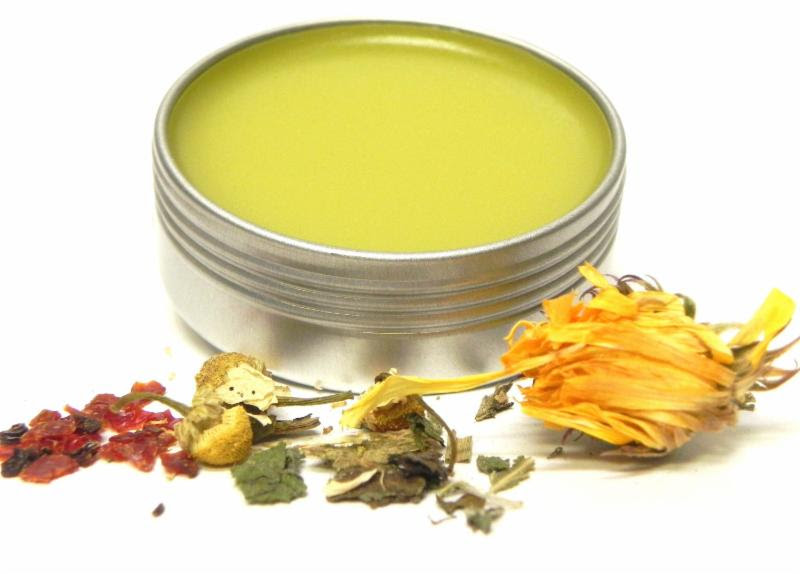
External Medicine Preparations
with Staff Herbalist Sophia Steinwachs
Date: Sunday March 13th
Location: 219 D Street Eureka
(next to Humboldt Herbals)
Time: 11am to 1 pm
Cost: $45 dollars
Join staff herbalist Sophia Steinwachs to learn how to make wholesome body care products from infused oils to slaves and cremes. Explore the myriad of ways to use herbs topically in baths, washes and masks. You will walk away with samples of each product, extensive handouts and the knowledge to make simple yet powerful topical medicine yourself. This is a hands on class so be ready to experience the aromatic wonder and herbal interaction. Class is limited to 15 students--please register and pay in advance. To register call 442-3541
Train to be a Doula in our Community Classroom
with the Doula Alliance
March 18-20
219 D Street Eureka
~Coming in April~
Internal Medicine Preparations
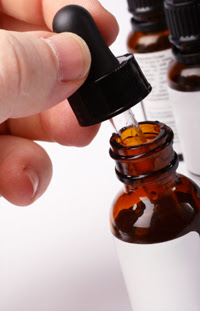
with Staff Herbalist Sophia Steinwachs
Date: Sunday April 3rd
Location: 219 D Street Eureka
(next door to Humboldt Herbals in the Community Classroom)
Time: 11am to 1 pm
Cost: $45 dollars
Join staff herbalist Sophia Steinwachs to learn how to make your own herbal extracts. We will be making and going home with samples of vinegar, alcohol and honey based medicine, as well as handouts, including different methods of preparing these medicines, and detailed information on medicinal properties and usage. Class's are limited to 15 students--please register and pay in advance.
To register call 442-3541
Intermediate Herbology II with Jane Bothwell
April 20th-June 8th
7-9pm Wednesdays
Tuition: $365
Location: 219 D Street, Eureka
(next to Humboldt Herbals)
Please call the Dandelion Herbal Center at (707) 442-8157 to register or for more information.
This course covers individual body systems and applicable safe and effective herbal treatments, the philosophy of herbal therapeutics, herbal formulation, wild foods, and wild plant identification.
Designed for the intermediate student and those who want a refresher course as well, this class will guide you through the gentle, healing way of herbs.
April 20: Philosophy of herbal therapeutics, healing from a holistic perspective & foundational system review.
April 27: Respiratory system relief.
May 4: Healing the skin.
May 11: Herbs for the cardiovascular system.
May 15th Herb Walk
-
Samoa Dunes 1:00
-
3:30pm
May 18: Loving your lymphs.
May 25: Muscular-Skeletal herbs.
June 1: Supportive therapies for cancer.
June 8: Class review and CELEBRATION!
Register NOW for these groundbreaking herbal conferences! Click the images for more information.

We're so happy to once again sponsor the TWHC gathering in New Mexico, where the herbal tribe gathers to teach, learn, laugh, dance and celebrate the magnificent diversity of western herbal healing traditions. We'd love to see you there!!
|
Chickweed: The Little Star of Spring
with Nourishing Recipes
By Candice Brunlinger, Herbalist
After a long drought we have finally had a nice wet winter here on the Pacific North Coast and the rains have nourished our earth and forest floors, bringing a vibrant green we have been missing the last few years. The transition from winter to spring is one of my favorite times of year as I love to go for walks and admire the early spring plants sprouting from the damp earth. My energy tends to correlate with the energy of the plants as I am ready to come forth and be more active outdoors, awaking from my hibernating winter energy, more restored and rejuvenated. This month I would like to highlight one of my favorite spring greens, Chickweed (Stellaria media). 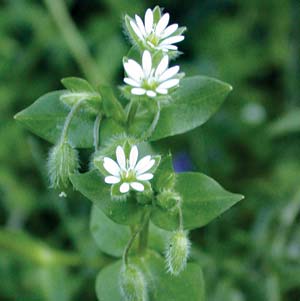
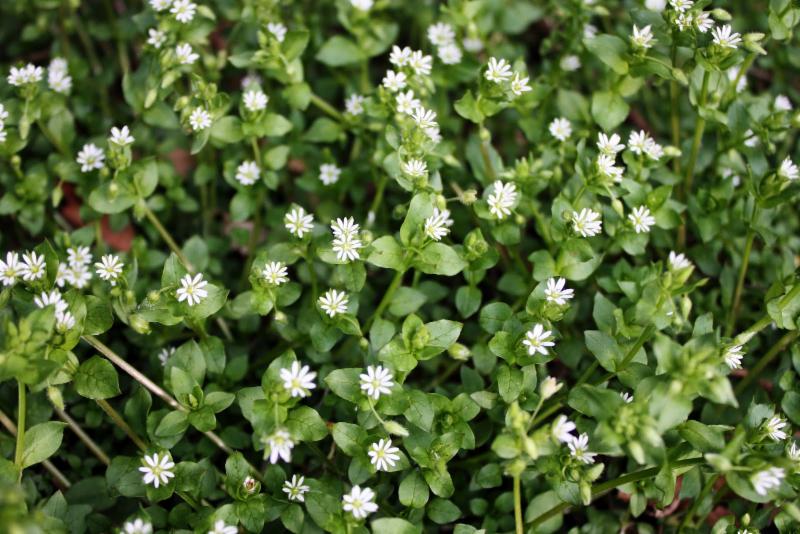
Chickweed is a sweet natured plant which has an association with the fairies as the leaves are very little and are the perfect size to feed them and other mystical folk lore creatures. Chickweed grows like a ground cover, making a soft but dense carpet on shaded forest floors. This weed can be found all over the world, especially in temperate climates where there is shaded, damp and rich soil. Its botanical or Latin name, Stellaria, means "little star" because of her very small star-shaped flowers and media means "in the midst of". It also goes by the following names: "starweed", "satin flower", "tongue grass", "white bird's eye", "scarwort" and "mouse ears" since the leaves are shaped like the ears of a little mouse. [1] The common name chickweed comes 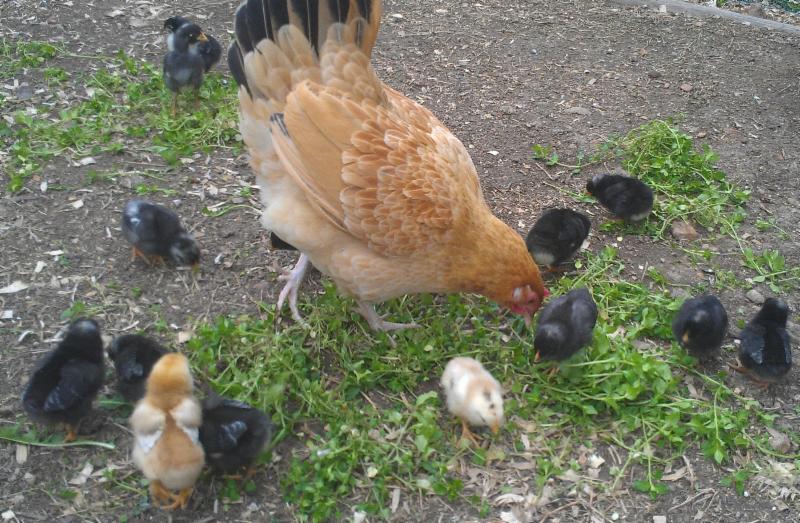 from the old custom of using the seeds to feed birds and chickens. The greens can also be used to feed other farm animals, life stock and household pets. from the old custom of using the seeds to feed birds and chickens. The greens can also be used to feed other farm animals, life stock and household pets.
A few characteristics to look for when identifying this plant is its double loop or cleft petals which resemble bunny ears. Even though the flowers have 5 petals which look like a star, each petal looks like 2 giving the chickweed flower a false appearance of 10 petals. If you look closely at the stem, there is a row of fine hairs which grow on only one side of the stem, switching sides at each pair of leaves. The opposite leaves also change where they grow from the stem alternating their position with each node. The leaves can vary in size and resemble mouse ears with a little point at the end.[2] 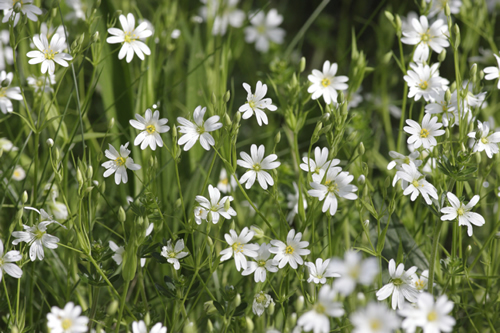
This annual plant can grow all year long in the right conditions but is most prevalent in late winter and early-mid spring. It self-seeds very easily and also spreads by taking root as the branches become heavy and fall, sprouting roots along the numerous nodes along the stem. Chickweed is one of the few plants which can grow throughout the winter and it still maintains its green leaves under the snow and frost; however, when the frost fades and the weather warms for spring, this plant becomes more abundant and can grow about a foot tall and climb up nearby plants and trees. Then it dies back in late spring-early summer when the weather starts to get dry and hot.
Summary of Chickweed's Benefits
- Nourishing & mineral rich
- Anti-inflammatory
- Cooling
- Moistening - mucilaginous, demulcent, emollient
- Healing
- Drawing action for first aid use
- Lymphatic & decongestant
- Diuretic
- Digestive tonic & nutrient absorption
- Enhances metabolism & burns fat
Nourishing Super Green
This mineral rich weed is packed with nutritional benefits. It is high in vitamins A, C, D, and some of the B-complex, especially riboflavin, niacin and thiamine. It is also rich in bioflavonoids, calcium, chlorophyll, copper, iron, magnesium, manganese, phosphorus, protein, potassium, silica, zinc and many other trace minerals. Here are a few examples of the high nutritional content of chickweed per serving (approximately ½ cup of fresh leaves): [3]
Vitamin A - 300%
Vitamin C - 625%
Calcium - 121%
Iron - 1406%
Potassium - 1840mg
The substantial levels of vitamins and minerals, tender leaves and delicious mild flavor make chickweed a wonderful super green which we can use just like any other green in our meals. The fresh leaves, stems and flowers can be used. Unfortunately, the plant does not dry very well and loses a majority of its benefits; however, the dried leaf can still be used to make tea and other nourishing infusions to use in our food. If you have access to the fresh use it in your salads, sautéed vegetables, juices, smoothies, sandwiches, green sauces, pesto, soups and stews, baked goods, etc. Refer to the recipes at the end of this article for inspiration. You can also juice it or slightly steam it until it starts to wilt. Then freeze in small portions and use throughout the year when it is not in season.
Topical First Aid
The cooling, anti-inflammatory and healing benefits of chickweed make it a great first aid remedy. Use a fresh chickweed poultice directly on the skin or make a strong tea and soak a piece of cloth in it to wrap the area or add the tea into your bath water. Chickweed is also almost always included in my healing salves and oil infusions. It is a great remedy for any kind of rash, bug bites and stings, poison oak/ivy, burns, itchy irritated skin, diaper rash, eczema, etc. Just keep in mind to avoid oils and salves on a fresh burn and only use it in the later stages of healing. See the recipes below for instructions on how to make a chickweed poultice, tea, oil infusion and salve.
Chickweed is also very beneficial for drawing out bacterial infections from the skin. Use it by itself or combine it with a little fresh plantain and/or calendula for pus-filled and bacteria infected wounds.
Chickweed is one of my favorite remedies to soothe irritated and inflamed eyes and speeding the healing of sties and conjunctivitis (pink eye). The fresh poultice is best. Just crush the leaves and apply on the infected eye for about 10-15 minutes. Discard the herb and repeat 2-3 times a day or as needed until healed. You can also make a tea and strain the herb out using a coffee filter or tightly woven cloth and either drop the infusion into the eye or use it as an eye wash.
Cooling & Healing Anti-inflammatory
Chickweed cools heat and calms inflammation throughout the body. It soothes irritated tissues, especially throughout the digestive, respiratory, reproductive and urinary organs. The fresh juices of the chickweed are very lubricating and mucilaginous, coating the tissues to help protect and heal them. Chickweed can even be added to other herbs such as marshmallow, meadowsweet, calendula and licorice to sooth and heal the lungs, dry sore throats, stomach and intestines. Or add it to uva ursi, corn silk and/or dandelion leaf to sooth UTI's and bladder infections.
Lymphatic, Decongestant & Dissolving Agent
Chickweed is a great decongestant and moves stagnant fluids and tissue making it a great remedy for swollen lymph glands. I like to use it along with other lymphatic herbs such as red root, cleavers and calendula. Chickweed is known as a great nourishing woman's tonic for its benefits in preventing and dissolving cysts, especially in ovarian and breast tissues. I think it pairs really well with violet and red clover for this benefit.
The main action chickweed has for this is the saponins found in the plant especially in when the leaves are still fresh. Saponins have a soap-like consistency that emulsify and increase the permeability of membranes helping to dissolve cell walls. When used consistently over time (6 - 12 months), chickweed can shrink and dissolve cysts and benign tumors.[4] It would be best to use the fresh leaves in food when in season and make a large batch of a vinegar infusion and tincture to continue using when it is not in season. See recipes below for making your own.
Diuretic
Chickweed is a soothing diuretic which flushes excess water from the body while supporting the urinary tract system and kidneys without depleting minerals from the body. It is great for anyone prone to UTI's , interstitial cystitis, chronic cystitis, or an irritated bladder which is common when these conditions occur, after childbirth and any kind of abdominal surgery. Chickweed soothes and cools, removes bacteria, and strengthens the bladder wall to improve overall urinary functions. It is commonly used in detox formulas for its nourishing and cleansing benefits.
Digestion, Nutrient Absorption, Metabolism & Weight Loss
Chickweed can help cool heat and reduce inflammation throughout the digestive track benefiting conditions such as gastritis, colitis and ulcers. It can be a great herbal ally for restoring the body and for gut healing especially after surgery or illness and with food allergies and leaky gut. It coats and protects the lining of the stomach and intestines. The saponins also increase our ability to absorb nutrients while toning down excessive permeability from leaky gut.
Since chickweed can dissolve unwanted and unneeded cells throughout the body, it is great for burning fat, cleansing and weight loss. Keep in mind that chickweed on its own may not result in weight loss but with a healthy diet and active lifestyle it can be a great aid to support the body as it comes to a more balanced and healthy weight. The nourishing benefits also help with reducing food cravings and suppressing excessive hunger.
Chickweed helps to balance metabolism and improve thyroid function. I am not familiar with it directly stimulating the thyroid like other plants. It most likely works indirectly through the nourishing benefits, gut healing, breaking up stagnation, dissolving fat cells and preventing excess weight gain. Although, we have so much more to learn from the plant on how it works and the ways it benefits us.
Energetic and Psychic Healing
Consuming chickweed has many benefits for us physically but she is also works by healing our spirit and psychic energy too. According to Susan Weed "she opens us up to cosmic energies and gives us the inner strength we need to handle those energies." [5] Chickweed also breaks up the sluggish and stagnant energy we feel when we are unmotivated and "bogged down" especially when we are transitioning from the winter hibernating energy into a renewed and fresh spring time energy.
Growing Chickweed
Chickweed is commonly referred to as a backyard weed since it is a very common weed which grows all over the world. If you live in a temperate climate or have a shaded area in your yard you can very easily grow it. You can purchase seeds from horizon herbs http://www.strictlymedicinalseeds.com/product.asp?specific=408 or go to your local nursery and ask if they have it or if they can order plant starts for you. Another benefit to growing your own chickweed is that it is a nitrogen fixer and is great to use for crop rotation to replenish and prevent soil depletion.
Harvesting Chickweed
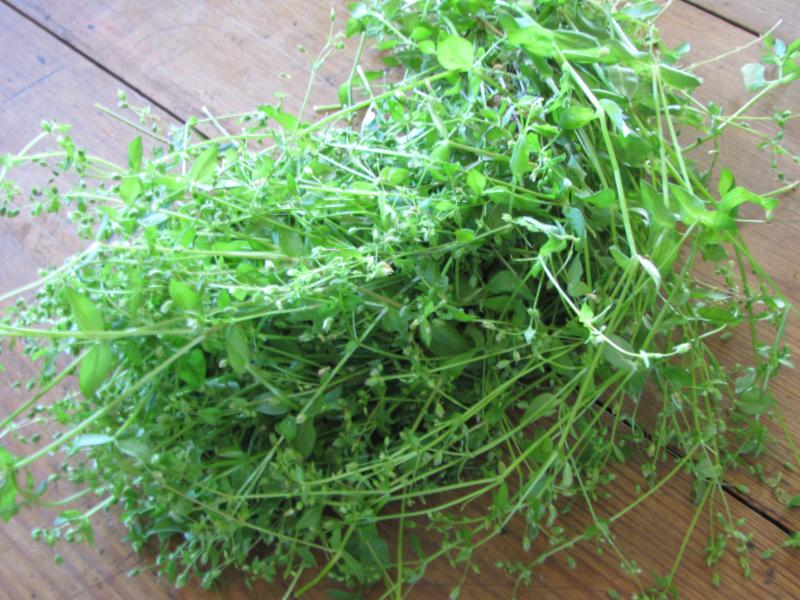
Using scissors or pruners, trim the aerial parts of the plant, an inch above the ground. Rinse the chickweed and allow to mostly dry in a colander or on a towel if needed. If you will be storing the chickweed to use later take a paper towel and line the bottom of a Tupperware container or a salad spinner. Place your recently cleaned chickweed on top and store in the fridge. The paper towel will help regulate and absorb excess moisture so it stores longer. If chickweed is too dry though it can start to wilt, reducing the length of storage. Chickweed can store well for up to a week in the fridge but the sooner you use it, the better. Most even suggest to harvest it fresh daily.
Chickweed Recipes
Since chickweed is best used when fresh, the following recipes will be for using the freshly harvested plant unless noted otherwise.
Chickweed Tea Infusion
Fill a jar about 1/2 full of your fresh chickweed, loosely packed. Pour recently 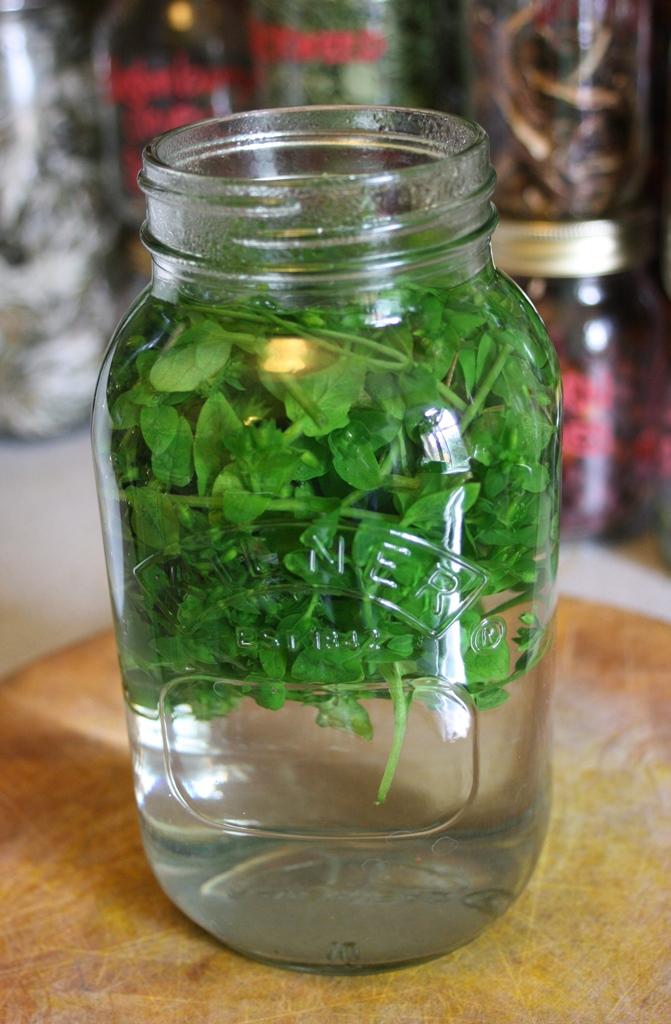 boiled water into your jar to the rim and gently stir the greens so they are moving freely. Cover and allow the greens to steep at least 30 minutes but feel free to allow them to sit up to 8 hours for a nourishing rich infusion. The longer you let it steep the more nutrients and beneficial minerals are extracted. I really enjoy letting the jar sit outside in the garden under the moonlight or in the sun for a lunar or sun-kissed tea. boiled water into your jar to the rim and gently stir the greens so they are moving freely. Cover and allow the greens to steep at least 30 minutes but feel free to allow them to sit up to 8 hours for a nourishing rich infusion. The longer you let it steep the more nutrients and beneficial minerals are extracted. I really enjoy letting the jar sit outside in the garden under the moonlight or in the sun for a lunar or sun-kissed tea.
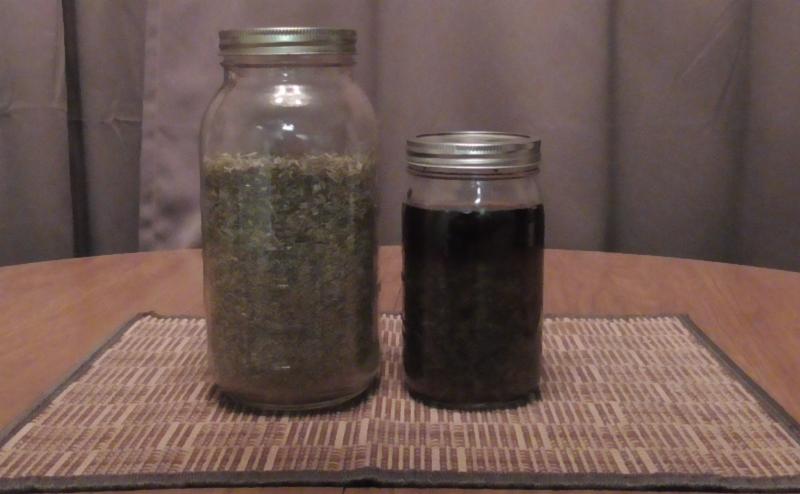 If you are not using the fresh plant and have access to a high quality, pristine dried leaf you can make a strong infusion using 1 ounce of herb material by weight in 1 quart of recently boiled water. Allow to infuse anywhere from 30 minutes or up to 8 hours. The longer it steeps, the more nourishing and rich the infusion. Strain and enjoy by slowly sipping the tea throughout the day. If you are not using the fresh plant and have access to a high quality, pristine dried leaf you can make a strong infusion using 1 ounce of herb material by weight in 1 quart of recently boiled water. Allow to infuse anywhere from 30 minutes or up to 8 hours. The longer it steeps, the more nourishing and rich the infusion. Strain and enjoy by slowly sipping the tea throughout the day.
Chickweed Poultice
There are a couple of ways of making a poultice depending on your preference and supplies.
Spit Poultice - If you are on a hike, playing outdoors or camping and you get an insect bite or sting or brush up on an irritating plant which causes a rash you can take a small amount of the leaves and chew them slightly to break up the juices. Then spread the macerated herb directly on the skin. Wrap to secure and leave on for 15-30 minutes. Remove and repeat as needed. This is one of my favorite ways of immediately easing poison oak rashes and nettle stings as the chickweed soothes and helps draw out the irritant from the skin.
Mortal & Pestle Poultice - Take your fresh chickweed and grind it using your 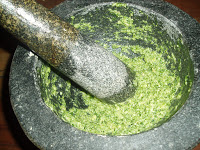 pestle to release its juices. Once a juicy paste forms apply to the skin. Use a towel, t-shirt or plastic wrap to secure and leave on for 15-30 minutes. Remove and repeat as needed. If you are outdoors you can make your own mortar and pestle using a large, flat rock or container and using another rock or wide stick to macerate. If you are in your kitchen and do not own a mortar and pestle use a bowl and a large wooden spoon instead. You can add a little splash of warm water but chickweed is juicy enough that it usually is not needed. pestle to release its juices. Once a juicy paste forms apply to the skin. Use a towel, t-shirt or plastic wrap to secure and leave on for 15-30 minutes. Remove and repeat as needed. If you are outdoors you can make your own mortar and pestle using a large, flat rock or container and using another rock or wide stick to macerate. If you are in your kitchen and do not own a mortar and pestle use a bowl and a large wooden spoon instead. You can add a little splash of warm water but chickweed is juicy enough that it usually is not needed.
Chickweed Oil Infusion and Salve
Take your freshly harvested chickweed and wilt them for 2-3 days until it is 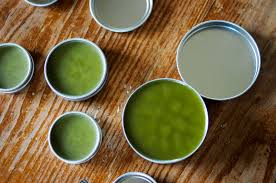 mostly dried. Then add the plant material into a crock pot or double boiler and cover with your favorite organic first aid oil such as olive, grape seed, sesame, coconut, almond, etc. until the herbs are completely saturated and moving freely in the oil. Use very gentle and indirect heat to slowly warm up the oil but be sure not to overheat or bring the oil to a simmer. Gently cook and infuse the chickweed for 1-2 hours. Allow to cool and strain the oil using a stainless steel mesh strainer or cheese/muslin cloth. Pour the oil in a bottle and add a splash of Vitamin E oil to help preserve it if desired. mostly dried. Then add the plant material into a crock pot or double boiler and cover with your favorite organic first aid oil such as olive, grape seed, sesame, coconut, almond, etc. until the herbs are completely saturated and moving freely in the oil. Use very gentle and indirect heat to slowly warm up the oil but be sure not to overheat or bring the oil to a simmer. Gently cook and infuse the chickweed for 1-2 hours. Allow to cool and strain the oil using a stainless steel mesh strainer or cheese/muslin cloth. Pour the oil in a bottle and add a splash of Vitamin E oil to help preserve it if desired.
If you would like to make a salve then take your strained oil and reheat it in your double boiler or crock pot. Add 1 ounce of beeswax (by weight) for every 4-6 ounces of oil infusion (by volume) depending on how firm you like your salves. Stir until the beeswax if fully melted. You are welcome to try other waxes and butters as well. If you use a soft butter such as shea or mango then you will need to adjust your recipe slightly for a firm salve. You can try 1 ounce of a soft butter by weight for every 2-4 ounces of oil by volume. Once the wax and butter has fully melted you are welcome to add your favorite first aid and healing essential oils such as lavender, tea tree, chamomile, helichrysum, etc. and/or vitamin E oil to help preserve. Then pour the mixture into salve jars or small mason jars. Allow to cool, cover with a tight fitting lid and label. Use as needed for any irritated skin condition and to soothe skin which is hot, irritated, itchy and inflamed.
Chickweed Tincture
A fresh chickweed extract can be made although eating the greens and drinking 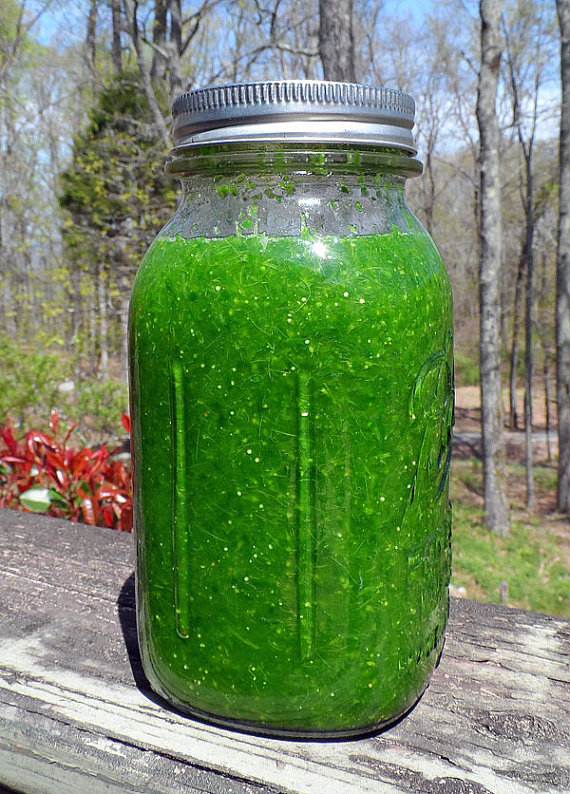 strong chickweed tea infusions are the more beneficial and preferred ways of getting the nourishing benefits of the plant. If you have an abundance of chickweed and are interested in making a tincture fill a jar ¾ of the way full of loosely packed fresh greens. You can use a large wooden spoon to firmly press and bruise the greens to release its juices if desired but it is not necessary. Pour in your alcohol (vodka, rum, everclear, 95% spirits, etc.) until greens are free flowing and there is at least an inch of extra alcohol around the herb. Secure with a lid and store in a cool, dry and dark place, shaking daily. Allow to infuse for 4-6 weeks, strain through a stainless steel mesh strainer or cheese/muslin cloth, squeezing out all the alcohol and juice from the chickweed. Pour into a bottle and label. Take anywhere from 1 dropperful (1 mil) or up to 1 tsp in 2-3 ounces of water or juice and drink 1-2 times daily. Or add a splash to homemade cocktails. strong chickweed tea infusions are the more beneficial and preferred ways of getting the nourishing benefits of the plant. If you have an abundance of chickweed and are interested in making a tincture fill a jar ¾ of the way full of loosely packed fresh greens. You can use a large wooden spoon to firmly press and bruise the greens to release its juices if desired but it is not necessary. Pour in your alcohol (vodka, rum, everclear, 95% spirits, etc.) until greens are free flowing and there is at least an inch of extra alcohol around the herb. Secure with a lid and store in a cool, dry and dark place, shaking daily. Allow to infuse for 4-6 weeks, strain through a stainless steel mesh strainer or cheese/muslin cloth, squeezing out all the alcohol and juice from the chickweed. Pour into a bottle and label. Take anywhere from 1 dropperful (1 mil) or up to 1 tsp in 2-3 ounces of water or juice and drink 1-2 times daily. Or add a splash to homemade cocktails.
Chickweed Vinegar Infusion
Fill a jar ¾ of the way full of loosely packed fresh chickweed greens. You can 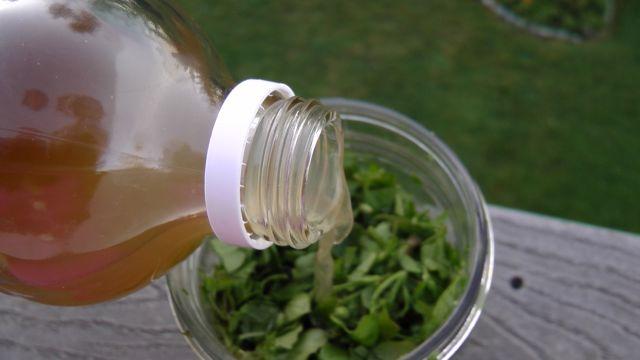 use a large wooden spoon to firmly press and bruise the greens to release its juices if desired but it is not necessary. If you do not have access to the fresh leaves you can use high quality dried leaves but the infusion will not be as strong. Pour apple cider vinegar to the rim and gently stir so the greens are free flowing, releasing any air bubbles. Secure with a lid and store in a cool, dry and dark place, shaking daily. Allow it to infuse for 2-4 weeks, strain through cheese or muslin cloth, squeezing out all the vinegar and juice from the chickweed. Pour into a bottle and label. Since the water from the fresh leaves can make the vinegar unstable, store your vinegar infusion in the fridge and use within 6 months. Vinegar makes a great chickweed infusion since it helps extract the beneficial minerals from plants. Use your nourishing chickweed vinegar in salad dressings, marinades or take 1 tbsp, 1-2 times daily before meals for endless benefits. use a large wooden spoon to firmly press and bruise the greens to release its juices if desired but it is not necessary. If you do not have access to the fresh leaves you can use high quality dried leaves but the infusion will not be as strong. Pour apple cider vinegar to the rim and gently stir so the greens are free flowing, releasing any air bubbles. Secure with a lid and store in a cool, dry and dark place, shaking daily. Allow it to infuse for 2-4 weeks, strain through cheese or muslin cloth, squeezing out all the vinegar and juice from the chickweed. Pour into a bottle and label. Since the water from the fresh leaves can make the vinegar unstable, store your vinegar infusion in the fridge and use within 6 months. Vinegar makes a great chickweed infusion since it helps extract the beneficial minerals from plants. Use your nourishing chickweed vinegar in salad dressings, marinades or take 1 tbsp, 1-2 times daily before meals for endless benefits.
Chickweed Juice
Take a large handful of chickweed greens and puree them in a blender or food 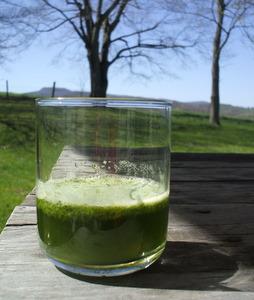 processor. If you have a juicer you can use that too but I like to use the whole plant if possible. Drink as is or blend with other fruits and vegetables for a green smoothie. I also like to take the chickweed puree and freeze it in ice cube trays to use for first aid. If you or a family member get a rash, bite, sting, abrasion or have itchy, inflamed and red skin take the chickweed cube and rub it along the area of the skin to sooth, reduce inflammation and heal. If you are using it on a burn allow the chickweed ice cube to melt first and apply the paste/juice on the skin as you do not want to use anything frozen directly on a burn. Since fresh chickweed is much superior to dry for topical first aid, frozen cubes are a perfect way of using this plant for first aid all throughout the year. processor. If you have a juicer you can use that too but I like to use the whole plant if possible. Drink as is or blend with other fruits and vegetables for a green smoothie. I also like to take the chickweed puree and freeze it in ice cube trays to use for first aid. If you or a family member get a rash, bite, sting, abrasion or have itchy, inflamed and red skin take the chickweed cube and rub it along the area of the skin to sooth, reduce inflammation and heal. If you are using it on a burn allow the chickweed ice cube to melt first and apply the paste/juice on the skin as you do not want to use anything frozen directly on a burn. Since fresh chickweed is much superior to dry for topical first aid, frozen cubes are a perfect way of using this plant for first aid all throughout the year.
Chickweed Salad
Take a large handful of freshly harvested and wash chickweed greens. You can 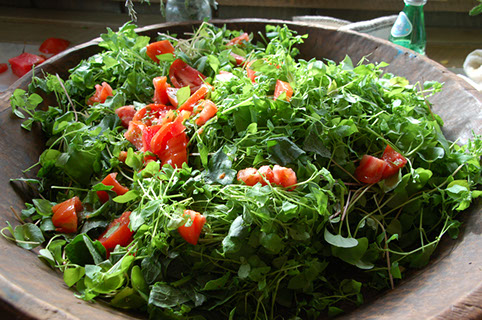 add other greens as well or just use them by themselves. Add any other salad ingredients of your choice. I personally like to include any other early spring edible flowers such as dandelions and violets, onions, shredded carrots, colorful sweet bell peppers, pumpkin seeds, sunflower seeds, sprouted seeds, a dash of seaweeds or Humboldt Herbals' Herb & Sea Veggie seasoning, dried cranberries, chevre and some chickweed salad dressing (or use another favorite dressing). If you are not a salad eater, the delicious and mildly sweet chickweed might convert you to love them. Chickweed has many more nutrients and benefits than common iceberg lettuce too. add other greens as well or just use them by themselves. Add any other salad ingredients of your choice. I personally like to include any other early spring edible flowers such as dandelions and violets, onions, shredded carrots, colorful sweet bell peppers, pumpkin seeds, sunflower seeds, sprouted seeds, a dash of seaweeds or Humboldt Herbals' Herb & Sea Veggie seasoning, dried cranberries, chevre and some chickweed salad dressing (or use another favorite dressing). If you are not a salad eater, the delicious and mildly sweet chickweed might convert you to love them. Chickweed has many more nutrients and benefits than common iceberg lettuce too.
Chickweed Salad Dressing
1 cup fresh picked chickweed greens
¼ cup lemon juice or vinegar
1/3 cup nourishing oil (olive, avocado, flax, pumpkin, etc)
1-2 cloves of garlic
1 tsp honey
1 tsp Dijon mustard
1/8 tsp salt and pepper
Blend all ingredients except the oil in a blender until well blended. While the blender is running on medium-high speed, very slowly drizzle your oil into it so it emulsifies well with the other ingredients. Once the dressing is well blended and creamy pour into your container and use as needed in salad dressings. Store in the fridge.
Chickweed Pesto
2-3 cloves of garlic 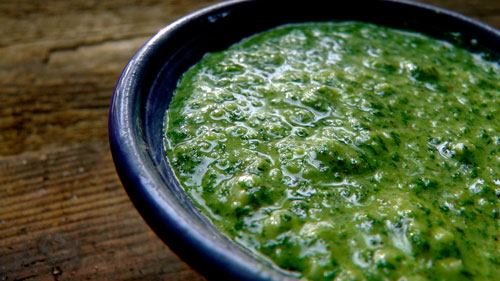
¼ cup of pine nuts or sunflower seeds
2 cups of firmly packed fresh chickweed, chopped (or 1 cup chickweed & 1 cup basil)
½ cup olive oil
½ cup Parmesan cheese
¼ tsp each of salt and pepper (or to taste)
Add all ingredients into a blender or food processor and blend until pureed well. Use as a dip with vegetables and crackers or as a spread on bread, sandwiches and wraps. Toss with pasta or salad and add to creamy sauces to enhance their flavor.
Chickweed Miso Soup
Follow the instructions for making miso soup (usually found on the container of miso paste). Add finely chopped chickweed along with your green onions or chives and let it sit for 3-5 minutes before serving.
Try adding chickweed greens to your other soups too. I like to add the freshly chopped greens as a garnish on my creamy tomato soup and I puree the greens in my creamy rosemary potato soup. Chickweed will go good in any soup or stew. I just use it as a garnish or add it in at the very end of my cooking and allow it to simmer for no more than 5 minutes to avoid overcooking it.
Chickweed Sandwiches/Wraps 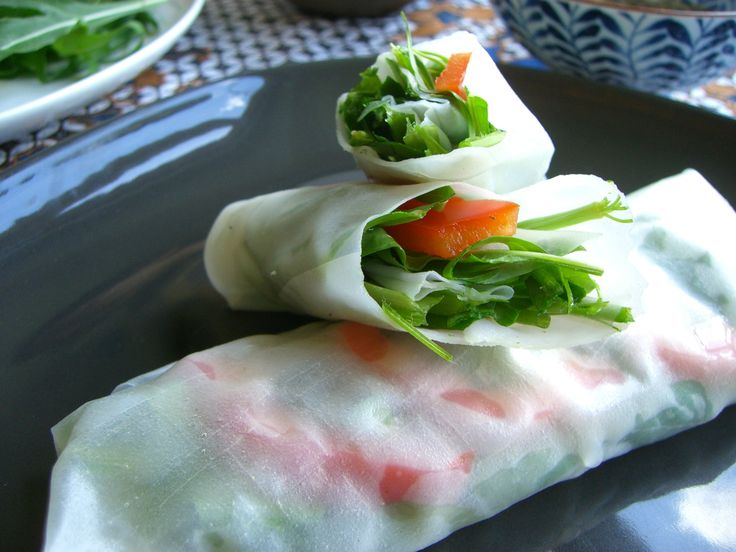
Use chickweed as the green in your sandwiches and wraps. My favorite is making a wrap with shredded chicken, chickweed pesto, sliced onion, tomato, sprouted seeds and chickweed greens with a little olive or avocado oil and lemon juice drizzled over it all. Or leave out the pesto and add avocado and chickweed dressing instead.
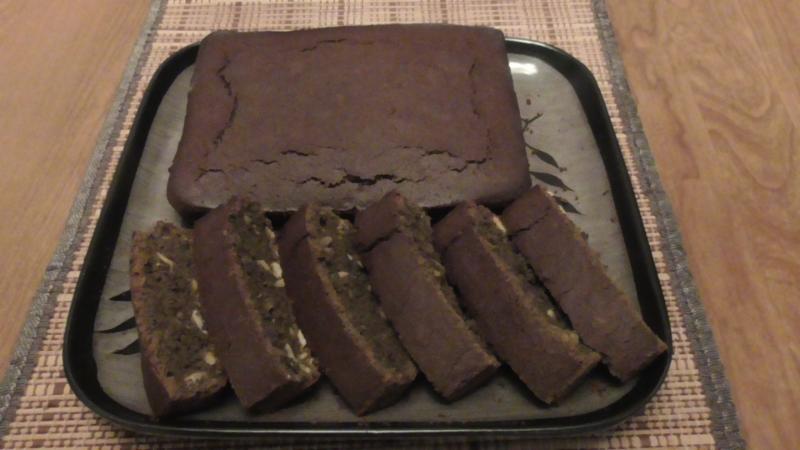 Chickweed Muffin Bread Chickweed Muffin Bread
3 eggs
3 cups spelt, sprouted, wheat or gluten free flour
1 tsp salt
1 tsp baking soda
1 tsp baking powder
1 cup butter or coconut oil, melted (or use your favorite baking vegetable oil)
1 large very ripe banana, smashed (natural sweetener; can omit and use more honey or maple syrup, if desired)
½ cup maple syrup, honey or other sweetener to taste
1 tbsp vanilla extract
1 cup of finely chopped chickweed or ¾ cup pureed chickweed
The following are optional ingredients and variations I enjoy using:
½ cup chopped walnuts, pecans or pumpkin seeds
¼ cup chia seeds
1 tbsp cinnamon
1 cup of dark chocolate chips
1 cup of blueberries
Preheat oven to 325º and grease 2 x 9x4 inch loaf pans. Sift together flour, salt, baking powder, baking soda and cinnamon in a bowl. Beat eggs, oil, vanilla and honey/maple syrup in another bowl. Slowly add dry ingredients to wet and beat well. Stir in a smashed banana, chickweed, nuts, seeds or any other added ingredients until well combined. Pour into pans and bake for 40-60 minutes or until a toothpick comes out dry when tested. Cool for 20 minutes before serving.
"Little Star Cookies" (Chickweed Oatmeal Cookies)
2 eggs 
1/2 cup vegetable oil
1/2 cup honey or maple syrup
1 tsp vanilla extract
1 cup unbleached flour (or almond flour for a wheat free recipe)
1 cup quick oats
1/2 cup firmly packed and finely chopped chickweed greens or a little less if using pureed chickweed.
Preheat the oven to 375. Mix the oil, honey, eggs and vanilla until wet ingredients are mixed well. Slowly blend in the flour, oatmeal, and chickweed greens. Oil a cookie sheet or line with unbleached parchment paper. Drop a tablespoon size spoonful of the dough onto the cookie sheet, 2 inches apart. Bake for 10-15 minutes. Remove from cookie sheet and allow to cool on a rack.
[1] Morgan Botanicals, "Chickweed for Victory"
http://www.morganbotanicals.com/herbal-blog/entry/chickweed-for-victory.html
[2] Edible and Medicinal Plants of the West by Gregory L. Tilford
Copyright 1997; Page 30
[3] Morgan Botanicals, "Chickweed for Victory"
http://www.morganbotanicals.com/herbal-blog/entry/chickweed-for-victory.html
[4] "Chickweed Is A Star" by Susan Weed; Article printed in Mystic Pop Magazine; Copyright 2007
http://www.susunweed.com/Article_Chickweed-A-Star.htm
[5] "Chickweed Is A Star" by Susan Weed; Article printed in Mystic Pop Magazine; Copyright 2007
http://www.susunweed.com/Article_Chickweed-A-Star.htm
About the Author:
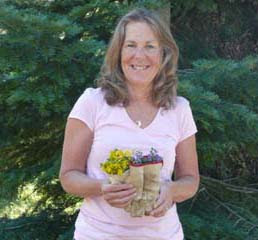
Candice Brunlinger has been studying and practicing herbal healing since 2004. Her passions include making herbal medicine, developing connections with plants, cooking, growing herbs, gardening, wild crafting, teaching workshops and classes, practicing tai chi and qi gong and being an "herbal mama". She teaches for the Northwest School of Botanical Studies, has a small clinical practice and an herbal product line, Herbal Infusions. Candice is inspired by plants and integrating a holistic lifestyle. You can visit her blog at http://nourishingherbs.blogspot.com/ or become a member of her facebook group "Herbal Living" at www.facebook.com/groups/herballiving/.
Eat Your Medicine!
Delicious Seasonal Spring Recipes
The best food preparation styles for spring include stir-fry, saute, steaming, grilling & broiling. Try to make sure you include warm foods (like wilted greens in your salads) and warm spices (like cinnamon, turmeric and ginger) in each meal. Enjoy lots of seasonal veggies, lean proteins, avocados and delicious fats like ghee, toasted sesame oil and good quality olive oil, and keep a dish of lemon slices on hand for easy squeezing. Bon Apetit!
Dandelions!
Used as medicinal and edible, the Dandelion is very nutritious, having more vitamins and minerals than most vegetables with a a long history of use as a food in many countries. Leaves can be cooked or boiled as a pot herb or enjoyed raw in salads (the young leaves are much less bitter), flowers can be incorporated into lots of dishes, and the dried, roasted roots are enjoyed around the world as a coffee substitute.
Dandelion Wine is made from fermented flowers that, when made correctly, results in a very flavorful and medicinal treat. You can buy dandelion greens in the produce section of most natural food stores, or harvest your own young spring greens from sunny meadows or your (unsprayed) yard. Remember, if the leaves are "fuzzy" it's not a true dandelion. True dandelion leaves are smooth and hairless.
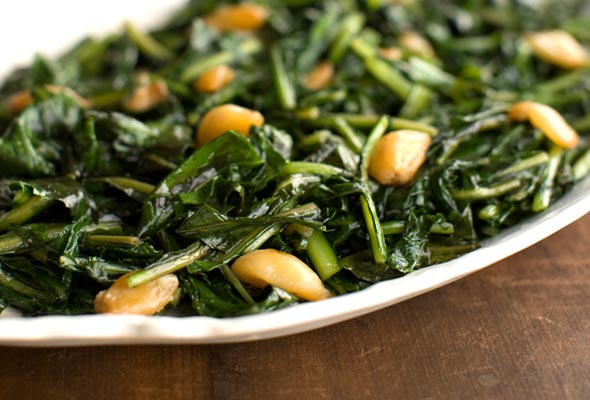
Curried Dandelions
4 tbs. peanut oil, sesame oil, or olive oil
9 cups young common dandelion leaves or other bitter wild or commercial greens
4-1/2 tsp. garlic, chopped
1-1/2 cups water
3/4 cup silken (the softest variety) tofu
2 tbs. mellow (light-colored) miso
1-1/2 tbs. lime juice
1-1/2 tbs. curry powder, or to taste
1. Sauté the common dandelion leaves and garlic in the oil 10 minutes.
2. Meanwhile, puree the remaining ingredients in a blender.
3. Add the puree to the dandelions, bring to a boil, reduce the heat to low, cover, and simmer 10 minutes.
Spring Song Soup (Susun Weed recipe)
2 cups nettle tops
1 cup yellow dock leaves
1/2 cup dandelion leaves
2 cups water
1 large onion
2 tablespoons olive oil
2 carrots, diced
2 turnips, diced
6 cups water
3 Tbs brown miso
Wash greens; chop, and cook until tender in water in a large pot. Meanwhile, saute onion in oil until golden. Add onion, carrots, and turnips to nettles. Add water and a pinch of salt and simmer for at least thirty minutes. Thin miso and add just before serving. Garnish with pansy blossoms.
Rosemary Gladstar's Favorite Dandelion Greens
Steam the leaves, then marinate them overnight in Italian dressing and honey. Warm gently, and enjoy!
Wilted Garlic-Sesame Salad
Toss dark green leafy vegetables in hot, garlicky oil for a cleansing -- and delicious -- dish.
1 tsp. olive oil
1 clove garlic, minced
1 lb. spinach, stemmed,
or 1 lb. Swiss chard, stems sliced, leaves torn
or 1 lb. mixture of spinach and watercress
Salt and freshly ground pepper to taste
1 tsp. sesame seeds for garnish
Warm oil in large skillet over medium-high heat. Add garlic and stir until lightly browned, about 45 seconds. Add greens (do in two batches if necessary) and toss until just wilted, 2 to 4 minutes. Season to taste with salt and pepper. Sprinkle with sesame seeds.
Steamed Salmon and Asparagus with Mustard Dill Sauce
The tangy mustard dill sauce is a great complement to both the salmon and asparagus in this Healthiest Way of Eating recipe. It also provides you with excellent sources of health-promoting omega-3 fatty acids, vitamin K, niacin, selenium, protein and tryptophan
1-1/2 lb salmon filet, skin and bones removed and cut into 4 pieces
1 + 1 TBS fresh lemon juice
2 bunches asparagus, bottom fourth removed
1 TBS extra virgin olive oil
salt and white pepper to taste
Mustard Dill Sauce
4 oz silken tofu
1 TBS prepared mustard such as Dijon
4 TBS fresh dill chopped
1 TBS honey
2 TBS fresh lemon juice
1/2 cup water
1/4 tsp salt
1/4 tsp white pepper
2 TBS extra virgin olive oil
Bring 2 inches of lightly salted water to a boil in a steamer with a tight fitting lid.
While water is coming to a boil, put all sauce ingredients except olive oil in a blender and begin to blend on high speed for about one minute. While blender is running, drizzle olive oil in a little at a time. Set aside.
Snap off tough asparagus ends. When water is at a full boil place asparagus in steamer basket, cover, and cook until asparagus is tender, about 3-5 minutes, depending on thickness. Remove from steamer, toss with 1 TBS lemon juice, 1 TBS olive oil, salt and pepper.
Rub salmon with 1 TBS lemon juice and season with a little salt and pepper.
Place salmon in the same steamer basket and steam until pink inside, about 3-4 minutes. Place salmon on a plate and pour desired amount of sauce over it and the asparagus.
Calabacitas
1 medium onion, cut in half and sliced thin
4 medium cloves garlic, chopped
2 cups zucchini, diced into 1/2 -inch cubes
2 cups yellow squash, diced in 1-inch cubes
15 oz can (BPA free) diced tomatoes, drained
4 oz can (BPA free) of diced green chili
1 TBS + 3 TBS chicken or vegetable broth
1/4 cup chopped cilantro
3 TBS fresh chopped fresh oregano (or 1 TBS dried oregano)
salt and black pepper to taste
*Optional: drizzle with olive oil before serving
Slice onion and chop garlic and let sit for at least 5 minutes to bring out their health-promoting benefits.
Prepare all the vegetables.
Heat 1 TBS broth in 11-12 inch stainless steel skillet. Sauté onions in broth over medium heat for about 5 minutes stirring frequently, until translucent. Add garlic and sauté for another minute.
Add zucchini, yellow squash, remaining broth, green chili, and cook for another 3 minutes or so until vegetables are tender, stirring often. Add tomatoes and continue to cook for another couple of minutes.
Stir in herbs, salt, and pepper.
Miso Healthy Sauté
Miso is a great way to add extra flavor and nutrition to your recipes. This versatile Healthy Sauté recipe can be adapted to any of your favorite vegetables or whatever you may have on hand. In fact the more variety, the more nutritional value. Enjoy!
1 TBS dried hijiki, sea palm or arame seaweed, soaked in 3/4 cup warm water (save water)
1 medium onion, cut in half and sliced thick
1 TBS minced fresh ginger
3 cloves garlic, pressed
1 medium sized carrot, peeled and sliced very thin
2 cups small broccoli florets, about 1/2-inch pieces
1 cup shredded green cabbage
4 oz thin sliced beef or chicken, or firm light tofu cut into 1/2-inch cubes
2 TBS light miso
2 TBS soy sauce
2 TBS rice vinegar
salt and white pepper to taste
1 tsp toasted sesame seeds
Chop onion and press garlic and let sit for 5-10 minutes to bring out their health-promoting benefits.
Rinse and soak seaweed in about 3/4 cup hot water, and chop rest of the vegetables. After about 10 minutes squeeze seaweed to remove excess water. Save the water.
Heat 1TBS of seaweed water in a stainless steel wok, or large skillet. Sauté onion and carrots in seaweed water over medium-high heat, for 2 minutes, stirring constantly.
Add garlic and ginger. Continue to stir constantly. Ginger may stick a little to the pan. Don't worry about it. It will come up when liquid is added. After about 2 minutes add broccoli. Stir-fry for another 2 minutes.
Add cabbage, miso dissolved in 2 TBS seaweed water, soy sauce, rice vinegar, seaweed, and tofu.
Continue stir-frying for another 2 minutes, stirring constantly. Add salt and pepper. Sprinkle with sesame seeds and serve.
Warm Asparagus Salad
Not only is it an excellent source of health-promoting vitamins A, C, and E, but it provides 16% of your Daily Value for folate. Enjoy!
1/2 small onion, cut in half and sliced thin
2 TBS light vinegar (rice, apple cider, or white wine)
1 cup hot water
1 bunch asparagus
3 TBS low-sodium chicken or vegetable broth
7-1/2 oz jar of roasted red bell peppers, drained and slivered (or 2 medium red bell peppers, sliced thin)
1 TBS balsamic vinegar
1 TBS extra virgin olive oil
salt and black pepper to taste
Slice onion and place in a small bowl with vinegar and hot water while preparing rest of the ingredients.
After about 10 minutes, remove onion from hot water and squeeze dry.
While onions are marinating heat 3 TBS broth over medium heat in a stainless steel skillet.
While broth is heating, snap off the woody bottom of asparagus stems, then cut the spears into 2-inch lengths. Cutting them into short pieces of equal length ensures quick, even cooking.
When broth begins to steam, add asparagus. Cover and cook for 5 minutes. The outside will be tender and the inside will be crisp. Thinner spears will take about 3 minutes.
Mix together roasted peppers with marinated onion, asparagus, vinegar, olive oil, salt, and pepper. Marinate for 4-5 minutes and serve warm.
Optional: If you use fresh red bell peppers, sauté them for 7 minutes and toss with rest of ingredients in place of roasted peppers.
Roasted Squash & Fennel with Thyme
2 small summer squash, (about 12 ounces)
1 1/2 cups sliced fennel bulb, (about 1 small bulb), plus 1 tablespoon chopped fennel fronds, divided
1 tablespoon extra-virgin olive oil
1 tablespoon chopped fresh thyme
1/4 teaspoon salt
1/4 teaspoon freshly ground pepper
1/4 cup thinly sliced garlic
Preheat oven to 450°F.
Quarter squash lengthwise, then cut crosswise into 1-inch pieces. Combine the squash with sliced fennel, oil, thyme, salt and pepper in a large bowl. Spread the mixture evenly on a large, rimmed baking sheet. Roast for 10 minutes. Stir in garlic and roast until the vegetables are tender and the fennel is beginning to brown, about 5 minutes more. Stir in fennel fronds and serve.
Lemon Ginger Miso Soup
A light, delicious comfort food that brings deep nourishment to your body. Keep the ingredients on hand, and enjoy frequently!
3 cups water (preferably filtered)
1 crushed garlic clove
1 teaspoon of grated ginger
juice of half a lemon
2 tablespoons red miso
a few drops of sesame oil
vegetables of your choice (sliced shiitake mushrooms, green onions, kale/chard, grated burdock, carrots, and any other veg you might have around)
Optional: chopped fresh herbs (parsley, cilantro, thyme, rosemary, etc.)
Optional: shredded chicken and/or a raw scrambled egg slowly drizzled into the simmering broth
Optional: pinch of cayenne
Bring the water to a boil and add garlic, ginger, and vegetables. Reduce heat and simmer for 10 minutes. Turn off the heat and add lemon juice, miso, chopped fresh herbs and sesame oil. Stir to dissolve the miso and serve.
|
|
| |
| |
|
|
 |
 |
|
 |
| |
|