|
It’s a well-known fact, soils rich in organic material are the best for growing plants. However, one of the challenges with agriculture in the Northern Panhandle is the relatively low level of organic matter found in many of the soils. New conservation demonstrations this season may literally give the hard Panhandle soil an injection of new life.
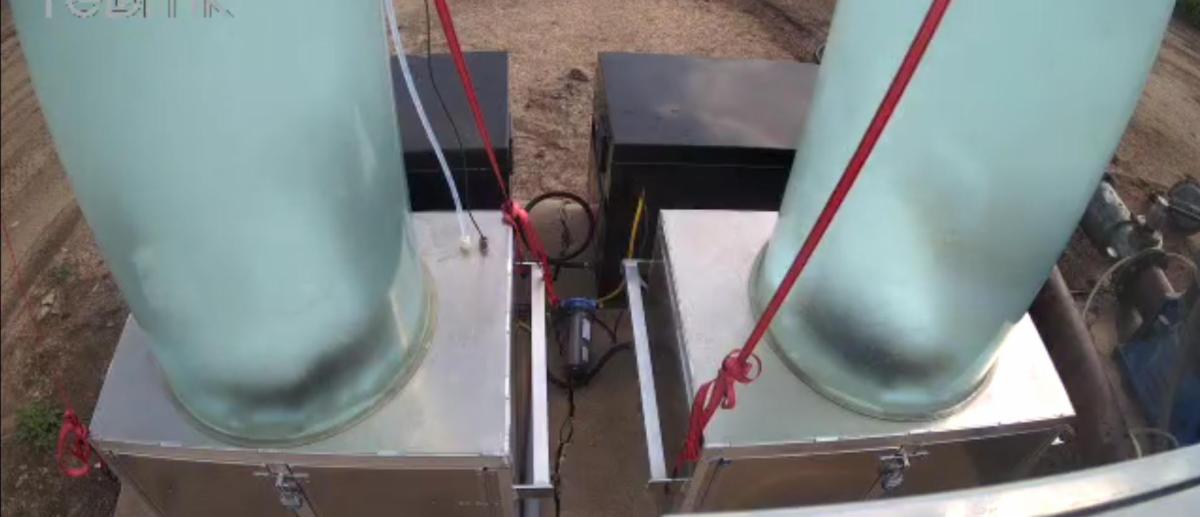
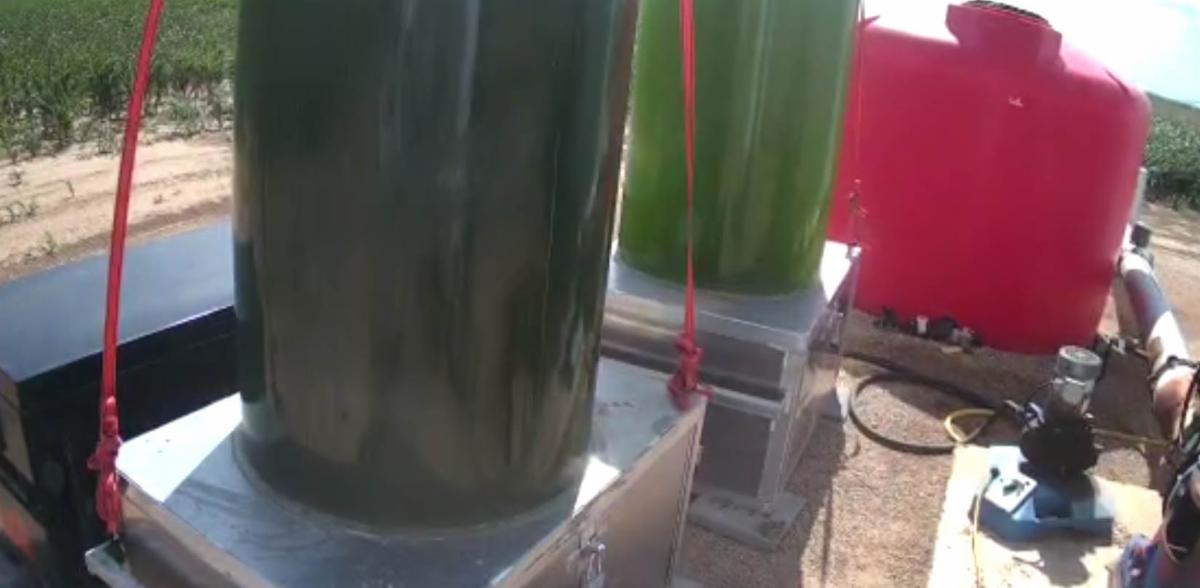
The District and its cooperators are working with an ag company called MyLand, located in Phoenix, Arizona. MyLand has designed a system for growing native microalgae harvested from a grower’s farm, then cultivated on the farm and introduced back into the soil. The idea is to take the long, slow processes of building soil health and regenerative agriculture and putting them on a fast-er track. Demonstration cooperator and District board member, Harold Grall said his interest was peaked by the potential to increase organic matter, “I was interested in being able to build organic matter levels in the soil which aids in water holding capacity.” The microalgae grows in the soil, increasing the organic matter in a relatively short time. The company says that increases in organic matter used to take decades can now be achieved in a few years.
Soil is generally comprised of four main elements: air, water, minerals, and organic matter. Northern Panhandle soils are made up of predominantly clay-type minerals with low to moderate organic material. Area farmers must amend the soil with various natural and synthetic fertilizers to supply the necessary nutrients for the crops to grow. The nutrients that are not taken up and used by the plants are often chemically bound-up in the soil and not available for future crops.
Minimum tillage and no-till farming practices, as well as cover crops and application of natural nutrients such as manure and compost, do help to return some organic matter to the soil. These practices may cause the overall organic matter to increase by a few tenths of a percent over as much as a decade. In comparison, demonstrations of the MyLand microalgae application system in Arizona have produced increases of a full percentage point in as little as three years. Grall says he first found out about MyLand when they came highly recommended almost two years ago. “I met Jonah Parker (MyLand Grower Relations Director) and he told me they were not ready to release the system at that time, but he stayed in touch while they tested and refined the process to get it ready for real-world applications,” said Grall.
When MyLand co-founder, Andy Ayers began working with microalgae decades ago, the attraction and intrigue was immediate. Ayers saw the potential microalgae held for a host of problems.
|