What do we have together?
|
In the second video of the Reframing Aging & Ageism series, Julie Sweetland, Ph.D., vice president for strategy and innovation of The Frameworks Institute, shares how we can change our language to incorporate
words that will help advance a more positive frame around aging.
Culture changes, shapes, and influences the way we process information--how we make meaning of messages, formulate, and reach decisions when it comes to complex social and scientific issues. As advocates, thinking carefully about using the subtle word choices we make, can make a BIG impact. Julie suggests revising pronouns to be inclusive by using words like we and us instead of words like they and them.
- Example: As we age, we all may need different options for transportation or housing
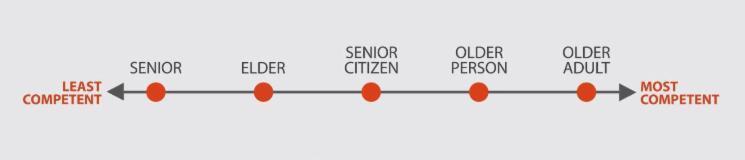
Recently, current terminology was rated on a 1 to 5 scale for perceived competence:
|
On average, this is what people think of when they hear these words:
|
Julie recommends using words like
older people;
older Americans; in a state context,
older Floridians; in a county context,
older Sarasotians, instead of elders, senior citizens, etc.
Video #2 Summary
Avoid references that have to do with disaster or crisis:
- Silver tsunami
- Grey wave
- Flood of older adults
Natural catastrophe words are suggestive of imagery that communicate a feeling of being overwhelmed, out of control or in a negative situation.
If the goal is to highlight increasing numbers of older Americans living longer, healthier lives,...
- Avoid using comparisons that separate out older people
- Avoid charts that communicate an economic pie
- Avoid using phrases like "the burden of social security"
- Avoid phrases that chunk older people in a group as "other"
We can all be helpful by using inclusive language that unites us. The one thing everybody has in common is that we are aging every day.
Together, if we are constant, consistent, and pay careful attention to the words we use, we will advance the breakdown of stereotypes surrounding ageism.
Age-Friendly Sarasota will showcase five more videos,
Throughout the videos, we will learn in depth about:
- Cultural models that people use to think about aging and older adults
- The values that are effective in shifting, expanding, and reorienting the way we think about aging
- Metaphors and how they affect people's thinking on ageism
|
Do We Really Understand Other Generations?
By Josephine Eisenberg
|
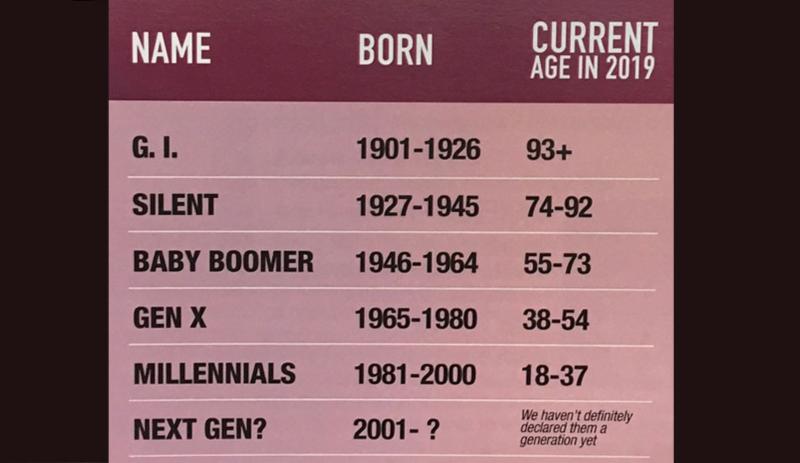
Reflections from the Reinvention Convention: The morning began with keynote speaker, Chuck Underwood, who has a phenomenal way of explaining the teachings and world events that have molded the core values of each of our generations. Mr. Underwood was able to give audience members a very truthful and touching insight into the five generations shaped by our one America. He defines a generation as an age group that shares similar basic core values because they absorbed similar "times" and "teachings" during their formative years, which are the first 18-23 years of life. A core value is created by what is happening in the world during your generation's formative years.
Chuck Underwood is one of the original pioneers who developed and popularized the field of generational studies. He is the founder and principal of the generational consulting firm, The Generational Imperative, Inc., with a client list that includes Hewlett-Packard, Procter & Gamble, Coca-Cola, Macy's, Veterans Healthcare Administration, United States Military, American Council on Education, and hundreds more across virtually all industries. He is also the author of America's Generations in the Workplace, Marketplace, and the Living Room.
As Mr. Underwood discussed each generation, there was an air of compassion and understanding sailing through the room as we came to understand each other a bit more and how we are all shaped by different generational core values. The Baby Boomers were touched by remembering their generation was responsible for propelling forward civil rights, female rights, and environmental rights. As a Gen X'er, I was reminded that a large part of the core values of my generation was formed by absorbing the full force of the feminist message. Congress passed Title IX, which demanded all federally funded schools must equalize sports offerings between boys and girls. The message to all girls was "There Are No Limits." Mental 'light bulbs' were flickering on very quickly for me as I understood how these world events helped shape the core values that guide me and how they guide the other generations.
|
 |
|
"We think of libraries as a place of resources, but they are also where people connect to ideas" - Debra Jacobs
|
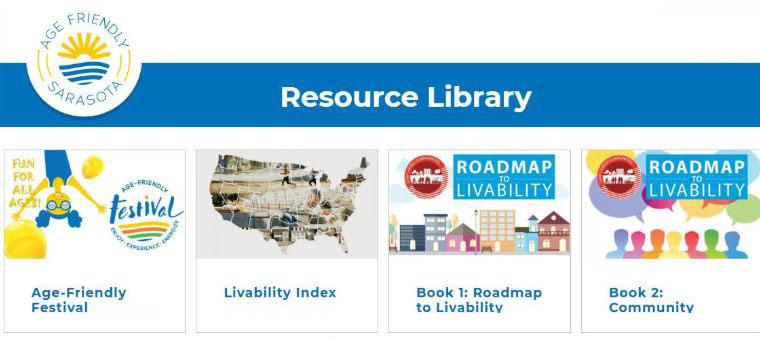
The age-friendly movement has been embraced by many worldwide - offering a variety of resources for communities to utilize. Explore the materials on the new
AFS Resource Page
that are impacting our journey towards being a community
#ForAllAges.
|
|
Locally, Nationally, & Globally, AFS is thankful for each community as we create an age-friendly world, together.
|
|
|
|
|

 (total time: 7 minutes)