PRODUCT STEWARDSHIP UPDATES |
|
Battery EPR Progress in CA |
|
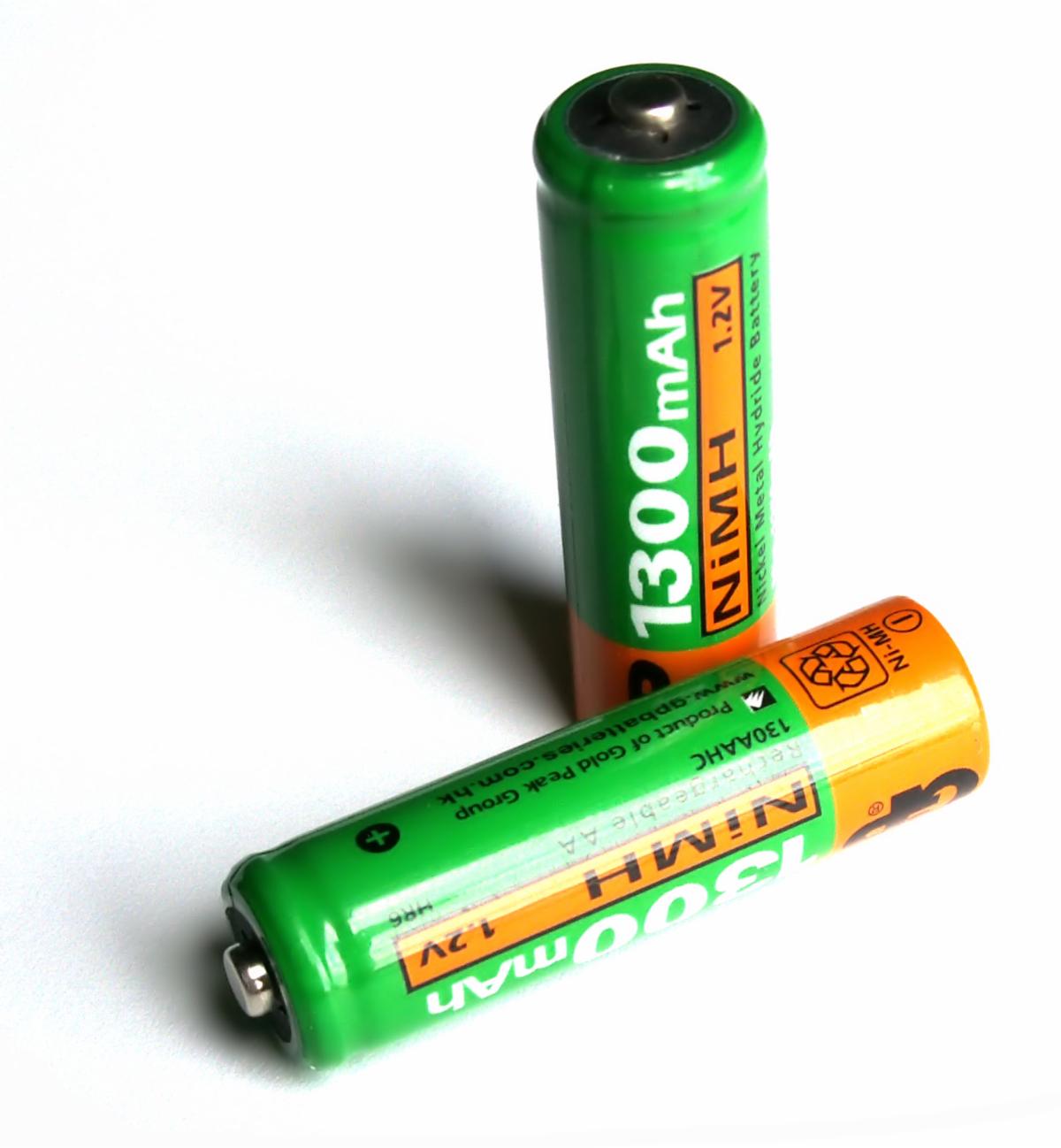
California’s Responsible Battery Recycling Act of 2022 (AB 2440) is headed to Governor Newsom's desk for signature. The bill was championed by the California Product Stewardship Council and Californians Against Waste and includes primary and rechargeable batteries, strong collection convenience standards and performance goals, comprehensive education and outreach requirements, and aspects that seek to advance equity in battery stewardship. AB 2440’s companion bill, SB 1215, has since had EPR elements removed and now amends California’s existing electronics recycling law (which is not EPR) to include batteries “embedded” in products and not designed to be easily removed; this bill is also headed to the Governor’s desk.
Over a decade ago, PSI began hosting meetings with state and local governments and other key stakeholders from across the United States to develop an evolved model for EPR batteries legislation based on global best practices. These ongoing discussions and the updated model helped shape legislation introduced in multiple states, which led to Vermont’s first-in-the-country single-use battery EPR law (2014) and the District of Columbia’s first-in-the-nation single-use and rechargeable battery law (2021). Our legislation incorporates best practices for EPR for batteries from well-established laws in Canada and the European Union and we applaud the forward momentum of effective battery EPR legislation in California.
|
|
Electronics EPR Continues to Evolve |
|
Today, there are 26 electronics EPR laws in 25 states and the District of Columbia but many are out of date. The recent introduction of a new bill in Pennsylvania that would revamp the state’s electronics EPR program follows a nationwide trend: This year, Michigan introduced a bill to update that state’s program and South Carolina enacted an EPR law that makes it the second state — after Illinois — to eliminate weight targets and increase access to collection, which are provisions of both new bills.
PSI is working with stakeholders in Alaska to adjust our model electronics EPR legislation and address that state’s unique transportation challenges and lack of existing infrastructure. We have also begun to collaborate with Oregon state and local governments and other stakeholders to update one of the earliest electronics EPR programs in the United States. Our goal is to ensure that both existing and emerging programs provide convenient collection services and ensure that program costs continue to be internalized by manufacturers.
|
|
Gas Cylinders Must Refill in CA |
|
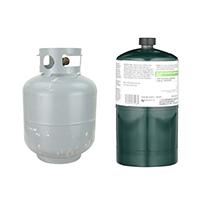
The California legislature recently passed legislation (SB 1256) that will ban sales of single use propane canisters that weigh two pounds when full. If signed by Governor Newsom, the ban will be effective as of January 1, 2028; it was also supported by the California Product Stewardship Council.
Although this is not an EPR law, it will phase out a single-use product for which there are reusable alternatives. Despite the fact that refillable and reusable products are available, many gas cylinders – such as those found in camping stoves and barbecues – end up as trash. The smallest amount of residual propane can cause explosions and fires, which can damage processing facilities and endanger workers, and metal recyclers typically refuse to accept cylinders unless they are visibly punctured and crushed. Because of the risks, they are costly to recycle and recycling options are few, even though they are made of valuable, recyclable materials.
In late 2020, PSI led a multi-stakeholder dialogue with the Connecticut Product Stewardship Council, local and state governments, nonprofits, recyclers, and gas cylinders manufacturers, ultimately resulting in the passage of HB 5142 into law in May 2022 that will create a first-in-the-nation EPR program for single use and reusable gas cylinders in Connecticut. Even reusable cylinders require an EPR program to manage the small percentage that are abandoned, end up in recycling facilities, or unusable.
|
|
Members and Partners receive regular legislative updates and can track EPR bills and laws in our Legislation Library.
|
|
JOIN US: POWERING UP FOR BATTERY EPR |
|
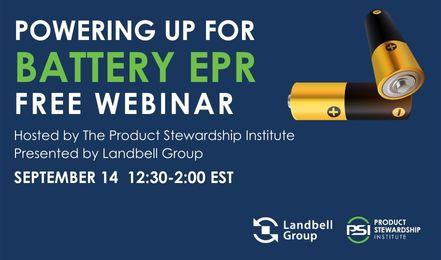
Global efforts to stabilize our climate have resulted in an increased use of electric bikes, scooters, and vehicles — and the batteries that power them. Extended producer responsibility for batteries provides an effective solution to preventing fires and environmental contamination, recovering valuable critical minerals, reducing greenhouse gases, and creating recycling jobs.
Please join us for a free "Powering Up for Battery EPR" webinar to discuss the past, present, and future of battery EPR. This webinar is open to everyone, but the video recording will be accessible only to PSI Members and Partners.
|
|
We recently launched an open platform where PSI Members can collaborate in real time. Called the PSI Packaging Action Hub, it is a space for state and local governments to coordinate and cross-pollinate on all things related to packaging EPR.
This is a pilot program for PSI Members, but we are considering developing Action Hub streams to other product categories and/or for PSI Partners, too. If we expanded the program, would you be interested in participating? Please let us know, in the anonymous poll below!
|
|
|
Are you interested in a Members and/or Partners Action Hub for multiple product categories?
|
|
|
|
PaintSquare covered the release of the International Paint Recycling Association (IPRA) 2021 Annual Report and quoted PSI’s Founder and CEO Scott Cassel, who helped launch the association in 2019: “Global sustainability is on the rise, and in response, IPRA continues to keep the recycled paint industry on the front lines. Together, we seek to lead the paint industry towards a zero-waste future and continue to promote the circular economy – both industry-wide and around the world.”
PCI published a writeup on our paint recycling program in Missouri, which is getting glowing reviews: “From a professional standpoint, the use of recycled paint just makes sense, not to mention the bonus of lower costs,” said Jay Berendzen of Porter, Berendzen & Associates, P.C. and lead architect on the Ashland city hall and police station renovation project. “I’d definitely consider recycled paint for future jobs and recommend it to our customers.”
“Four state-level elected officials who have worked on extended producer responsibility bills for packaging recently discussed how they became champions of recycling policy and offered tips to help advance legislation.” Resource Recycling shared a comprehensive overview of our recent packaging EPR webinar.
|
|
On Thursday, October 20th, the Paper and Plastics Recycling Conference will host a panel on “EPR and Sustainable Packaging” that includes Myles Cohen, Founder & Managing Director of Circular Ventures, who is also an advisor to the Pack Green Coalition, a PSI Partner.
Sydney Harris, PSI's Policy & Programs Manager, will present on an EPR panel hosted by David Eldridge, Editor of Plastics Recycling World magazine, at the Plastics Recycling World Conference, November 9-10 in Cleveland, OH.
|
|
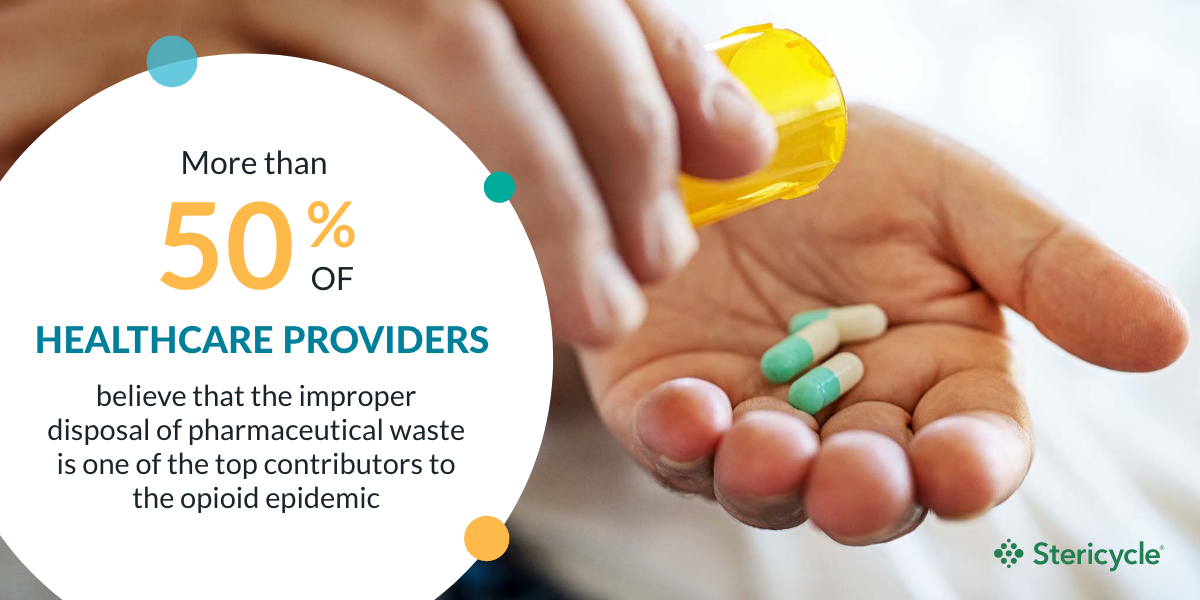
The report reveals crucial insights into healthcare workers’ perspectives on their work environments, including the effective management of medical waste in home care settings and the safe disposal of pharmaceuticals. On the heels of immense change brought on by modernization, new technology, changing expectations—and of course, the COVID-19 pandemic—the study aimed to better understand healthcare providers and administrators’ perspectives on the safety and standards needed to provide a quality care environment.
|
|
PSI is a founding member of the International Paint Recycling Association and we’re proud of the impact numbers in their 2021 Annual Report. Three years ago, in collaboration with recycled paint manufacturers, we helped establish IPRA and it's amazing to see how much the group has accomplished in just two short years! In 2021, IPRA members recycled or reused over 4.7 million gallons of paint, achieved a 71.4% paint-to-paint recycling rate, and supported more than 3,200 jobs in the recycling industry.
Data shared at the recent Resource Recycling Conference showed that old corrugated container (OCC) recycling is closer to 69% than the 91.4% reported by the American Forest & Paper Association in May. The disparity was attributed to the boxes used to import goods, which are not accounted for in the AF&PA calculation; a lower OCC rate would impact overall recycling numbers, because mixed paper, newspaper, and other paper fiber streams have lower recycling rates. At the conference, presenters included Myles Cohen, Managing Director of Circular Ventures, and Ryan Fox, corrugated market analyst at Bloomberg Intelligence.
The Northeast Recycling Council is hiring an Executive Director who can broaden NERC’s impact on minimizing waste, conserving natural resources, and advancing a sustainable economy through facilitated collaboration and action.
Thomas Coates recently became Program Director of the California Carpet Stewardship Program. Coates specializes in leading strategic environmental compliance analysis and most recently served as Lead Program Manager, Environment & Compliance for the City of Ontario, CA.
|
|
New battery EPR rules in India make producers responsible for collecting and refurbishing batteries, as well as making sure that recovered materials are used in new production.
We regularly share information like this on LinkedIn, Twitter, and Facebook. If you'd like to get these updates in real time, please follow our accounts. Thanks!
|
|
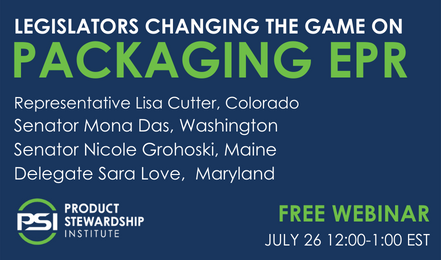
In 2022, 16 states introduced packaging EPR legislation and laws were enacted in Colorado and California. The video of “Legislators Changing the Game on Packaging EPR” with CO Representative Lisa Cutter, WA Senator Mona Das, ME Senator Nicole Grohoski, and MD Delegate Sara Love is now available to PSI Members and Partners.
|
|
The Product Stewardship Institute is a policy advocate and consulting 501(c)(3) nonprofit that powers the emerging circular economy. We rely on the generosity of our members, partners, and supporters to convene diverse stakeholders to build extended producer responsibility (EPR) policies, programs, and laws. Thank you!
|
|
The Product Stewardship Institute, Inc. is an equal opportunity employer and provider. Persons with disabilities who require alternatively formatted materials to ensure effective communication should contact Amanda Nicholson at amanda@productstewardship.us or 617.236.4855, TTY: use 711 or 800-439-2730; MassRelay.
|
|
|
|
|
|
|