|
See Nova Scotia White Sharks
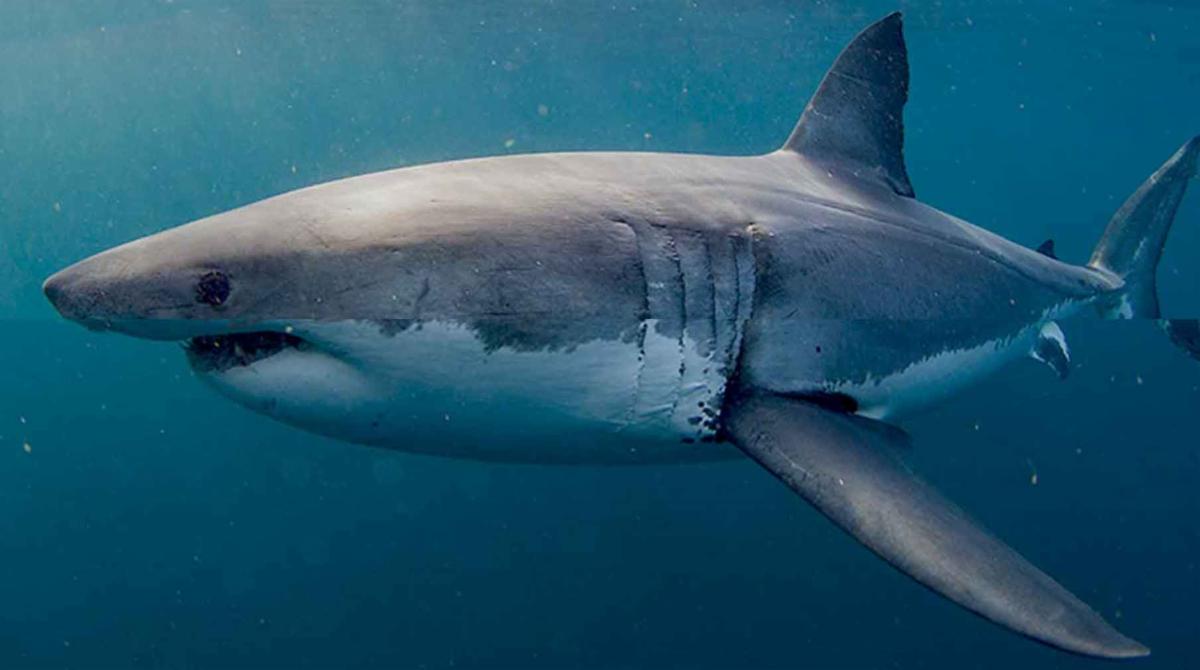
Nova Scotia is getting its first-ever white shark cage diving via a permit by the Canadian Government under the Species at Risk Act.
Marine biologist Dr. Neil Hammershlag of The Atlantic Shark Expedition, based out of Liverpool, N.S., is offering ecotourists an opportunity to join researchers on boat-based expeditions from August 1 to the end of October 2023. Participants may view sharks from the boat and/or underwater from the cage, learn from the research team, and observe scientific activities. The cost is $395 per person ($355 for students).
Learn more
| |
|
Plumbing the Depths
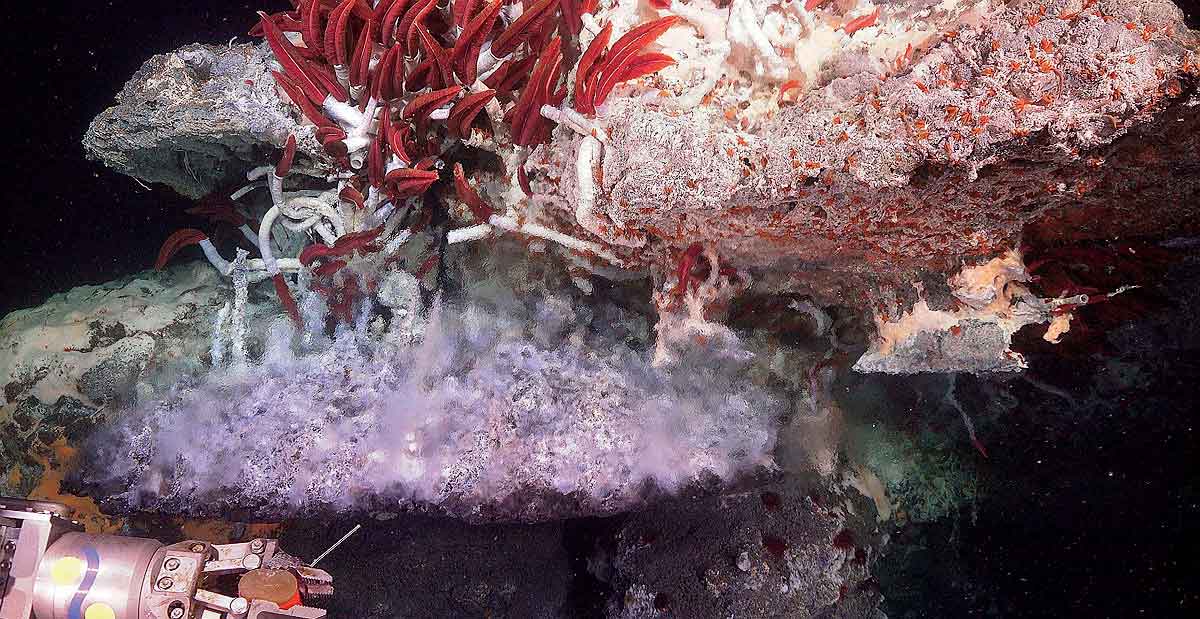
At the hydrothermal vents, where sunlight never penetrates, creatures live in total darkness. They build their bodies and exist in ways that seem to have little in common with inhabitants of sunlit realms. Humans and most other animals depend on the energy of the sun, eating plants or the species that feed on them, and breathing in the products of photosynthesis; vent dwellers draw on the energy of the planet, heated by the Earth’s molten core and are fed by bizarre reactions between seawater and rock.
This summer Peter Girguis, professor of organismal and evolutionary biology at Harvard's Biological Laboratories, and his crew will take pressure vessels he has invented on the Schmidt Ocean Institute’s research ship. July and August will find them off the coast of Costa Rica and farther south in the Galapagos, to plumb the depths where the ocean floor roils with hydrothermal vents.
Read more
| |
Whale Songs
Whales are highly social creatures which use sound to communicate and socialize with each other, and find food. "Singing", producing loud melodic notes and tones that closely mimic the sounds of music created by humans, are commonly referred as "whale songs".
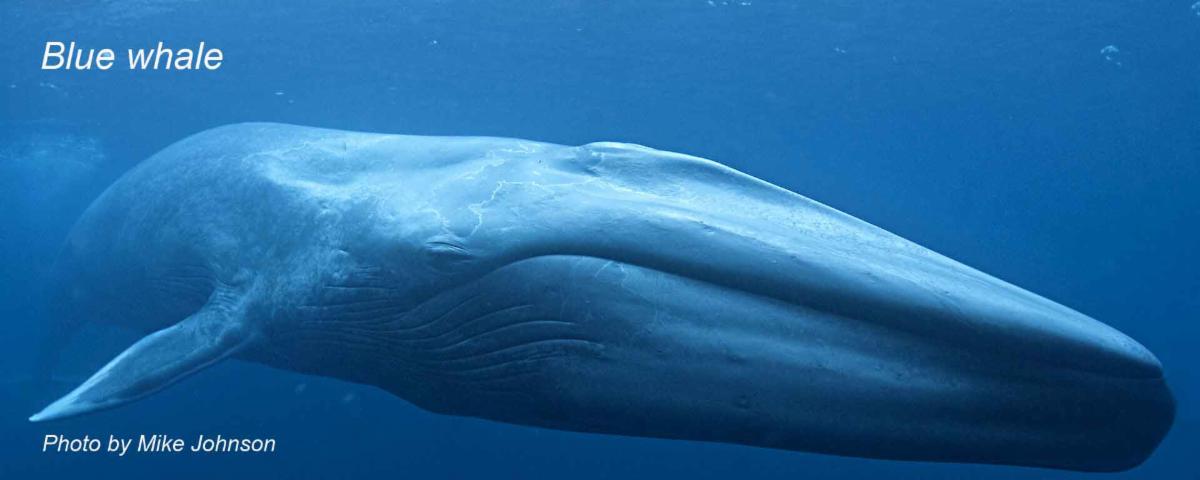
Baleen whales, such as humpback, minke, fin whales and the more distantly related bowhead whales, "sing". Blue whales, 80 m (262 feet) in length and weighing up to 200 tons, the largest animals on the planet, also make the loudest sounds, but we can barely hear their 180-decibel vocalizations because the sound frequency is so low.
Beluga whales are toothed whales that are so vocal and have such large repetroires they have earned the nickname, "sea canaries". The massive sperm whale, the largest toothed whale, produces elaborate buzzes, clicks and squeaks that it uses for ecolocation and find prey.
| |
|
Listen to the Sounds of Coral Reefs
Google is helping scientists monitoring the health of coral reefs by sifting through
hundreds of hours of recordings of coral reefs captured in over-fished and marine-protected areas across the world.
| |
|
Two Marine Mammals on the Brink of Extinction
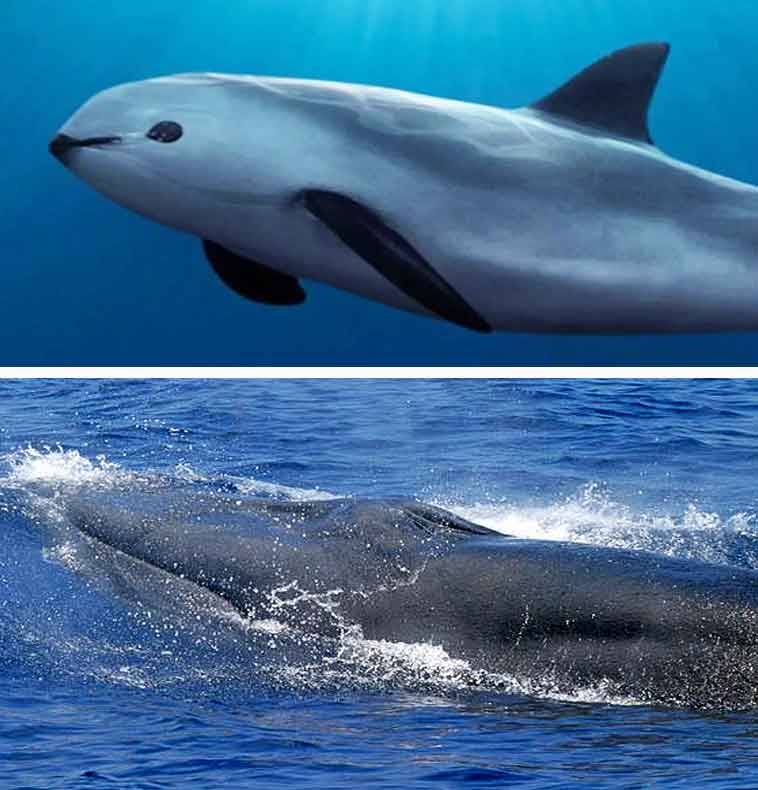
It is estimated that only eight vaquitas, Phocoena sinus, remain in Gulf of California, the only area in the world where they are found. Mexico's attempts to protect the species from the illegal totoaba fishery have been ineffectual.
Rice's whale, Balaenoptera ricei, is endemic to the northern Gulf of Mexico. Alongside the vaquita it is one of the most critically endangered cetaceans in the world. It is estimated that only 33 remain, with as few as 16 mature individuals remaining. Scientists believe that the industrialization of the Gulf of Mexico and the increase of anthropogenic activities in its habitat are primary contributors to their decline.
Read more
| |
|
By-The-Wind-Sailors Ashore on California Coast
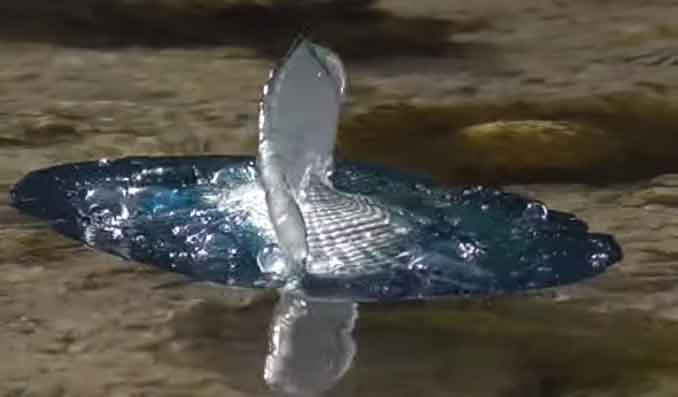
These small creatures with tiny blue tentacles may look like little jellyfish with tiny blue tentacles but they are hydroids known as Velella velella, also known as "by-the-wind sailors." Each has a transparent sail across the top of its body. They float in large numbers at the sea surface, drifting with the winds and ocean currents.
California State Parks report Velella velella have been washing ashore at Crystal Cove in Newport Beach, and they have been spotted as far north as Point Reyes National Seashore, north of San Francisco. and in San Clemente, Manhattan Beach and along other Southern California beaches. They are related to jellyfish and the Portuguese man-of-war, which can produce a painful stings. Although the tentacles of Velella velella are mostly harmless, it may be best not to touch the tentacles when you find one on the sand.
Learn more
| |
Caribbean Sea Urchin Die-Off Caused by Protozoan Parasite
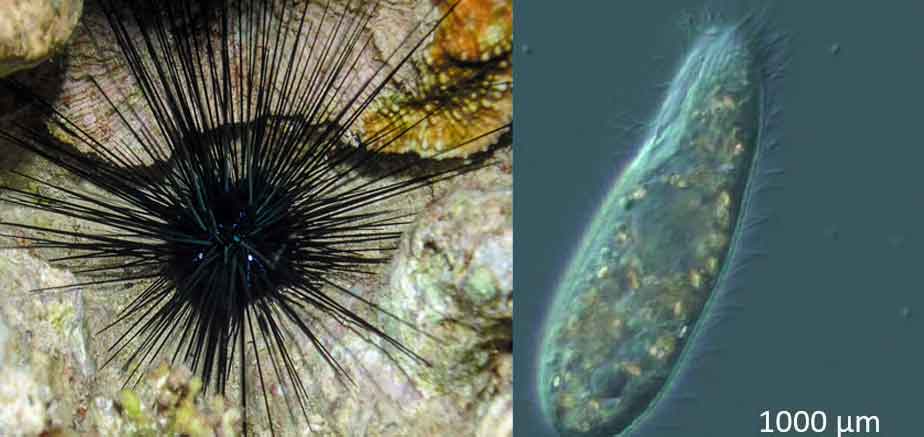
A severe die-off of long-spined sea urchins (Diadema antillarum) across the Caribbean Sea has had devastating consequences for coral reefs and surrounding marine ecosystems. The sea urchins are vital herbivores that graze on algae, which if left unchecked will outcompete corals for space and blanket them, block light and kill them. By feeding on algae, the sea urchins are essential to maintaining coral health and balance in the marine ecosystem.
A international team of 42 scientists has identified the culprit as Philaster apodigitiformis, a unicellular eukaryote that is part of a group of 8,000 species called ciliates. In the early 1980s, long-spined sea urchins were almost completely wiped out in the Caribbean leading to rapid degradation of many coral reefs across the region that persist today, with some coral species becoming extremely rare. Thirty years later, their populations rebounded, but only by an estimated 12% from pre-epidemic numbers.
Read more
| |
|
A Message from Stan Waterman
Stan sends his heartfelt thanks and warmest wishes to the many individuals who sent cards and photos to celebrate his 100th Birthday earlier this month.
Stan is the most influential and one of the best-known scuba divers in the world. He started freediving around 1935 (long before Cousteau came on the scene) when he was given a mask used by Japanese ama divers.
Stan taught us that we must love what we are doing throughout our lives. "I went diving and the sea took me in and it has never been dull, and I have never looked back or regretted it," he says.
During his long career, Stan was named a Legend of the Sea. He produced underwater films, Emmy Award winning television shows, authored hundreds of articles on sharks and ocean conservation, and two books. Stan introduced millions of people to sharks and the ocean ─ and he inspired us to care deeply about both.
Learn more
| |
|
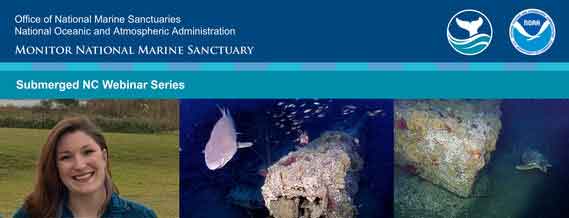
Submerged North Carolina: Shipwreck Ecosystems - Ecology and Conservation
DATE: April 26, 2023
TIME: 7 am Hawaii / 10 am Pacific / 12 pm Central / 1 pm Eastern
Ever wonder what happens to ships after they wreck? Join Cady Breslin, an educator with the North Carolina Aquarium on Roanoke Island will discuss how shipwrecks, over time, evolve into an oasis ecosystem. Learn about the harsh environment off the North Carolina coast known as the Graveyard of the Atlantic, and discover how it affects the biodiversity found in these treacherous waters. Learn how the North Carolina Aquariums work with NOAA to conserve the native species utilizing these unique spaces.
Register here
After registering, you will receive a confirmation email containing information about joining the webinar. The webinar ID is 584-199-939
| |
|
Seattle Port Event
DATE: Saturday April 29, 2023
TIME: 10 am to 5 pm PDT
Folks in the Seattle area can tour, join NOAA at Pier 46 for a tour of NOAA ship Okeanos Explorer, see the ROVs used to the explore the seafloor, and meet the expedition team of explorers as well as other NOAA scientists from the region.
| |
|
Notes
Amazon.com is offering an opportunity to generate donations to the Shark Research Institute at no extra cost to you. Simply start your shopping at smile.amazon.com/ch/22-3110087, confirm "Shark Research Institute, Inc." as your charity of choice, and Amazon will make a donation to our organization.
Consider a tax-deductible year-end gift to the Shark Research Institute. Just mail a check to SRI at 70 Heather Lane, Princeton, NJ 08540, USA, or go to the link on our website.
You may join or renew your membership in the Shark Research Institute, or make a donation of any size at https://www.sharks.org/donate
Note: All donations are tax-deductible from U.S. federal income taxes as
charitable donations and help fund our field research, advocacy and education programs.
| |
Please share this free weekly newsletter with your friends and family to help grow our audience. All they need to do to receive the newsletter is simply sign up on our website’s home page (https:www.sharks.org)
We all have a lot of work ahead to protect sharks and the ocean,
and combat climate change while there is still time.
| | | | |