Dear Mahopac Community,
Welcome to the first newsletter for the 2022-2023 school year! This will be a weekly publication showcasing the amazing students and staff in the Mahopac Central School District.
We are off to a great start for the school year. I am incredibly impressed with the caliber of our students and how engaged they are in learning. Most impressive to me is the welcoming culture in each of our schools where students and staff exhibit kindness and respect.
Please join me in welcoming Kathy Weinborg, our new Food Service Director, contracted through Aramark. Ms. Weinborg joins us from the Dobbs Ferry Union Free School District where she served as the Food Services Director for 15 years. Ms. Weinborg is no stranger to Mahopac having spent her first year working for Aramark in the Mahopac Schools.
“With my experience,” Ms. Weinborg said, “I hope to enhance the food program with new and innovative menu ideas for the students in order to increase participation and create excitement.”
Be sure to have your children try our school lunches in the near future. Please click here for an application should you wish to apply for Free or Reduced Price School Meals.
If you have not already done so, please join me at a Community Connections meeting for informal conversation and the opportunity to ask questions and share your ideas for continued success in our wonderful school district. The next monthly meetings are on November 17 at 11:30 a.m. at the Falls School and at 6 p.m. at Mahopac High School. I look forward to working collaboratively with the entire Mahopac community to support a culture where our students reach academic, social, and emotional excellence.
Sincerely yours,
Christine A. Tona
Superintendent of Schools
|
|
A Science Class Murder Most Foul |
|
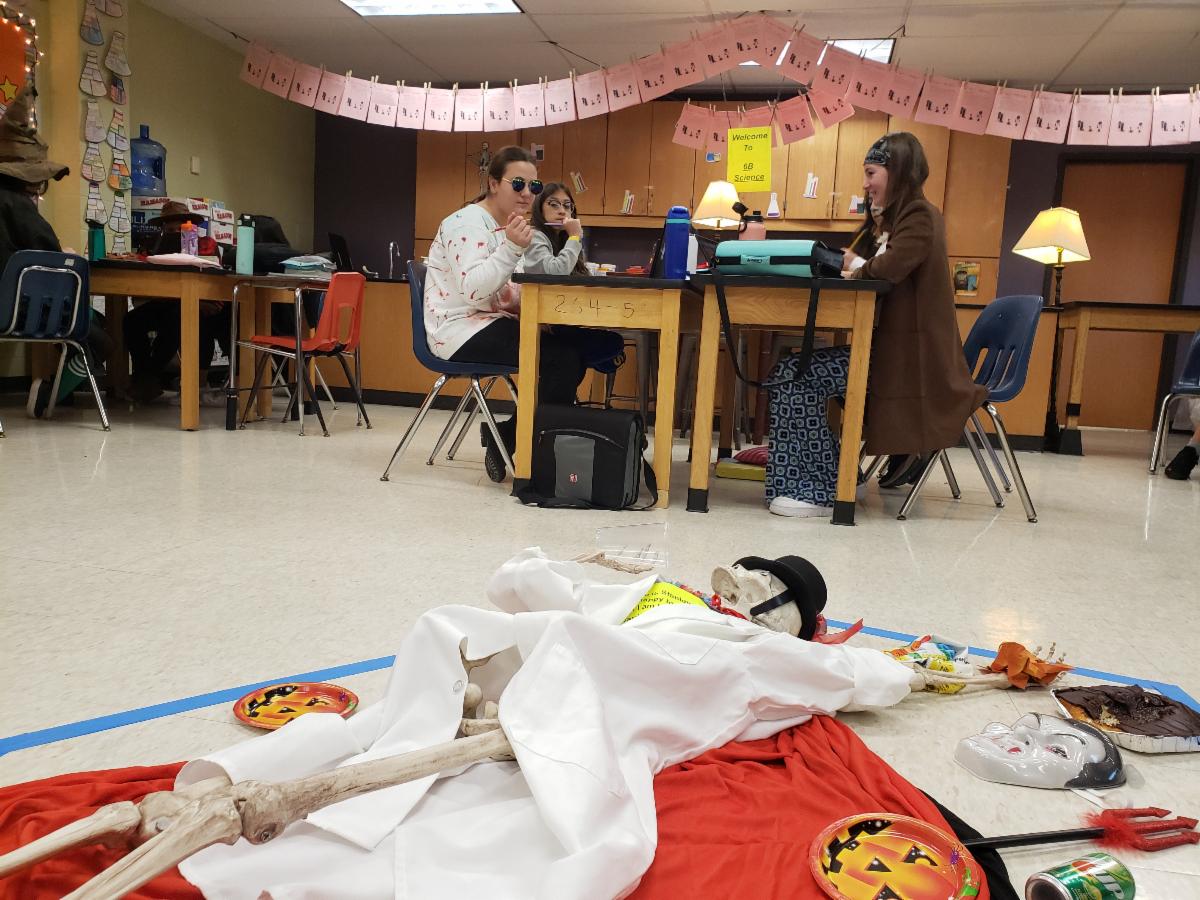
It had been days since the beloved science class mascot Stanley Skeleton met his untimely end in Mahopac Middle School…
In the center of science teacher Patrice Butala’s classroom lay the gruesome scene. Stanley, the class’s skeletal anatomical model, lay motionless, surrounded by evidence that could lead the class of intrepid sixth grade investigators to his killer.
When asked what leads he had, sixth grader Christopher Pilato said, “It was Ms. Fallman!”
Pilato pointed toward a mugshot of the suspect on his screen. He had noticed a distinct Halloween mask in the teacher’s hand, which just so happened to be found at the scene.
“No! There was also a red fingernail!” said student Hunter Rodriguez, pointing to a picture of another suspect, “It must have been both of them!”
While the junior detectives continued their work, the dramatic sounds of harpsichords and piano played and Butala explained that she had devised the lesson with the help of Jason Zides as part of the state’s Next Generation Science Standards.
“We’re teaching claim, evidence, and reasoning.” Butala said, “Tomorrow I’m going to go into those standards with them by asking ‘What is your claim? What happened to Stanley? What is your evidence?'"
While the search for the killer is entertaining for the sixth graders, they are learning evidence-based deductive reasoning as they solve the crime.
|
|
Elementary 5K Run at FDR Park |
|
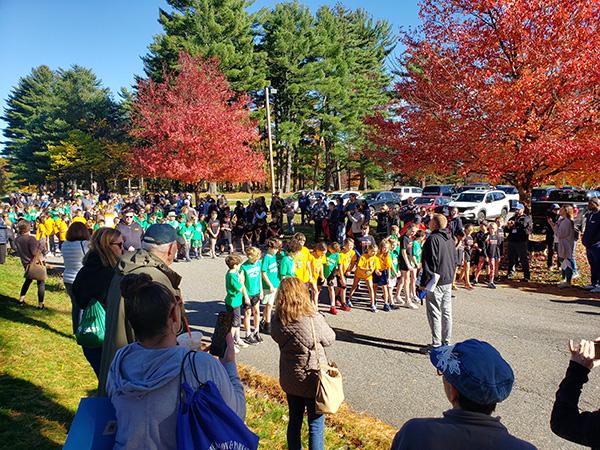
A flurry of yellow and red leaves fell around the students from Mahopac’s three elementary schools as they waited for the event that they had spent weeks preparing for to begin. Students were wearing their elementary school colors: green T-shirts for Fulmar Road, black for Austin Road and yellow for Lakeview.
The 145 second, third, fourth, and fifth-grade students sat on the grass at Franklin Delano Roosevelt Park listening as physical education teacher Bill Huestis prepared them for the run.
“When can we go?” one Austin Road student called out.
The students were about to run 3.1 miles in two laps around a paved, flat, circular route. Some of the students were nervous, while those who had run the 5K before were excited. After some final words of encouragement from Superintendent Christine Tona, students took to the starting line.
The shrill sound of a whistle carried across the park. The runners were off. They began in a pack but stretched out as the race progressed. Parents and teachers waited by the finish line.
After less than half an hour, students began cross the finish line, beginning with Isaiah Mitchell who said that “the race was only a little hard.”
Mitchell and his classmates had been training for the run in the weeks leading up to the event and had participated in the run at Lakeview Elementary School the prior week.
Parents and teachers congratulated students as they poured across the finish line, handing out ribbons and medals.
When asked how he was feeling after the race, Fulmar Road student Jonathan said that he felt good about his performance, but that “I kept looking back for other runners.”
That was when another Lakeview fourth grader chimed in, saying, “I’m happy and I’m hungry.”
|
|
Science Research Student Published in Journal of Emerging Investigators |
|
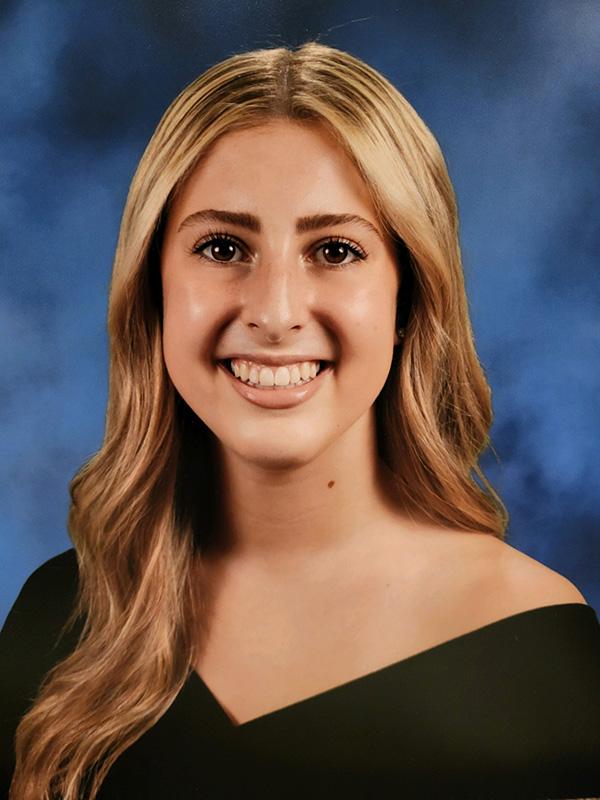
Long-term projects are always intimidating, especially when that work is destined to be judged. Mahopac High School Senior Megan Bloomer undertook just such a project in her sophomore year when she joined the high school’s Science Research Program, headed by Elizabeth Stephens.
Students begin the program in 10th grade but unlike most other electives, science research spans two to three years. During that time, students develop, research, present, and edit a science research project of their choosing. Since joining the program, Bloomer has presented her work in front of peers and adults.
“I have learned a lot about research,” she said. “And even if you don’t publish, you learn presentation skills.”
Students typically work on either one project for two years or two projects for a total of three years in the program. After choosing a project, students work with a mentor and Stephens on their project.
Early this year, Bloomer was contacted by the “Journal of Emerging Investigators,” a science journal for high school scientists, regarding her nine-page paper, titled, “The effect of adverse childhood experiences on e-cigarette usage in people aged 18-30 in the US.” She had been selected to edit her paper in preparation for being published.
“I was so excited, but there was still a lot of work to do with the editing,” Bloomer said.
After a lengthy editing process, Bloomer’s research paper was accepted and published on the journal’s website on Oct. 6.
Bloomer credited Mahopac’s Science Research Program with helping her develop college-level skills and build her resume. Stephens said the research program challenges students, provides valuable
experience and helps them to develop projects that will stand out after high school.
The program is still accepting 10th grade students who are interested in science research this year.
Those interested should contact Elizabeth Stephens at stephense@mahopac.org.
|
|
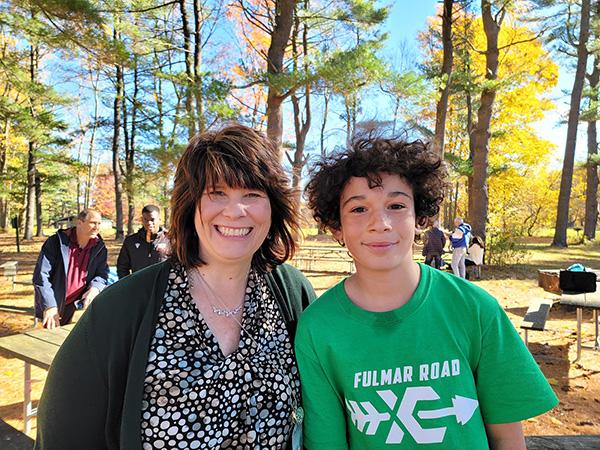
First place runner Isaiah Mitchell posing for a photo after the race with Mahopac Central School District Superintendent Christine A. Tona. |
|
|
|
11/8 - Superintendent's Conference Day/Election Day (School Closed for Students)
11/9 - SEPTO Meeting
11/11 - Veterans Day (Schools Closed)
|
|
Mission Statement
To prepare each and every student for college and career readiness, and
to educate all students to be responsible and productive members
of the global community.
|
|
Mahopac Central School District
179 East Lake Boulevard, Mahopac, NY 10541-1666
Phone: 845-628-3415 Fax: 845-628-5502
|
|
|
|
|
|
|