|
In This Issue:
From Paddi's Desk
CT Agency Corner
Municipal Roundup
Inside Scoop
This Day in CT History
| |
|
|
A total solar eclipse is like no other sight on Earth - except the last month of the CT State legislature!
How often do those of us who roam the state capitol find ourselves murmuring, "Just get used to it, we're all in the dark!" How fitting that sentiment could be on Monday, April 8th, as the solar eclipse traverses the United States from the Mexican border to the top of New England.
The focal point of this phenomenon is a 115-mile-wide corridor, known as the path of totality, which intersects 15 states—though two are only marginally within the 100% totality prediction. The farther one strays from this path, the less of the sun will be obscured during the eclipse when the moon passes between the Earth and the Sun, casting its shadow.
For those situated within the path of totality, the eclipse will present the most striking effects, with the Sun entirely concealed by the Moon. This path of totality will journey through parts of North America, including Mexico, the United States, and Canada.
According to Time and Date, Connecticut will experience just under a total solar eclipse, with roughly 90% of the sun obstructed by the moon. The partial solar eclipse is set to commence around 2:10 PM. EST, peaking at 3:27 PM EST, and returning to normality by 4:37 PM EST.
Now, you might be wondering, how this relates to the operations of state government. At first glance, it may seem like an odd comparison, but there are parallels between a solar eclipse and the workings of the CT legislature.
Consider the occasional rarity of both phenomena. A solar eclipse, a rare event that last occurred in 2017, transpires when the moon obscures sunlight by passing between the Earth and the Sun. Similarly, the work of a state legislature often entails significant events or decisions that occur sporadically, akin to darkness giving way to light. For instance, healthcare reform is a perennial issue in Hartford, with competing bills in the current session addressing the evolving healthcare landscape.
Alignment of forces is another commonality between a solar eclipse and the state capitol. Just as the alignment of the sun, moon, and earth is essential for an eclipse, political forces, interests, and agendas must align for legislation to pass. For example, in 2017, moderate House Democrats collaborated with Republicans and then Governor Dan Malloy to establish fiscal guardrails, now credited with stabilizing CT's fiscal health.
State governments are catalysts for change, whether through legislation, regulation, tax policy, or media advocacy, often reshaping the legal landscape. Similarly, a solar eclipse temporarily alters the physical landscape as darkness envelops the day, just as happened late last week with the passing of esteemed public servant and former US senator from CT Joseph Lieberman.
Both phenomena capture public attention due to their rarity and spectacle. Similarly, the work of a state legislature garners public engagement, particularly on contentious issues like early voting, as evidenced by recent low voter turnout in Connecticut – Just like the hoopla around Monday’s spectacular celestial event.
Complex processes and collaboration characterize both a solar eclipse and legislative work. Just as various stakeholders collaborate to study an eclipse, legislators, stakeholders, and citizens collaborate to address diverse concerns and interests through legislation.
As we approach the final days of the 2024 session and the impending eclipse this coming Monday, there's much to contemplate. Consider the safety of eclipse observers and the fate (aka safety) of legislative initiatives as they navigate committees and chambers. Just as weather conditions affect eclipse visibility, external factors can determine legislative success or failure.
Ultimately, while the analogy between a solar eclipse and the work of a state legislature may seem abstract, both involve unique events or processes requiring coordination, alignment, and engagement to achieve specific outcomes or objectives.
As the clock ticks towards Monday and 21 days left until the session's conclusion, remember these words from Hartford's own Harriet Beecher Stowe: "In the darkest hour, the soul is replenished and given strength to continue and endure."
| |
|
CT Agency Corner - Food Waste Goals Set by CT to Address Waste Crisis
A report issued this week cited by DEEP indicated that over 520,000 tons of food waste is generated by state residents with primarily the sources of that food waste from schools and universities. Several programs and organizations in Connecticut are actively working towards food waste reduction. One such initiative is Food Rescue US, which utilizes volunteers to collect surplus food from restaurants, grocers, and other businesses, redirecting it to those in need. Another organization, Community Plates, employs a similar model, leveraging technology to connect donors with surplus food to local food assistance organizations.
Connecticut's government is also implementing policies to encourage food waste reduction. DEEP has launched a "Don't Waste Food CT" campaign, providing resources and guidance to businesses, schools, and households on how to reduce food waste. Additionally, the state offers grants to support projects focused on food waste prevention and diversion.
Anaerobic digestion has been a main priority for the administration and has been the focus of new investment from the private sector leading into the state’s overall recycling goals. While it’s expensive and requires heavy subsidy, the future for this technology presents an economy of scale opportunity to create more infrastructure and improve on the overall effectiveness of its use. Food waste will be a pervasive issue needing resolution and without these types of recycling efforts, the state will still be well short of its reduction goals.
| |
|
For over three decades, Connecticut legislators have grappled with the contentious issue of eliminating the state's unpopular car tax. Despite efforts, the tax remains intact, as the finance committee failed to reach an agreement before their annual deadline expired. The primary obstacle lies in finding a viable alternative to the nearly $1 billion revenue generated annually by the car tax, crucial for municipalities' budget balancing. Lobbying groups representing local governments opposed the abolition, emphasizing the challenge of shifting the tax burden onto other entities, such as homeowners.
Recent proposals aimed to phase out the car tax over five years, offsetting the loss in revenue by increasing real estate assessments. However, this approach faced criticism, particularly regarding the potential burden on homeowners. Despite setbacks, proponents like Senate President Pro Tem Martin Looney (D-New Haven) remain committed to the cause, emphasizing the need for a comprehensive overhaul of the property tax system. The endeavor, championed by figures like Senator MD Rahman (D-Manchester), seeks to alleviate financial strains on vulnerable demographics such as senior citizens, students, and businesses, echoing personal experiences of hardship.
The issue of the car tax has a long history of political contention in Connecticut, with numerous failed attempts to abolish it dating back to the early 1990s. Various gubernatorial proposals have faltered in the face of opposition from legislators and local officials. Meanwhile, alongside the car tax debate, legislators are addressing the underperformance of the state's pension fund. A bipartisan effort has led to the approval of a bill seeking bids for an independent review of the fund's performance, prompted by revelations of its subpar performance compared to other states. This push for transparency and oversight reflects a broader commitment to financial accountability within the state government.
| |
|
Maybe Next Year
On the second floor of the legislative office building sits the Appropriations Committee room. Staff and legislators that encompass the most important budget committee in the building sift back and forth throughout the long days of the legislative session. Legislators of different committees, particularly the co-chairs, come down to see if members of the Appropriations Committee are around to get a sense of the latest on budget negotiations. It’s a great spot to be located. It’s usually bustling with legislators and lobbyists and this past week was no different, despite the news. This Committee is tasked with putting forward a budget that will be a rebuttal to the Governor’s. After months of public hearings, hundreds of people coming to testify, and great work done by so many stakeholders to “sing for their supper,” like Oliver Twist, this Committee will be making the rare move of not putting forward a substantive budget. What does that even mean? Let’s take a look.
It’s not exceedingly rare for the legislature to be unable to push a budget forward, the CT Mirror puts it well here from their great write-up on Tuesday: “…legislators have increasingly struggled to craft budgets in all years since 2017, despite an unprecedented explosion in state revenues. The 2017 budget controls, commonly called “fiscal guardrails,” have generated huge surpluses while tightening the reins on how most resources can be spent.” So – here we are, one day after the Appropriations Committee gaveled in, caucused for a few hours, and came back in for their final meeting to essentially say, we are sticking to the budget that passed last year, it’s bipartisan. The caveat to that, is the allocation of any ARPA dollars that can be clawed back and appropriated. That is the next big question for those immersed in the budget of the state of Connecticut, how much money is there is unspent ARPA dollars and where can it go. Add that to the discussion around potential revenue intercepts and the middle of April could bring news that some priorities are happy about (think higher ed, nonprofit providers, and behavioral health stakeholders). As of today, we are in an interesting spot. Per usual, we have a lot more that is going to come. What comes when Monday hits is a month until the end of session and the majority of the work still to be done.
| |
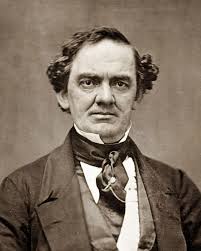
April 5: P.T. Barnum Becomes Bridgeport's Mayor - Not His Greatest Show
Today in 1875, Phineas T. Barnum was elected Mayor of Bridgeport, at the age of 64. Though internationally acclaimed as an entertainment impresario and well respected as a politician at the state level, Barnum’s short mayoral tenure was not the greatest showing for a man still remembered as one of America’s most successful entertainers, entrepreneurs, authors, and philanthropists.
P. T. Barnum rose to fame through the success of his American Museum, which opened in New York City in 1841, 31 years before his mayoral bid. The must-see attraction boasted oddities and curiosities of both certain and dubious veracity, from a working model of Niagara Falls to the alleged remains of a “Feejee mermaid”. Barnum cultivated a reputation for being a peddler of “humbugs” – exhibits that challenged observers to determine for themselves whether what they saw was real or fake (and if fake, a “humbug”). But he also had a highly moralistic side, born of his universalist religious convictions and a mid-life conversion to temperance, that is, complete abstinence from alcohol. Politically, he was a champion for the moral reforms advanced by the 19th-century Temperance Movement. He also was an ardent advocate for full citizenship for black Americans as outlined in the Fourteenth Amendment. To advance these goals, Barnum ran successfully as a Republican candidate for the Connecticut state legislature in 1866, and served very effectively for four terms in the state House of Representatives.
In 1875, wanting to see his temperance policies implemented in the city he loved. Barnum decided to run for mayor of his hometown of Bridgeport, an office he won handily after a month-long campaign. As the industrializing city’s mayor, however, the moralism that won him kudos in the state legislature received an altogether different welcome. His mayoral edicts, which included very strict enforcement of liquor laws, shutting down the city’s gambling “hells” and brothels, reducing the size of city government, and providing forced employment for “loungers and loafers,” soon put him at all-out war with Bridgeport’s Democratic council, aldermen and their allies in the press. Barnum’s tenure as mayor was marked by unending, contentious, disputes. After only nine months, Barnum announced he would leave office at the end of his one-year term, saying, “No one can congratulate me on the event more heartily than I do myself.”
After his not-quite-stellar mayoral stint, Barnum once again turned his attention toward producing entertainment for the masses. In 1881, he merged his already renowned “Greatest Show on Earth” with the show of his competitor James Bailey , creating “Barnum & Bailey’s Circus,” – later Ringling Brothers & Barnum and Bailey’s Circus – which ran continuously for 137 years, closing in 2017.
Barnum remained Bridgeport’s most famous and philanthropic citizen. He continued to invest in his adopted hometown, donating land to create the city’s Seaside Park, becoming one of the founders of Bridgeport Hospital, and building the Barnum Institute of Science and History, today’s Barnum Museum, as a lasting legacy to the city’s cultural and scientific achievement. To honor the man who had been a much better citizen than a mayor, the city erected a monument to Barnum in Seaside Park after his death in 1891.
To view the full story on the CT Historian's website, click here.
| |
Sullivan & LeShane, Inc.
www.ctlobby.com | (860) 560-0000
| | | | |