ISSUE #37 | January 17, 2023 | |
 | |
Tara Bynum & Kabria Baumgartner on Defiant Joy
Join us for virtual conversation
On Thursday, March 2, at 2:30 p.m. CST, Professors Tara Bynum (English, CLAS) and Kabria Baumgartner (History and Africana Studies, Northeastern University) will think together about shared interests inspired by Bynum's new book, Reading Pleasures: Everyday Black Living in Early America (University of Illinois Press), which tells the stories of four early American writers who expressed defiant joy despite living while enslaved or only nominally free.
Bynum, a 2021 recipient of the Book Ends: Obermann/OVPR Book Completion Workshop award, says that she and Baumgartner will discuss "the pleasure of reading in the 'archive,' the individual and collective experiences of joy in the lives of Wheatley, Gronniosaw, Marrant, and Walker, and what these eighteenth-century pleasures mean for us at present."
Hear Professor Bynum in person at Prairie Lights on Wednesday, March 22, 2023, from 7:00–8:30 p.m. The Prairie Lights event is hosted by the OVPR and will feature Bynum in conversation with Ashley Howard (History, CLAS).
|
Interdisciplinary Research Teams in the Spotlight! | |
From Salamanders to Sundance:
As part of their Summer 2019 Obermann Interdisciplinary Research Grant project, Mary Helena Clark (School of Art, The Cooper Union) and Mike Gibisser (Cinematic Arts) developed a multimedia documentary about transformation, alchemy, regeneration, contamination, and interdependence through the lens of the Lake Pátzcuaro salamanders and the group of nuns keeping the species alive. Now complete, the film—A Common Sequence—will premiere this month at the Sundance Film Festival!
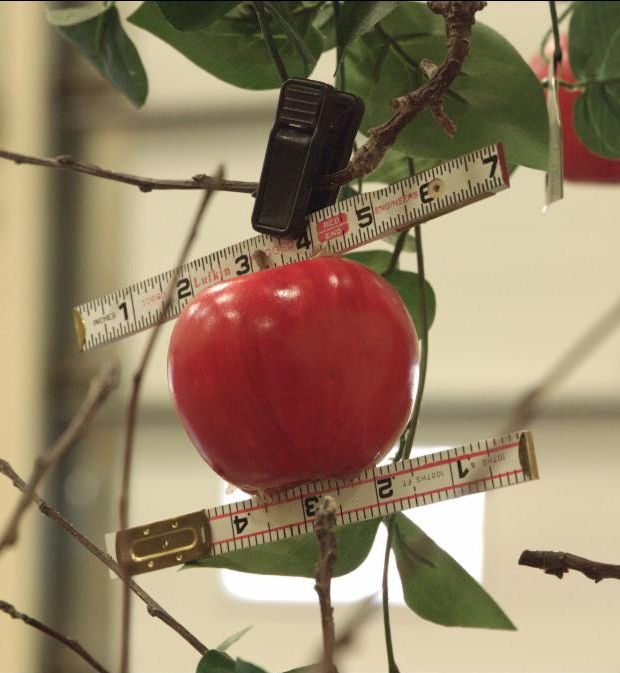
Delving into labor and science practices, A Common Sequence examines who gets to work with the essentials of life—saving animals from extinction, researching medicine, harvesting food, coding the genome—in our modern world controlled by data. Clark and Gibisser take us to the areas and people involved in these physical and political worlds. Take, for instance, the achoque salamander, which can regenerate limbs and even its heart; the intellectual property rights of apple trees; or the commodification of human DNA. The film eloquently guides us through the philosophy of what is “common” to everyone in nature and the complicated pursuits of owning materials of the planet and even our bodies. Watch online January 24-30!
| |
Training Rural Librarians to Organize Inclusive Community Archives:
In Summer 2021, Micah Bateman (SLIS) and Lindsay Mattock (SLIS) used their Obermann Interdisciplinary Research Grant to develop a nine-credit online certificate program to train working LIS professionals in community memory practices, such as using digital tools to provide broad access to communities’ cultural heritage collections.
In September 2022, the Institute of Museum and Library Services awarded Bateman and Mattock a $150,000 Laura Bush 21st Century Librarian Program Grant to further their work. Their project, Activating Archives in Remote Communities: Training Rural LIS Professionals for Inclusive Memory Work, will investigate ways small and rural libraries can increase their capacity to organize community archives while being sensitive to the diversity and equity of the voices within.
"Rural Iowa communities have queer, disabled, and impoverished people, who have stories that are less documented or don't feel a sense of belonging enough to volunteer activities for libraries or historical societies," Bateman says. "We will try to create training materials that assume no prior knowledge but encourage the inclusion of stories from people historically excluded from community stories [...] Studies show that when communities engage in history and memory-making and get to tell their own stories, they have a better sense of community overall."
| |
|
Writing Group at Obermann
Get support & accountability
If you're seeking camaraderie in your writing life, consider joining the spring Obermann-sponsored writing group. Facilitated by PhD student Kaity Lindgren-Hansen (Religious Studies), the group meets on Wednesday mornings from 12:30-2:00 p.m. at the Obermann Center (111 Church St.), beginning January 18. A virtual option is available as well.
The group will focus on accountability and structured time to write in community. Members will begin and end each session with time to set goals for the coming week and to celebrate each other's writing successes. In order to prioritize writing during the meeting, they will use the pomodoro technique (or other strategies folks would like to try!) We currently have space for four people willing to commit to weekly meetings over the course of the semester. Reach out to kaitlyn-lindgren@uiowa.edu.
|
 | |
Apply to Transform a Graduate Seminar to a Humanities Lab
Letters of inquiry due March 7; Application info session Jan. 23
| |
This year, our Mellon Humanities for the Public Good grant is funding four graduate humanities labs that are transforming graduate courses in English, Cinematic Arts, Linguistics, and History. Faculty members are reimagining traditional seminars as applied, experiential “labs” that offer graduate students meaningful ways to connect advanced studies in the humanities with both a social challenge and skills valued in multiple career settings.
We can provide funding to develop two additional labs in summer 2023. The $15,000 funding can support a planning team including faculty, staff, graduate students, and/or community partners to work together in summer 2023 to develop the lab. In addition, the host department receives $10,000 to acknowledge their commitment to experimentation and collaboration. The course should be offered in the 2023-24 or 2024-25 academic year.
Interested in applying? Join Teresa Mangum at an information session on Monday, January 23, from 3:00-4:00 at the Obermann Center.
|
|
Join one of 29 Obermann Working Groups!
Find one that fits your interests
When you become part of one of our Obermann Working Groups, you'll be in conversation with UI faculty, staff, graduate students, and, in some cases, community members. We're hosting a record number of groups this year, whose foci range from academic podcasting to reproductive justice and from Jewish studies to the health humanities. Read about all of the groups and find directors' emails. Reach out to these group leaders to join a meeting early in the semester to discern if you'd like to become an active member.
| Awards, Accomplishments, & Other Happy News |
-
Shanna Greene Benjamin ('16 Fellow-in-Residence) was awarded honorable mention for the Modern Language Association of America's William Sanders Scarborough Prize for her book, Half in Shadow: The Life and Legacy of Nellie Y. McKay (University of North Carolina Press).
-
Kristy Nabhan-Warren (to whom the Obermann Center reports) received the 2023 Distinguished Teaching Award from the American Catholic Historical Association.
-
Dominic Dongilli (HPG RA and intern) is one of 70 students featured in the OVPR's 2023 Dare to Discover campaign for his inspired research on animal histories and the American zoo — and María Leonor Márquez Ponce (HPG intern) is featured for her research on the higher education experiences of Chicano/a and Latino/a/x students!
|
|
|
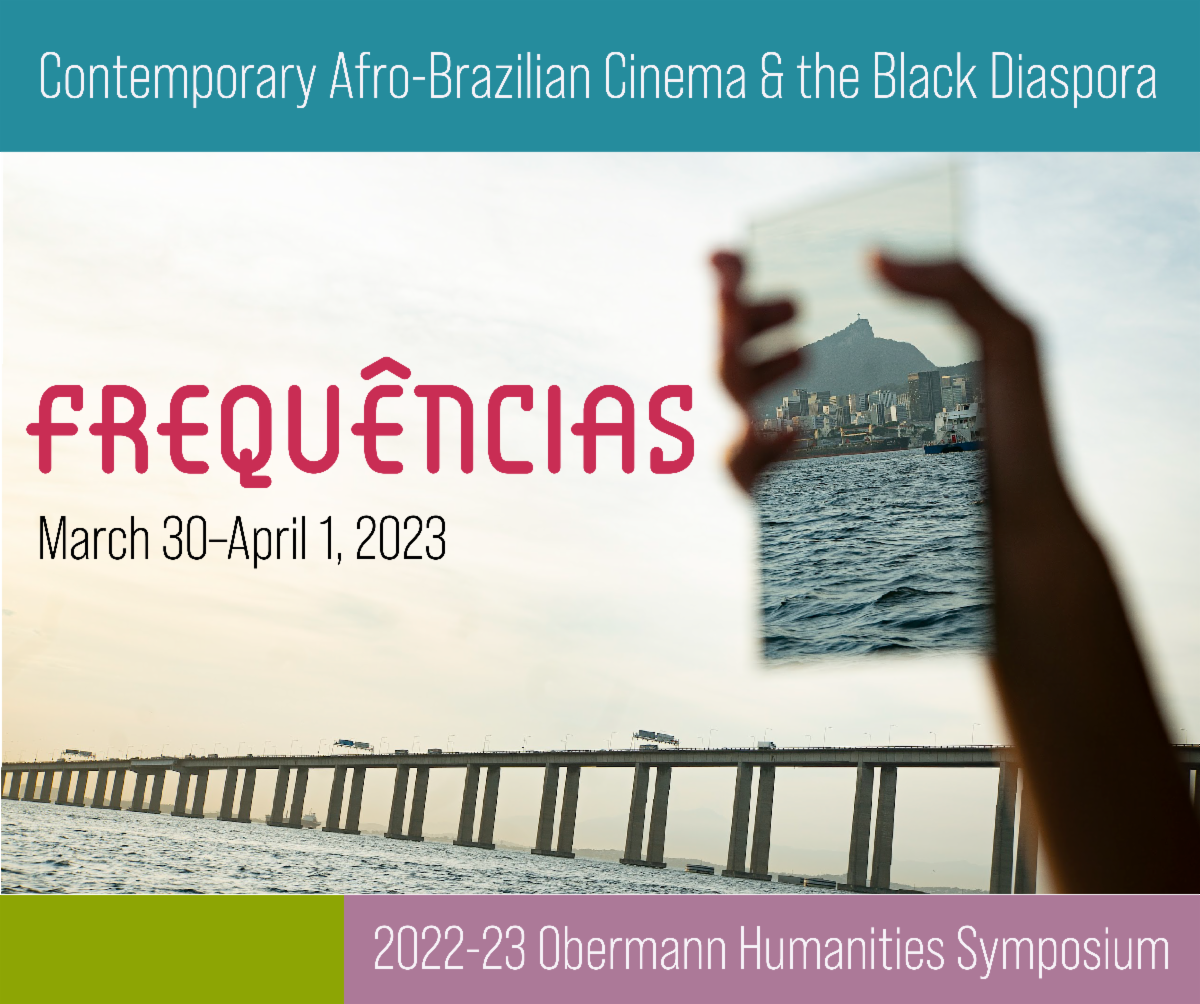
Schedule Announced for Frequências: Contemporary
Afro-Brazilian Cinema & the Black Diaspora
Symposium will feature renowned scholar-artists, "interventions"
From March 30–April 1, 2023, we will welcome the following filmmakers, artists, scholars, and critics from across the globe:
-
Miryam Charles, filmmaker and director of photography
-
Tatiana Carvalho Costa, curator, teacher, and doctoral student at the Federal University of Minas Gerais
-
Michael B. Gillespie, Associate Professor in the Department of Cinema Studies at NYU's Tisch School of the Arts
-
Aline Motta, Brazilian filmmaker
-
Grace Passô, Brazilian actress, director and playwright
-
Yasmina Price, writer, researcher, and PhD student at Yale University
-
Cauleen Smith, Los Angeles-based interdisciplinary artist
We have asked our speakers not only to share their own work, but to build a multi-dimensional conversation of words, images, and performance in response to a quotation from the work of Rogers S. Berlind Professor Tina M. Campt, a Black feminist theorist of visual culture and contemporary art and lead convener of the Practicing Refusal Collective and the Sojourner Project:
“Attending to frequency is, at its core, a practice of attunement—an attunement to waves, rhythms, and cycles of return that create new formations and new points of departure.” Your response can take any form you wish: improvisation, performance, presentation of scholarship, personal, film clips, sound clips, stills, multimedia, conversation with other participants and/or the audience, the popular interactive “versus” format where participants take turns playing media, etc. The only limit is your imagination.”
—Tina M. Campt, A Black Gaze: Artists Changing How We See (MIT Press, 2023)
Presenters’ "interventions" will take a variety of forms: improvisation, performance, presentation of scholarship, personal, film clips, sound clips, stills, multimedia, collaboration with other participants, a conversation with the audience. The goal is to incite, inspire, and engage the audience to join the organizers and participants—both scholars and filmmakers—in an act of creativity and imagination in response to the films, performances, and theorizations of Afro-Brazilian film, history, and culture. We look forward to collective conversations on contemporary aesthetic practices of the Black diaspora in Africa, the Caribbean, North America, and Europe.
| |
Individuals with disabilities are encouraged to attend all University of Iowa–sponsored events. If you are a person with a disability who requires a reasonable accommodation in order to participate in our programs, please contact Erin Hackathorn in advance at 319-335-4034 or erin-hackathorn@uiowa.edu. | |
| | | |