Recent Publications From the Pacific Northwest Research Station: 1st Quarter 2024 |
|
 |
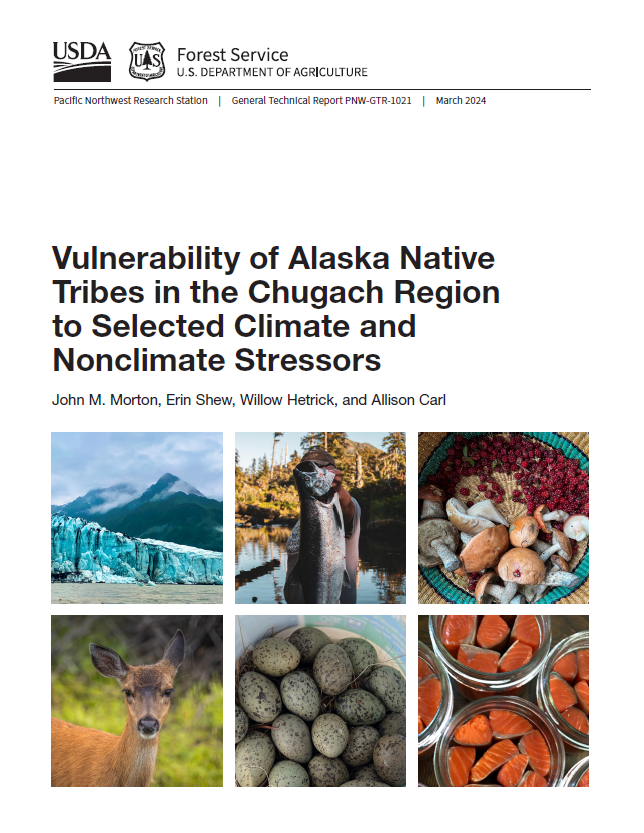
This report assesses the vulnerability of seven Alaska Native tribes in the Chugach region, which includes Prince William Sound (tribes in Chenega, Cordova, Qutekcak [Seward], Tatitlek, and Valdez) and the adjoining Kenai Peninsula (Nanwalek and Port Graham), to key climate and nonclimate stressors. It supplements the interagency Climate Change Vulnerability Assessment for the Chugach National Forest and the Kenai Peninsula that was published in 2017.
Over the next 50 years, all communities are generally expected to experience higher temperatures, with decreasing snowpack along the coast where these villages are located. However, at a finer scale, neither climate change nor natural resource distribution are uniform among communities.
Morton, John M.; Shew, Erin; Hetrick, Willow; Carl, Allison. 2024. Gen. Tech. Rep. PNW-GTR-1021. Portland, OR: U.S. Department of Agriculture, Forest Service, Pacific Northwest Research Station. 71 p. (Online only).
|
|
|
|
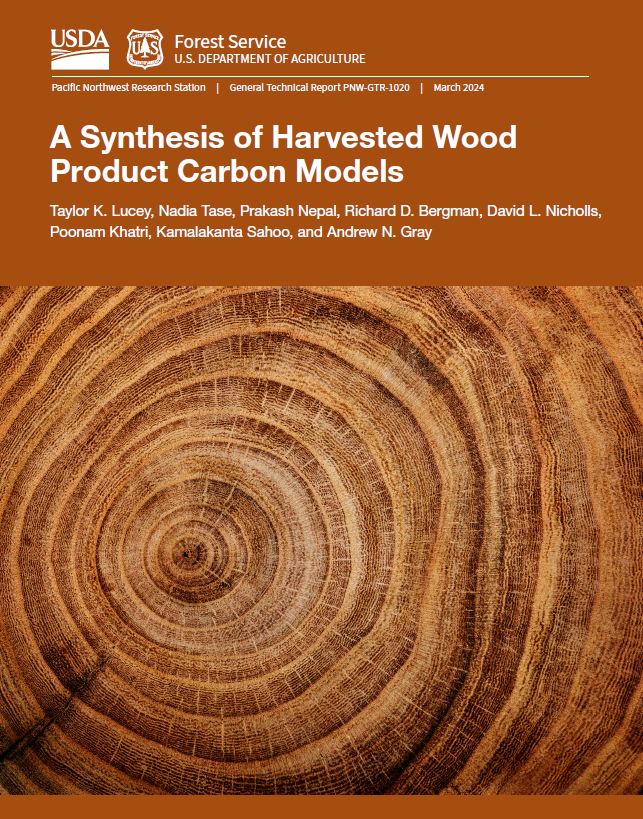
As local, state, and national entities develop forest management objectives that address climate change mitigation, there is a need to consider the short- and long-term fate of carbon in harvested wood products. The goals of this synthesis were to (1) review and synthesize the functionality of current harvested wood product carbon models available for use in the United States and Canada; (2) describe the role of life-cycle assessment to estimate overall greenhouse gas implications of using harvested wood products instead of alternative nonwood materials or fossil-fuel-based energy (i.e., substitution); and (3) discuss economic feedbacks of timber supply, demand, and price between harvested wood products and forest management.
Lucey, Taylor K.; Tase, Nadia; Nepal, Prakash; Bergman, Richard D.; Nicholls, David L.; Khatri, Poonam; Sahoo, Kamalakanta; Gray, Andrew N. 2024. Gen. Tech. Rep. PNW-GTR-1020. Portland, OR: U.S. Department of Agriculture, Forest Service, Pacific Northwest Research Station. 73 p.
|
|
|
|
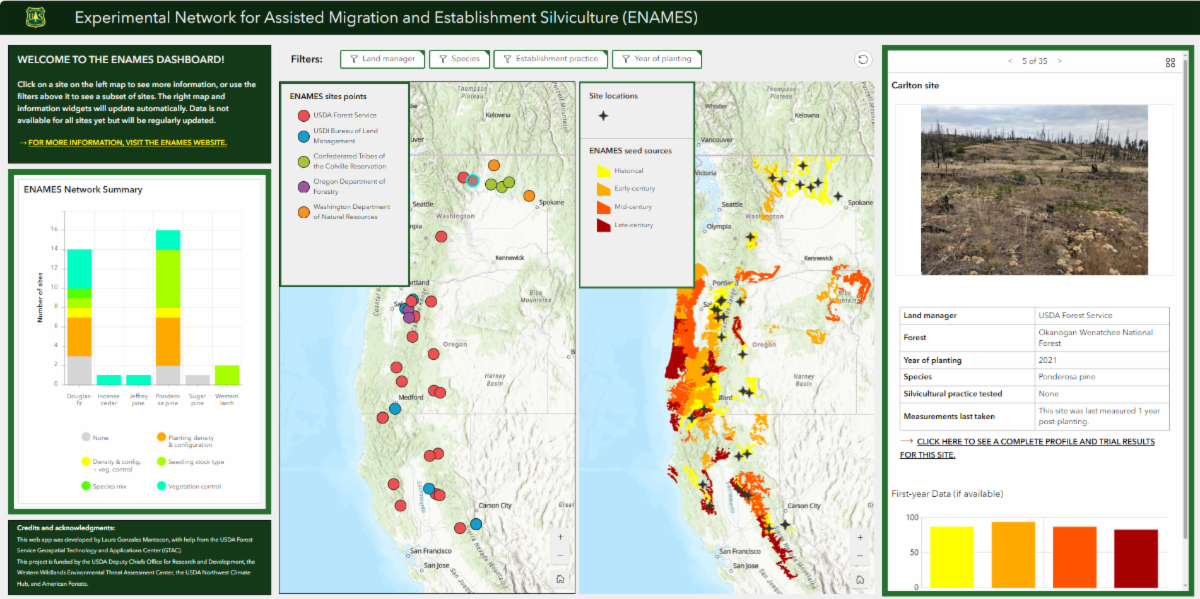
This interactive tool, developed by Laura Gonzalez Mantecon and Michelle Agne, provides information about 35 sites within the Experimental Network for Assisted Migration and Establishment Silviculture (ENAMES) study. The tool shows the ENAMES sites, seed sources, site-specific and network-wide data, and site information, as well as links to complete site profiles. It can used by anyone interested in climate-informed reforestation and strategies to increase reforestation success. |
|
|
|
|
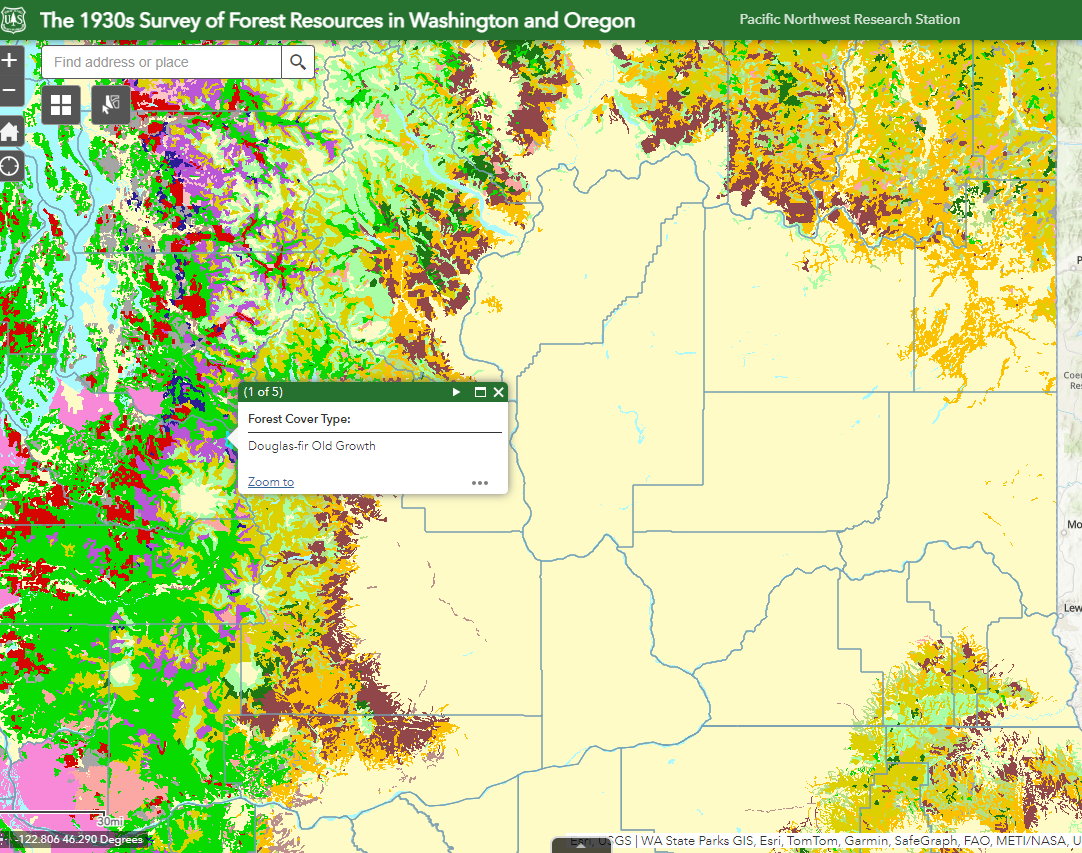
The first large-scale survey of forest resources in the Pacific Northwest began in the early 1930s in response to the passage of the 1928 McSweeney-McNary Forestry Research Act. Nearly 100 years since the original survey, these data are now viewable as an interactive map, developed by Connie Harrington and Adam Cameron. This project is an offshoot of a report (PNW-GTR-584) published in 2003 that included a CD-ROM with the digitized data. The current effort makes those data accessible to today’s researchers. The data were also recently added to the Forest Service’s Research Data Archive to ensure their availability to future researchers.
|
|
|
|
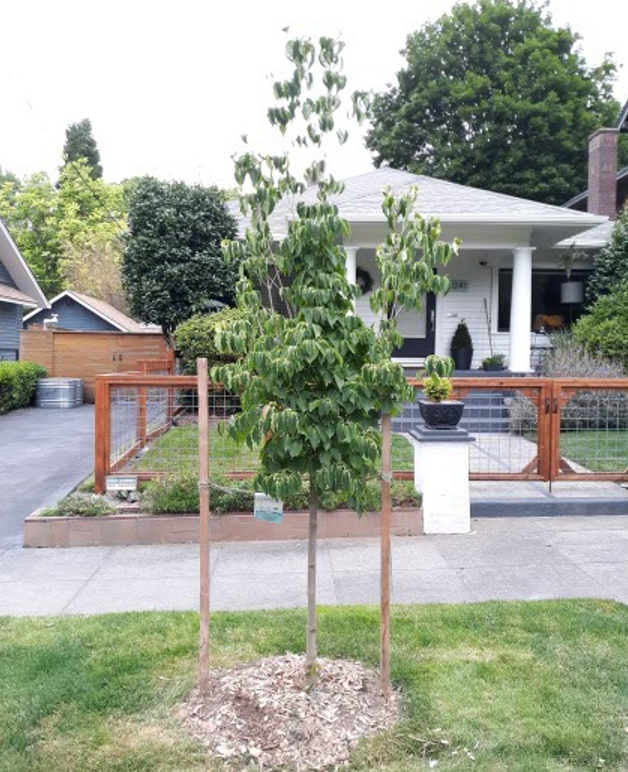
Using 30 years of tree planting data generated by Friends of Trees, a nonprofit organization that has planted trees throughout Portland, Oregon, researchers with the Pacific Northwest Research Station and colleagues modeled the impact of tree planting on nonaccidental mortality in Portland’s 140 census tracts.
The analyses revealed that an increase in the number of trees was associated with lower rates of cardiovascular and nonaccidental mortality. This lower rate of nonaccidental mortality has economic ramifications. Based upon the U.S. Environmental Protection Agency’s value of a statistical life ($10.7 million), planting a single urban tree in each of Portland’s 140 census tracts is associated with $14.2 million in reduced mortality. Furthermore, as the trees matured, the health benefits increased.
|
|
|
|
|
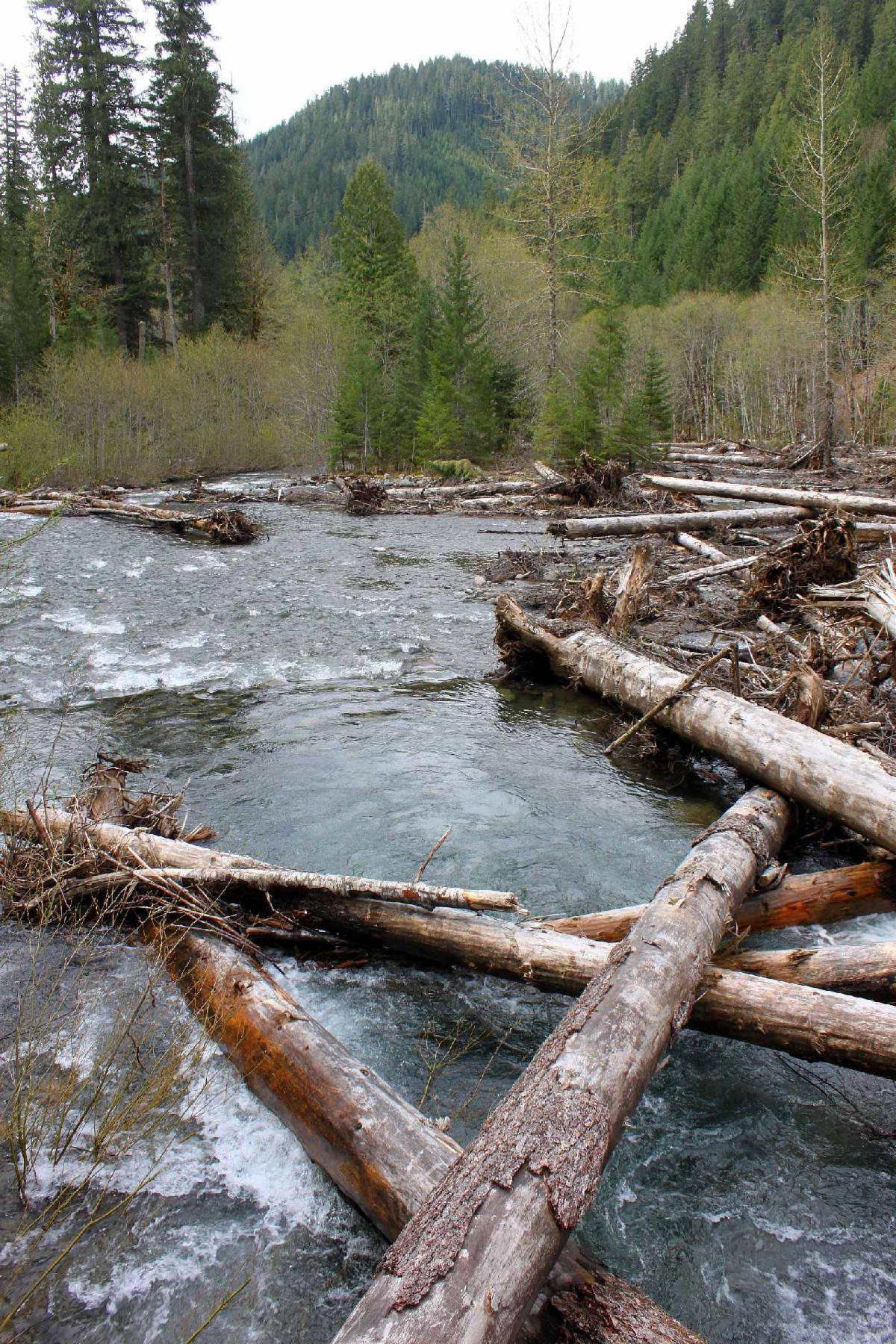
In the past decade, land managers in the Pacific Northwest have devised projects to reconnect rivers with their floodplains. They’ve designed these projects to increase the abundance and diversity of freshwater organisms by increasing habitat complexity.
To further understand this new rehabilitation method, scientists with the Pacific Northwest Research Station investigated the short and long-term effects of these floodplain projects, which varied in novelty, size, and intensity.
|
|
|
Journal Articles by Topic
|
|
Where wilderness is found: Evidence from 70,000 trip reports. Derrien, Monika M.; Winder, Samantha G.; Wood, Spencer A.; Miller, Lesley; Lia, Emilia H.; Cerveny, Lee K.; Lange, Sarah; Kolstoe, Sonja H.; McGrady, Grace; Roth, Anna. 2024. People and Nature. 6(1): 202-219.
|
|
A near real-time mapping of tropical forest disturbance using SAR and semantic segmentation in Google Earth Engine. Kilbride, John Burns; Poortinga, Ate; Bhandari, Biplov; Thwal, Nyein Soe; Quyen, Nguyen Hanh; Silverman, Jeff; Tenneson, Karis; Bell, David; Gregory, Matthew; Kennedy, Robert; Saah, David. 2023. Remote Sensing. 15(21): 5223.
|
|
Resource Management & Use |
|
Amping up biosecurity for herps. Bletz, Molly C.; Palmisano, Jenna; Julian, James T.; Shender, Lisa; Olson, Deanna H. 2023. The Wildlife Professional. 17(6): 46-49.
|
|
About the Pacific Northwest Research Station |
|
The USDA Forest Service, Pacific Northwest Research Station is a leader in the scientific study of natural resources. We generate and communicate impartial knowledge to help people understand and make informed choices about natural resource management and sustainability. Headquartered in Portland, Oregon, the station has laboratories and research centers in Alaska, Washington, and Oregon.
Recent Publications of the Pacific Northwest Research Station is published quarterly.
The USDA is an equal opportunity employer.
|
|
|
|
|
|
|