|
|
The Blissfield Brief
July 2024
|
"Community is about doing something together that makes belonging matter." - Brian Solis |
| |
|
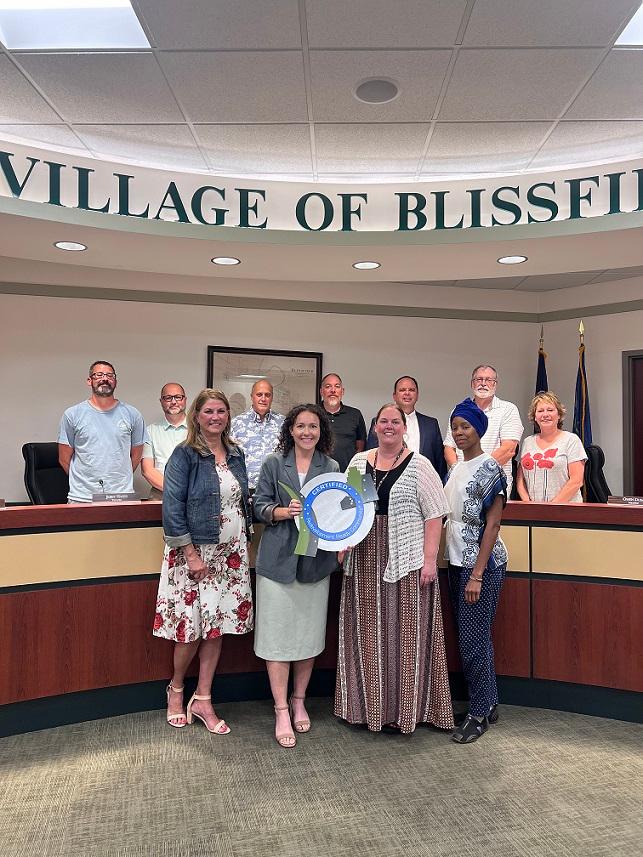
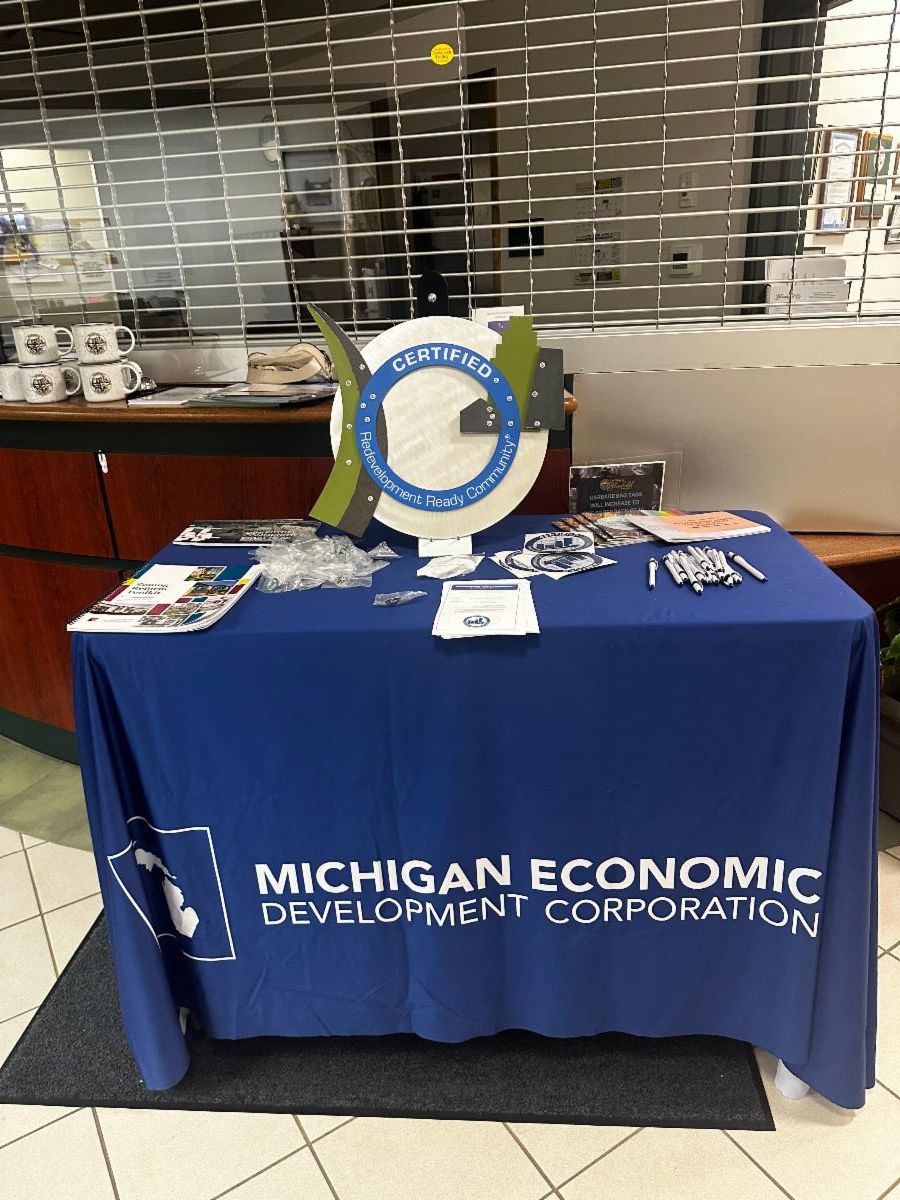
Blissfield Celebrated Redevelopment Ready Community Certification at June Committee of the Whole Meeting
I am excited to have celebrated Blissfield becoming a Redevelopment Ready Certified Community. We are 2nd in Lenawee County, and 77th in the State of Michigan to become a RRC certified community.
What does it mean? It means we are ready and open for business. We have made a commitment to transparency, superior customer service and to focus our resources on development.
This goal was achieved through a collaborative effort. It has taken us over 4 years; and a lot of time and hard work.
The RRC certification process was not just checking items off a list, but was a deliberate attempt to understand and focus on aspects of becoming redevelopment ready. Not only has this process equipped Blissfield to be redevelopment ready but it helped to bring our boards together which then got us all working jointly towards the same goals.
I would like to extend a thank you to our partners throughout the process:
- The Michigan Economic Development Corporation (MEDC)
- Community Economic Development Association of Michigan (CEDAM); specifically, their Fellowship program which brought us Asia
- Blissfield Planning Commission
- Blissfield Parks & Recreation Advisory Board
- Blissfield DDA Mainstreet Board
- Blissfield Township
- Riga Township
- Staff
- And Blissfield Village Council
We also have our other partners that help us promote development day in and day out; our business owners, people who have invested and visit our local businesses, the Blissfield Historical Society that tell people visiting about all of the treasurers our community has to offer, the Advance, and of course our citizens that are always showing their Blissfield Pride.
Thank you All! I am proud of all the things Blissfield has accomplished in the last several years, all the things we continue to work on and all that we will continue to achieve.
This recognition are not the end for us, we have just begun our journey. The journey to attract, retain and support business and growth within our community.
-Danielle Gross, Village Administrator
| |
|
Please join us in congratulating WWTP Operator Don Stace who obtained his State of Michigan Department of Environment, Great Lakes, and Energy (MI EGLE) Sewage Operator Class C Classification.
Congratulations on this accomplishment Don, and thank you for all you do for the Village of Blissfield.
| |
|
Blissfield Police Department Criminal Justice Information Services (CJIS) Compliant
The Village of Blissfield Police Department is audited every three (3) years by the Michigan State Police LEIN Field Services Division for compliance with the CJIS Division standards set by the U.S. Department of Justice. In June 2024 our Police Department was again found to be in compliance with those standards. "We are only compliant due to the commitment by all of our officers, along with support from Administration and Council in meeting the financial demands placed on us by the standards", said Chief Greenleaf. The CJIS standards help protect sensitive data and information that the Police Department obtains and stores from unauthorized access, disclosure, or misuse. Thank you to our Chief and Officers whose hard work and are dedicated to protecting our residents.
| |
|
Did you know?
Since 2021 the Village has received $653,650.00 in grant funding.
Redevelopment Ready Community Grant through MEDC (2021) - $29,250 - This funded the Village Master Plan, Economic Development Strategy, and the Public Participation Plan completed by McKenna.
CEDAM Fellow Program (2023-2024) - $90,000 - This funded the 15 month full time fellow position.
Consumer's Forestry Grant (2023) - $2,600 - Planted 13 trees throughout the community.
USDA Capital Facilities Grant (2022) - $13,300 - Partially funded a DPW Truck with Plow
CEDAM Implementation Grant Funding (2024) - $10,000 - Funding maintenance and repairs to the Ellis Park Basketball Courts
Vibrancy Grant (2024) - $25,000 - Funded the Bicentennial Mural, park stage, tables, and DDA road barricades.
Legacy Land Conservation (2024) - $500 - planted 120 trees within Clara Bachmayer Park.
MI EGLE TMF Grant (2024) - $483,000 - Identify service line material within the community
|  | |
At the Blissfield water treatment plant (BWTP), providing safe high quality drinking water to its customers is one of the most important responsibilities. This includes fire protection, managing water resources, regulatory compliance and meeting future needs and expectations of customers. Through the monthly newsletters, I; Nora Kiefer, Water Treatment Plant Supervisor would like to start educating the community on their drinking water.
Where do we get our water from?
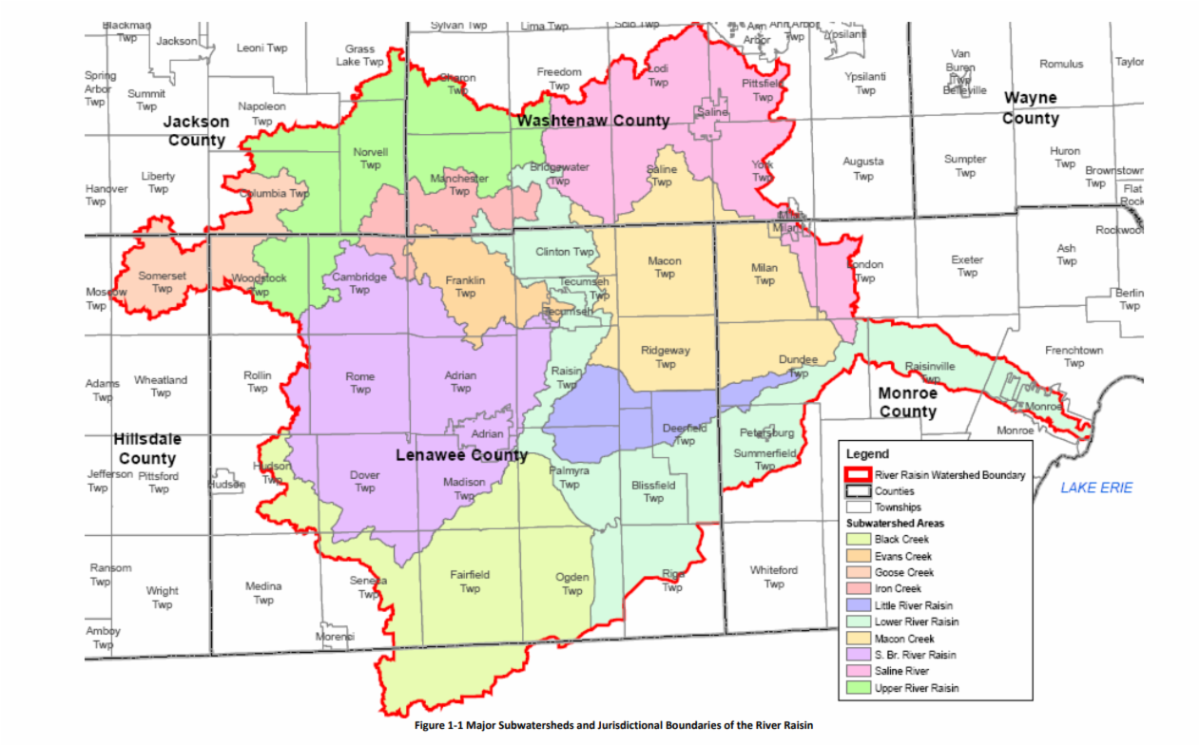
Water treatment plants can get their water from different sources such as, ground water and surface water. Ground water is from wells. The Rural areas surrounding the village of Blissfield area are generally supplied by private wells. The water quality from these wells is exceedingly variable in mineral content. The most serious problem with well supplies is the availability of sufficient volume. The local aquifers cannot support continuous large volume draws such as what would be needed for a municipal supply. Many wells for private residences have inadequate capacity for even routine household uses. The second source of water is surface water, rivers, reservoirs, and lakes. Blissfield’s drinking water is exclusively pulled from the River Raisin. At this time, surface water is the only economically feasible source of water for our community. The River Raisin is approximately 150 miles long and its watershed covers 1,072 square miles. 80% of the watershed is zoned for farmland. In the 1,072 miles there are approximately 429 lakes and ponds, more then 3,000 miles of man-made drainage systems and 49 dams. Urbanization and agricultural land use have put significant stress on the River Raisin watershed over the past 200 years. With the increase of land usage, we see many things impairing the water quality. We have seen an increase of pesticides, metals, turbidity, nitrates, and pathogens.
|  | |
How does the Blissfield water treatment plant turn the river water into our community drinking water?
First the raw river water is delivered to the treatment plant through an 18-inch line that extends into the river and feeds the facility. Blissfield’s treatment plant is a complete treatment plant, activated carbon is added to help with taste and odor, potassium permanganate is added as an oxidizer to help get rid of organic materials. The Blissfield plant consist of two up flow clarifiers, where sedimentation and flocculation occur. To aid in flocculation, ferric sulfate is feed along with a cationic polymer to help bind and settle containments in the water. The plant has to adjust the P.H. of the water before it is sent to the community; caustic soda is used to increase the P.H. back to approximately 8.0. After the clarifiers, the water will enter the filters of the plant. A small dose of chlorine is added to the water as it enters the filter. After filtration, the final dose of chlorine is added for disinfection. Lastly, fluoride and phosphate are added to the treated water before storage and delivery to the community. Fluoride is added for public health and phosphate is an aid in corrosion control. The BWTP analyzes water for chemical, physical, and bacteriological results daily, monthly, and/or annual summaries of climatic processes.
In addition to the water treatment plant and raw water intake the BWTP has a 0.5MG finished water storage reservoir at the plant and a 0.4MG elevated storage tank located northwest section of the village. BWTP has over 50 miles of water distribution system mains ranging in size from 2” to 12” with typical daily use of about 0.4 (MGD) serving approximately 3,500 customers. There are 135 valves throughout the system and 150 fire hydrants and water meters with sizes ranging from five eights of an inch (5/8”) to four inches (4”).
There are everyday actions you can take to help protect our drinking water source. First, use and dispose of harmful materials properly. Don't pour hazardous waste down the drain, on the ground, or into storm sewers. This could contaminate the soil, groundwater, or nearby surface water. A number of products used at home contain hazardous or toxic substances that can contaminate ground or surface waters, such as: motor oil, pesticides, leftover paints or paint cans, mothballs, flea collars, and household cleaners. Secondly, make sure you are disposing of your medications properly, in homes that use septic tanks, prescription and over-the-counter drugs flushed down the toilet can leach into the ground and seep into groundwater. In cities and towns where residences are connected to wastewater treatment plants, prescription and over-the-counter drugs poured down the sink or flushed down the toilet can pass through the treatment system and enter rivers and lakes. These water sources may flow downstream to community drinking water supplies. Water treatment plants are generally not equipped to remove medicines. We encourage the public to take advantage of pharmaceutical take-back collection programs that accept prescription or over-the-counter drugs, as these programs offer a safe and environmentally-conscious way to dispose of unwanted medicines. Another everyday action is to think twice about lawn and garden chemicals, limit the use of pesticides or fertilizers, and always follow the label directions. Many fertilizers and pesticides contain harmful chemicals which can travel through the soil and contaminate groundwater or run off in storm water to rivers, streams, and lakes.
If you would like to tour our Blissfield Water treatment plant, please visit the utilities website and sign up for a quarterly tour or request a tour for your small group.
|  | |
|
517-486-4347
administrator@blissfieldmichigan.gov
| | | | | |