|
Accessible Text Version Below
New IPR Research Report!
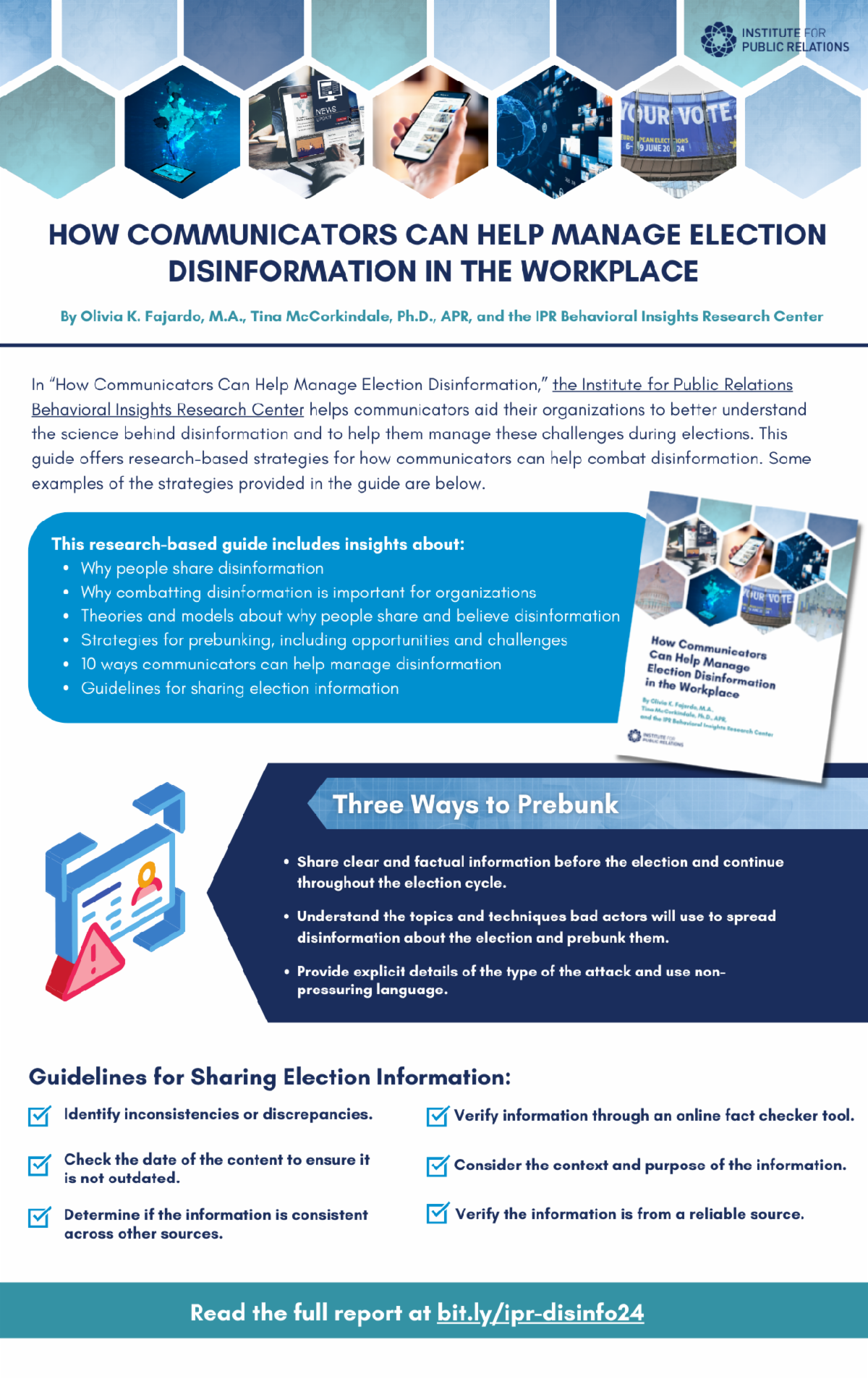
How Communicators Can Help Manage Election Disinformation in the Workplace
By Olivia K. Fajardo, M.A., Tina McCorkindale, Ph.D., APR, and the IPR Behavioral Insights Research Center
In “How Communicators Can Help Manage Election Disinformation,” the Institute for Public Relations Behavioral Insights Research Center helps communicators aid their organizations to better understand the science behind disinformation and to help them manage these challenges during elections. This guide offers research-based strategies for how communicators can help combat disinformation. Some examples of the strategies provided in the guide are below.
This research-based guide includes insights about:
- Why people share disinformation
- Why combatting disinformation is important for organizations
- Theories and models about why people share and believe disinformation
- Strategies for prebunking, including opportunities and challenges
- 10 ways communicators can help manage disinformation
- Guidelines for sharing election information
Three Ways to Prebunk:
- Share clear and factual information before the election and continue throughout the election cycle.
- Understand the topics and techniques bad actors will use to spread disinformation about the election and prebunk them.
- Provide explicit details of the type of the attack and use non-pressuring language.
Guidelines for Sharing Election Information:
- Identify inconsistencies or discrepancies.
- Verify the information is from a reliable source.
- Check the date of the content to ensure it is not outdated.
- Determine if the information is consistent across other sources.
- Verify information through an online fact checker tool.
- Consider the context and purpose of the information.
Read the full report at bit.ly/ipr-disinfo24.
|